 Ferndale Siding
 Why Point Roberts Puts Extra Wear on a Roof
Point Roberts sits on its own peninsula, with saltwater on most sides and very little to break the wind before it reaches a roofline. That exposure changes what a roof has to deal with compared with a more sheltered lot inland. Salt air, driving rain off the water, and a moss season that runs long into the wet months all take a toll on roofing materials — and they don't take it evenly. A roof that would hold up fine a few miles inland in Whatcom County can show corrosion, staining, or moss buildup years sooner out here.
Salt Air and Corrosion
Airborne salt settles on everything, including roofing metal, fasteners, and flashing. On uncoated or poorly coated steel, that accelerates rust — first at cut edges, screw heads, and anywhere the factory finish has been scratched or drilled through during installation. It also matters which metals touch which: mixing incompatible metals, such as an uncoated steel fastener against aluminum flashing, can set up galvanic corrosion that eats through metal faster than salt air alone would. None of this means metal roofing is a bad choice here — it means the coating system, fastener spec, and flashing details have to be chosen for a marine environment, not installed to a generic inland standard.
Wind Exposure on an Open Peninsula
With less tree cover and terrain to break the wind than a more sheltered inland lot, roofs on the Point take a steadier beating from gusts, especially during fall and winter storm systems. Wind doesn't just push rain sideways under loose flashing — sustained gusts test every fastener and seam on the roof. A panel system and fastening pattern that would hold up fine on a protected inland roof can come loose here if it wasn't specified for this level of exposure.
Moss and a Long Wet Season
Whatcom County's wet season runs long, and Point Roberts gets its full share of it. Moss needs sustained moisture and shade to establish, and north-facing slopes, valleys, and anywhere debris collects are the usual starting points. Metal sheds water fast and gives moss spores less to grip than a textured shingle surface, but that doesn't make a metal roof moss-proof — debris in valleys, around vents, or on low-slope sections can still hold enough moisture for growth to start if it's never cleared out.
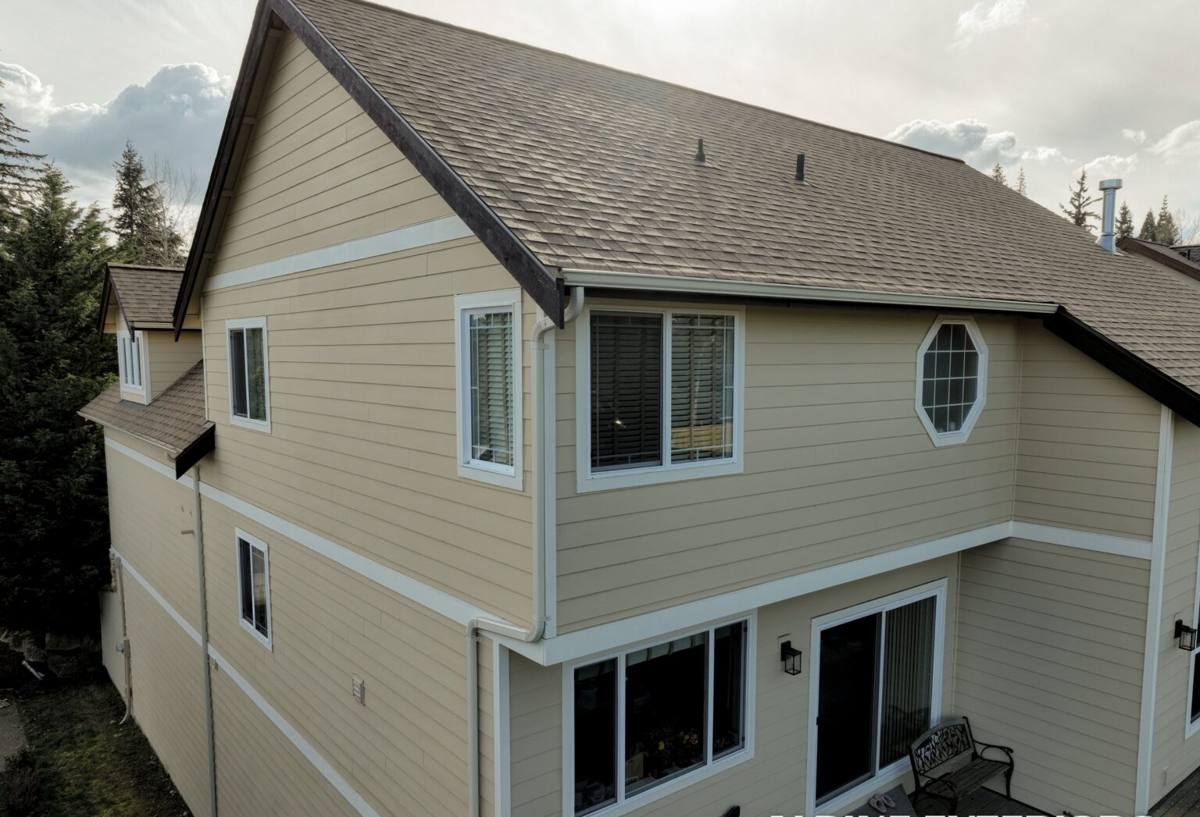
Signs Your Roof Is Losing the Battle Out Here
Because of how exposed this location is, roofing problems can show up faster and less obviously than they would inland. A few warning signs worth walking your roofline for, or having a professional check from the ground and attic:
- Rust streaking below fasteners, flashing, or panel seams
- Lifted or fluttering panel edges after a windstorm
- Green or dark buildup collecting in valleys or on north-facing slopes
- Sagging or soft spots near valleys, which can point to deck damage underneath
- Water stains or musty smells in the attic, even without an obvious visible leak
- Chalky, faded, or peeling coating on older metal panels
Catching any of these early is almost always cheaper than waiting for a full leak to show up inside the house.
Why Metal Roofing Makes Sense on the Point
Given that combination of wind, salt, and moisture, metal roofing has real advantages for homes out here:
- Sheds driving rain quickly instead of letting it sit against a textured surface
- Handles wind uplift well when the fastening pattern and panel profile are matched to the site's exposure
- Gives moss and algae less organic material to root into than a shingle roof
- Long service life, which matters when a re-roof means coordinating a crew and materials onto the peninsula
- A wide range of profiles and colors, from a low-key exposed-fastener panel to a standing seam look
None of that is automatic, though. A metal roof only delivers on those advantages if it's installed correctly for this specific climate, not to a generic, one-size-fits-all checklist.
What a Correct Metal Roof Installation Involves
A metal roof is only as good as the details underneath and around the panels. On a site with this much wind and salt exposure, a few things matter more than they would on a sheltered inland roof:
Underlayment and Water Barriers
A quality synthetic underlayment across the whole roof, with self-adhered ice-and-water membrane at eaves, valleys, and any low-slope transitions, gives the roof a real second line of defense if wind-driven rain gets pushed up under a panel edge — which happens more often on an exposed peninsula lot than on a sheltered one further inland.
Fasteners and Flashing for Salt Exposure
Fasteners and flashing should be specified for a marine environment: corrosion-resistant coatings or stainless steel where it counts, and metals chosen so they don't set up galvanic reaction against each other. Flashing at walls, penetrations, and ridges needs to be formed and lapped correctly, not just caulked over gaps — sealant should be a backup layer, not the primary seal against the weather this location sees.
Ventilation and Condensation Control
Metal roofing needs a clear path for intake and exhaust ventilation under the deck. Without it, warm moist household air can condense on the underside of cold metal panels during Whatcom County's damp winters, leading to hidden moisture and rot problems that have nothing to do with the roof leaking from outside — and everything to do with airflow that was never properly planned during installation.
Choosing a Panel System
There isn't one right metal roofing system for every home — the right choice depends on roof pitch, budget, and how much long-term maintenance an owner wants to take on. Here's how the common options compare for a coastal Point Roberts home:
| Panel Type | Fasteners | Maintenance in Salt Air | Typical Cost Position |
|---|---|---|---|
| Standing seam | Concealed clips, no exposed screws in the field | Lowest — fewer penetration points for corrosion to start | Higher upfront |
| Exposed-fastener panel | Screws through the panel face, with gaskets | Moderate — gaskets and screw heads need periodic checking | Mid-range |
| Metal shingle or shake panel | Concealed or partially concealed depending on the system | Moderate — more seams and laps than standing seam | Mid to upper-range |
Standing seam tends to be the strongest fit for a high-exposure site like this, simply because it has the fewest places for salt air and driving rain to find a way in over the decades. Exposed-fastener systems can still be a sound, more budget-friendly choice for the right home — they just ask a little more of the ongoing maintenance routine described further down this page.
Our Process for a Point Roberts Project
- On-site assessment — we look at pitch, exposure, existing decking condition, and any moss or moisture damage before recommending a system.
- Material selection and ordering — panel profile, gauge, and coating are matched to the site's wind and salt exposure, then ordered with the peninsula's delivery timeline built into the schedule from day one.
- Scheduling around access — because of how Point Roberts is situated, we plan crew and material movement in advance rather than treating it like a same-day inland job.
- Tear-off and deck inspection — old roofing comes off and the deck is checked for rot or soft spots before anything new goes on.
- Underlayment, flashing, and panel installation — installed in the sequence and detail described above, never shortcut for speed.
- Cleanup and walkthrough — the site is cleared of debris and stray fasteners, and we walk the finished roof with the homeowner before calling the job done.
Why a Crew That Already Works Point Roberts Matters
Point Roberts is part of Whatcom County, but it isn't connected to the rest of the county by road — getting there by land means crossing into Canada and back. For a roofing contractor, that's not a small detail. It affects how crew time is scheduled, how tools and materials move, and how realistic a quoted timeline actually is. A contractor who hasn't planned for that ahead of time can turn a straightforward project into a string of delays and surprise costs, none of which the homeowner should have to absorb.
A crew that already works this area builds that logistics into the estimate from the start, instead of discovering it mid-project. We also know what this exposure does to roofing over time, because we've seen it on other roofs out here: which slopes tend to moss first, where salt corrosion tends to show up, and which installation details are worth the extra time to get right the first time — since a roof out here doesn't get casually inspected or serviced as often as one on a well-traveled inland street.
Maintenance in a Salt Air, Moss-Prone Climate
Metal roofing is low-maintenance compared with most alternatives, but "low" isn't "none," especially in this setting. A short annual routine keeps small issues from becoming expensive ones:
- Clear debris from valleys, around vents, and behind chimneys before the wet season sets in
- Rinse accumulated salt spray off the roof surface periodically, especially after storm systems off the water
- Check exposed fasteners and gasket condition on exposed-fastener systems once a year
- Look for scuffed or worn coating anywhere branches or debris have been in contact with the panels
- Watch for new fixtures — vents, brackets, antennas — added after installation that introduce incompatible metals against the roof
- Confirm gutters and downspouts stay clear so water isn't backing up against eave flashing
Cost Factors to Expect
Every metal roof estimate comes down to a handful of variables: the panel system chosen, the roof's pitch and complexity — valleys, dormers, and penetrations all add labor — whether it's a tear-off or a re-roof over existing material where code allows, and site accessibility for material delivery. Standing seam runs higher upfront than an exposed-fastener system, largely because of the concealed-fastener installation method and typically heavier-gauge material, but it also asks the least of an owner in ongoing maintenance over the life of the roof. We walk through these trade-offs specifically for your roof during the estimate, rather than quoting off a generic price sheet that doesn't account for this site's exposure.
If you're weighing a metal roof for a Point Roberts home, we're glad to come take a look and talk through what your roof actually needs — no pressure, no generic sales pitch, just a straight answer based on what we see. Fill out the form below to schedule a free estimate.