 Ferndale Siding
 Building Near the Water Changes What a Window Has to Do
Lummi Nation sits close enough to Bellingham Bay and the Nooksack delta that homes here deal with a different set of conditions than a house ten miles inland in Whatcom County. Salt-laden air moves in off the water, driving rain comes sideways during winter storms, and the wet, shaded stretches of the year feed a long moss season that coats roofs, siding, and window trim if nothing is done to slow it down. When we're framing new construction in this area, the window package isn't an afterthought picked from a catalog — it's one of the first decisions that determines how the house performs for the next 20-30 years.
This page is specifically about installing windows during new construction — not swapping out old windows in a finished wall, which is a different job with different flashing logic. If you're building new near Lummi Nation, here's what actually matters.
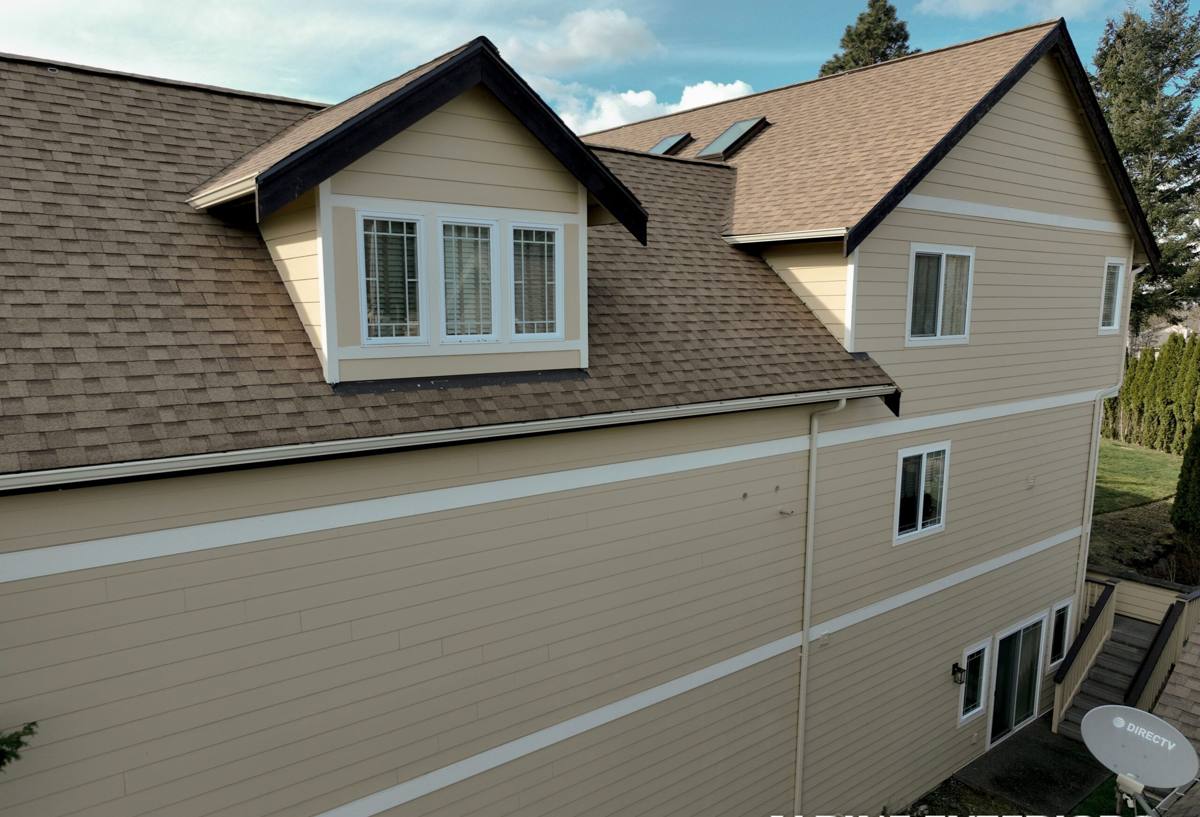
New-Construction vs. Replacement: Why the Distinction Matters
New-construction windows have a nailing fin (or flange) that gets integrated directly into the house wrap and flashing system before siding goes on. That's a big advantage over replacement windows, which get inserted into an existing frame and rely more heavily on sealant to stay watertight. Done right, a new-construction window installation gives you a fully layered, shingle-style water management path — house wrap, flashing tape, the window's nailing fin, and then more flashing tape over that — so water is directed out and down no matter how hard the wind is driving rain against the wall.
That layered approach matters more here than in drier parts of the state. A wall assembly that's "good enough" for eastern Washington will show problems faster in a spot that gets sustained wet weather and salt exposure from the bay.
What Local Conditions Actually Do to a Window Assembly
Salt Air
Airborne salt accelerates corrosion on unprotected metal fasteners, cheap hardware, and lower-grade aluminum components. It also breaks down some exterior finishes faster than a standard warranty test anticipates. This is why hardware and fastener choice matters as much as the window brand itself in a shoreline-adjacent build.
Driving Rain
Wind-driven rain doesn't just hit a window head-on — it gets pushed sideways and upward under sills and around the edges of poorly sealed flanges. A window that would perform fine in a sheltered inland yard can leak here if the sill pan, head flashing, and side flashing aren't installed in the correct order with the correct overlaps.
Moss and Sustained Moisture
Moss doesn't grow directly on glass, but it colonizes wood trim, sill areas, and anywhere organic debris collects and stays damp. Over a few seasons, moss and the moisture it holds against a window frame can degrade caulk lines, promote rot in wood-adjacent trim, and hide slow leaks until they've already caused damage behind the wall.
Choosing the Right Window Material for This Climate
There's no single "best" window brand — the right choice depends on budget, maintenance appetite, and how exposed the specific elevation is. Here's how the common options actually compare for a build in this area:
| Material | Moisture & Salt Behavior | Maintenance | Typical Cost Position |
|---|---|---|---|
| Vinyl | Good — won't rot or corrode; UV can affect color/finish over decades | Low — occasional cleaning | Lower to mid |
| Fiberglass | Excellent — very stable in wet, salty, temperature-swinging conditions | Low | Mid to higher |
| Wood-clad (vinyl or aluminum exterior) | Good on the exterior face if the cladding is intact; vulnerable where cladding is compromised or improperly flashed | Higher — exterior cladding needs monitoring at joints | Higher |
| Bare aluminum frame | Poor near salt air unless marine-grade and well-finished | Higher | Varies |
For most new builds near Lummi Nation and the surrounding shoreline, we steer people toward vinyl or fiberglass because both hold up well against salt air and moisture without demanding ongoing upkeep. We're not against wood-clad windows on principle — they can look great — but we're upfront that any cladding system is only as good as the flashing detail protecting the seams, and that's a maintenance conversation worth having before you commit, not after.
Installation Details That Determine Whether a Window Leaks
Most window failures in coastal Whatcom County builds trace back to installation sequence, not the window unit itself. The details that matter most:
- Sloped sill pan flashing installed before the window ever goes in, so any water that gets past the glass has somewhere to drain — not somewhere to pool
- Flashing tape applied in the correct shingle-lap order: sill first, then jambs, then head, each layer overlapping the one below it
- Backer rod and sealant at the interior air seal, separate from the exterior weather seal — these are two different jobs, not one bead of caulk doing double duty
- Corrosion-resistant fasteners appropriate for salt-air exposure, not whatever standard-grade screws came in the box
- Proper shimming so the window sits square and doesn't rack under wind load, which over time opens gaps at the corners
- Weep holes and drainage paths left clear, not sealed shut by an over-eager caulking job
Skip any one of these steps and you can still have a house that looks finished and passes a casual glance — right up until the first hard winter storm finds the gap.
How We Handle New-Construction Window Installs
Our process on new builds in this area follows the same general order every time, because consistency is what prevents callbacks:
- Review the window schedule and rough openings against the plans before framing is finalized, catching sizing or orientation issues while they're cheap to fix
- Confirm house wrap and flashing tape compatibility with the specific window's flange material — not all tapes bond equally well to every finish
- Install sill pan flashing, set the window, then complete jamb and head flashing in the correct sequence
- Air-seal the interior gap and verify the window operates smoothly (opens, closes, locks) before moving on
- Document flashing details at each rough opening, so there's a record of what's behind the siding if a question ever comes up down the road
We don't consider a window installed until it's passed that whole sequence — not just set in the opening and moved on from.
Building on Lummi Nation Land: Know Who You're Working With
If your project is on Lummi Nation trust land or within the reservation boundary, permitting and building requirements can run through tribal authority rather than — or in addition to — standard Whatcom County process. We're not the ones to give final word on jurisdiction for any specific parcel; that's a conversation for the property owner and the appropriate permitting office to have directly. What we can do is build to a consistent quality standard regardless of which permitting path applies, and coordinate our schedule and paperwork around whatever process the project requires. If you're unsure which authority governs your build, that's worth confirming before the window order goes in, since it can affect timeline.
What to Look for in a Contractor for This Area
Not every siding or window crew has real experience with shoreline-adjacent conditions. Before hiring for a new-construction window package here, it's worth asking:
- Can they explain their flashing sequence in specific terms, not just "we seal everything up"?
- Do they have a stated approach to fastener and hardware selection for salt-air exposure?
- Will they document flashing details before siding covers them up?
- Do they carry manufacturer certifications or documented training for the window lines they're installing?
- Are they familiar with moss and moisture patterns specific to this part of Whatcom County, not just general Pacific Northwest weather?
- Can they speak plainly about maintenance trade-offs between window materials instead of just pushing one product?
A crew that's actually worked in and around Lummi Nation and the Ferndale shoreline area will have direct answers to all of these, not vague reassurance.
Cost Factors Worth Understanding Up Front
Window costs on new construction swing on a few variables: the material chosen, the number and size of openings, glazing package (double vs. triple pane, low-E coatings), and how much site-specific flashing detail the openings require. Corner windows, larger picture windows, and openings on the most weather-exposed elevation typically cost more to flash correctly than a standard opening on a sheltered wall — that's labor and material going into protecting the investment, not padding. We'll walk through where your specific plan adds cost and where there's room to make trade-offs without compromising performance.
If you're planning a new build in or near Lummi Nation and want windows installed correctly the first time — flashed right, matched to the material that fits this climate, and backed by a crew that actually works this area — we're glad to walk the plans with you and put together a free, no-pressure estimate. Use the form below to get started.