 Ferndale Siding
 Roofing for a Lake, Tree-Canopy Community
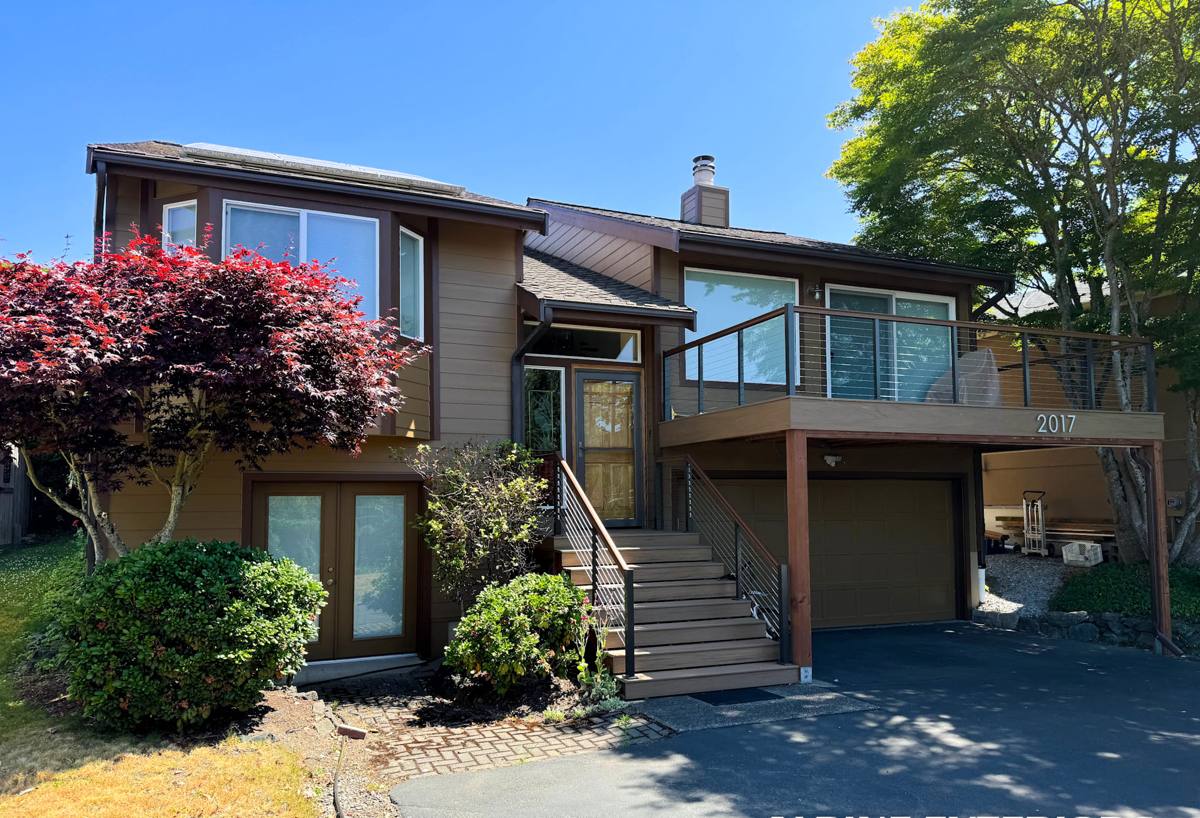
Sudden Valley sits differently than most Whatcom County neighborhoods. Homes here are tucked among mature evergreens, close to Lake Whatcom, often with steep driveways, wooded lots, and roof planes that stay shaded for large stretches of the day. That shade is part of what makes the neighborhood attractive to live in — and part of what makes roofs here age faster than the same roof would on an open, sun-exposed lot ten miles away. A roof that never fully dries out between rain events behaves differently over twenty years than one that does, regardless of what shingle brand is on it.
We install roofs across Whatcom County, and Sudden Valley gets its own approach because the conditions call for it: heavy tree cover, persistent shade, driving rain off the water, and a moss season that runs longer here than it does in more open parts of Ferndale or Lynden. A correct installation accounts for all of that from the decking up — not just the shingle on top.
What the Local Climate Actually Does to a Roof
Whatcom County sits in a marine climate, and that combination of moisture, mild temperatures, and salt-tinged air off the Sound shapes how every exterior material ages here — fasteners, flashing, and metal components included. In Sudden Valley specifically, the tree canopy and lake-adjacent air add another layer: needles and debris collect in valleys and gutters, shaded roof planes stay damp longer after a storm, and moss gets a foothold faster than it would on a roof that dries out in full sun.
The pattern we see most often
- Moss and algae streaking on north-facing or heavily shaded slopes, well before the shingles themselves are worn out
- Granule loss concentrated where moss has been sitting and holding moisture against the shingle surface
- Soft or spongy decking discovered under old moss mats once a roof is opened up
- Clogged valleys and gutters from needle drop, which back water up under the shingle edge during driving rain
- Flashing and fastener corrosion that shows up earlier than the roofing material's own wear
None of this means a roof in Sudden Valley can't last its full expected lifespan — it means the installation has to plan for these conditions instead of ignoring them.
Signs You Need a Replacement, Not Another Patch
Not every roof problem calls for a full tear-off. But there's a point where repeated patching stops making financial sense, and pushing past that point usually means paying for both the patches and the eventual replacement. Have a real look at these before deciding:
- Shingles that are cupping, curling, or missing granules across large sections, not just one isolated spot
- Daylight visible through the roof deck from inside the attic
- Soft spots when walked, or decking that flexes underfoot
- Moss that keeps returning within a season or two of being cleaned off
- Leaks that show up in a new location every time it rains hard
- A roof approaching or past the manufacturer's expected service life for its material and exposure
- Multiple layers of shingles already on the roof from past re-roofs (a sign a proper tear-off is overdue)
What a Correct New Roof Installation Involves
A roof is a system, not a single product. Skipping any layer of that system shortens the life of every other layer, and in a shaded, moisture-heavy setting like Sudden Valley, the layers most people never think about matter more than usual.
Tear-off and deck inspection
We remove the old roofing down to the deck rather than layering over it. That's the only way to actually see what's underneath — soft plywood, rot around valleys, or damage from moss that's been sitting on the surface for years. Any compromised decking gets replaced before anything new goes down; installing new shingles over a weak deck just hides the problem for a while.
Underlayment built for wet exposure
In a marine climate with long stretches of shade, we treat underlayment as real weather protection, not a formality. That means synthetic or self-adhered membrane in vulnerable areas — valleys, eaves, around penetrations — where wind-driven rain is most likely to work its way under the surface layer.
Flashing done right
Flashing failures are one of the most common causes of roof leaks, and they're rarely the roofing material's fault. Chimneys, skylights, walls, and valleys all need properly formed, correctly lapped flashing — not caulk standing in for metal. We flash to shed water, not to seal it in place with sealant that will eventually crack.
Ventilation that matches the home
A shaded roof that also traps warm, moist attic air ages fast from both directions. Balanced intake and exhaust ventilation keeps the underside of the deck dry and helps prevent the ice-and-condensation cycles that rot decking from the inside out — a problem that shows up years before it's visible from the ground.
Final details
Drip edge, ridge caps, valley metal, and fastening pattern all matter as much as the shingle choice itself. We install to manufacturer spec, not just "close enough," because that's what keeps warranties valid and keeps the whole system watertight.
Material Options for Sudden Valley Conditions
There isn't one right material for every home — it depends on your roof's slope, sun exposure, budget, and how much maintenance you want to take on. Here's how the common options actually compare for a shaded, wet, tree-covered setting like this one:
| Material | How it handles moss/moisture | Maintenance | Typical lifespan |
|---|---|---|---|
| Architectural asphalt shingle (standard) | Moderate — benefits from algae-resistant granules | Periodic moss removal recommended in shaded areas | 25–30 years |
| Algae-resistant asphalt shingle | Better — copper/zinc granules slow algae and moss growth | Lower, but not maintenance-free | 25–30 years |
| Standing seam metal | Very good — sheds water fast, little surface for moss to grip | Low | 40–50+ years |
| Cedar shake | Poor in heavy shade without diligent upkeep — holds moisture | High — requires regular treatment and moss control | 20–30 years with upkeep |
| Synthetic composite shingle | Good — engineered for moisture resistance | Low to moderate | 30–50 years |
We don't push one product on every roof. Cedar shake can still look great on a home with good sun exposure and an owner willing to maintain it, but on a heavily shaded Sudden Valley lot, that maintenance burden is real and ongoing — we'll tell you that plainly rather than sell you a product that fights the site conditions.
Our Installation Process
- On-site assessment — we walk the roof, check the attic, and look at tree cover, slope, and drainage before recommending anything
- Written estimate — material options, scope, and price laid out clearly, no pressure to decide on the spot
- Scheduling — timed around weather windows, since a proper tear-off needs a dry stretch to keep the open deck protected
- Tear-off and deck repair — old roofing removed, deck inspected and repaired as needed
- Underlayment, flashing, and ventilation installed — the system layers that do the real long-term work
- Final roofing material installed to spec — with attention to valleys and shaded areas where moss risk is highest
- Site cleanup and walkthrough — magnetic sweep for debris, and a final look at the finished roof with you
Building In Moss Prevention From the Start
You can't roof your way out of Whatcom County's climate entirely, but you can install a roof that fights moss instead of inviting it. That includes choosing algae-resistant materials where the budget allows, making sure valleys and gutters are sized and pitched to actually clear needle debris, and keeping ventilation balanced so the deck itself doesn't stay damp from the inside. None of this eliminates the need for occasional moss removal on a heavily shaded roof — no roof avoids that here — but it stretches the time between cleanings and keeps that moss from ever reaching the decking.
Why Local Experience in Sudden Valley Matters
Sudden Valley has its own logistics: private roads, HOA considerations, steep and sometimes narrow driveways, and lots with limited staging space for equipment and material delivery. A crew that already works this neighborhood knows how to plan access, protect landscaping during tear-off, and get material and dumpsters in and out without the guesswork that costs a homeowner time and money. We also know which roof orientations in this kind of tree cover tend to have moss and moisture issues before we even climb up, which makes for a faster, more accurate assessment.
We're a Ferndale-based crew that works throughout Whatcom County, and Sudden Valley is a neighborhood we return to — not a one-off job we had to look up on a map.
Cost Factors to Expect
Every roof is different, but the line items that move the price on a Sudden Valley job tend to be consistent:
| Factor | Why it affects cost |
|---|---|
| Roof size and number of planes | More square footage and complexity means more material and labor |
| Deck condition | Rotted or soft decking found during tear-off adds repair cost |
| Material choice | Asphalt, metal, and composite options carry different material and install costs |
| Access and site layout | Steep driveways, tree clearance, and staging space affect labor time |
| Ventilation and flashing upgrades | Bringing an older roof's system up to current standards adds scope but reduces future problems |
| Number of penetrations | Chimneys, skylights, and vents each require additional flashing work |
We give a written, itemized estimate before any work starts, so you know what you're paying for and why — not a vague lump sum.
If your roof in Sudden Valley is showing moss, wear, or age, we're glad to come take a look and give you an honest read on whether it needs replacing — no pressure, no obligation. Use the form below to request a free estimate.