 Ferndale Siding
 Metal Roofing Built for Nooksack's Weather, Not Just Its Looks
Nooksack sits close enough to the water and far enough into farm country that its roofs take a beating from two directions at once: salt-laden air moving in off the Strait and the Sound, and the kind of driving, sideways rain that Whatcom County is known for most of the fall and winter. Add a long, damp shoulder season that lets moss get a foothold on anything that stays wet too long, and you have a climate that is genuinely hard on a roof. Metal roofing handles that combination better than most materials, but only when it's specified and installed correctly for this specific area. That's the part most homeowners don't get told.
This page is about metal roofing for Nooksack homes specifically — what the local climate demands, what a correct installation actually involves, and how we approach the job when we're on your roof.
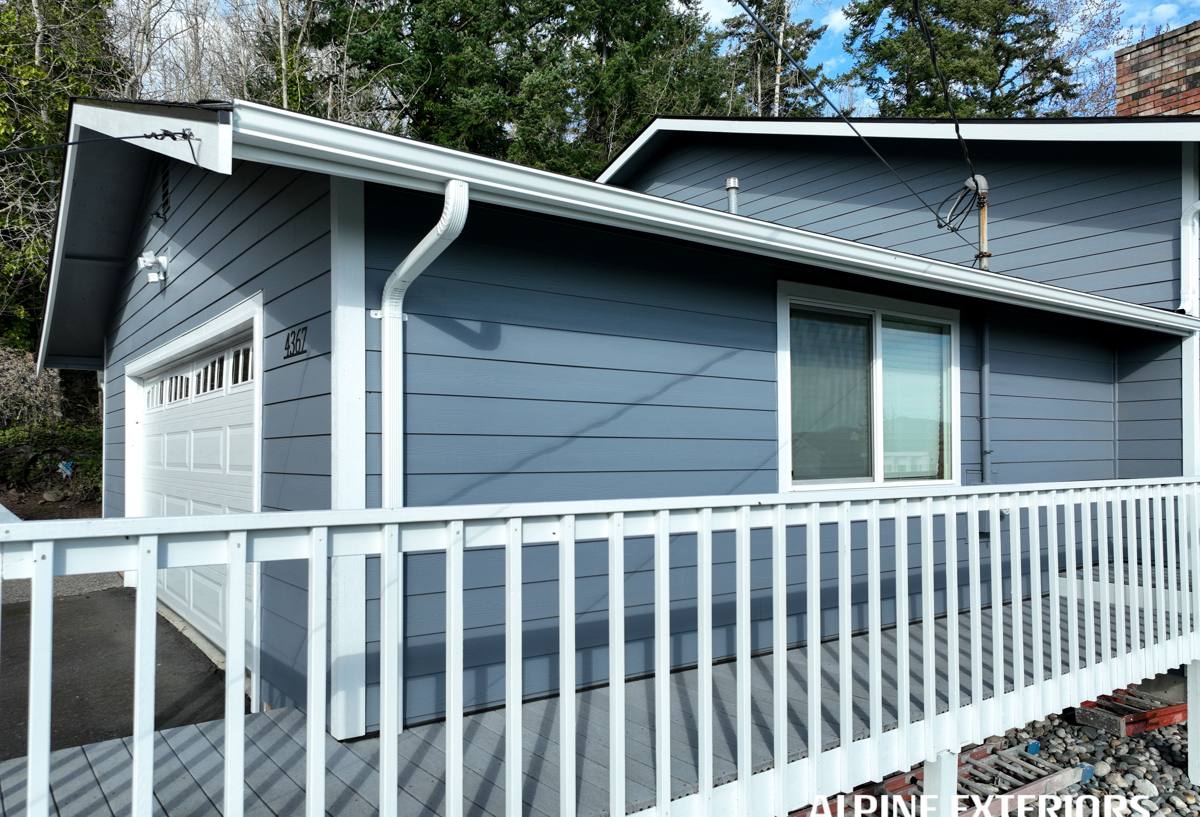
What Salt Air, Rain, and Moss Actually Do to a Roof Here
Salt Air and Corrosion
Airborne salt doesn't need to be right on the coastline to matter — it travels on wind and settles on exposed metal, fasteners, and flashing over months and years. On a roof with the wrong metal coating or exposed, unprotected fastener heads, that translates into premature rust streaking, corroded screws, and weakened seams well before the roof's rated lifespan. It's a slow process, which is exactly why it gets missed — the damage is invisible until a fastener starts leaking.
Driving, Wind-Driven Rain
Whatcom County rain rarely falls straight down. Wind pushes it sideways and up under laps, ridge caps, and around penetrations like plumbing vents and chimneys. A roof that would perform fine in a calmer climate can leak here simply because the flashing details and underlayment weren't built to handle rain moving uphill and sideways, not just down.
Moss and Prolonged Moisture
Moss needs shade, moisture, and time — Nooksack's tree cover and long wet season provide all three. On asphalt shingles, moss roots into the granules and lifts them, shortening the roof's life. Metal doesn't give moss the same foothold, but moss and organic debris can still build up in valleys and around low-slope transitions if the roof isn't designed to shed water and debris efficiently. Left alone, that trapped moisture works against seams and fasteners the same way standing water does on any roof type.
Metal Roofing Systems We Install
Not all metal roofing is the same product wearing different colors. The panel type, fastening method, and coating all affect how the roof performs against this specific climate.
| System | How It's Fastened | Best Fit |
|---|---|---|
| Standing seam | Concealed clips, no exposed fasteners on the field | Homes wanting maximum weather resistance and the longest maintenance-free run — our default recommendation for full roof replacements here |
| Exposed-fastener panel | Screws driven through the panel face with a gasket washer | Budget-conscious projects, outbuildings, shops — workable if gaskets and screws are inspected and replaced on a schedule |
| Metal shingle / shake profile | Interlocking panels, concealed or minimally exposed fasteners | Homeowners who want a traditional shingle or shake look with metal's durability and fire resistance |
For most Nooksack homes, we steer people toward standing seam. The concealed fastener system removes the single biggest long-term weak point on a metal roof in a salty, wet climate — exposed screws and their gaskets, which are the first thing to fail and the hardest thing to catch before it leaks.
What a Correct Installation Actually Involves
Underlayment
A synthetic, high-temp underlayment goes down first, with self-adhered ice-and-water membrane at eaves, valleys, and around every penetration — the spots where wind-driven rain is most likely to find a way in. This layer is your backup if anything above it ever gets compromised, and it's not optional on a roof exposed to this much wind-driven weather.
Flashing and Penetration Details
Every place the roof plane changes or something pokes through it — chimneys, vents, valleys, wall transitions — is a place water can get in. Flashing has to be formed to shed water downhill, layered correctly with the underlayment and panels, and sealed with materials rated for the metal being used. This is the detail work that separates a roof that lasts decades from one that leaks in year three.
Fastening and Panel Layout
Panel spacing, clip type, and fastener selection all need to account for wind uplift and thermal movement — metal expands and contracts more than other roofing materials, and a roof fastened without room to move will eventually oil-can, loosen, or crack its seams. We use fasteners and clips rated to hold up against coastal wind exposure, not generic hardware.
Ventilation
A metal roof still needs a ventilated attic or roof deck underneath it. Trapped moisture from the living space condensing against the underside of cold metal causes deck rot that has nothing to do with the roofing material itself. We check and correct ventilation as part of any full roof project — skipping this step is how a good roofing material ends up blamed for a moisture problem it didn't cause.
Our Process for a Nooksack Metal Roof Project
- On-site assessment. We walk the roof, check the deck condition, existing ventilation, and flashing details, and take real measurements — not a satellite estimate.
- Honest scope and written estimate. You get a clear breakdown of panel system, underlayment, flashing plan, and price, in plain language, with no pressure to decide on the spot.
- Deck prep and repair. Any soft, rotted, or undersized decking gets addressed before a single panel goes down — covering up a bad deck is how roofs fail early.
- Underlayment and flashing installation. This is where most of the actual weatherproofing happens, done before the metal itself is ever a factor.
- Panel installation. Panels are set, seamed or fastened, and checked for square and consistent reveal as we go — not just at the end.
- Final walkthrough and cleanup. We check every penetration and edge detail with you, and the site is cleared of debris, old materials, and stray fasteners before we call it done.
What Drives the Cost of a Metal Roof
| Factor | Why It Matters |
|---|---|
| Panel system chosen | Standing seam costs more upfront than exposed-fastener panel but needs far less long-term attention |
| Roof complexity | Multiple valleys, dormers, and penetrations mean more flashing labor and material |
| Deck condition | Rot or soft decking found during tear-off adds repair cost but is far cheaper to fix now than after a leak |
| Roof pitch and access | Steeper or harder-to-reach roofs take longer and require more safety setup |
| Coating and gauge | Heavier gauge steel and marine-grade coatings cost more but hold up better against salt air over time |
We don't quote a number until we've actually seen the roof — anything given over the phone or from a satellite photo is a guess, and guesses don't hold up once tear-off starts.
Keeping a Metal Roof Performing in This Climate
Metal roofing is low-maintenance, not no-maintenance. A short annual check catches small issues before Whatcom County's wet season turns them into leaks.
- Clear debris and needles from valleys and low-slope areas where moss and organic buildup can trap moisture
- Check exposed fasteners (if that system was used) for loosening, rust, or gasket wear
- Look at flashing around chimneys, vents, and skylights for gaps or sealant breakdown
- Confirm gutters and downspouts are clear so water actually leaves the roof instead of backing up under an edge
- Watch for any panel movement, oil-canning, or noise after a hard windstorm
Why Hiring a Crew That Already Works in Nooksack Matters
A roofing crew that mostly works drier inland climates tends to under-detail flashing and underlayment because they've never had to answer for a leak caused by rain moving sideways. Working Ferndale and the surrounding Whatcom County communities regularly means we size up moss growth patterns, salt exposure, and wind-driven rain as a matter of course, not as an afterthought. That local familiarity shows up in the small decisions — how much ice-and-water membrane goes where, which fastener coating to spec, how a valley gets detailed — that determine whether a metal roof lasts the decades it's supposed to.
If you're weighing a metal roof for a Nooksack home, we're happy to take a look and walk you through what your specific roof needs — no pressure, no hard sell. Request a free estimate using the form below and we'll get back to you to schedule a time.