 Ferndale Siding
 Roof Repair Built for the Nooksack Area's Weather
Homes in and around Nooksack sit inside the same weather pattern that shapes every roof in this part of Whatcom County: moist marine air moving inland, rain that arrives sideways as often as it falls straight down, and a stretch of mild, damp months long enough for moss to take hold on almost any roof that doesn't get regular sun. Add in the salt-tinged air that carries in off the Sound and works its way up the river valleys, and you've got a climate that's genuinely harder on a roof than most of the country deals with. A repair that would hold up fine in a drier region can fail here in a fraction of the time if it isn't done with this specific weather in mind.
That's the whole reason a page like this exists. Roof repair in Nooksack isn't a smaller version of roof repair somewhere dry — it's a different job, with different failure points and a different standard for what "done right" actually means. Ferndale Siding Company works roofs, siding, windows, and decks across this part of the county, and we treat roof repair calls in this area with the same climate-first approach we'd use on a full replacement.
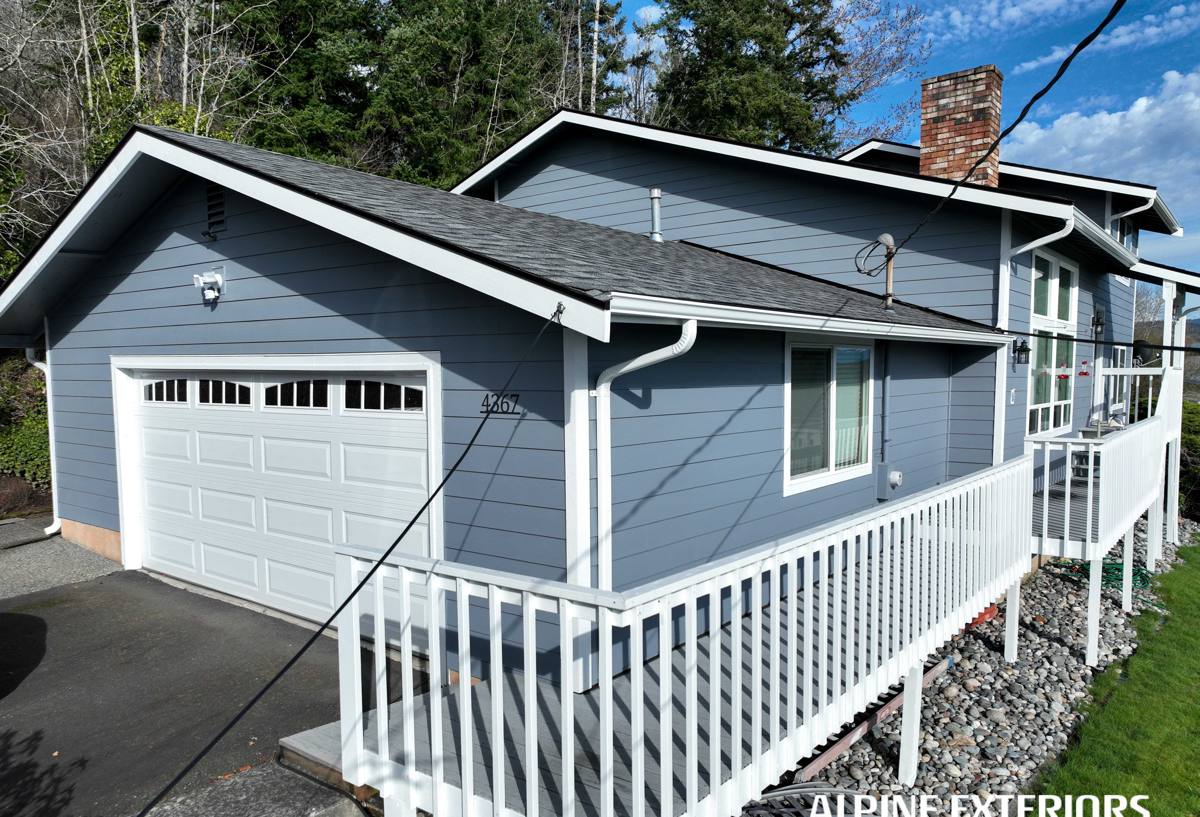
What Local Weather Actually Does to a Roof
Driving Rain Finds the Weak Spots
Wind-driven rain doesn't behave like a straight downpour. It gets pushed under shingle tabs, around vent pipes, and into any gap in flashing that a calm rain would never reach. Most of the leaks we get called out for in this area didn't start because a shingle wore out in the middle of a roof plane — they started at a transition point: a valley, a chimney, a skylight curb, or the place where a roof meets a wall. Those are the details that separate a repair that lasts from one that reopens the next storm season.
Salt Air Accelerates Corrosion
Homes closer to the water, and anywhere air moves freely up the river corridors from the Sound, deal with a steady low-level dose of salt in the air. It doesn't do dramatic damage overnight, but it speeds up corrosion on exposed fasteners, flashing, and metal roof components over years. A repair that uses the wrong-grade nails or unprotected flashing metal can start rusting years before the shingles around it are anywhere near worn out.
Moss Season Runs Long
Mild temperatures and consistent moisture give moss a growing season that lasts most of the year here, not just a few weeks in spring. Shaded roof planes, north-facing slopes, and anything under tree cover hold onto dampness longer, and moss doesn't just look bad sitting on a roof — it holds water against the surface, works into shingle edges, and can lift material enough to open a path for water underneath.
Signs Your Roof Needs a Repair Call
- A water stain on a ceiling or wall, even a small one — it almost never gets smaller on its own
- Granules building up in gutters or at the bottom of downspouts
- Shingles that are curling, cupping, cracked, or missing after a windstorm
- Moss that keeps coming back on the same section even after cleaning
- Flashing around a chimney, skylight, or vent pipe that looks lifted, rusted, or gapped
- Soft or spongy spots when walking the roof, or sagging visible from the ground
- Daylight showing through the roof deck when you look up from inside the attic
None of these need to turn into an emergency. Caught early, almost all of them are a straightforward repair. Left through another wet season, several of them start affecting the roof deck itself, and that's when a repair job turns into a much bigger one.
Common Repairs We Handle in the Nooksack Area
| Repair Type | Typical Cause Here | What Happens If It's Ignored |
|---|---|---|
| Flashing repair or replacement | Wind-driven rain working into valleys, chimneys, and wall transitions | Slow leaks that damage roof decking and interior finishes before they're visibly obvious |
| Shingle replacement (localized) | Wind damage, granule loss, age, or moss lifting shingle edges | Water intrusion at the exposed spot spreads to surrounding shingles over time |
| Moss removal and treatment | Shade, moisture, and a long mild growing season | Moss holds moisture against the roof and can lift shingles, shortening their life |
| Vent pipe and skylight boot repair | Rubber or sealant boots breaking down faster in sustained damp conditions | A small, often hidden leak that shows up as interior water damage well after it starts |
| Gutter and drainage correction | Debris and moss buildup blocking water from clearing the roof edge | Water backs up under the roof edge and into fascia and soffit areas |
What a Correct Repair Actually Involves
A roof repair that's done right isn't just replacing whatever's visibly broken. It starts with figuring out where the water is actually getting in, which is often not the same spot where the damage shows up inside the house — water can travel along a rafter or under underlayment before it drips somewhere visible. That means:
- Tracing the leak to its actual entry point, not just patching the nearest damaged shingle
- Checking the roof deck underneath for soft spots or rot before closing the repair back up
- Matching or properly integrating new flashing with the existing roof system, not just caulking over a gap
- Using fasteners and flashing metal rated for a consistently damp, salt-influenced climate
- Confirming attic ventilation isn't trapping moisture that will undo the repair from underneath
Skipping any of these steps is how a repair that looked fine on the day it was finished ends up leaking again two winters later — sometimes in the exact same spot, sometimes somewhere new because the underlying moisture problem never actually got fixed.
Repair or Replace? What We Actually Weigh
Not every roof problem calls for a full roof replacement, and we don't default to recommending one just because it's a bigger job. The honest answer depends on a handful of specific factors, and we'll walk you through what we find rather than just naming a number.
| Factor | Leans Toward Repair | Leans Toward Replacement |
|---|---|---|
| Extent of damage | Localized to one section or detail | Spread across multiple roof planes |
| Roof age | Well within its expected service life | Near or past its rated lifespan |
| Roof deck condition | Solid, dry, no soft spots | Soft, rotted, or moisture-damaged in multiple areas |
| Repair history | First or second repair on this roof | Repeated repairs to the same or nearby areas |
| Underlying cause | A single identifiable event or defect | A systemic issue like failed underlayment or poor original ventilation |
A roof with a single storm-damaged section and a sound deck is almost always a repair. A roof nearing the end of its rated life with moss damage on several slopes and a deck that's soft in more than one spot is more honestly addressed with a replacement — another patch just delays a bigger expense while continuing to risk interior damage.
Our Process on a Nooksack Roof Repair Call
- Inspection first. We look at the roof from the ground and, where it's safe to do so, up close — including the attic side when a leak is involved — before recommending anything.
- Honest diagnosis. We tell you what's actually causing the problem, what it will take to fix it correctly, and whether repair or replacement is the more honest recommendation for your specific roof.
- Clear scope and estimate. You get a straightforward explanation of the work and the cost before anything is scheduled — no surprise add-ons once the job is underway.
- The repair itself. Work is done to hold up under this climate specifically — proper flashing integration, correctly rated fasteners and materials, and attention to the deck and ventilation underneath, not just the visible shingle layer.
- A final check. Before we consider the job finished, we confirm the repair area and surrounding sections are sound, not just that the obvious damage is covered up.
Keeping a Repair From Undoing Itself
A well-done repair can still get shortened by neglect afterward, especially in a climate where moss and debris build up year-round. A little regular attention goes a long way toward protecting the work:
- Keep gutters and downspouts clear so water actually leaves the roof instead of backing up at the edge
- Trim back branches that keep a roof section shaded and slow to dry
- Have moss addressed before it spreads across a full slope, not after
- Do a visual check after any major windstorm, especially around flashing and roof edges
- Get a professional look at the roof roughly once a year, ideally before the heaviest fall rains arrive
Why Hiring a Crew That Already Works This Area Matters
A contractor who works roofs across this part of Whatcom County through every season learns things a data sheet can't tell you — which roof orientations in the Nooksack area hold moss longest because of tree cover, how much extra attention a valley needs in a spot that catches wind-driven rain from a particular direction, and which flashing shortcuts are the ones that come back to bite a homeowner two winters later. That local pattern recognition is the difference between a repair that's technically correct and one that's actually built for how weather behaves on your specific roof, in your specific spot, not just on paper.
It also means straight answers. We're not going to tell you a roof needs full replacement when a solid repair will do the job, and we're not going to patch over a problem that's clearly heading toward bigger damage just to keep the estimate small. Roofing is one part of what we do — we also handle siding, windows, and decks — and if a roof repair call turns up a related issue at a wall-to-roof transition or in nearby trim, we can point it out and address it as part of the same conversation instead of leaving you to track down a second contractor.
Get a Free, No-Pressure Estimate
If you're dealing with a leak, storm damage, or a roof that just needs a professional look before the next wet season sets in, we're glad to come take a look. Use the form below to schedule a free estimate on your Nooksack-area roof repair — straightforward answers, no pressure, and no upsell script.