 Ferndale Siding
 Storm Damage in the Nooksack Area: What We're Actually Dealing With
Homes in and around Nooksack sit in a stretch of Whatcom County that gets hit from two directions at once — wet Pacific weather system after wet Pacific weather system rolling off Bellingham Bay, and the funneling wind that moves through the Nooksack River valley. That combination means roofs here rarely fail from one big dramatic event. More often it's a slow accumulation: a windstorm lifts a few shingle tabs in the fall, driving rain finds that opening over the winter, and by spring there's a soft spot in the decking nobody noticed until a stain showed up on a ceiling.
When we say "storm damage repair," we mean fixing that whole chain — not just replacing what blew off, but checking what the wind and water did underneath it. A repair that only addresses the visible shingle damage and ignores the underlayment or decking underneath is a repair that fails again next storm season.
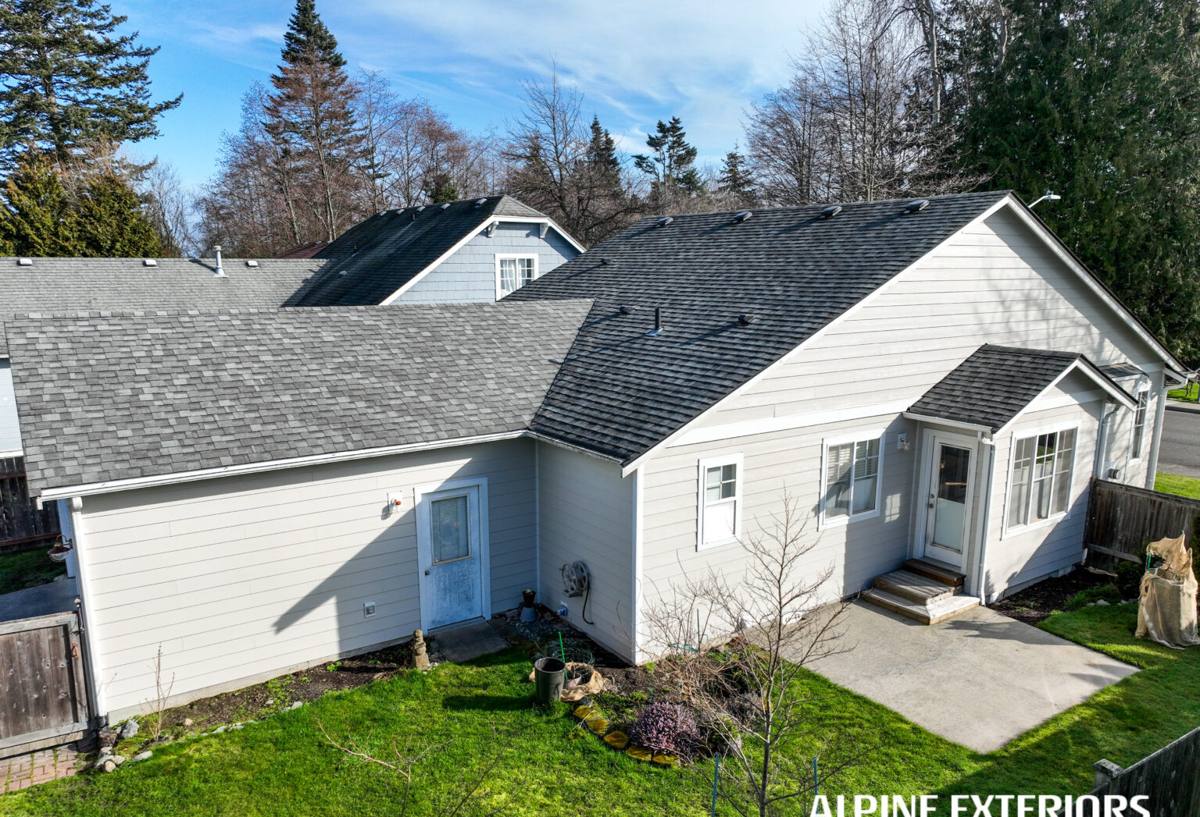
Why Nooksack Roofs Take a Different Kind of Beating
Three things define the climate load on a roof out here, and each one shapes how we approach a repair:
Salt air
Being close enough to the water to get salt-laden air means metal components — flashing, fasteners, gutter hardware — corrode faster than they would inland. A flashing detail that would last two decades in a dry climate can start showing rust streaks in half that time here if the wrong metal or fastener was used originally.
Driving rain
Storms in this part of Whatcom County frequently come in sideways, not straight down. That matters because a lot of roofing details are designed to shed water moving vertically. Wind-driven rain gets pushed up under shingle edges, around vent boots, and into any gap that a calmer rain would never reach. Storm damage repair here has to assume water traveled sideways and uphill before it found its way in.
A long moss season
Cool, damp, shaded conditions for much of the year mean moss and algae growth is close to a year-round concern rather than a summer nuisance. Moss holds moisture against the roof surface, works its way under shingle edges as it grows, and can lift tabs enough that the next windstorm finishes the job. A lot of what looks like sudden storm damage is actually moss-weakened shingles that finally gave way.
What Counts as "Storm Damage" (and What Doesn't)
Homeowners often aren't sure whether what they're seeing is worth a repair call. Here's how we sort it out:
- Wind damage: lifted, creased, torn, or missing shingle tabs; shingles that look intact but sound hollow or move when pressed (a sign the seal broke).
- Impact damage: bruising or punctures from tree limbs, hail, or debris — sometimes visible, sometimes only found once we're up there.
- Water intrusion: stains on interior ceilings or walls, damp insulation in the attic, or a musty smell that shows up after a storm.
- Flashing failure: gaps or rust at chimneys, skylights, and roof-to-wall transitions — often the actual entry point even when the shingles nearby look fine.
- Not storm damage: gradual granule loss, general aging, and moss buildup that developed slowly over seasons. These matter, but they're maintenance and lifecycle issues, not a single storm event — and it's worth knowing the difference before filing an insurance claim.
Our Storm Damage Repair Process, Step by Step
We keep this straightforward because a roof repair shouldn't feel like a mystery to the homeowner paying for it.
- Inspection first. We get on the roof (weather permitting) and in the attic. Surface damage tells part of the story; attic staining and decking condition tell the rest.
- Honest assessment. We tell you what we found, what caused it, and whether it's a targeted repair or something bigger. No upselling a full tear-off when a section repair will hold.
- Decking check. Any area where water got underneath gets the shingles pulled back so we can see the decking itself. Soft, delaminated, or stained decking gets replaced — covering it back up is how small problems become big ones.
- Underlayment and flashing. Given how much wind-driven rain this area sees, we don't skip the underlayment. If it's compromised, it gets replaced along with any flashing that's corroded or improperly lapped.
- Shingle repair or matched replacement. We repair with materials that match your existing roof as closely as possible in profile and color, so a repair doesn't stand out as a patch.
- Final check for hidden weak points. Before we call it done, we look at surrounding areas — nearby moss growth, other flashing points, gutter condition — since those are often what caused the original failure or will cause the next one.
Repair vs. Replace: How We Make That Call
Not every storm-damaged roof needs a full replacement, but not every roof should be patched forever either. This is roughly how we think through it:
| Situation | Usually a Repair | Usually Points to Replacement |
|---|---|---|
| Damage extent | Isolated to one slope or area | Spread across multiple slopes |
| Roof age | Roof is under ~15 years old | Roof is near or past its expected lifespan |
| Decking condition | Decking is sound once exposed | Widespread soft spots or rot found |
| Moss/algae history | Minor, recently treated | Long-term buildup affecting large areas |
| Shingle match availability | Matching shingles still obtainable | Discontinued product, visible mismatch unavoidable |
We'll walk you through where your roof falls on this and give you our honest read — including telling you when a repair is genuinely the right call, not just the cheaper one.
Materials We Use for Storm Repairs Here
Given the salt air and driving rain, we're particular about a few things on every storm repair:
- Corrosion-resistant fasteners and flashing — standard-grade metal corrodes faster this close to the coast, so we use materials rated for it rather than whatever's cheapest.
- Synthetic underlayment over old-style felt where we're opening up a section, since it holds up better to the repeated wet-dry cycling common here.
- Properly lapped flashing at every transition point — chimneys, valleys, roof-to-wall — because wind-driven rain finds shortcuts that a straight-down rain never would.
- Ice-and-water shield in vulnerable areas like valleys and eaves, which gives extra protection where wind-driven rain and moss both tend to concentrate.
We don't push premium products for the sake of it, and we won't recommend materials that create more maintenance burden than they're worth for a straightforward repair. Where a lower-maintenance option makes sense for this climate, we'll say so and explain the trade-off — cost, appearance, or install complexity — rather than just defaulting to what's easiest for us.
Insurance and Storm Claims — What Homeowners Should Know
Many storm repairs in this area do get covered by homeowners insurance, but coverage depends on cause and documentation. A few practical points:
- Document damage with dated photos as soon as it's safe to do so, ideally before any tarping or temporary repair.
- An inspection report that separates storm-caused damage from pre-existing wear (like moss deterioration) helps your claim go smoother — adjusters look for that distinction.
- Temporary protection (tarping an exposed area) is often reasonable and expected while a claim is processed; leaving a roof open to more water is not.
- We can provide a written assessment of what we found and what we believe caused it, which you're free to share with your insurer.
We're not a public adjuster and we don't negotiate your claim for you, but we'll give you an honest, documented account of the roof's condition so you're working from accurate information.
A Correct Storm Repair: Checklist
If you're getting a repair done — by us or anyone else — here's what should be part of it:
- Attic inspected, not just the roof surface
- Decking checked and replaced if soft, stained, or delaminated
- Underlayment condition assessed in the repair area, not assumed fine
- All nearby flashing inspected, not just the flashing at the obvious damage point
- Shingle color and profile matched as closely as possible
- Surrounding moss or debris addressed so it doesn't undo the repair
- Written explanation of what was found and what was done, for your records and any insurance claim
Why a Crew That Already Works Nooksack Matters
A roofer who works this specific area regularly has already seen how the local wind patterns tend to hit roofs, which flashing details fail first in this kind of weather, and how fast moss comes back on a shaded north-facing slope near the river valley. That's not something you can fully substitute with general roofing experience from a drier or calmer climate. It also means we can usually get to a storm-damaged roof quickly when timing matters — leaving decking exposed to more Whatcom County rain while you wait on a crew from further away is how a repairable roof turns into a replacement.
We're a Ferndale-based crew, and Nooksack is part of the area we already know — not a stretch assignment. That local familiarity shows up in the small decisions during a repair: which flashing detail to double-check, which slope tends to hold moisture longer, and which storm patterns to expect next.
If you've got storm damage or you're just not sure whether recent weather did any damage worth worrying about, we're happy to take a look. The estimate is free, there's no pressure to move forward, and you'll get a straight answer about what your roof actually needs — use the form below to get started.