 Ferndale Siding
 Roof Repair for Sudden Valley's Wooded, Lakeside Setting
Sudden Valley sits back among mature trees near Lake Whatcom, in a part of Whatcom County that doesn't get hit with open coastal wind the way homes right on Bellingham Bay do — but the tree canopy creates its own kind of wear on a roof, and it's a different problem than most homeowners expect. Shade keeps roofs damp longer after every rain. Needles and leaves collect in valleys and gutters instead of blowing clear. And moss, once it gets a foothold under that kind of cover, doesn't let go on its own. Add in the driving rain and long wet season that shape roofing decisions across greater Ferndale and Whatcom County, and a Sudden Valley roof is dealing with more than it looks like from the driveway.
We repair roofs throughout Ferndale and the surrounding communities, and Sudden Valley's forested, lake-adjacent lots come up often enough that we treat them as their own category rather than applying the same playbook we'd use on an open, sun-exposed roof across town. This page covers what we actually find on these roofs, what a correct repair involves, and why hiring a crew that already knows this specific setting matters more here than on a typical in-town property.
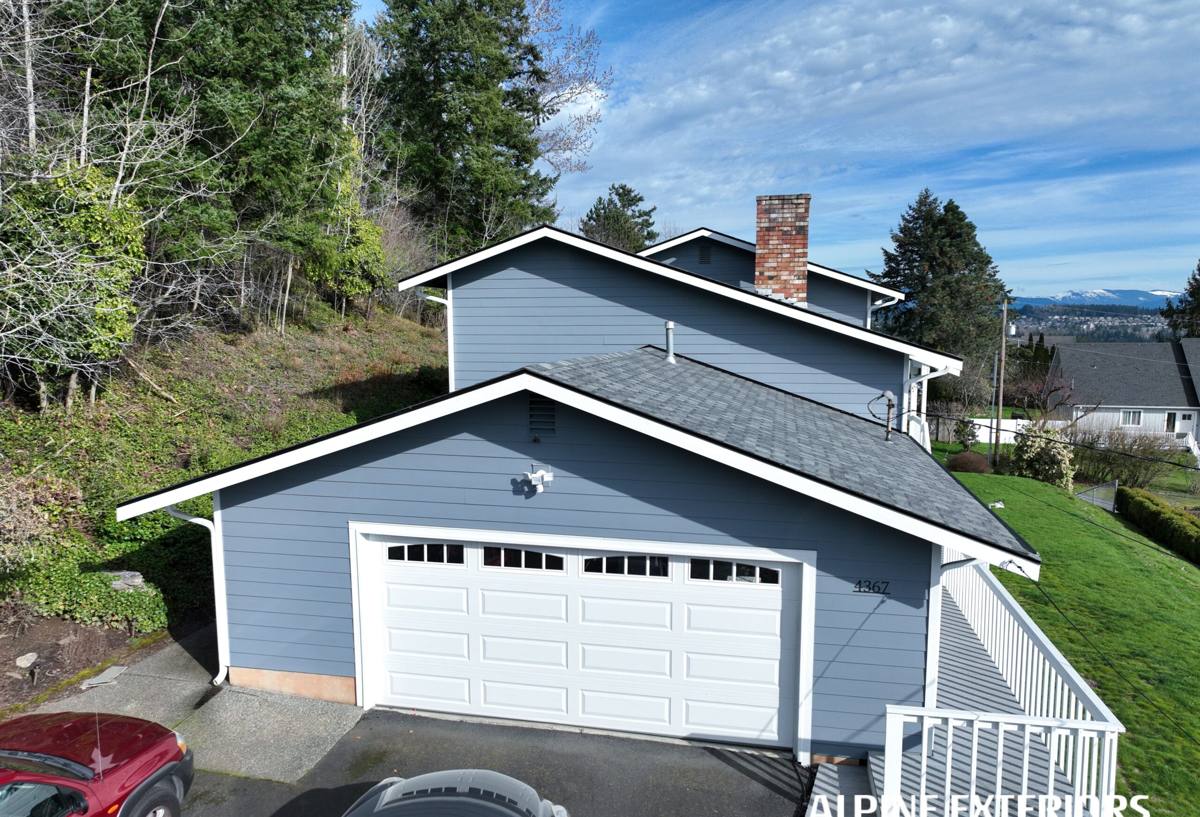
What This Climate and Setting Do to a Roof
Moss Is the Default, Not the Exception
Under a full tree canopy, shingles rarely get a clean drying cycle between storms. That constant low-level dampness is exactly what moss needs to establish, and once it does, it doesn't stay put on the surface — it lifts shingle edges as it spreads, works its way under tabs, and holds water directly against the roof deck underneath. Whatcom County already runs a long moss season, roughly fall through late spring, and a shaded Sudden Valley lot stretches that window even further. A roof that would shed a light moss film in open sun can carry a thick, established mat here if it isn't kept in check.
Rain That Gets Funneled, Not Just Dropped
Driving rain moving through the region doesn't fall straight down through a dense canopy — branches and needles funnel it into concentrated points on the roof, often the same valleys and low spots where debris has already built up. That's a different failure pattern than open-roof wind-driven rain: instead of testing the whole roof evenly, it repeatedly hammers a handful of spots until something gives. Salt-tinged air moving in off the Salish Sea across the wider Ferndale area adds a slower, quieter problem on top of that — corrosion at exposed fasteners and unprotected flashing that shows up first as rust streaks, well before it becomes a visible leak.
Needles, Leaves, and the Debris Problem
Gutters and valleys under a tree canopy fill up faster than anywhere else, and once they're partially blocked, water backs up under shingle edges instead of running off cleanly. That trapped moisture is often what turns an otherwise sound roof into one with active rot at the eaves, and it's a maintenance item that's easy to underestimate if you're not the one climbing up there every season.
Signs a Sudden Valley Roof Needs Repair, Not Just a Cleaning
- Moss mats thicker than an inch or two, especially on north-facing or heavily shaded slopes
- Ceiling stains inside the home, particularly near exterior walls or below valleys
- Granules collecting in gutters or at the base of downspouts
- Shingles that are curling, cupping, or lifting at the edges
- Soft spots underfoot on the roof deck, or daylight visible from inside the attic
- Flashing pulling away around chimneys, skylights, or roof-to-wall transitions
- A persistent damp or musty smell in the attic that doesn't clear with ventilation
Any one of these on its own might be a minor fix. Several at once usually mean water has been getting past the surface layer for a while, and the repair needs to address what's underneath, not just what's visible from the ground.
What a Correct Repair Actually Involves
Diagnosis Before Anything Gets Pulled Apart
The first step is figuring out where water is actually getting in, which isn't always where the stain shows up inside. Water can travel a long way along rafters or sheathing before it drips somewhere visible, so a correct repair starts with tracing the path back to the real entry point — a lifted shingle, a failed flashing seam, a clogged valley — rather than patching the spot that happens to be leaking onto the ceiling.
Moss and Debris Removal Done the Right Way
Moss has to come off before any repair underneath it can be assessed properly, but how it's removed matters. High-pressure washing can strip the protective granules right off asphalt shingles, shortening their remaining life instead of extending it. We use gentler methods — soft brushing and low-pressure treatment — that clear moss and debris without damaging the shingle surface underneath.
Flashing and Underlayment
Most leaks on a shaded, debris-prone roof trace back to flashing rather than the shingles themselves — around chimneys, skylights, vent pipes, and anywhere two roof planes meet. A correct repair replaces failed flashing rather than caulking over it, and checks the underlayment beneath the surrounding shingles for water damage before closing everything back up.
Matching Materials
On an older roof, exact shingle matches aren't always available. We use the closest match available and place repaired sections where they'll be least noticeable, but we'll always tell you honestly if a patch is going to stand out, and whether that's a reasonable trade-off given the roof's remaining life.
Repair or Replace? Weighing the Real Factors
| Factor | Leans Toward Repair | Leans Toward Full Replacement |
|---|---|---|
| Roof age | Under 15–20 years, depending on material | Approaching or past expected service life |
| Extent of moss damage | Isolated patches, surface-level only | Widespread coverage with lifted shingles across multiple slopes |
| Past repair history | First or second repair on this roof | Several previous patches in different spots already |
| Deck condition | Solid, dry sheathing found during inspection | Soft spots, rot, or water staining on the decking itself |
| Budget and timeline | Need the issue solved now, replacement not yet planned | Already planning to replace within the next year or two |
None of these factors decide anything on their own — we look at the whole picture on your specific roof before recommending either path, and we'd rather tell you a repair will hold for several more years than upsell a replacement you don't need yet.
Our Process, Start to Finish
- A roof inspection in person, including the attic where accessible, to trace leaks back to their actual source
- A written explanation of what we found, in plain language, with photos of the specific problem areas
- A clear recommendation — repair or replacement — along with the reasoning behind it
- A written estimate before any work begins, with no pressure to decide on the spot
- The repair itself: moss and debris removal, flashing and underlayment work, and shingle replacement where needed
- A final walk-through so you can see exactly what was done and ask questions before we leave
Material Considerations for Shaded, Moss-Prone Roofs
Standard asphalt shingles remain the most common and most cost-effective option for repair work on a shaded Sudden Valley roof, and they hold up well when moss and debris are kept under control through regular maintenance. Some manufacturers offer algae-resistant shingle products with copper or zinc granules mixed into the surface, which can slow moss regrowth somewhat on a heavily shaded slope — worth discussing if you're replacing a full section or slope rather than just patching one. Metal roofing sheds moss and debris more readily than asphalt and holds up well under a tree canopy, but it's a bigger investment and not always the right call for a targeted repair versus a full reroof. We'll walk you through what fits your specific roof and budget rather than defaulting to whatever's easiest to sell.
Why a Crew That Already Works Sudden Valley Matters
Roofing under a tree canopy calls for a different kind of caution than an open, exposed roof does — ladder placement has to account for branches and uneven, often sloped ground, and staging materials on a tree-lined lot takes more planning than it does on a flat, open driveway. A crew that's worked this specific setting before knows which slopes hold moss the longest, where debris tends to collect fastest, and how to schedule around the wettest stretches of the year so a repair isn't rushed into marginal weather. That familiarity isn't cosmetic — it's the difference between a repair that's planned around the actual conditions on your roof and one that treats every job the same regardless of setting.
Simple Maintenance Between Repairs
- Clear gutters and valleys of needles and leaves at least twice a year, more often under heavy tree cover
- Have moss treated before it establishes thick mats, not after
- Trim back branches that overhang the roofline where it's safe and practical to do so
- Check the attic occasionally for damp smells, staining, or daylight coming through the decking
- Have the roof inspected after any major windstorm, even if nothing looks obviously wrong from the ground
If you're seeing moss buildup, a slow leak, or just want an honest read on how much life is left in your Sudden Valley roof, we're glad to take a look. Reach out using the form below to schedule a free, no-pressure estimate.