 Ferndale Siding
 Roofing Challenges Unique to the Fairhaven Area
Homes near the water in the Fairhaven area face a combination of stresses that inland Whatcom County roofs simply don't deal with. Salt-laden air off the Salish Sea accelerates corrosion on exposed metal — fasteners, flashing, vent caps, and gutter hardware all age faster here than they would ten or fifteen miles inland. Add in driving rain that comes sideways during winter storms, and you get wind-driven water finding its way into laps, valleys, and penetrations that would stay dry in a calmer climate.
Then there's moss. Whatcom County's long, wet, mild winters create a moss season that can run from October through April in shaded or north-facing sections of a roof. Moss isn't just cosmetic. It holds moisture against the roofing material, lifts shingle edges as it grows, and slowly breaks down the granule surface that protects asphalt shingles from UV and weather. A roof that looks "just needs cleaning" from the ground often has moss roots working into the shingle mat itself.
None of this means Fairhaven-area roofs need exotic solutions. It means the details — fastener choice, underlayment type, flashing metal, ventilation balance — have to be selected and installed with this specific coastal, moss-heavy climate in mind, not a generic Pacific Northwest spec.
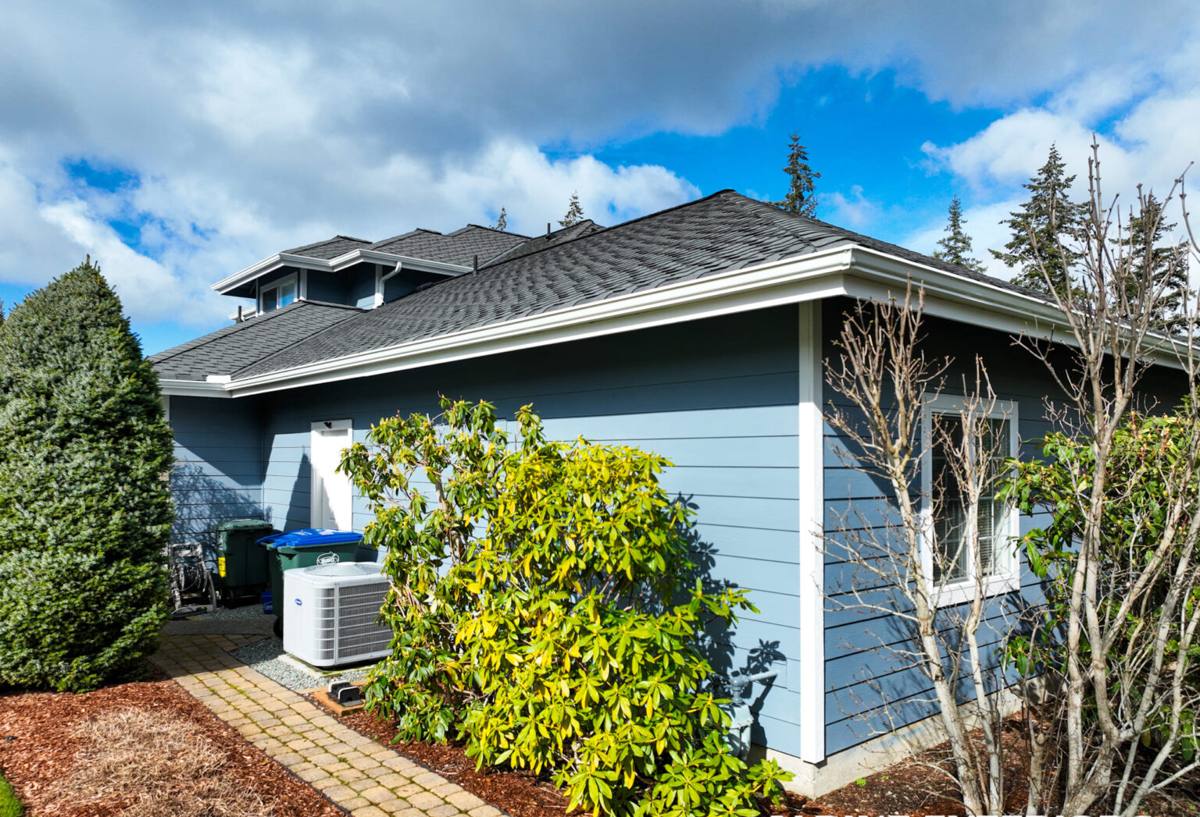
How to Tell a Fairhaven Roof Needs Full Replacement, Not Just Repair
Not every roofing problem calls for a full tear-off. A responsible contractor should be honest about when a repair will genuinely hold and when it's just delaying an inevitable, more expensive failure. Some signs that point toward replacement rather than patching:
- Granule loss heavy enough that you're seeing bare, shiny patches of asphalt on multiple slopes, not just one damaged spot
- Shingles that are cupping, curling, or cracking across a large portion of the roof rather than an isolated area
- Moss growth that has been present for several seasons and has visibly lifted shingle tabs, especially on north-facing or heavily shaded slopes
- Repeated leaks in different locations after a season of heavy rain, suggesting the underlayment and flashing system as a whole has failed, not just one spot
- Soft or spongy decking felt underfoot during inspection, which means water has already reached the wood sheathing
- A roof approaching or past the manufacturer's expected service life for its material and exposure
If a roof shows one or two of these in a small area, a targeted repair may be the honest answer. When several of these show up together, or the roof is old enough that a repair would just be a short-term patch on a system that's failing broadly, replacement is the more cost-effective move over a 10-15 year horizon.
What a Correct Roof Replacement Actually Involves
A roof replacement is more than swapping old shingles for new ones. The parts you don't see — decking, underlayment, and flashing — determine whether the new roof actually performs in this climate or just looks new for a couple of winters.
Tear-Off and Deck Inspection
Old roofing should come off down to the deck so the sheathing can be inspected directly. Any soft, delaminated, or water-damaged plywood or OSB gets replaced before anything new goes down. Skipping this step and roofing over questionable decking is one of the most common shortcuts that causes early failure — new shingles fastened into weakened wood won't hold up to coastal wind gusts.
Underlayment and Ice-and-Water Protection
In a driving-rain climate, the underlayment layer matters as much as the shingles themselves. Synthetic underlayment generally outperforms old-style felt for wind-driven rain resistance and tear strength during installation. Self-adhered ice-and-water membrane belongs at eaves, valleys, and around penetrations — the spots where wind-driven water is most likely to work backward under a shingle course.
Flashing Details
Flashing around chimneys, skylights, sidewalls, and roof-to-wall transitions is where most leaks actually originate, not in the open field of shingles. In a salt-air environment, flashing metal choice matters: painted or coated metals hold up better than bare galvanized over time, and fastener corrosion resistance should match the exposure, not just meet minimum code.
Ventilation
A balanced intake-and-exhaust ventilation system keeps the attic temperature and moisture level in check. In a wet climate, poor ventilation traps moisture under the deck, which encourages rot and, ironically, can make moss and algae growth worse on the roof surface above by keeping the whole assembly damp longer after every rain.
Choosing Roofing Materials for Salt Air and Heavy Moss
There isn't one "best" roofing material for every home — the right choice depends on budget, roof pitch, architectural style, and how much long-term maintenance a homeowner wants to take on. Here's how the common options stack up specifically against salt air and moss exposure:
| Material | Salt-Air Performance | Moss Resistance | Maintenance |
|---|---|---|---|
| Architectural asphalt shingle | Good with corrosion-resistant fasteners and flashing | Moderate — benefits from algae-resistant granules and periodic cleaning | Low to moderate |
| Standing-seam metal | Very good with proper coating; check fastener spec | High — moss struggles to root on smooth metal | Low |
| Composite/synthetic shake | Good; verify manufacturer coastal warranty terms | Moderate to good depending on surface texture | Low to moderate |
| Cedar shake | Requires diligent maintenance in wet coastal climates | Low without regular treatment and cleaning | High |
We don't push one material on every homeowner. Our job is to lay out the honest trade-offs — upfront cost, appearance, expected service life in this specific climate, and the maintenance a homeowner is realistically willing to do — and let that guide the decision, rather than defaulting to whatever is easiest to install.
Our Fairhaven Roof Replacement Process
The steps themselves aren't unique to us, but the order and attention to detail is where quality shows up:
- On-site inspection and honest assessment. We walk the roof, check the attic from inside when accessible, and document actual condition rather than assuming replacement is needed before looking.
- Written scope and material selection. Homeowner decides on material, color, and any upgrades (better underlayment, ventilation improvements) with real trade-offs explained, not upsold.
- Weather-window scheduling. Given how often Whatcom County sees multi-day rain systems, we plan tear-off and dry-in around forecast windows rather than starting a tear-off with no cover for an incoming system.
- Tear-off and deck inspection. Old material removed, decking checked and repaired as needed, debris cleared same-day whenever possible.
- Dry-in. Underlayment and ice-and-water membrane installed promptly so the home isn't left exposed overnight during an active tear-off.
- Flashing and detail work. Chimneys, valleys, skylights, and wall transitions addressed with corrosion-appropriate materials.
- Roofing installation. Shingles, panels, or shakes installed to manufacturer spec and local code, with attention to nailing pattern and exposure — both of which affect wind and rain performance.
- Ventilation check and final walkthrough. Intake and exhaust balance verified, site cleaned, and the finished roof reviewed with the homeowner before we call the job done.
Moss, Algae, and Long-Term Roof Maintenance
A new roof in the Fairhaven area isn't maintenance-free just because it's new. Moss spores are present in the air throughout this region, and any roof with shaded, north-facing, or low-slope sections will eventually see some growth. The goal isn't a moss-proof roof — it's a roof designed to shed moisture well and be easy to keep clean, plus a homeowner who knows what to watch for.
Practical steps that extend a roof's life in this climate:
- Keep gutters clear so water isn't backing up under the eave edge during heavy rain
- Trim back overhanging branches to reduce shade and debris buildup on north-facing slopes
- Address light moss growth early with gentle, manufacturer-approved cleaning methods rather than pressure washing, which can strip granules and shorten shingle life
- Have the roof looked at after major wind events, since driving rain and gusts are what typically expose weak flashing or lifted shingles first
- Schedule a periodic check-up rather than waiting for an active leak, since coastal moss and moisture issues tend to develop gradually
Cost Factors for a Fairhaven Roof Replacement
Every roof is different, so we won't quote a number without seeing the job, but the factors that most often move the price are consistent from house to house:
| Factor | Why It Matters |
|---|---|
| Roof size and number of planes | More square footage and more complex geometry mean more labor and material |
| Roof pitch and access | Steeper roofs and difficult access (tight lots, water-facing slopes) require more safety setup and time |
| Number of layers to remove | Tearing off one existing layer costs less than removing two or three stacked layers |
| Decking condition | Rotted or delaminated sheathing found during tear-off requires replacement before roofing can proceed |
| Material selection | Asphalt shingle, metal, and composite products carry different material and labor costs |
| Flashing and penetration count | Chimneys, skylights, and multiple vent penetrations each add detail work |
| Ventilation upgrades | Adding or correcting intake/exhaust ventilation is a smart add-on but does add scope |
Broadly, homeowners should expect a range from a modest low-slope, single-layer asphalt job up to a considerably higher figure for a large, steep, multi-plane roof with decking repairs and metal roofing. We'll always give a specific written number after seeing the actual roof rather than a generic estimate over the phone.
Why a Crew That Already Works the Fairhaven Area Matters
Roofing crews who regularly work coastal Whatcom County neighborhoods develop a practical feel for things that don't show up in a general roofing manual — how quickly a north-facing slope near mature trees tends to grow moss again, which fastener and flashing upgrades are worth the extra cost given the salt air, and how to sequence a job around this region's rain patterns so a home isn't left exposed mid-project. That's different from general familiarity with "Pacific Northwest weather" — it's specific, repeated exposure to this stretch of coastline's actual conditions.
There's also a practical scheduling advantage. A crew already working in and around Ferndale and the surrounding coastal communities can often get to a Fairhaven-area home faster for both estimates and follow-up service, without the drive time and logistics of a contractor based well outside the region.
A Contractor Vetting Checklist Before You Sign
Whoever you choose for a roof replacement, a few basic checks protect you regardless of which crew you hire:
- Confirm current Washington state contractor registration and ask to see proof of liability insurance and workers' compensation coverage
- Ask for a written scope of work that specifies underlayment type, flashing materials, and ventilation approach — not just "new roof, [material], [color]"
- Ask how decking issues discovered during tear-off are handled and priced, before the job starts
- Ask about manufacturer warranty requirements — some warranties require certified installation, and it's worth knowing whether that applies to your job
- Get a realistic timeline that accounts for weather delays rather than a schedule that assumes no rain days
- Ask what happens if rain moves in mid-tear-off, and how the crew protects an open roof deck
A contractor who answers these questions clearly and in writing, without hedging, is generally one who does this work carefully and often.
If you're weighing repair versus replacement, or just want an honest look at where your roof actually stands, we're happy to come take a look. There's no pressure and no obligation — just a straightforward estimate based on what we find on your roof, using the form below.