 Ferndale Siding
 Siding Replacement for Sandy Point Homes
Sandy Point sits close enough to the water that its houses take a different kind of weather than homes a few miles inland in Ferndale. Salt-laden air, wind-driven rain off the Strait, and a wet season that stretches long enough to grow a full coat of moss on anything that stays damp — that's the environment your siding has to survive, year after year. When siding fails out here, it's rarely one dramatic event. It's slow: a joint that stayed wet one winter too many, paint that couldn't keep up with the salt, panels that cupped and let water behind them. By the time it's visible from the street, the damage underneath is usually further along than it looks.
We replace siding in Sandy Point regularly, which matters more than it might sound. A crew that mostly works drier, more sheltered parts of Whatcom County will detail a house the same way they always do. A crew that works this specific stretch of coastline knows which details actually matter here — and which corners, if cut, come back to bite the homeowner in three or four years instead of twenty.
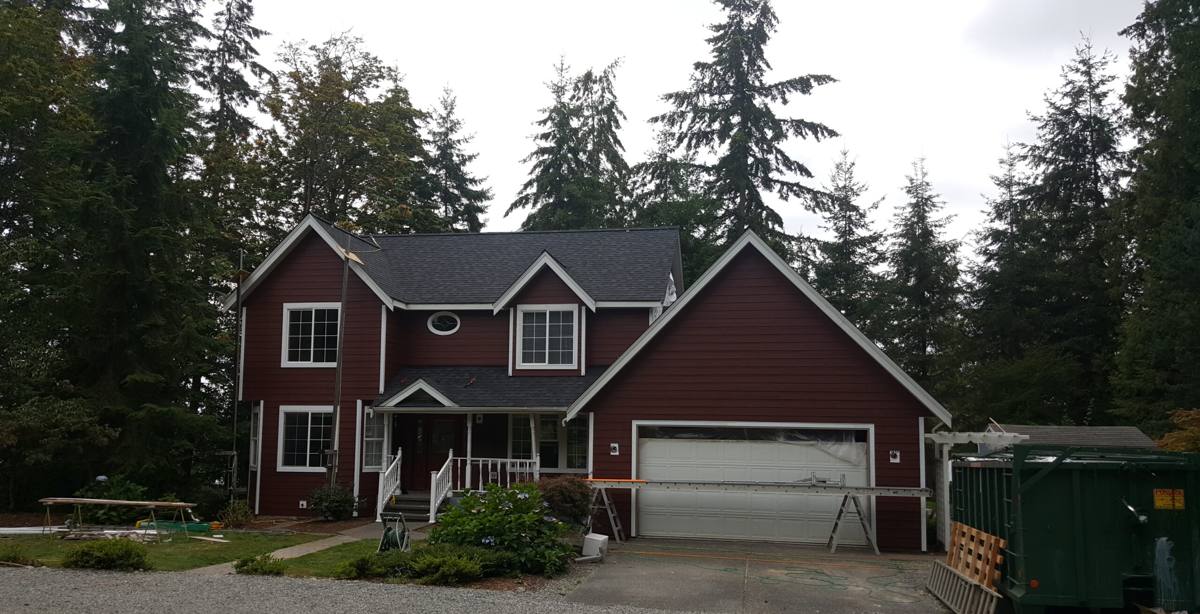
Why Sandy Point Is a Tougher Environment for Siding
Salt Air
Airborne salt is corrosive and it's persistent. It settles on siding, trim, and fasteners and it doesn't rinse off completely even in heavy rain. Over time it degrades paint finishes, accelerates corrosion on lower-quality fasteners and flashing, and gives mold and mildew a head start by holding moisture against the surface. Materials and hardware that hold up fine twenty miles inland can visibly age faster here.
Driving Rain
Wind off the water doesn't just drop rain on a house — it drives it sideways, into laps, seams, and anywhere the siding meets a window, door, or trim board. A siding system with weak water management will let that wind-driven rain track behind the cladding, and once water gets behind siding it often stays wet far longer than it takes to dry a surface that only gets rained on from above.
Moss and Constant Damp
Whatcom County's wet season is long, and shaded or north-facing walls in Sandy Point can stay damp for weeks at a stretch. Moss and algae need exactly that — sustained moisture and shade — and once established they hold even more water against the siding surface, which compounds every other problem on this list.
What "Correct" Actually Means on a Job Like This
A siding replacement that's built for Sandy Point's conditions isn't just about swapping old panels for new ones. It comes down to a handful of details that are easy to skip and expensive to skip:
- Full tear-off and inspection — old siding comes off so the sheathing and framing underneath can actually be checked for rot or hidden moisture damage, not just covered back over.
- Correct weather-resistive barrier — a properly lapped and sealed water/air barrier behind the siding, not a stapled-on afterthought.
- Rainscreen or drainage gap where called for — a small air gap behind the siding lets any water that does get in drain and dry instead of sitting against the wall.
- Flashing at every penetration — windows, doors, hose bibs, light fixtures, and vents all need flashing detailed to shed water outward, not funnel it into the wall.
- Corrosion-resistant fasteners — coastal air is hard on cheap fasteners; the right fastener spec matters more here than it does further inland.
- Factory-finished siding — a finish baked on in a controlled factory process holds up to salt and UV far better than field-applied paint, and it doesn't rely on a painter getting perfect conditions on installation day.
Why We Install Only James Hardie Fiber Cement
We don't install vinyl, LP SmartSide, primed spruce, cedar, or other fiber cement brands. That's a deliberate standard, not a lack of options. In a marine environment like Sandy Point, the material choice has more consequence than almost anywhere else in the county:
Non-Combustible and Dimensionally Stable
Fiber cement doesn't expand and contract with moisture and temperature the way wood-based products do, and it won't burn. In a coastal climate where siding is wet more often than dry for months at a time, that stability matters — less movement means fewer stressed joints and caulk lines over the years.
ColorPlus Factory Finish
James Hardie's ColorPlus finish is baked on at the factory under controlled conditions, with a finish engineered to resist fading and hold up to UV and salt exposure better than most field-applied paint. That's a real advantage on a coastal home where a standard paint job tends to chalk and fade faster than it would inland.
HZ5 Product Line
Hardie engineers its HZ ("HardieZone") product lines for specific climate exposures, and the HZ5 line is built for the wetter, harsher conditions found in the Pacific Northwest — including moisture and freeze-thaw behavior that matters directly in a place like Sandy Point.
Warranty and Track Record
James Hardie backs its siding with a strong, transferable product warranty, and factory finishes carry their own coverage as well. Combined with decades of real-world use in wet coastal climates, it's the product we're willing to put our name behind.
We're not going to tell you every other siding product is junk — vinyl, engineered wood, and other fiber cement brands all have legitimate uses. But for a stretch of coastline that sees this much salt, wind-driven rain, and sustained moisture, we've made the call that Hardie fiber cement is the product that holds up best with the least long-term maintenance burden, and it's the only thing we put our crews' labor behind.
Siding Options: A Straight Comparison
| Factor | Vinyl Siding | Untreated Wood / Primed Spruce | James Hardie Fiber Cement |
|---|---|---|---|
| Salt air resistance | Fair — can chalk, fade, and become brittle over time | Poor — absorbs moisture, prone to rot without diligent upkeep | Strong — engineered for coastal HZ5 exposure |
| Wind-driven rain / water intrusion behind panels | Depends heavily on installation quality | Vulnerable if any coating fails | Strong when installed with proper drainage detailing |
| Moss/algae resistance | Moderate | Low — organic material feeds growth | Higher — dense fiber cement surface, factory finish |
| Fire resistance | Low — melts/deforms | Low — combustible | Non-combustible |
| Finish longevity | Color molded in, can fade/chalk | Depends entirely on paint maintenance schedule | Factory-baked ColorPlus finish, long fade resistance |
| Typical maintenance | Low, but limited repair options if damaged | High — regular repainting and moisture checks | Low — periodic caulk/paint touch-up at joints and trim |
Our Process for a Sandy Point Replacement
1. On-Site Assessment
We walk the exterior with you, looking at current siding condition, trim, flashing, and any signs of moisture that's already gotten behind the wall — especially on north-facing and water-exposed sides of the house.
2. Tear-Off and Sheathing Check
Old siding and any compromised barrier material comes off. This is the point where hidden rot or soft sheathing gets found and dealt with, before it's covered by new siding for another twenty years.
3. Water Management Rebuild
New weather-resistive barrier, flashing at every window, door, and penetration, and drainage detailing appropriate to the wall assembly — built to move water out, not trap it in.
4. Hardie Installation to Spec
Panels, fasteners, and gaps installed per James Hardie's published installation requirements — the fastener spacing, clearances, and caulking details that keep the product's warranty valid and keep water out over the long run.
5. Final Walkthrough
We go over the finished job with you directly, in plain language, so you know what was done and why.
What to Check Before You Hire Anyone for This Job
- Do they carry current Washington contractor licensing and insurance, and will they show you proof without you having to ask twice?
- Have they actually worked in Sandy Point or similarly exposed coastal areas of Whatcom County, or is it a new environment for them?
- Will they do a full tear-off and sheathing inspection, or are they planning to side over existing material?
- Can they explain their flashing and drainage plan for windows, doors, and penetrations in specific terms — not just "we'll seal it up"?
- Are they installing to the manufacturer's published spec, in a way that keeps the product warranty intact?
- Do they give you a written estimate that spells out material, prep, and labor — not just a single lump-sum number?
Why a Local Crew Matters Here
Sandy Point's exposure isn't uniform across Whatcom County — a house two blocks off the water can weather completely differently than one further inland in Ferndale. A crew that already works this specific area knows which walls take the worst of the wind-driven rain, where moss tends to establish first, and which installation details actually make a difference in salt air versus which ones are just extra steps. That's knowledge you can't fully get from a spec sheet — it comes from doing the work here, repeatedly, and seeing what holds up.
Get a Straight Answer on Your Home
If your siding in Sandy Point is showing moss buildup, faded or peeling finish, soft spots, or you're just planning ahead before it becomes a bigger problem, we're glad to take a look. We'll give you a free, no-pressure estimate and an honest read on what your home actually needs — no upsell, no guesswork.