 Ferndale Siding
 Building a Deck That Actually Holds Up in Semiahmoo
Semiahmoo sits close enough to the water that a deck here lives a different life than one built twenty miles inland. Salt-laden air, wind-driven rain off the Strait, and a moss season that can stretch from October well into spring all work on wood, fasteners, and finishes at a faster pace than most homeowners expect. A deck that would hold up fine in a drier part of Whatcom County can start showing rust streaks, soft spots, or slick green growth within a couple of seasons out here if it wasn't built with that exposure in mind.
We build custom decks for homes in and around Semiahmoo with that reality built into every decision — material selection, framing details, fastener choice, and drainage. This isn't about upselling anyone on premium everything. It's about matching the deck to the site so you're not fighting rot, rust, and slip hazards a few years in.
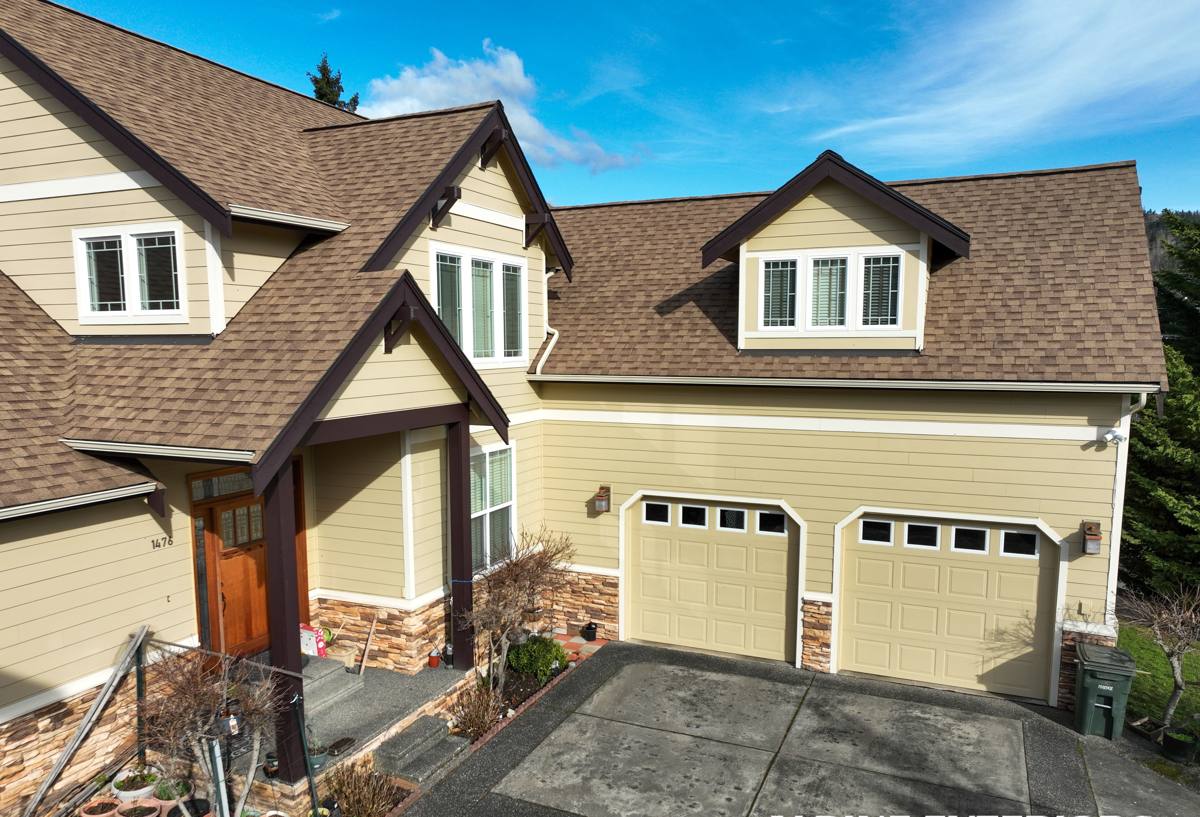
What Salt Air, Driving Rain, and Moss Actually Do to a Deck
It helps to understand the specific ways this coastal climate attacks a structure, because it changes what "good enough" materials look like out here.
Salt Air and Metal Fasteners
Airborne salt accelerates corrosion on any exposed metal — nails, screws, joist hangers, bolts. Standard electro-galvanized fasteners that are fine in a dry inland yard can start rusting within a few years this close to the water. Once a fastener corrodes, it loses holding strength long before it looks obviously bad, which is part of why fastener choice matters more here than almost anywhere else in the build.
Driving Rain and Water Intrusion
Wind-driven rain doesn't just fall straight down — it gets pushed sideways into ledger boards, under railing posts, and into any gap where flashing was skipped or done poorly. The ledger connection (where the deck attaches to the house) is the single most common failure point on decks in this region, because water finds its way behind poorly flashed ledgers and rots the house's rim joist from the inside, often invisibly for years.
Moss, Algae, and Slip Risk
Ferndale's long wet season gives moss and algae months to establish on any deck surface that stays damp and shaded. Beyond the cosmetic issue, moss growth on decking is a genuine slip hazard on stairs and walkways, and it holds moisture against the wood surface, which speeds up decay in untreated or poorly finished lumber.
Decking Material Options for a Coastal Whatcom County Deck
There's no single "best" decking material — it depends on your budget, how much upkeep you want to do, and how close your lot sits to the water. Here's how the common options actually perform in this climate.
| Material | Upfront Cost | Maintenance | Coastal/Moisture Performance |
|---|---|---|---|
| Pressure-treated fir/hem-fir | Lowest | Needs re-staining or sealing every 1-2 years | Decent if properly sealed and maintained; end grain and cut edges need re-treating or they become entry points for rot |
| Western red cedar | Mid-range | Regular oiling or staining to keep natural rot resistance intact | Naturally rot- and insect-resistant, but still needs finish maintenance in this rain and salt exposure or it grays and checks |
| Composite decking | Higher | Occasional washing; no staining or sealing | Very good moisture resistance; some early-generation composites had moss/algae staining issues, so board selection matters |
| PVC/capped polymer decking | Highest | Lowest — mostly washing | Best overall resistance to moisture and salt exposure; not affected by rot, but can get slick with moss if not cleaned |
We don't push composite or PVC as automatically "better" than wood — a well-built, well-maintained cedar deck can look great for decades. What we push is honesty about the maintenance commitment each material actually requires once it's exposed to this climate, so you're choosing with real information instead of a showroom sample.
Framing and Substructure — Where Most Deck Problems Actually Start
The decking boards are the part everyone sees, but the framing underneath is what determines whether the deck is safe and long-lasting. In a marine climate, a few framing details matter more than usual:
Ledger Flashing
Where the deck attaches to the house, we install proper flashing that directs water away from the rim joist rather than trapping it against the house. This is inexpensive to do right during construction and very expensive to fix later, since fixing it usually means tearing the deck off the house.
Footings and Post Bases
Footings need to be sized and set below frost depth per code, with post bases that keep the wood post off the concrete so water doesn't wick up into the end grain. Standing water at a post base is one of the fastest ways to rot a structural post from the bottom up.
Joist Spacing and Hardware
Tighter joist spacing than the bare code minimum makes for a stiffer deck surface and gives composite or thinner decking better support. Joist hangers and structural connectors should be rated for the exposure — this is where fastener grade really matters, covered next.
Fasteners and Hardware: Not a Place to Cut Corners
Because Semiahmoo sits close enough to saltwater to get real airborne salt exposure, fastener grade is one of the highest-value decisions in the whole build, and one of the easiest to get wrong without noticing for years.
| Fastener Type | Corrosion Resistance | Best Use |
|---|---|---|
| Standard electro-galvanized | Lowest — thin coating wears through | Not recommended for coastal-exposed structural connections |
| Hot-dip galvanized | Good — thicker zinc coating | Solid choice for most framing in this climate at a moderate cost |
| Stainless steel (305/316) | Best — resists salt corrosion long-term | Ledger connections, near-ground hardware, and anywhere replacement would be difficult |
We spec fastener grade based on where it sits in the structure — critical, hard-to-inspect connections get the higher-grade hardware even if it costs a bit more, because replacing a rusted-through joist hanger years later means pulling up decking to get at it.
Our Process, Start to Finish
Design and Site Walk
We walk the site with you, talk through how you'll actually use the deck, and look at sun exposure, drainage, and wind direction — all of which shape material and layout choices more than most people expect.
Permitting
Most new decks and many deck replacements require a building permit, whether your property is inside Ferndale city limits or unincorporated Whatcom County. We handle the permit application and inspection scheduling as part of the job so you're not tracking that down yourself.
Footings and Framing
Footings go in first, inspected before we build on top of them, followed by framing with the flashing and hardware details covered above.
Decking, Railings, and Stairs
Decking, railings, and any stairs go on last, with attention to fastener spacing and drainage gaps between boards so water sheds instead of pooling.
Final Walkthrough
We walk the finished deck with you, cover basic care for whatever material you chose, and answer questions before we consider the job done.
Maintenance Through a Long Moss Season
Whatever material you choose, a little seasonal upkeep goes a long way toward keeping a Semiahmoo-area deck safe and good-looking through the wet months. A basic yearly routine:
- Sweep debris and standing leaves off the deck surface regularly in fall — trapped organic matter holds moisture and feeds moss growth
- Rinse or lightly scrub decking in early spring to remove winter moss and algae buildup before it gets slick
- Check and clear drainage gaps between boards and around posts so water isn't pooling
- Inspect the ledger flashing area and post bases annually for any signs of water staining or soft wood
- Re-stain or re-seal wood decking on the schedule the product calls for — don't wait until it looks obviously weathered
- Look over visible fasteners and hardware once a year for early rust streaking, especially near the ground and at the ledger
None of this takes long, and catching a small issue during a spring check is a lot cheaper than replacing rotted framing later.
Why It Matters to Hire a Crew That Already Works This Area
A deck built to a generic set of specs — the kind that works fine in a dry climate — is set up to fail faster here. Working regularly in Ferndale and the surrounding Whatcom County coastline means we're not guessing at fastener grade, flashing details, or material trade-offs; we're applying what actually holds up against salt air, driving rain, and a moss season that doesn't let up for months. That local experience shows up less in what a deck looks like on day one and more in how it's still performing five and ten years out.
If you're planning a new deck or replacing one that's showing its age, we're happy to come look at your site and talk through what makes sense for your home. The estimate is free, there's no pressure, and you'll get straight answers about material and cost trade-offs before you commit to anything — just fill out the form below to get started.