 Ferndale Siding
 Marietta's Siding Takes a Different Kind of Beating
Marietta sits close to the water along Bellingham Bay, just south of Ferndale, and that proximity to salt water changes what siding has to survive here compared to homes further inland in Whatcom County. Salt-laden air corrodes metal fasteners and flashing faster, wind off the bay drives rain sideways into wall assemblies that were only ever detailed for straight-down weather, and the shade and dampness that come with waterfront tree cover keep north- and west-facing walls wet longer than they'd like to be. None of that is dramatic on its own. It's cumulative — a slow, steady wearing-down that shows up as caulk failure, soft trim, and moss creeping up from the bottom courses long before most homeowners think to call anyone.
Siding repair in a neighborhood like this isn't the same job as siding repair in a dry subdivision twenty miles inland. The failure patterns are different, the moisture sources are different, and a repair that doesn't account for that will fail again — often faster than the damage it replaced.
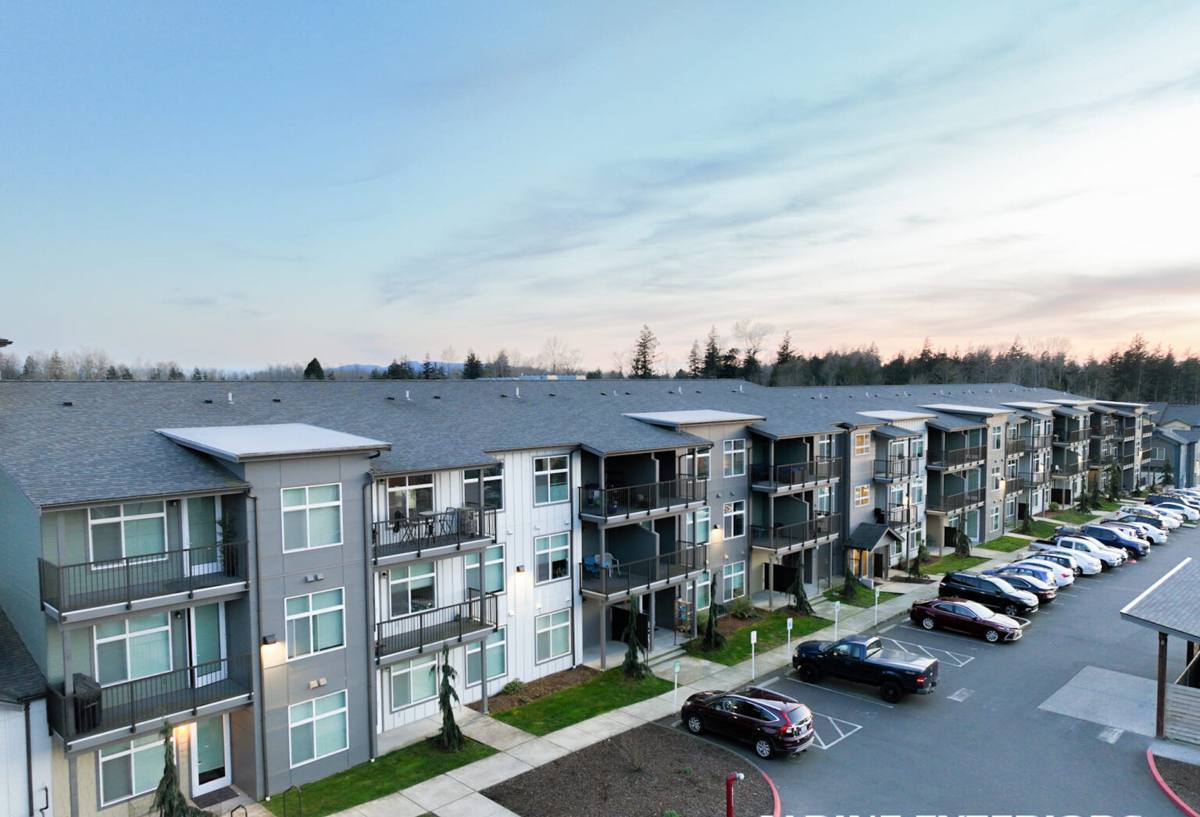
What Salt Air, Driving Rain, and Moss Actually Do to Siding
Salt Air and Fasteners
Nails, screws, and metal flashing corrode faster near salt water. Once a fastener starts rusting, it loses its grip on the siding, and you get movement — small gaps that open and close with temperature and moisture, which is exactly how water starts working its way behind the cladding.
Driving Rain and Wind-Driven Moisture
Wind coming off the bay doesn't just wet the surface of the siding — it pushes rain up under laps, into seams, and around trim that wasn't caulked or flashed with that kind of pressure in mind. This is where a lot of "mystery" water damage actually starts: not a leak in the obvious sense, but water forced in sideways during a storm and never fully drying out afterward.
Moss and Prolonged Dampness
Shaded, damp walls in this part of Whatcom County grow moss and algae readily, especially on siding that stays wet for days after a storm. Moss itself doesn't destroy siding, but it holds moisture against the surface and traps it in seams and butt joints, which accelerates rot in wood-based products and breaks down caulk and paint faster than direct sun exposure would.
Signs a Marietta Home Needs Siding Repair
Most siding problems here don't announce themselves with a hole in the wall. They show up as small, easy-to-dismiss signs that add up:
- Soft or spongy spots when you press on siding near the bottom courses, corners, or under windows
- Paint or caulk that's cracked, peeling, or pulling away at seams and trim joints
- Visible moss or algae staining, particularly on north- and west-facing walls
- Fastener heads showing rust bleed or "popping" slightly proud of the surface
- Warping, buckling, or boards that no longer sit flat against the wall
- Musty smell or discoloration on interior walls that back up to exterior siding
- Gaps opening up around window and door trim
Any one of these on its own might be minor. Two or three together, especially on the water-facing side of a house, usually means moisture has been getting behind the siding for a while.
What a Correct Siding Repair Actually Involves
A repair that's done right isn't just "cut out the bad piece and nail in a new one." It involves a few steps that get skipped more often than they should:
1. Find the Actual Source
Damaged siding is usually a symptom, not the root cause. Before replacing anything, we look at flashing, caulking, grade slope, gutters, and how water is actually moving across that section of wall. Replacing a damaged board without fixing why it got damaged just buys a few more years before the same repair is needed again.
2. Check What's Behind the Siding
Once siding is off, we check the water-resistive barrier (house wrap or building paper) and the sheathing underneath for rot or soft spots. If that layer has failed, patching the visible siding and leaving compromised sheathing behind it is a short-term fix that hides a bigger problem.
3. Match or Transition the Material Thoughtfully
Patching in a small section of matching siding can make sense on a limited, isolated repair. But matching old, weathered material exactly is rarely possible, and if the existing siding is a product prone to moisture damage in the first place, a like-for-like patch is often just delaying the next repair call.
4. Re-Flash and Re-Seal Properly
Every repair is an opportunity to correct flashing and sealant details that weren't right the first time — especially around windows, trim, and butt joints, which are where most of the water intrusion we see actually originates.
Repair vs. Replacement: When Patching Isn't Enough
Not every siding problem needs a full re-side, and we're not going to tell a homeowner they need one when a targeted repair will genuinely hold. But there's a point where patching stops being cost-effective, and it's worth knowing where that line usually sits.
| Situation | Usually a Repair | Usually Points to Replacement |
|---|---|---|
| Extent of damage | Isolated to one board, corner, or wall section | Recurring damage across multiple walls or elevations |
| Cause | Single identifiable source (bad flashing, one failed seam) | Systemic moisture intrusion or widespread material failure |
| Sheathing condition | Solid, dry sheathing behind the damaged area | Soft, rotted, or delaminated sheathing found during inspection |
| Siding material | Fiber cement or sound wood with isolated failure | Original material prone to moisture damage, already near end of service life |
| Age of siding | Mid-life siding, otherwise performing well | Siding nearing or past its expected service life |
When damage is limited and the cause is clear, repair is the honest recommendation and what we'll do. When we find rot spreading behind multiple sections, or the existing material is one that struggles with this climate to begin with, we'll say so plainly rather than keep patching a wall that's going to keep failing.
Why We Only Repair Toward James Hardie Standards
Our company installs James Hardie fiber cement siding exclusively — we don't install vinyl, LP SmartSide, or primed wood products. That standard shapes how we approach repairs, too. When a repair calls for replacing a section of siding rather than patching what's there, we replace it with Hardie material engineered for this climate, not because we're trying to upsell a repair job, but because it's the product we trust to actually hold up to salt air and wind-driven rain over the long run.
Fiber cement doesn't absorb water the way wood-based products can, so it doesn't swell, rot, or delaminate from repeated wetting the way some siding does after years near the water. James Hardie's ColorPlus factory finish also means a repaired or replaced section can be color-matched without relying on field-applied paint, which is one less seam where moisture can get a foothold. When a homeowner's existing siding is a product known to struggle in coastal, high-moisture conditions, we'll be direct about that trade-off rather than just patching around it indefinitely.
Our Process for Marietta Siding Repair Calls
- Inspection. We look at the damaged area and the surrounding wall system — not just the visible symptom — including flashing, trim, and grade conditions nearby.
- Diagnosis. We identify the actual moisture source before proposing a fix, and we'll tell you plainly if we think the cause is isolated or systemic.
- Honest scope. You get a clear picture of what a repair will and won't solve, and whether replacement makes more sense for the area in question.
- The repair itself. Damaged material and any compromised sheathing or barrier is removed, the substrate is confirmed sound (or corrected), and new material is properly flashed and sealed — not just nailed over the old details.
- Walkthrough. We show you what we found and what we did, so the repair isn't a black box.
What Drives the Cost of a Siding Repair
Every repair is different, and we don't quote sight unseen, but a few factors consistently move the price:
| Factor | Why It Matters |
|---|---|
| Extent of hidden damage | Rotted sheathing or barrier found behind the siding adds scope beyond the visible repair |
| Accessibility | Second-story, tight side-yard, or obstructed walls take longer to work safely |
| Material match | Matching existing siding closely (or transitioning cleanly to Hardie) affects labor and material cost |
| Trim and flashing work | Correcting flashing details properly, not just replacing boards, adds time but prevents repeat failures |
| Number of affected areas | Multiple isolated spots across a house cost more in mobilization than one contiguous section |
Before You Call: A Quick Homeowner Checklist
If you're trying to decide whether it's time to get a repair looked at, walk the exterior of the house — especially the sides facing the water and any shaded walls — and check for:
- Soft spots when pressed firmly by hand, particularly near the bottom of walls
- Visible gaps or separation at trim, corners, and butt joints
- Moss or dark staining that keeps returning after cleaning
- Any interior wall, near an exterior wall, with a musty smell or soft drywall
- Peeling paint or failed caulk lines, especially around windows and doors
Catching these early is the difference between a contained repair and a much larger one once water has had a season or two to work behind the wall.
Why a Crew That Already Works Marietta Matters
Siding repair done from a generic playbook misses the details that actually matter in a bay-adjacent community like Marietta. A crew that regularly works Ferndale and the surrounding Whatcom County waterfront knows which walls tend to take the worst of the wind-driven rain, how fast moss returns on shaded siding here compared to inland homes, and where corroded fasteners and failed flashing tend to show up first on houses this close to salt water. That familiarity means less guesswork diagnosing the actual source of a problem and a repair that's built for the conditions the wall will keep facing — not just the conditions on a spec sheet.
If you're noticing soft spots, moss buildup, or failing caulk on your Marietta home, we're happy to take a look and give you a straight answer about what it needs. Reach out for a free, no-pressure estimate using the form below — no obligation, just an honest read on what's going on with your siding.