 Ferndale Siding
 Why Sudden Valley Siding Takes a Different Kind of Beating
Homes around Sudden Valley deal with a combination of conditions that's tougher on exterior siding than what you'd find in a drier inland climate. Whatcom County sits close enough to the water that salt-laden air is a real factor on siding, trim, and fasteners, especially on the sides of a house that face open exposure. Add in driving rain that comes sideways during winter storms, and you've got moisture finding its way into every seam, lap joint, and nail hole that isn't sealed correctly.
Then there's tree cover. Many properties in and around Sudden Valley sit under a mix of conifers and deciduous trees, which is great for privacy and shade but terrible for airflow. Shaded, damp siding doesn't dry out between rain events, and that's exactly what moss and mildew need to take hold. A "long moss season" here isn't an exaggeration — in the shadier spots, siding can stay damp for weeks at a stretch, and moss will happily root itself into caulk lines, butt joints, and anywhere water sits.
None of this means siding is doomed. It means repair work in this area has to account for the actual cause of the damage, not just patch the visible symptom. A repair that doesn't address the moisture source will look fine for a season and then fail again in the same spot.
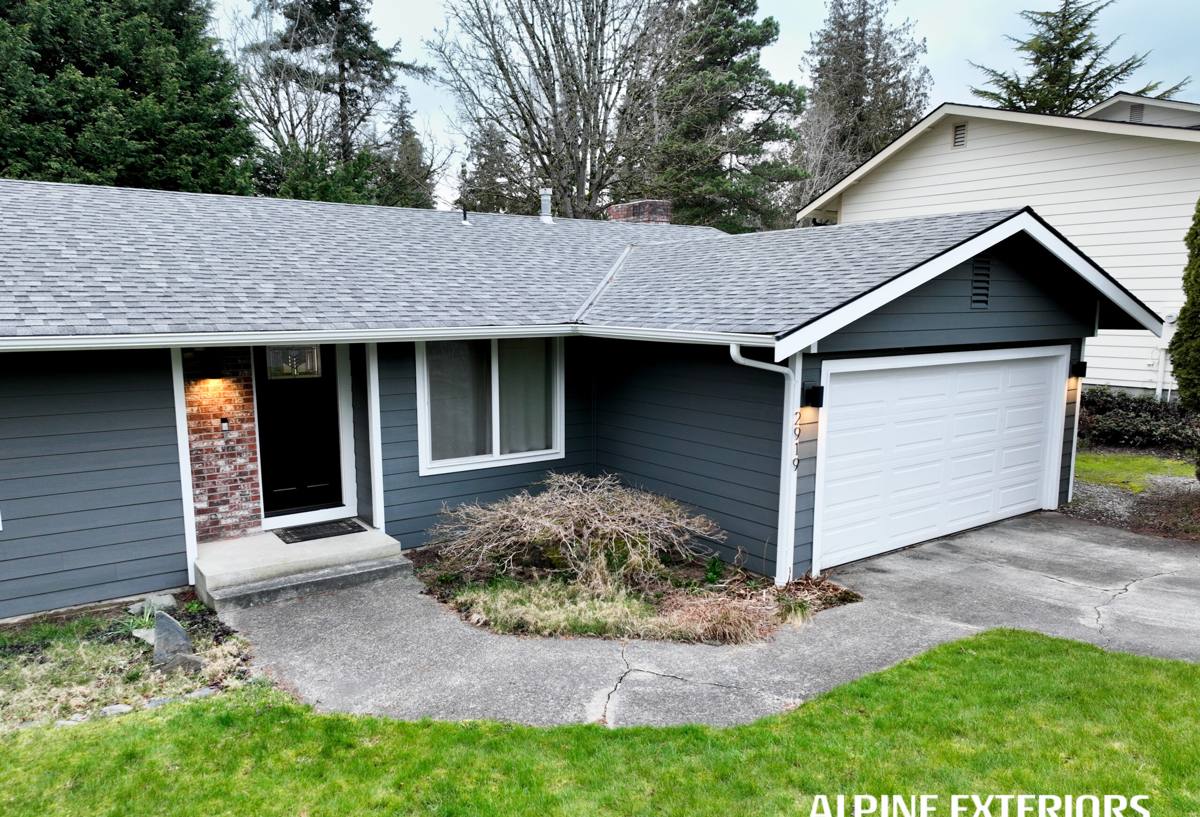
Signs Your Siding Needs Repair — Not a Full Replacement
Most homeowners don't need to replace their entire siding system to fix a real problem. Here's what typically points to a repair job rather than a full re-side:
- Cracked, split, or impact-damaged boards in an otherwise sound wall
- Soft or spongy spots at the bottom courses, near downspouts, or under windows
- Persistent moss or dark streaking concentrated in one shaded area rather than across the whole house
- Gaps opening up at butt joints, corners, or trim where caulk has failed
- Localized paint failure or bubbling that suggests moisture trapped behind a section of siding
- Damage from a single event — a fallen branch, a ladder mishap, a pressure washer used too aggressively
If the damage is widespread, if the underlying sheathing is compromised in multiple areas, or if the siding material itself is past its usable life, repair stops making financial sense and replacement becomes the honest recommendation. Part of a proper repair visit is telling you which situation you're actually in.
What a Correct Siding Repair Actually Involves
Finding the Real Cause First
Cutting out a damaged board and nailing in a new one is the easy part. The part that determines whether the repair lasts is figuring out why that spot failed in the first place. That usually means checking the flashing above windows and doors, looking at how the house wrap or weather barrier is lapped behind the siding, and confirming that water has somewhere to go once it gets behind the cladding — which it eventually will, on any home.
Matching Material and Reveal
A repair that's visually obvious from the street isn't a good repair. That means matching the profile, reveal (the exposed width of each course), and finish of the existing siding as closely as possible. On factory-finished fiber cement, this is more straightforward because the color is baked into the board rather than field-applied — on field-painted materials, matching weathered paint is harder and often means a slightly larger repair area to keep the color transition from standing out.
Fasteners and Sealants Rated for the Coast
Cheap fasteners are one of the most common causes of repeat failures in this climate. We use corrosion-resistant fasteners and exterior sealants rated for sustained moisture exposure — not general-purpose caulk that will shrink and crack within a couple of seasons.
Repair vs. Replace: How We Actually Make the Call
Homeowners often ask us to just be straight about which option makes sense. Here's the general framework we use when evaluating a Sudden Valley home:
| Factor | Leans Toward Repair | Leans Toward Replacement |
|---|---|---|
| Extent of damage | Isolated to one or two areas | Spread across multiple elevations |
| Sheathing condition | Solid and dry behind the damaged boards | Rot or soft sheathing found in several spots |
| Age of existing siding | Within its expected service life | At or past the end of its practical lifespan |
| Material type | Still available or reasonably matchable | Discontinued profile, color, or product line |
| Moisture source | Identifiable and fixable in the repair | Systemic — poor original flashing or drainage design |
Most homes we visit fall clearly into one column or the other once we've actually opened up the damaged area and looked behind the siding. We'll walk you through what we find and why we're recommending one path over the other.
Why the Siding Material Matters, Even for a Repair
What we install matters just as much on a repair as it does on a full replacement, because a patch is only as good as the material going into it. We build and repair exclusively with James Hardie fiber cement siding. We don't install LP SmartSide, vinyl, Cemplank, Allura, or unfinished wood siding like primed spruce or cedar — not because those products don't have their place, but because after years of doing this work in a wet coastal climate, we standardized on one system we can stand behind on every job.
Fiber cement doesn't absorb water the way wood-based products can, and it's non-combustible, which matters in a region where wildfire smoke seasons have made exterior fire resistance a bigger consideration than it used to be. James Hardie's ColorPlus factory finish also means a color-matched repair is genuinely achievable, since the color is manufactured into the board rather than applied on-site and weathered unevenly over time.
If your home currently has vinyl, LP SmartSide, or cedar siding, we can still often repair it in place — patch work doesn't always require a material switch, and we'll tell you honestly when a like-for-like repair is the right, cost-effective move. But if a section is failing repeatedly, or the damage is extensive enough that you're weighing a broader upgrade, we'll walk you through why Hardie is what we'd put on in its place, and what that would look like as a phased or full transition.
Our Process for a Sudden Valley Repair Visit
- Assessment. We inspect the damaged area and the surrounding siding, checking for moisture intrusion, soft sheathing, and the condition of flashing and trim.
- Diagnosis. We identify the actual cause — impact damage, failed sealant, poor flashing, trapped moisture from shade and tree cover — and explain it in plain terms.
- Scope and options. We give you a clear repair scope, and if replacement makes more sense for part or all of the home, we'll say so directly rather than patching over a bigger problem.
- Repair work. Damaged material is removed, the substrate is checked and dried or repaired as needed, and new material is installed with corrosion-resistant fasteners and proper flashing details.
- Finish and cleanup. Trim, caulking, and touch-up work are completed so the repaired section blends with the surrounding siding as closely as the material allows.
Moss, Mildew, and What You Can Do Between Visits
A long moss season doesn't have to mean constant repair calls. A few habits go a long way toward protecting siding between professional maintenance:
- Keep tree limbs trimmed back from siding to improve airflow and sun exposure on shaded walls
- Rinse visible moss or algae buildup gently with a garden hose rather than a pressure washer, which can force water behind laps and joints
- Check and clear gutters each fall so overflow doesn't run down the siding face
- Walk the exterior once or twice a year looking for cracked caulk, gaps at corners, or soft spots near ground level
- Address small issues early — a cracked board or open joint is a much smaller job in year one than after two more wet seasons
None of this replaces a professional inspection, but it does reduce how often you need one, and it catches problems while they're still cheap to fix.
Why It Matters to Hire a Crew That Already Works This Area
Siding repair in a coastal, tree-covered, moss-prone community like Sudden Valley isn't the same job as siding repair in a dry, open subdivision. A crew that regularly works Ferndale and the surrounding Whatcom County communities has already seen how salt exposure, driving rain, and shade patterns play out on real homes here — which flashing details tend to fail first, which elevations take the worst weather, and which repairs actually hold up through a second or third wet season. That local pattern recognition is the difference between a repair that lasts and one you're calling about again next winter.
We're happy to take a look at what's going on with your siding and give you a straight answer on repair versus replacement, no pressure either way. If you'd like an honest assessment and a free estimate, the form below is the easiest way to get started.