 Ferndale Siding
 Siding Replacement for Everson Homes
Everson sits inland from the coast but still lives inside the same Whatcom County weather pattern that wears down siding year after year: long stretches of driving rain, heavy fall and winter humidity, and a moss and mildew season that can run eight months or longer in shaded, tree-lined lots. Homes here take on moisture from the outside in, and the siding is the first line of defense. When that defense starts to fail — through cracking, warping, soft spots, or paint that won't hold anymore — replacement isn't just a cosmetic project. It's a structural one.
Ferndale Siding Company works throughout this part of the county, and Everson's mix of older farmhouse-style homes, mid-century ranches, and newer construction gives us a good cross-section of what actually fails out here and why. This page covers what a correct siding replacement looks like for an Everson home, not a generic overview of siding in general.
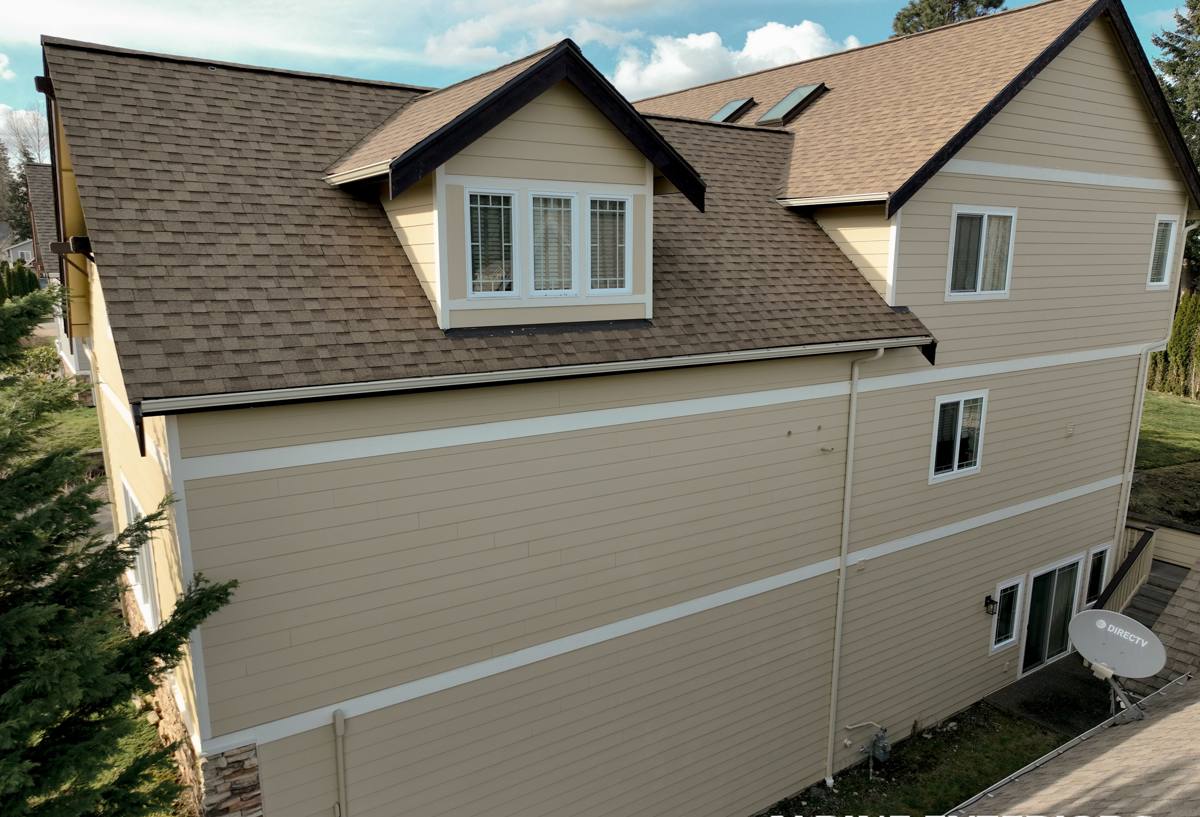
Why Siding Fails Faster in This Part of Whatcom County
A few climate factors combine to shorten the life of the wrong siding product in and around Everson:
- Sustained damp season: Long gray stretches keep exterior wall surfaces wet for days at a time, which is exactly the condition that lets moisture work into seams, fastener holes, and butt joints.
- Moss and organic growth: Shaded lots, mature trees, and north-facing walls stay damp longer, giving moss, algae, and mildew a long runway to take hold on porous or textured surfaces.
- Temperature swings: Freeze-thaw cycles in winter, paired with warm dry stretches in summer, stress any siding material that expands and contracts a lot with moisture and temperature.
- Wind-driven rain: Storms off the Strait push rain sideways into wall assemblies, not just straight down, which punishes poorly flashed seams and butt joints.
None of this means every home needs replacement on a fixed schedule. It means the material and the installation quality matter more here than they would in a drier inland climate.
Signs an Everson Home Needs Siding Replacement, Not Just Repair
Not every issue calls for a full tear-off. But a few signs reliably point to replacement rather than patching:
Material-Level Failure
Cracking, delaminating, or crumbling siding — common on aging wood, hardboard, or older cement products past their service life — usually can't be spot-repaired for long. Once the material itself is breaking down, patches fail again within a season or two.
Moisture Behind the Siding
Soft or spongy spots, dark staining at seams, or paint that bubbles and peels repeatedly in the same spots are signs that water is getting behind the siding, not just sitting on top of it. That's a moisture-management problem, and it usually means the underlying weather barrier and flashing need attention along with the siding itself.
Persistent Moss and Mildew
Some moss growth is normal on any exterior surface in this climate. Moss that keeps coming back heavily on the same wall, season after season, despite cleaning, often points to a surface that's holding moisture rather than shedding it — worth having looked at rather than just re-cleaned.
Rising Maintenance Burden
If a home is on a repaint cycle of every 3-5 years just to keep the siding looking presentable, or caulking gaps keep reopening, the ongoing labor and material cost of maintaining old siding starts to outweigh the cost of replacing it with something built for this climate.
What We Install: James Hardie Fiber Cement, Exclusively
Ferndale Siding Company installs James Hardie fiber cement siding and nothing else. We don't offer vinyl, LP SmartSide, primed wood, or cedar as alternatives, and that's a deliberate standard, not a sales limitation. In a climate like Everson's, the material differences show up fast:
- Non-combustible: Fiber cement doesn't feed a fire the way wood-based products can, which matters more each year as wildfire smoke seasons stretch into the Pacific Northwest.
- Moisture-resistant by composition: Fiber cement doesn't absorb water and swell, rot, or delaminate the way engineered wood or old hardboard can when it's damp for extended periods.
- Factory-applied ColorPlus finish: The finish is baked on at the factory under controlled conditions, which holds color and resists fading and chipping far better than field-applied paint — and it doesn't need repainting on the same short cycle.
- Engineered for this region: Hardie's HZ10 product line is formulated specifically for wetter, more humid climate zones like ours, which is the line we spec for Whatcom County homes.
We go into more detail on the tradeoffs of other siding materials on our other pages — this page is focused on what correct installation looks like once Hardie is the material.
What a Correct Siding Replacement Involves
The siding panel itself is only part of the job. Most siding failures we see in older Everson homes trace back to what was underneath the old siding, not the siding material itself. A proper replacement addresses the whole wall assembly:
1. Tear-Off and Inspection
We remove the old siding and inspect the sheathing underneath for rot, soft spots, or existing water damage. This is often the first real look anyone's had at the wall assembly in decades, and it's where hidden problems get caught before they're covered up again.
2. Repair Sheathing and Framing as Needed
Any damaged sheathing or framing gets repaired or replaced before new siding goes on. Installing new siding over compromised sheathing just hides a problem that will resurface.
3. Weather-Resistive Barrier
A correctly installed and lapped weather barrier (house wrap) goes on before the siding, giving the wall a drainage plane so any moisture that does get past the siding has somewhere to go, rather than sitting against the sheathing.
4. Flashing at Every Penetration
Windows, doors, vents, and any other wall penetration need proper flashing integrated with the weather barrier. This is the single most common place we find prior installation shortcuts, and it's usually where moisture problems in older homes originate.
5. Correct Fastening and Clearances
James Hardie specifies fastener type, spacing, and minimum clearances from grade, roof lines, and other surfaces for a reason — get these wrong and even the best material will trap moisture or fail early. We install to Hardie's published specifications, which is also what keeps the manufacturer's warranty valid.
6. Caulking, Trim, and Finish Details
Butt joints, trim intersections, and penetrations get sealed correctly rather than just caulked over gaps. Good trim and joint work is also what keeps a finished job looking sharp for years rather than showing seams early.
Cost Factors for Everson Siding Replacement
Every home is different, so we don't quote fixed prices without seeing the house, but the main cost drivers for a job in this area are consistent:
| Factor | Why It Affects Cost |
|---|---|
| Home size and wall complexity | More square footage and more corners, gables, and trim details mean more material and labor. |
| Condition of existing sheathing | Hidden rot or water damage found during tear-off adds repair scope beyond the siding itself. |
| Siding profile and accessories | Lap width, trim style, and accent details (like board-and-batten sections) affect material cost. |
| Access and site conditions | Multi-story walls, tight lot lines, or landscaping obstacles affect labor time and staging. |
| Number of penetrations | Homes with more windows, vents, and fixtures require more flashing and detail work per square foot. |
The one factor we won't cut corners on regardless of budget is the underlying moisture-management work — weather barrier, flashing, and fastening to spec. That's what determines whether the job lasts fifteen years or fifty.
Why a Crew That Already Works Everson Matters
Siding installation skill matters everywhere, but local experience matters more in a climate that punishes shortcuts. A crew that's worked houses throughout Whatcom County knows which wall orientations tend to hold moss, how far up a wall wind-driven rain actually reaches in a storm off the Strait, and where older local homes typically have hidden moisture damage before the tear-off even starts. That's knowledge that shows up in the quality of the flashing details and the material choices, not just in the finished look.
We also stand behind the work with James Hardie's manufacturer backing, which requires installation to their published specifications — another reason we don't deviate from Hardie's system or cut corners on the underlying prep work.
A Practical Checklist Before You Replace Your Siding
- Get an inspection that includes the sheathing, not just the visible siding surface
- Ask what weather-resistive barrier and flashing details are included, not just the siding brand
- Confirm the installer follows the manufacturer's published fastening and clearance specifications
- Ask whether the manufacturer's warranty stays valid based on how the job is installed
- Get a clear scope in writing — tear-off, sheathing repair allowance, barrier, flashing, and finish trim
- Ask how the crew handles moss and moisture-prone wall sections specifically
If your Everson home's siding is showing its age — moss that won't quit, paint that won't hold, or soft spots you're not sure about — we're happy to take a look and give you a straight answer. Request a free, no-pressure estimate below and we'll walk the exterior with you before recommending anything.