 Ferndale Siding
 Siding Replacement Built for Marietta, Not a Generic Job Site
Marietta sits low and close to the water on the edge of Ferndale, in a part of Whatcom County where the exterior of a house works harder than it does just a few miles inland. Homes here sit near tidal water and open marine air for most of the year, and that changes what a siding replacement actually needs to accomplish. A job that would hold up fine in a drier, more sheltered neighborhood can fail early here if it's built to a generic standard instead of a local one.
This page is specifically about siding replacement for Marietta homes — not a general overview of siding, and not a different service dressed up with a place name. We're talking about what happens when the siding on a Marietta house has reached the point where repair no longer makes sense, what a correct replacement involves in this specific setting, and why the details we insist on matter more here than they would somewhere with less salt air, less driving rain, and a shorter moss season.
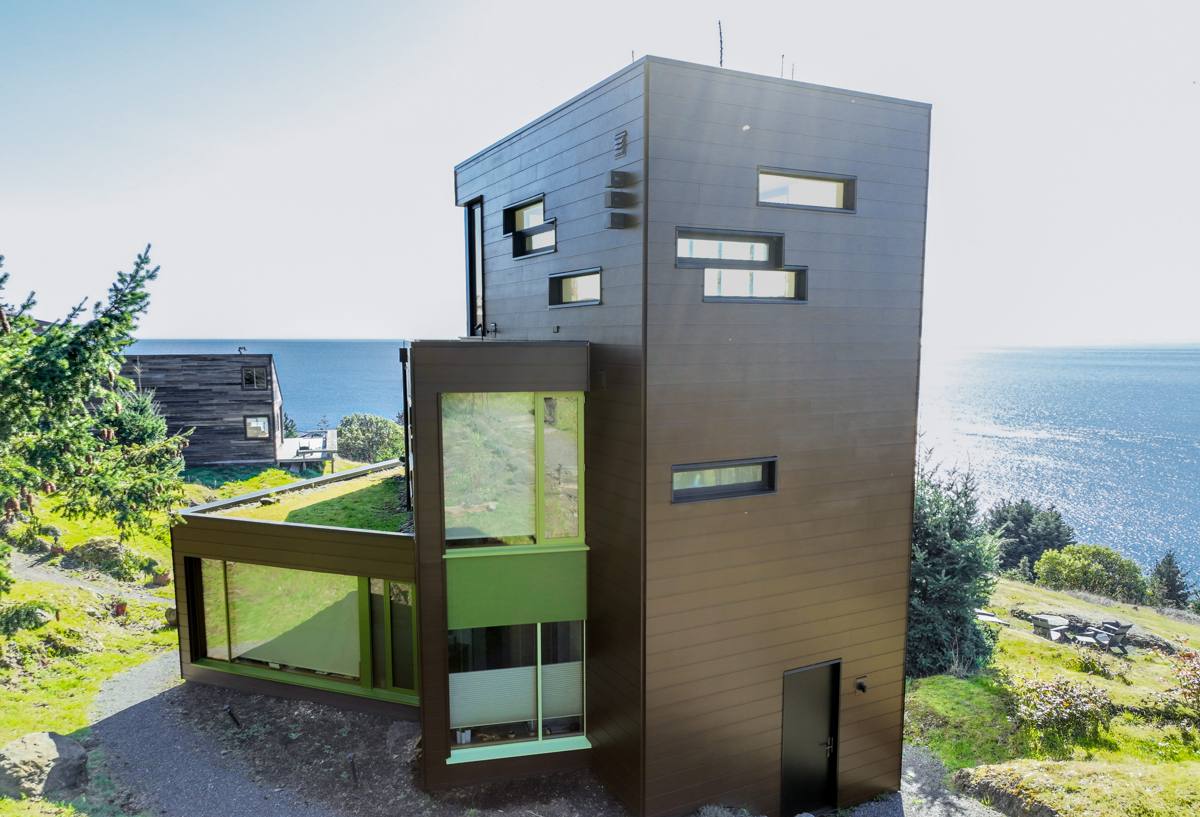
Why Marietta's Climate Wears Out Siding Faster
Salt Air Off the Water
Homes in and around Marietta sit close enough to open water that salt-laden air is a constant, not an occasional weather event. Salt accelerates corrosion on fasteners, flashing, and any exposed metal trim, and it breaks down lower-grade paints and coatings faster than a dry inland climate would. On an aging siding system, that shows up as rust streaking at nail heads, chalky or fading finishes, and trim that corrodes years ahead of schedule.
Driving Rain, Not Just Rainfall
What matters for siding isn't just how much rain Whatcom County gets — it's how that rain arrives. Storms moving in off the water push rain sideways into wall assemblies, window flashing, and the seams where trim meets siding, rather than dropping straight down where a roof overhang could shield it. That wind-driven pattern finds gaps a careless installation leaves behind, and it's a bigger factor in Marietta than it is in more sheltered parts of the county.
A Long Moss Season
Mild temperatures and near-constant moisture give moss and mildew a growing season that can run most of the year on shaded or north-facing walls. Any siding material with even slight surface porosity becomes a growth surface over time, and once moss and mildew establish themselves, they hold moisture directly against the wall instead of letting it dry out between storms.
Signs a Marietta Home Is Ready for Siding Replacement
Not every siding problem calls for full replacement — some issues are legitimately repairable. But certain signs, especially in this climate, usually mean the siding system as a whole has reached the end of its useful life rather than needing a patch:
- Soft, spongy, or crumbling siding when you press on it, especially low on the wall or around window trim
- Moss or dark staining that returns quickly after cleaning, on the same walls every time
- Visible warping, cupping, or buckling panels, particularly on shaded or north-facing sides
- Paint that's peeling or blistering repeatedly despite recent repainting
- Rust streaking at fastener heads or corroded trim, more common this close to the water
- Gaps opening at seams, corners, or trim joints that weren't there a few years ago
- A musty smell or visible staining on interior walls that back up to exterior siding
If a Marietta home is showing two or three of these at once, that's usually a sign the water-resistive barrier and possibly the sheathing behind the siding have already been compromised, not just the visible surface.
Why We Only Install James Hardie Fiber Cement
We install one siding system: James Hardie fiber cement. We don't install LP SmartSide, vinyl siding, Cemplank, Allura, primed spruce, or cedar. That's a professional standard we've held to, not a limitation in what we're capable of installing, and it comes directly from what we've found doing tear-offs and service calls on homes in salt-air, high-moisture parts of Whatcom County like Marietta.
- Non-combustible core: Fiber cement doesn't feed a fire the way wood-based siding products can, which matters for both household safety and insurance considerations.
- Factory-applied ColorPlus finish: The color is baked on under controlled factory conditions instead of brushed on in the field, so it resists fading, chalking, and moisture wear far longer than field-applied paint.
- Climate-engineered HZ formulation: Hardie's HZ5 product line is engineered for regions with sustained moisture and freeze-thaw cycling, which describes Marietta's marine climate well.
- Dimensional stability: Fiber cement doesn't swell, cup, or warp the way engineered wood products can after years of exposure to driving rain and standing humidity.
- Strong transferable warranty: Hardie backs the product with one of the stronger warranty structures in the industry, provided the installation meets their published spec.
Every product on that "won't install" list has real advantages and homeowners elsewhere who are satisfied with it. But in a place where salt air and wind-driven rain are near-constant conditions, we'd rather stand fully behind one system than offer something cheaper that quietly shifts maintenance risk onto the homeowner a few years down the road.
What a Correct Siding Replacement Involves
Tear-Off, Not Overlay
In Marietta's climate, we treat a full tear-off as the standard approach, not an upsell. Pulling the old siding off down to the sheathing is the only way to actually see what's happened behind the wall — whether moisture has already reached the sheathing, whether flashing was installed correctly the first time, and whether the water-resistive barrier is still doing its job. Overlaying new siding over old skips that inspection entirely, and in a wet, coastal setting, whatever problems exist behind the old siding just keep developing underneath the new material.
The Details That Actually Prevent Failure
Hardie siding performs the way it's engineered to only when the installation follows spec, and in Marietta's climate the details matter more than they would somewhere drier:
- Rain screen gap: A drainage cavity behind the siding lets any moisture that gets past the exterior surface drain and evaporate instead of sitting against the sheathing.
- Correct fastener type and spacing: Hardie specifies corrosion-resistant fasteners and precise spacing for a reason — loose spacing or the wrong fastener is one of the more common causes of early failure we find on tear-offs near the water.
- Properly lapped house wrap and flashing: Every seam and penetration needs to shed water downward and outward, especially on walls that take wind-driven rain directly.
- Sealed butt joints and trim transitions: Open or poorly sealed joints are exactly where salt-laden, wind-driven moisture finds its way behind new siding first.
None of this is unusual or exotic — it's the manufacturer's own installation spec, followed consistently rather than shortcut on the parts that are hardest to see once the job is finished and the crew has moved on.
How the Process Works
Inspection and Estimate
We walk the property in person before pricing anything. Two homes in Marietta with the same square footage can need very different scopes once we're actually looking at the condition of the existing siding, trim, and any visible moisture damage, so we're cautious about phone or online quotes that skip that step.
Tear-Off and Substrate Repair
Old siding and trim come off down to the sheathing. Any rotted or delaminated sheathing, damaged framing, or failed flashing gets identified and repaired before anything new goes on — building over a compromised substrate just guarantees a callback down the line.
Water Management Layer
A new water-resistive barrier, properly lapped and integrated with window and door flashing, goes on before the siding does. This layer, done correctly, is what actually keeps wind-driven rain out of the wall assembly over the long run — the visible siding is really the second line of defense, not the first.
Siding Installation
James Hardie panels or lap siding go on to manufacturer spec: correct rain screen gap, fastener type and spacing, and sealed joints and trim transitions throughout.
Final Walkthrough
We walk the finished job with the homeowner, checking trim lines, caulking, and paint touch-up before calling it complete.
Cost Factors for a Marietta Siding Replacement
| Factor | What Drives It | Marietta Climate Consideration |
|---|---|---|
| Home size and shape | Total wall area, number of corners, roofline complexity | More trim and flashing seams for driving rain to find |
| Substrate condition | Sheathing and framing repair once old siding is off | Salt air and moisture make hidden damage more likely on older homes |
| Tear-off vs. overlay | Full removal costs more upfront than overlay | Tear-off is the only way to inspect and fix what's behind the wall |
| Trim and detail work | Window and door count, corner and transition detailing | Every seam needs correct flashing against wind-driven rain |
| Fastener and hardware grade | Corrosion-resistant fasteners and trim hardware | Standard-grade hardware corrodes faster this close to the water |
These are general cost drivers, not a quote. A firm number depends on what we find once we're actually up close on the wall, which is why we walk every Marietta property before putting a real figure on the work.
Why a Crew That Already Works Marietta Matters
A contractor who regularly works Marietta and the surrounding Ferndale area has already seen how salt air, driving rain, and a long moss season play out on real houses here over multiple seasons — not just how a product performs on a spec sheet. That experience shapes decisions on install day: which walls stay wet longest, where extra flashing attention actually pays off, and which fastener and detail choices are worth the extra time so a homeowner isn't dealing with a callback after the next storm off the water. Marietta's exposure isn't identical to more sheltered inland neighborhoods, and a crew that treats it that way builds a siding system meant to hold up here specifically, not a generic installation that happens to be located nearby.
If your Marietta home needs siding replacement, we're glad to take a look and give you a straightforward, honest assessment of what it needs. Use the form below to schedule a free, no-pressure estimate.