 Ferndale Siding
 Asphalt Shingle Roofing Built for Sudden Valley's Climate
Homes around Sudden Valley deal with a specific combination of weather that a lot of roofing crews from outside Whatcom County simply don't plan for. You've got salt-laden air moving in off the water, long stretches of driving rain in the fall and winter, and shaded, damp conditions that keep moss and moisture active on the roof deck for much of the year. An asphalt shingle roof that's specified and installed correctly can handle all of that for two to three decades. One that's installed the way a lot of out-of-town crews do it — fast, generic, no attention to local conditions — tends to show granule loss, moss colonization, and edge failure years before it should.
This page covers what a correctly built asphalt shingle roof looks like for a Sudden Valley home, what our process actually involves, and why local experience matters more than most homeowners realize until they've had a roof fail early.
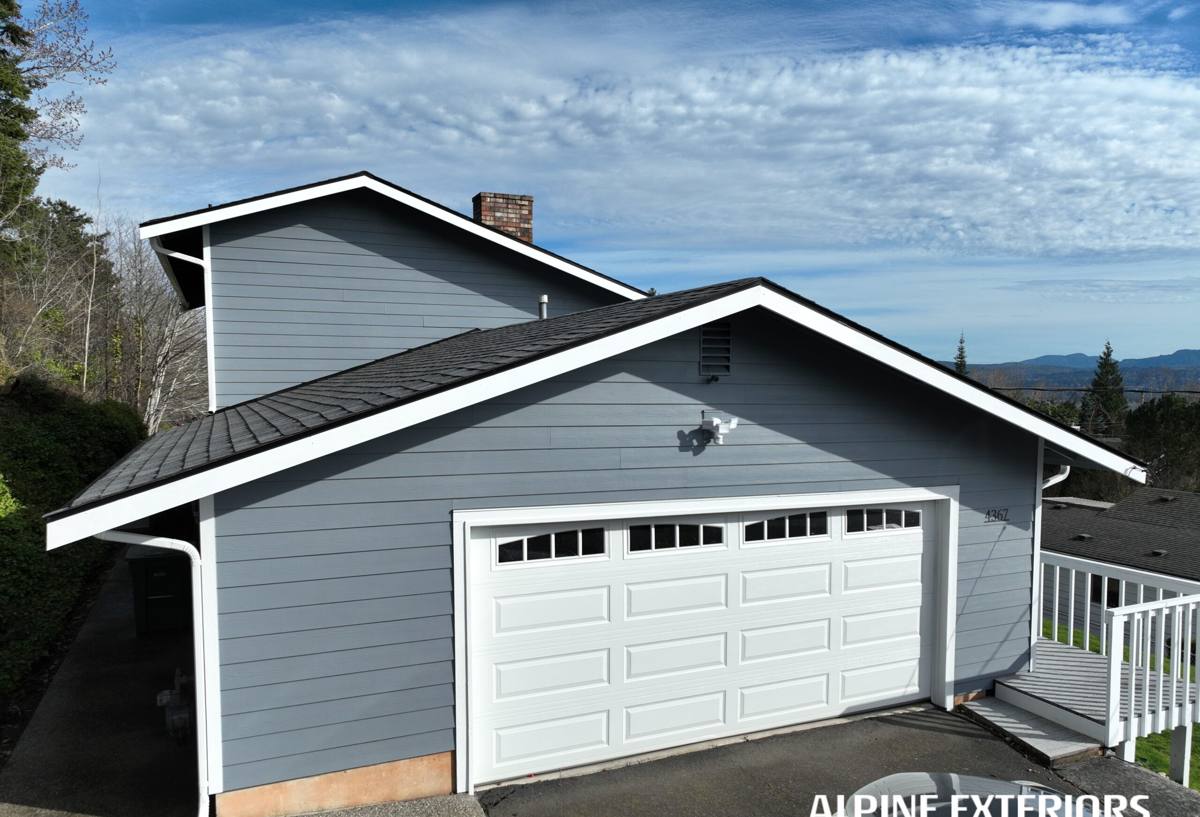
What This Climate Actually Does to a Shingle Roof
Ferndale and the surrounding Whatcom County area sit close enough to the water and to heavy tree cover that roofs here age differently than roofs inland. A few things stand out:
- Salt air corrosion: Metal components — flashing, nails, vent stacks, drip edge — corrode faster near the coast. Cheap or under-spec'd metal fails first, and once flashing corrodes, water finds a way under the shingles even if the shingles themselves look fine.
- Driving rain, not just rain: Wind-driven rain doesn't just fall on a roof, it pushes sideways and up under laps, ridge caps, and around penetrations. Underlayment quality and fastening pattern matter more here than in calmer climates.
- Extended moss season: Shade from surrounding trees plus persistent moisture means moss and algae have a long window to establish. Moss holds water against the shingle surface and lifts tabs as it grows, which is one of the most common causes of premature shingle failure we see on local roofs.
- Slow drying cycles: A roof that stays damp longer between rain events gives moss, lichen, and wood rot more time to work. Ventilation and roof pitch matter as much as the shingle brand.
None of this means asphalt shingles are the wrong choice for Sudden Valley — they're still the most practical, cost-effective option for most homes here. It means the installation details have to account for the local conditions, not just follow a generic spec sheet.
What a Correct Asphalt Shingle Job Includes
Tear-Off and Deck Inspection
We don't install new shingles over old ones, and we don't skip inspecting the deck once the old roofing is off. Moss and moisture problems often mean there's soft or delaminated decking underneath that isn't visible until the old layer comes off. Catching that now is far cheaper than finding out later when it shows up as a ceiling stain.
Underlayment Suited to Wind-Driven Rain
Standard felt underlayment is fine in a lot of climates, but for a home exposed to driving rain off the water, a synthetic or self-adhered underlayment at vulnerable areas — valleys, eaves, around penetrations — gives real backup protection if wind ever pushes water under a shingle lap.
Ice-and-Water Barrier at Eaves and Valleys
Even without heavy snow, this membrane matters here because it protects the areas most exposed to pooling and wind-driven water: eaves, valleys, and any low-slope transitions.
Corrosion-Resistant Flashing and Fasteners
Given the salt air, we use flashing and fastener materials chosen to resist coastal corrosion rather than the cheapest option available. This is one of the areas where cutting corners doesn't show up as a problem for a few years — and then shows up as a leak that's hard to trace.
Proper Ventilation
A roof that can't breathe stays damp longer, which feeds moss growth and can shorten shingle life from the underside as well as the top. Balanced intake and exhaust ventilation is part of a correct install, not an upsell.
Ridge Caps and Nailing Pattern
Ridge caps and the nailing pattern across the field of the roof are where a lot of wind and rain problems start if they're rushed. We follow manufacturer nailing specs to the letter, because that's what keeps shingle warranties valid and keeps shingles in place during winter wind events.
How We Approach a Sudden Valley Roofing Project
- On-site inspection. We walk the roof (or use a lift/ladder inspection where access is limited), check the deck condition where visible, look at existing flashing, ventilation, and moss/algae presence, and note any specific exposure issues tied to the home's position and tree cover.
- Written estimate. You get a clear scope of work and pricing before anything starts — no vague allowances, no surprise change orders for things we should have caught during inspection.
- Material selection. We walk through shingle options with you, including impact and wind ratings appropriate for this area, and color/style choices.
- Tear-off and deck repair. Old roofing comes off, the deck gets inspected, and any soft or damaged sheathing is replaced before anything new goes down.
- Underlayment, flashing, and shingle installation. Installed to manufacturer spec, with the underlayment and flashing choices matched to this climate as described above.
- Cleanup and final walkthrough. Site cleared of debris and nails (we use magnetic sweeps), and we walk the finished roof with you before calling the job done.
Comparing Shingle Options for a Coastal, Moss-Prone Roof
Not every asphalt shingle product performs the same way under Sudden Valley conditions. The table below is a general guide to trade-offs — actual pricing depends on your roof size, pitch, and access.
| Shingle Type | Typical Lifespan | Moss/Algae Resistance | Best Fit For |
|---|---|---|---|
| Standard 3-tab | 15–20 years | Low unless treated | Budget-focused projects, secondary structures |
| Architectural (laminate) | 25–30 years | Moderate; better with algae-resistant granules | Most primary homes — best balance of cost and durability |
| Algae-resistant architectural | 25–30 years | High — granules include copper or zinc compounds | Heavily shaded lots, homes with a history of moss staining |
| Premium/designer shingle | 30+ years | High (varies by line) | Homeowners prioritizing longevity and appearance over upfront cost |
For most Sudden Valley homes, an architectural shingle with algae-resistant granules is the practical sweet spot — it costs more upfront than standard 3-tab but meaningfully reduces the moss and staining problems that are common in shaded, damp settings.
Why We Don't Recommend Cutting Corners on Ventilation or Flashing
It's tempting to save money by reusing old flashing or skipping ventilation upgrades during a re-roof. Our standard is to flag these as part of the estimate rather than quietly reuse them, because in this climate they're often the actual cause of a roof's early failure — not the shingles themselves. Reused flashing that's already corroding from salt exposure will keep corroding under new shingles, and a poorly ventilated attic will keep feeding moisture problems regardless of how good the shingles are. We'd rather explain the trade-off honestly upfront than have a homeowner deal with a leak two years into a "new" roof.
Maintenance That Actually Extends Roof Life Here
A correctly installed roof still benefits from basic upkeep in this climate. A simple annual routine goes a long way:
- Keep gutters clear so water isn't backing up against the roof edge, especially during fall leaf drop.
- Have moss and algae growth treated before it spreads across the roof face, not after tabs start lifting.
- Trim back overhanging branches where practical to reduce shade and debris buildup.
- Have flashing around chimneys, vents, and skylights checked periodically — these are the most common leak points on an otherwise sound roof.
- Schedule a roof check after any major windstorm to catch lifted or displaced shingles early.
Why a Crew That Works This Area Regularly Matters
A roofing crew that works Ferndale and the greater Whatcom County area regularly has already seen how local conditions play out over years, not just at the moment of installation. That means knowing which details actually matter here — flashing material, underlayment placement, ventilation balance — versus what's just a generic spec sheet written for a different climate. It also means being reachable if a question comes up after the job is done, rather than dealing with a crew that installed the roof and moved on to a different region entirely.
Get a Straightforward Estimate
If your Sudden Valley home needs a roof inspection, a repair, or a full replacement, we're glad to take a look and give you an honest assessment — no pressure, no inflated urgency. Fill out the form below for a free estimate and we'll walk you through exactly what your roof needs and why.