 Ferndale Siding
 Why Sudden Valley Roofs Age Differently
Homes tucked into the wooded, hilly pockets of Whatcom County don't wear the same way a roof in a dry inland climate does. Sudden Valley sits close enough to open water that salt-laden air moves through on a regular basis, and it's shaded enough by fir and cedar cover that roofs stay damp long after a storm has passed. That combination is hard on roofing materials in ways that aren't always obvious from the ground.
Salt air accelerates corrosion on exposed metal fasteners, flashing, and vents. Driving rain, which is common with the wind patterns that move through this part of the county, doesn't just fall straight down — it gets pushed sideways under shingle edges and around poorly sealed penetrations. And the long moss season, which can run most of the year in shaded, tree-covered lots, keeps roof surfaces wet, cool, and slow to dry. Put those three together and you get roofs that can look fine from the driveway while quietly failing underneath.
A roof replacement here isn't just about swapping old shingles for new ones. It's about building a roof system that's actually suited to how this specific area behaves through the year.
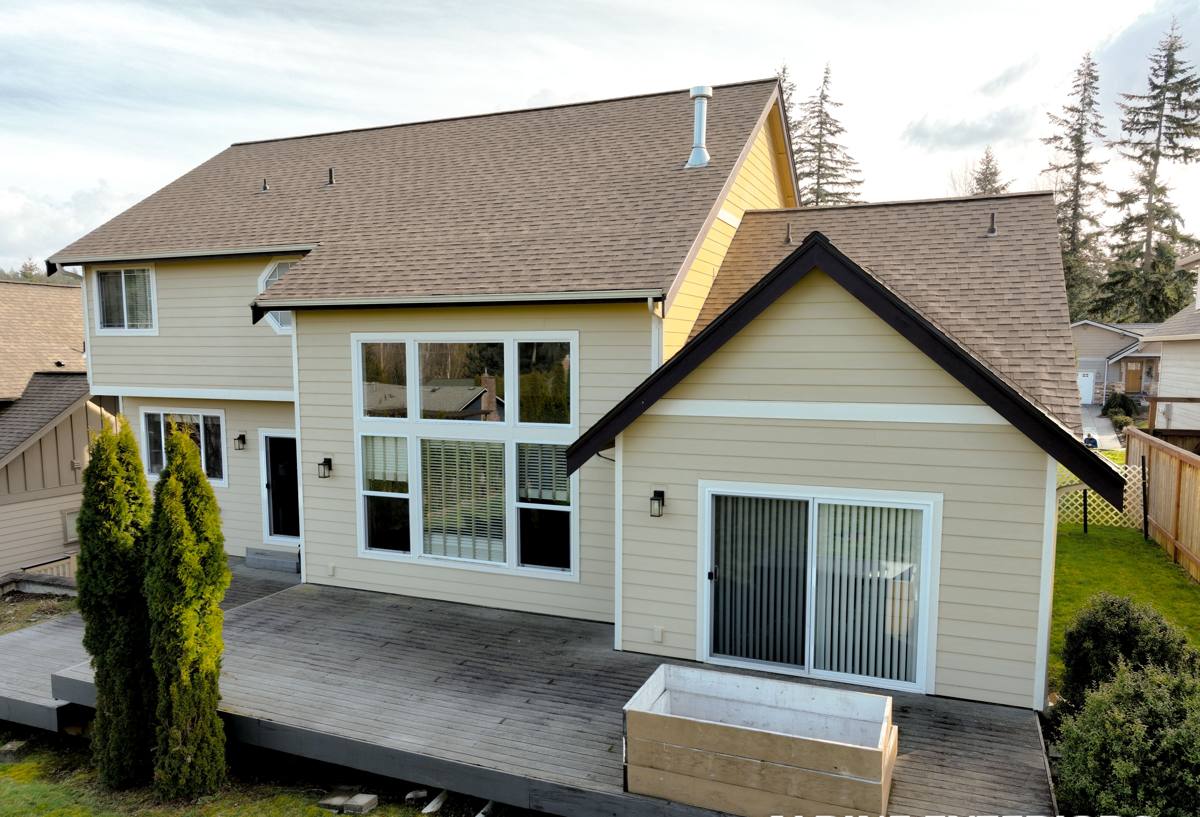
Signs a Sudden Valley Roof Needs Replacing, Not Just Patching
Repairs make sense when a roof has isolated damage and the rest of the system is sound. Replacement makes sense when the roof as a whole has reached the end of what it can reasonably protect. Some of the clearest signs we look for on local homes:
- Granule loss heavy enough that you can see bare, shiny patches on the shingle surface
- Moss or algae staining that keeps coming back within months of being cleaned
- Soft spots or visible sagging in the roof deck when viewed from the attic
- Daylight visible around vent pipes, chimneys, or valleys
- Shingles that are curling, cracking, or lifting at the edges
- Water stains on interior ceilings, especially near exterior walls or valleys
- A roof that's 20+ years old and has never had underlayment or flashing upgraded
Any one of these on its own might just need a repair. Several at once, especially on an older roof, usually means the underlying materials have degraded past the point where patching is a good use of money.
What a Correct Roof Replacement Actually Involves
It's Not Just the Shingles
A full tear-off and replacement gives us access to everything a repair can't touch: the decking, the underlayment, the flashing, and the ventilation. In a climate that pushes rain sideways and keeps moss growing most of the year, those hidden layers matter as much as the visible roofing material.
Tear-Off and Deck Inspection
We remove the old roofing down to the deck so we can actually see what's underneath rather than guessing. Any rotted or delaminated sheathing gets replaced before anything new goes down — covering over a compromised deck is one of the more common shortcuts that leads to problems a few years later.
Underlayment Built for Wet Weather
In areas that see sustained rain and shade-driven dampness, we use synthetic or self-adhering underlayment in vulnerable zones — eaves, valleys, and around penetrations — rather than the bare minimum. This is the layer that protects the deck if wind-driven rain ever gets past the shingles themselves.
Flashing Done Right
Flashing around chimneys, skylights, sidewalls, and valleys is where most roof leaks actually start, not in the open field of shingles. We replace flashing during a full roof replacement rather than reusing old pieces, and we pay particular attention to step flashing and counterflashing on any wall-to-roof transition.
Ventilation That Matches the House
Proper intake and exhaust ventilation keeps the attic space closer to outdoor temperature and humidity, which reduces condensation and helps shingles last their full service life. We check existing ventilation on every replacement and correct it when it's insufficient, rather than just replacing the roofing over a system that was never balanced correctly.
Choosing a Roofing Material for This Climate
There's no single "best" roofing material — the right choice depends on the home, the budget, and how much upkeep an owner wants to take on. Here's how the common options compare for a shaded, damp, coastal-influenced property:
| Material | Moss & Moisture Behavior | Maintenance | Typical Lifespan |
|---|---|---|---|
| Architectural asphalt shingle | Good with algae-resistant granules; needs periodic cleaning in shaded areas | Low to moderate | 25–30 years |
| Standard 3-tab shingle | More prone to moss buildup and granule loss over time | Moderate | 15–20 years |
| Metal (standing seam) | Sheds moisture quickly; resists moss better than shingles | Low | 40–50+ years |
| Cedar shake | Attractive but holds moisture longer in shaded, damp settings | High — regular treatment needed | 20–30 years, shorter in heavy shade |
For most Sudden Valley homes under consistent tree cover, we lean toward architectural shingles with algae-resistant granules or metal roofing, simply because both shed moisture faster and resist the moss cycle better than the alternatives. That's a recommendation based on how these materials perform in shaded, damp conditions over time — not a knock on any manufacturer's product line.
Our Roof Replacement Process
- On-site inspection. We walk the roof and attic, check for soft decking, assess ventilation, and look at how water currently moves across the roof.
- Written estimate. You get a clear scope of work and pricing before anything is scheduled — no vague allowances.
- Material selection. We walk through the trade-offs for your specific roof, shade level, and budget rather than pushing one product.
- Tear-off and deck repair. Old roofing comes off, decking is inspected, and any damaged sheathing is replaced.
- Underlayment, flashing, and ventilation. These get addressed properly, not just covered over.
- New roofing installation. Installed to manufacturer specifications so warranties stay valid.
- Final walkthrough and cleanup. We check the finished roof with you and make sure the property is cleared of debris and nails.
Cost Factors for a Sudden Valley Roof Replacement
Every roof is priced individually, but the factors that move the number up or down are consistent across most homes in this area:
| Factor | Why It Matters |
|---|---|
| Roof size and pitch | Steeper, larger roofs take more material and labor time |
| Number of layers to remove | Tear-off of multiple old layers adds labor and disposal cost |
| Deck condition | Rotted sheathing found during tear-off adds material and time |
| Material choice | Standard shingles, architectural shingles, and metal carry different price points |
| Roof complexity | Valleys, dormers, skylights, and chimneys add flashing and labor detail |
| Access and tree cover | Limited access or heavy overhead branches can affect setup and cleanup time |
We'd rather walk your roof and give you real numbers than quote a range that doesn't reflect your actual property.
Why Hire a Crew That Already Works in Sudden Valley
Roofing crews that only pass through occasionally don't always know how a shaded, tree-heavy lot behaves through a Whatcom County winter, or which flashing details tend to fail first when rain comes in sideways off the water. A crew that regularly works in this specific area has already seen how these homes age, what ventilation setups tend to be original to older builds, and where moss tends to establish itself first on a given roof style.
That local familiarity shows up in small decisions — where to add extra underlayment, how to detail a valley that collects debris from overhead trees, or which vents hold up best against salt air corrosion. It also means we're not guessing at permitting or disposal logistics specific to this part of the county, which keeps a project moving instead of stalling on paperwork.
Protecting Your Investment After Installation
A correctly installed roof still benefits from basic upkeep, especially under tree cover. A short annual routine goes a long way toward getting the full lifespan out of the materials:
- Clear gutters and valleys of needles and leaf debris at least twice a year
- Have moss or algae growth treated before it spreads across a wide area
- Trim back branches that overhang the roofline where reasonably possible
- Check attic ventilation isn't blocked by insulation or storage
- Have flashing and penetrations visually checked after major storms
- Schedule a professional roof check every couple of years, even without visible problems
None of this replaces a properly built roof system, but it does help that system perform the way it was designed to for its full expected life.
Get a Straightforward Estimate
If your roof is showing its age, or you just want an honest read on how many years it has left, we're happy to take a look. There's no pressure and no sales script — just a clear assessment of what your roof needs and what your options actually cost. Use the form below to request a free estimate for your Sudden Valley home.