 Ferndale Siding
 Windows Built for Life on Lummi Island
Lummi Island sits out in the marine air of Whatcom County, and that location shapes everything about how a window performs there. Homes here take a steady dose of salt-laden air off the water, wind-driven rain that finds its way sideways under poorly flashed trim, and a long, damp moss season that keeps siding, sills, and trim wet for months at a time. A window that's a perfectly fine choice inland can fail early out here if it wasn't selected and installed with that exposure in mind. This page is about that one job, done right, for this one place.
We're based in Ferndale and work throughout Whatcom County, including the homes on Lummi Island. That matters more than it might sound like — island jobs have their own logistics, and a crew that's done them before plans differently than one that hasn't.
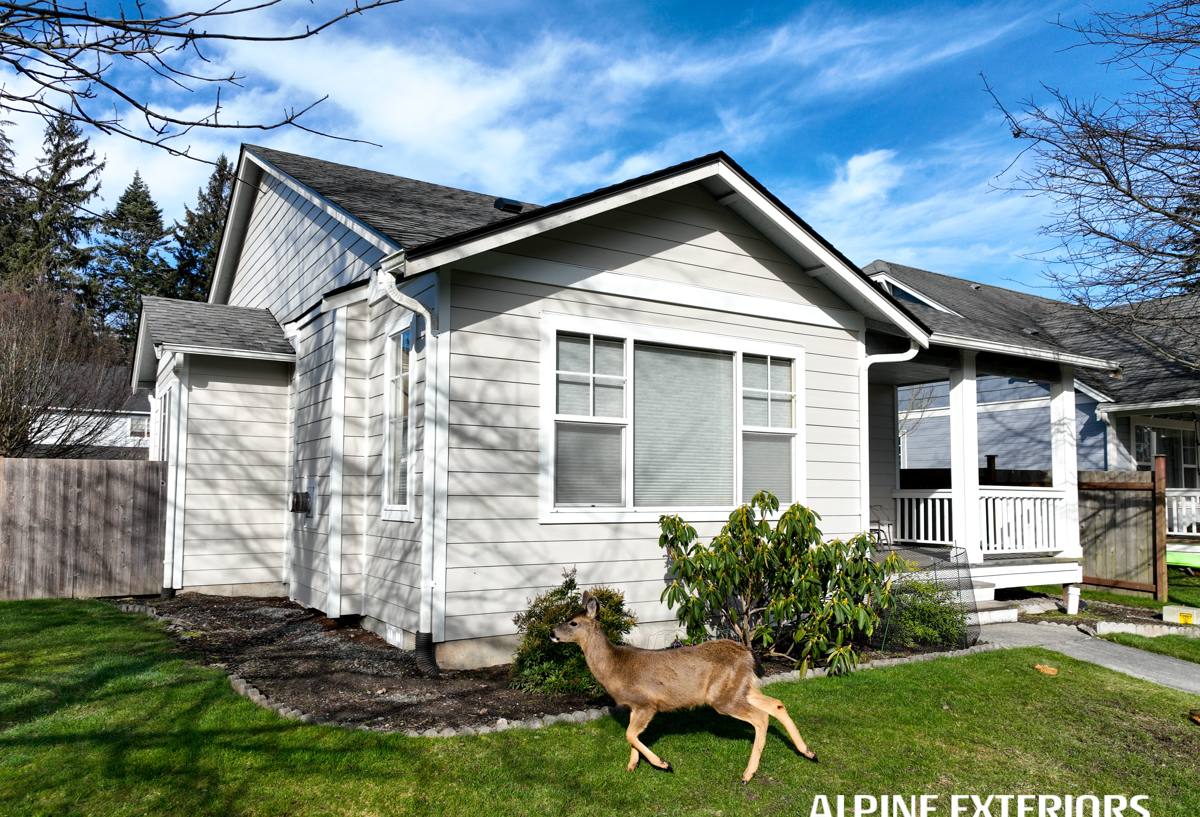
What Salt Air, Driving Rain, and Moss Season Actually Do to Windows
Salt Air
Airborne salt accelerates corrosion on anything metal — hardware, hinges, screws, and especially lower-grade aluminum components. Over years, it can pit finishes and cause fasteners to weaken well before they would inland. It also tends to leave a fine residue on glass and frames that, left alone, can degrade certain coatings and seals faster than a dry-climate installation would ever see.
Wind-Driven Rain
Rain that comes in at an angle, pushed by wind off the water, doesn't behave like rain falling straight down. It gets forced up under trim, into gaps, and behind sills if the flashing and sealant details aren't correct. A window can look properly installed and still leak in a wind-driven storm if the water management behind the trim wasn't built for that kind of weather.
Moss Season
Whatcom County's long wet season keeps north-facing walls, sills, and trim damp for extended stretches. Moss and algae hold moisture against wood and painted surfaces, which is exactly the environment that starts rot at a window's weakest points — the bottom corners of the frame and the sill. A window installed with the right drainage path sheds that moisture; one that traps it will show problems within a few seasons.
Signs a Lummi Island Home's Windows Need Attention
Because of the exposure out here, window problems tend to show up earlier and more visibly than they would on a similar home twenty miles inland. Homeowners on the island should watch for:
- Soft or discolored wood at the bottom corners of the frame or sill
- Fogging or a hazy film between panes of double-pane glass — a sign the seal has failed
- Drafts you can feel near the frame edges on a windy day
- Paint that's bubbling, peeling, or chalking faster on window trim than on the rest of the siding
- Visible corrosion or chalky white residue on hardware or aluminum components
- Moss or dark staining building up on the sill or the trim just below the window
- Windows that are noticeably harder to open, close, or lock than they used to be
Any one of these on its own might just mean routine maintenance. Several together, especially on windows facing the water or prevailing wind, usually means the installation or the window itself has reached the end of its useful life.
What a Correct Window Installation Actually Involves
Setting a new window into a rough opening looks simple from the outside. The parts that determine whether it holds up to this climate are mostly hidden once the trim goes back on.
Flashing and Water Management
Every opening needs a drainage plane that directs any water that gets past the exterior finish back out and away from the wall framing — not into it. That means correctly lapped flashing tape at the sill, jambs, and head, in the right order, so water is shingled downward and out rather than trapped behind the window. On a home taking direct wind-driven rain, this detail is not optional trim work — it's the difference between a window that's dry in ten years and one that's rotting the wall around it.
Sealant and Fastening
The right sealant, applied at the right points (and not over-sealed in ways that trap water instead of releasing it), plus corrosion-resistant fasteners suited to a marine environment, keep the installation performing instead of quietly failing behind the trim.
Insulation and Air Sealing
The gap between the window frame and the rough opening needs to be filled with the right low-expansion foam or backer rod and sealant — not stuffed with fiberglass, which does little to stop air movement and nothing to manage moisture.
Level, Plumb, and Square
A window that's out of square will bind, won't lock properly, and puts uneven stress on the seals — which shortens the life of the glass unit itself. This is basic craftsmanship, but it's also the step most often rushed on a fast installation.
Choosing Window Materials for Coastal and Island Exposure
Frame material affects how a window holds up to salt air, moisture, and UV over time. There's no single "best" choice for every home — it depends on your budget, your home's style, and how much maintenance you want to take on.
| Frame Material | Salt Air / Corrosion Resistance | Maintenance | Typical Trade-Offs |
|---|---|---|---|
| Vinyl | Good — won't corrode or rust | Low; occasional cleaning | Budget-friendly; limited color options; can expand/contract with temperature swings |
| Fiberglass | Very good — stable and rot-proof | Low | Higher upfront cost; handles the wide humidity swings of a marine climate well |
| Aluminum | Fair unless marine-grade and properly coated | Moderate — watch for pitting near the coast | Slim sightlines, but a poor thermal performer without a thermal break |
| Wood / Wood-Clad | Depends entirely on the cladding and upkeep | Highest — regular painting/sealing required | Classic look; the cladding and finish quality matter more here than almost anywhere else |
For homes taking direct exposure off the water, we generally steer homeowners toward vinyl or fiberglass for the frame, paired with hardware rated for coastal or marine use. That's not a knock on wood-clad windows — they can look great — but they demand a maintenance commitment that not every homeowner wants to sign up for out here, and we'll always tell you that honestly before you buy.
Our Installation Process
- On-site assessment: We look at existing window condition, sill and framing health, sun/wind exposure on each elevation, and any signs of past water intrusion.
- Product selection: We walk through frame material, glass package, and hardware options suited to the specific exposure of your home, not a generic recommendation.
- Scheduling around weather and ferry logistics: Island jobs get planned around tide-friendly ferry sailings and a realistic weather window, so materials, crew, and equipment arrive together and the opening isn't left exposed longer than it has to be.
- Removal and opening inspection: Once the old window is out, we check the framing and sheathing underneath for rot or prior water damage before anything new goes in.
- Flashing, install, and seal: The new window is set level, plumb, and square, flashed and sealed per the details above, and insulated correctly around the frame.
- Trim and finish: Exterior and interior trim is reinstalled or replaced, and everything is cleaned up before we leave.
- Final walkthrough: We check operation, locks, and seals with you before calling the job done.
Why the Ferry Changes How This Job Should Be Planned
Getting to Lummi Island means a ferry crossing, and that's a real scheduling factor, not just a detail. A contractor who doesn't normally work the island can end up making extra crossings for forgotten materials, tools, or trim — which costs you time and sometimes money. We plan window jobs out there as a complete trip: materials staged, tools loaded, and the crew ready to work a full day, so the opening isn't sitting exposed to the weather while someone runs back for a part. Knowing the sailing schedule and building it into the plan is a small thing that makes a real difference on install day.
What Affects the Cost
| Factor | Why It Matters |
|---|---|
| Number of windows and sizes | Larger openings and full-frame replacements take more material and labor than a simple pocket install |
| Frame material and glass package | Vinyl, fiberglass, and wood-clad price differently; upgraded glass (Low-E coatings, argon fill) adds cost but pays off in comfort and condensation resistance |
| Condition of the existing opening | Rot or water damage found during removal adds repair work before the new window can go in |
| Full-frame vs. insert replacement | Replacing down to the studs costs more than fitting a new window into a sound existing frame, but it's sometimes the only correct fix |
| Access and logistics | Second-story windows, tight access, or island scheduling can add time to the job |
We give straightforward, written estimates so you know what you're paying for and why — no vague allowances that turn into surprises later.
Why Hire a Crew That Already Works Lummi Island
A window installer who mainly works dry inland neighborhoods isn't necessarily going to get the flashing details, material choices, or scheduling wrong — but a crew that's already done this work on the island has already run into the specific problems this exposure creates and built habits around avoiding them. We know what marine air does to hardware over a few years, what a poorly flashed sill looks like once it's finally opened up, and how to plan a visit so your home isn't sitting with an open wall cavity longer than necessary. That familiarity shows up in fewer surprises and a job that's built to actually hold up to the conditions it'll face.
Get a Free, No-Pressure Estimate
If your windows on Lummi Island are showing their age, or you're planning ahead before the next wet season sets in, we're happy to take a look and give you an honest assessment — no pressure, no obligation. Use the form below to request a free estimate, and we'll walk you through what your home actually needs.