 Ferndale Siding
 Window Replacement Built for Nooksack's Weather, Not Just Its Houses
Nooksack sits in a part of Whatcom County that asks a lot of a window. Winters bring long stretches of driving rain that comes in sideways more often than straight down. Summers are mild but humid enough that moisture doesn't dry out of building materials as fast as homeowners expect. And year-round, the area's damp, shaded microclimates keep moss and algae active on siding, trim, and window sills longer than in drier parts of the state. None of that is exotic information to anyone who's lived here a while, but it matters enormously when you're deciding what kind of window to put in your walls and how it gets installed. A window that's rated fine for a dry inland climate can still fail here in five to eight years if it's installed without attention to local conditions.
We work window replacement jobs throughout the Ferndale area, including Nooksack, and we've seen what holds up and what doesn't. This page is about that one job — window replacement — done specifically for homes in this part of Whatcom County.
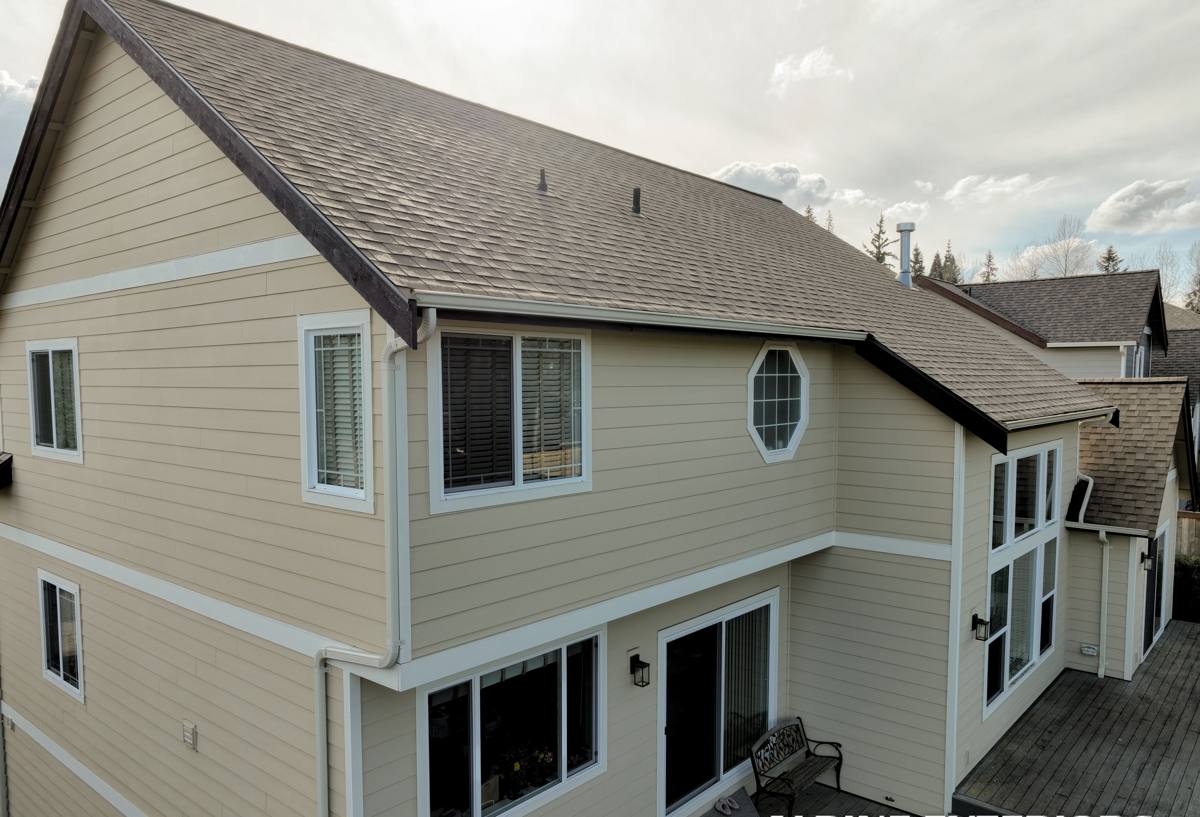
What Constant Moisture Actually Does to a Window Over Time
Window failure around here rarely shows up as one dramatic problem. It's usually a slow accumulation of small ones:
- Wood or composite sills that stay damp longer than they dry, leading to soft spots and paint failure at the lowest point of the frame
- Seal failure in older double-pane glass, showing up as fogging or a milky haze between the panes
- Weatherstripping that hardens, cracks, or compresses over years of wet-dry cycling, letting drafts and water in around the sash
- Moss and algae growth on horizontal trim and sills that holds moisture against the wood instead of letting it shed
- Condensation on interior glass in colder months, a sign the unit's insulating value has dropped or indoor humidity isn't being managed
Any one of these is manageable. Left alone through a few more wet seasons, they compound — water finds the weak point, gets behind the trim, and starts affecting the framing and sheathing around the window opening, not just the window itself.
Signs a Nooksack Home Is Due for Window Replacement
Visible signs
Fogged or hazy glass, visible gaps around the sash, paint peeling specifically at the sill, soft or spongy wood when you press a thumb into the frame, and moss or dark staining that keeps returning no matter how often it's cleaned off.
Less visible signs
A noticeable draft near the window even with it closed and locked, windows that are hard to open or close because the frame has swollen or shifted, a jump in heating costs without any other explanation, and condensation forming between the panes rather than on the surface — that one specifically means the seal is gone and the unit can't be repaired, only replaced.
If you're only seeing one or two of these on one window, that can sometimes be addressed without a full house re-window. If you're seeing several signs across multiple windows, especially ones facing the prevailing wind and rain direction, that's usually a sign the whole set is reaching the end of its service life together, since they were installed at the same time and have weathered the same seasons.
New Construction vs. Retrofit: Why the Installation Method Matters as Much as the Window
This is the part of a window job that gets skipped over in a lot of sales conversations, and it's the part that determines whether the new window actually solves your moisture problem or just delays it.
Retrofit (pocket) replacement installs a new window frame inside the existing opening, leaving the surrounding trim and siding undisturbed. It's faster and less invasive, and it's a reasonable choice when the existing frame, sill, and surrounding wall are still sound. But if there's already hidden rot or a history of water intrusion at that opening, a retrofit installs a new window on top of an old problem.
Full-frame (new construction) replacement removes the window down to the rough opening, exposing the framing, sheathing, and flashing underneath. It's more work, but it's the only method that lets us actually see and fix what's happening behind the window — replace damaged flashing, address any rot in the framing, and properly integrate new water management with the existing siding. For a home in this climate with any history of leaks, staining, or soft trim, we'll usually recommend this even though it costs more, because installing a great window over a bad flashing detail just hides the problem for a while.
Part of our job on the estimate visit is telling you honestly which one your situation calls for — not defaulting to the cheaper option to win the bid, and not upselling a full-frame job where a retrofit will genuinely do the job.
Choosing Materials and Glass for This Climate
There's no single "best" window — there's a best fit for your home, your budget, and how much of the region's weather that particular window will face (a west-facing window catching prevailing rain needs to perform harder than a sheltered one under an eave).
| Frame Material | How It Handles Local Moisture | Maintenance | Typical Trade-Off |
|---|---|---|---|
| Vinyl | Won't rot or corrode; performs well in wet climates | Low — occasional cleaning | Fewer color/finish options; can't be painted a different color easily |
| Fiberglass | Very stable, minimal expansion/contraction, excellent moisture resistance | Low | Higher upfront cost than vinyl |
| Wood-clad | Good if the exterior cladding is intact; failure point is where the clad meets the frame | Higher — exterior clad needs monitoring, interior wood needs occasional refinishing | Best look for some homes; more sensitive to installation quality |
| Aluminum | Durable but conducts cold and can condense more in our winters unless thermally broken | Low | Not our first recommendation for primary living-space windows here |
On glass, we typically spec dual-pane units with a low-E coating and an argon fill as the baseline for this area — it manages condensation better and keeps energy costs down through our long shoulder seasons. Triple-pane is worth discussing on north-facing rooms or homes with especially high heating costs, but for most Nooksack homes it's not always the cost-effective choice over a quality dual-pane unit.
How Our Window Replacement Process Works
- On-site assessment — we look at each window individually, not just the house as a whole, since exposure varies wall to wall
- Honest recommendation — retrofit vs. full-frame, material and glass options that fit your budget, and which windows can wait versus which shouldn't
- Written estimate — clear on scope, materials, and what's included so there's no ambiguity later
- Installation — proper flashing and sealing at every opening, not just setting the unit and caulking the outside
- Site cleanup — old windows and debris hauled off, work area left clean
- Walkthrough — every window operated and checked with you before we consider the job done
What Drives the Cost
| Factor | Why It Matters |
|---|---|
| Retrofit vs. full-frame | Full-frame involves more labor and possible framing/flashing repair |
| Frame material | Vinyl generally costs less upfront than fiberglass or wood-clad |
| Window size and configuration | Large picture windows, bays, and custom shapes cost more than standard sliders or double-hungs |
| Number of windows and access | Second-story or hard-to-access windows take more time and equipment |
| Existing condition | Hidden rot found once we open the wall adds scope — we flag this before proceeding, not after |
We don't quote a per-window number without seeing the house, because the honest number depends on all of the above. What we can tell you is that we won't pad a bid with unnecessary scope or shave corners that show up as callbacks two winters later.
Why It Matters That We Already Work in Nooksack
A crew that installs windows across a range of climates has to relearn the local conditions every time they take a job somewhere new. We don't — we already know how Whatcom County's rain behaves against different wall orientations, which sill details tend to hold up against years of moss and standing moisture, and how to sequence a job around a wet forecast instead of getting caught mid-install when the weather turns. That familiarity shows up less in the sales pitch and more in the small decisions on install day: how the flashing gets lapped, how much slope the sill gets, where the sealant actually needs to go versus where it's just cosmetic.
Before You Hire: A Practical Checklist
- Ask whether they'll recommend retrofit or full-frame for your specific windows, and why
- Ask what happens if they find rot or damage once they open the wall — get that answer in writing before work starts
- Confirm licensing, bonding, and insurance for work in Washington
- Ask about the manufacturer's warranty versus the installer's workmanship warranty — they're two different things
- Get the glass spec in writing (pane count, coating, gas fill) so you know exactly what you're comparing between bids
- Ask how they handle disposal of the old windows and job site cleanup
If you're weighing whether it's time to replace windows on a Nooksack home, we're glad to take a look and give you a straight answer — including telling you if a full replacement isn't actually needed yet. Reach out for a free, no-pressure estimate using the form below.