 Ferndale Siding
 Roofing Sandy Point Homes for Whatcom County's Coastal Climate
Sandy Point sits close enough to the water that its roofs live a different life than a roof ten miles inland in Ferndale or Bellingham. Salt-laden air off the Strait, near-constant winter moisture, and long stretches of shade from mature trees add up to conditions that wear on asphalt shingles faster than a typical suburban lot. If you own a home out here, you already know the drill: moss creeping across the north slope by February, gutters that need checking more than once a season, and metal fasteners that corrode faster than they would twenty minutes east.
We're a local siding and exterior crew that also handles asphalt shingle roofing, and Sandy Point is a neighborhood we already know from doing work in the area. That matters more than it sounds like it should. A roof here isn't just "a roof" — it's a roof that has to shed water fast, resist wind off the water, and survive moss and moisture without the shingles curling or the decking rotting underneath.
What Sandy Point's Climate Actually Does to a Roof
Salt Air and Metal Components
Every roof has metal in it somewhere — flashing, valleys, drip edge, nail heads, vent caps. Salt air accelerates corrosion on all of it. On a standard inland roof, cheap galvanized fasteners might last the life of the shingles. Close to the water, they can start rusting and staining well before the shingles themselves are due for replacement. We spec corrosion-resistant fasteners and flashing metals on coastal jobs for exactly this reason, not because it's required everywhere, but because it's required here.
Driving Rain and Wind-Driven Water
Rain that comes in mostly straight down is one problem. Rain that comes in sideways off open water is another. Wind-driven rain finds weaknesses that vertical rain never tests — under-lapped shingles, marginal flashing at walls and chimneys, nail placement that's an inch off spec. A roof built to a minimum standard might perform fine most winters and then leak during the one storm that pushes rain sideways under the shingle tabs. Sandy Point gets more of those storms than most of the county.
Moss, Shade, and Slow-Drying Slopes
Tree cover and coastal humidity together mean some roof slopes here barely dry out between rains for months at a time. Moss doesn't just look bad — it lifts shingle edges as it grows, holds moisture against the shingle surface, and works its way into nail holes over years. A moss-heavy roof is aging faster than its calendar age suggests, even if it isn't leaking yet.
What a Correct Asphalt Shingle Job Looks Like Out Here
A roof built for Sandy Point isn't a different product than a roof built anywhere else — it's the same asphalt shingle system installed with more attention to the details that coastal exposure punishes. That starts underneath the shingles, not with the shingles themselves.
- Ice-and-water shield at eaves and valleys — a self-adhering membrane at the vulnerable low points, standard on coastal work even where it might be optional inland
- Synthetic underlayment across the full deck — a second line of defense if wind-driven rain ever gets past the shingles
- Corrosion-resistant fasteners and flashing — matched to the salt exposure, not the cheapest option that meets code
- Proper nailing pattern and placement — the single biggest factor in wind and rain resistance, and the easiest thing for a rushed crew to get wrong
- Balanced attic and roof ventilation — keeps the deck dry from underneath, which matters when the outside air is already damp most of the year
- Valley and wall-flashing detail — where the majority of real leaks start, coastal or not
None of this is exotic. It's the difference between a roof installed to pass and a roof installed to last through what this specific location throws at it.
Shingle Options and How They Hold Up Here
Most Sandy Point homes are good candidates for standard architectural (laminated) asphalt shingles rather than older three-tab styles. Architectural shingles are heavier, have a thicker wind-rated construction, and generally handle driving rain and gusty coastal wind better. The table below is a general guide, not a quote — actual pricing depends on roof pitch, access, tear-off scope, and current condition.
| Shingle Type | Typical Lifespan | Coastal Suitability | Relative Cost |
|---|---|---|---|
| 3-tab asphalt | 15–20 years | Lower wind rating, less ideal near open water | Lowest |
| Architectural (laminated) asphalt | 25–30 years | Better wind resistance, our standard recommendation here | Moderate |
| Impact-resistant architectural | 25–30+ years | Added durability, useful on exposed or storm-prone sites | Higher |
| Premium/designer laminate | 30+ years | Strong performance, driven mostly by appearance goals | Highest |
We don't push a particular brand as a status symbol. We recommend what fits the home's exposure, the roof's pitch and complexity, and the homeowner's budget honestly — including telling you when a mid-tier architectural shingle is the smarter choice over a premium line that costs more without buying you meaningfully more protection for this location.
Reading Your Roof: Signs Sandy Point Homeowners Shouldn't Ignore
Because moisture damage here can build slowly and quietly behind moss or under shade, it helps to know what to actually look for before it turns into a bigger repair.
- Moss or dark streaking concentrated on shaded or north-facing slopes
- Granules collecting in gutters or at downspout outlets
- Shingle edges that look lifted, curled, or cupped rather than lying flat
- Rust staining running from nail heads, vents, or flashing
- Soft spots or sagging when walked on (a sign of deck moisture, not just shingle wear)
- Daylight visible through the roof deck from inside the attic
- Water stains on interior ceilings, especially after a wind-driven rain event
Catching these early is almost always cheaper than waiting. A moss problem addressed this year is a cleaning and a maintenance plan. The same moss problem left three more winters is often a deck repair.
Our Process on a Sandy Point Roof
Inspection and Honest Assessment
We start by getting on the roof, not just looking at it from the ground. We check shingle condition slope by slope, look at flashing at every valley, wall, and penetration, and check the deck for soft spots. We'll tell you plainly if a repair is enough or if a full replacement is the more honest long-term answer.
Scope and Materials Walkthrough
Before any work starts, we walk through shingle options, underlayment and flashing specs, and what the coastal-grade details will cost versus a bare-minimum install. You should understand what you're paying for and why, not just see a total number.
Tear-Off and Deck Check
Old material comes off down to the deck so we can actually inspect the sheathing for rot or soft spots — something you can't fully evaluate from the outside, and something that matters more here given how often moisture sits against these roofs.
Underlayment, Flashing, and Shingle Installation
Ice-and-water membrane at eaves and valleys, full synthetic underlayment, corrosion-resistant flashing and fasteners, then the shingles installed to manufacturer nailing spec — not a faster, looser pattern that happens to pass a quick glance.
Cleanup and Final Walkthrough
Magnetic sweep for nails, full site cleanup, and a walkthrough where we point out what we did and answer questions before we consider the job finished.
Why a Crew That Already Works Sandy Point Matters
A roofing crew that's worked this specific area has already seen how moss behaves on these lots, how much wind-driven rain the exposed sides of a roof take in a real winter storm, and which detailing shortcuts show up as leaks two years later. That's different from a crew running a general playbook built for a drier, more sheltered part of Whatcom County. We're not asking you to take that on faith — ask any local contractor pointed questions about how they handle valley flashing, fastener choice, and moss-prone slopes specifically for homes near the water, and you'll hear the difference between general experience and local experience quickly.
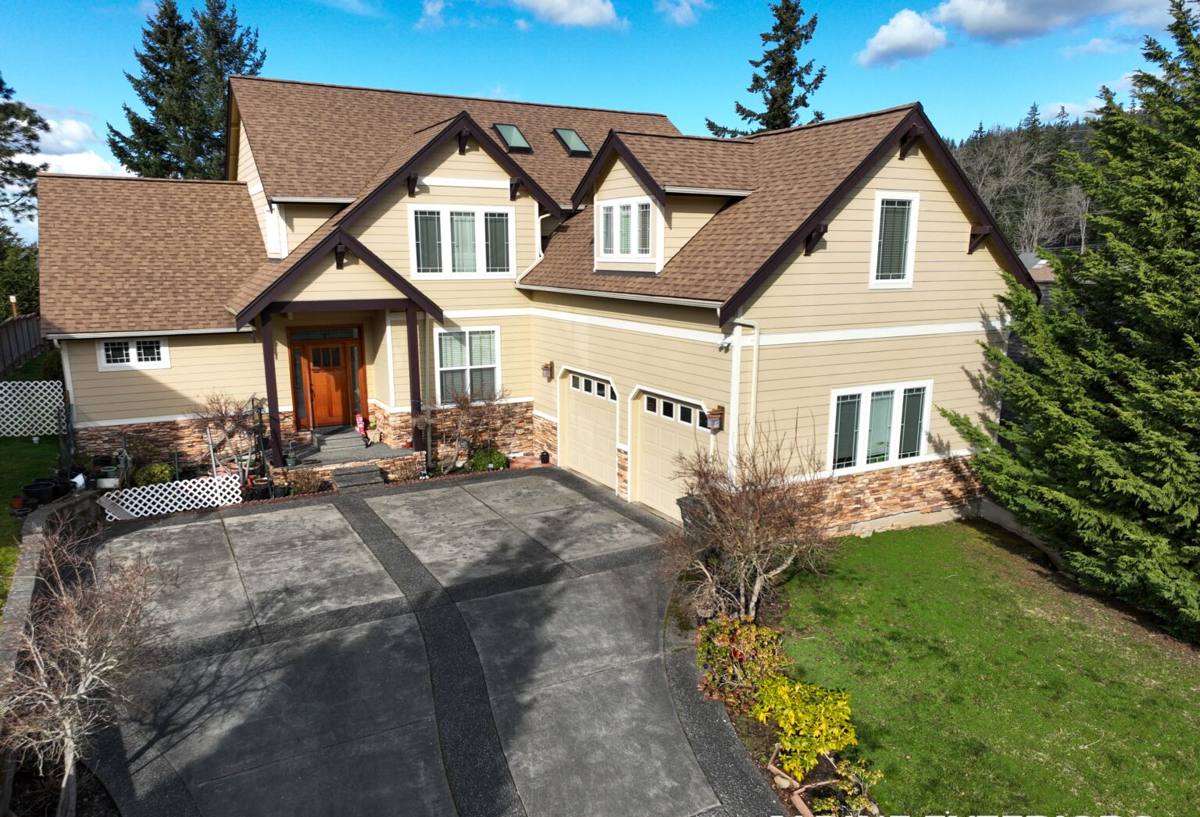
We're a Ferndale-based crew, and jobs like this one are exactly why we structure our process the way we do — because a roof built to a generic standard is the roof that ends up needing early repairs out here.
Maintenance That Actually Extends a Sandy Point Roof's Life
A well-installed roof still needs some upkeep in this climate, and a little attention goes a long way:
- Have moss treated or removed before it lifts shingle edges — don't wait for it to look bad from the street
- Keep gutters clear so water isn't backing up under the shingle edge, especially under trees
- Check flashing at chimneys, vents, and walls every couple of years, since these are the first points to fail
- Trim back overhanging branches to cut down on shade, debris, and moss-friendly conditions
- Have a professional look at the roof after any unusually severe wind event, not just when a leak shows up
Ready When You Are
If you're noticing moss, aging shingles, or you just want a straight answer about how much roof life you've got left, we're glad to take a look. We offer free, no-pressure estimates for Sandy Point homeowners — use the form below to get one scheduled.