 Ferndale Siding
 Storm Damage Roof Repair in Blaine, Washington
Blaine sits right on the water at the northern edge of Whatcom County, which means it takes weather most inland homes never see. Winter windstorms come off the Strait of Georgia with little to slow them down, driving rain sideways into roof edges and flashing that were never designed to handle water moving horizontally instead of down. Add in salt air off the bay and a moss season that runs longer here than almost anywhere else in the county, and you have a roof environment that ages faster than the average homeowner expects. We repair storm-damaged roofs across Whatcom County, and Blaine's roofs get a specific kind of abuse that calls for a specific kind of repair.
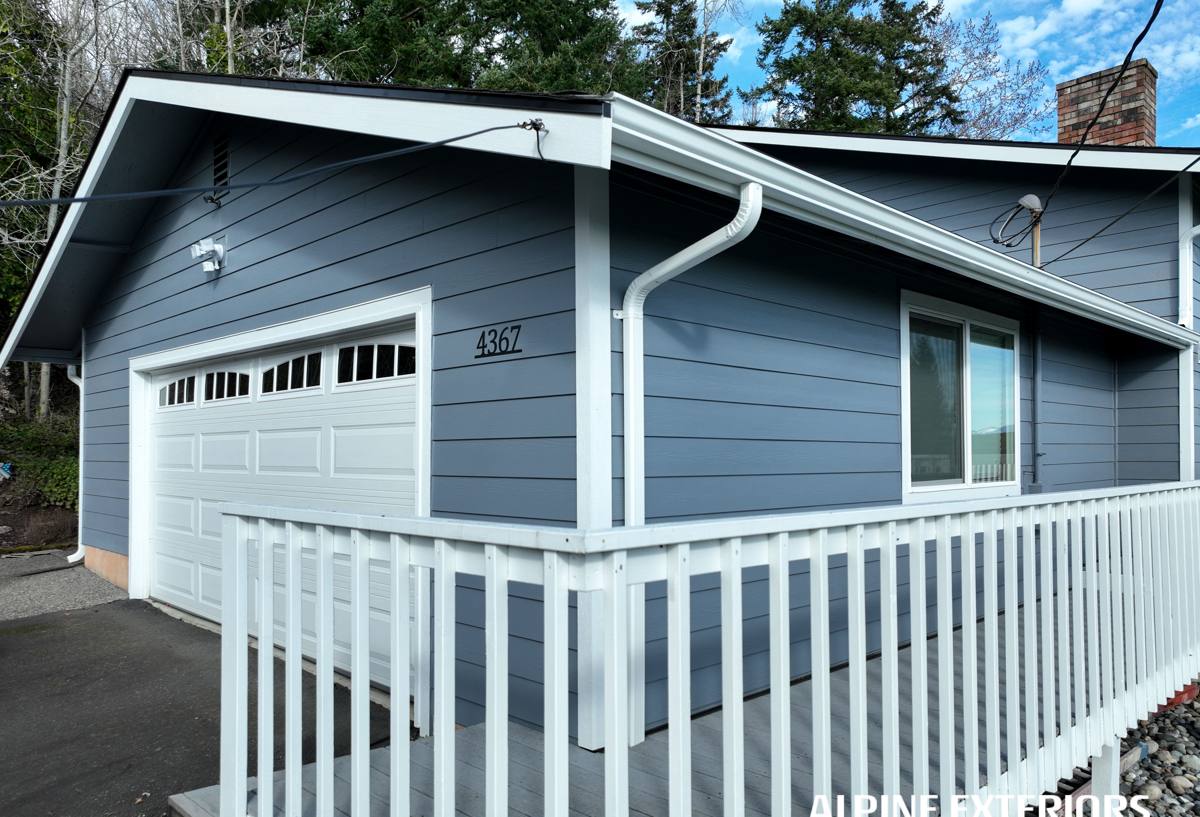
Why Blaine's Coastal Climate Is Hard on Roofs
A roof a few miles inland and a roof exposed to open water face different problems, even under the same storm. Three things stand out in Blaine:
Salt Air and Corrosion
Metal flashing, nails, and fasteners corrode faster near salt water. A flashing detail that would last decades in a sheltered neighborhood can start rusting and pulling away from the roof deck years earlier here. Once a fastener corrodes, it loses its grip, and that's exactly where wind gets underneath shingles during a storm.
Driving, Wind-Blown Rain
Most roofing is built to shed water moving straight down. Wind off the water pushes rain sideways and even upward under eaves, into vents, and behind flashing that's only sealed against vertical water flow. This is why a roof can look intact after a storm but still be leaking into the attic — the damage is at a seam or lap joint, not a missing shingle.
A Long Moss Season
Shaded, moisture-heavy roofs in this part of Whatcom County stay damp longer between storms, which gives moss more time to establish. Moss holds water against the roofing material and lifts shingle edges as it grows, which weakens exactly the areas that wind needs to get a foothold during the next storm. Storm damage and moss damage often show up on the same roof for the same underlying reason: the roof stays wet longer than it should.
Common Storm Damage We See on Blaine Roofs
After a windstorm or a heavy rain event, the damage isn't always obvious from the ground. Here's what we actually find during post-storm inspections:
- Shingles lifted, cracked, or torn loose at ridges, edges, and valleys — the highest-wind-exposure areas
- Flashing pulled away from chimneys, skylights, and roof-to-wall junctions
- Granule loss on asphalt shingles from wind-driven debris, which shortens the shingle's remaining life even without a visible tear
- Gutters torn loose or pulled away from fascia boards, often taking fascia damage with them
- Moss mats that lifted and shifted during high wind, opening gaps under shingle tabs
- Saturated or soft roof decking where water has been getting in slowly for longer than the homeowner realized
- Debris punctures from tree limbs, especially on roofs near mature trees or windbreaks
Some of this is visible from the ground or a ladder. Some of it — especially decking that's gone soft — only shows up once we're actually on the roof or in the attic looking at the underside of the sheathing.
What a Correct Storm Repair Actually Involves
A storm repair done right is not just replacing whatever's visibly missing. It's tracing the damage back to its actual boundary and fixing the whole affected area, not just the part you can see from the driveway.
Inspection Before Anything Else
We check the roof surface, the flashing details, the gutters, and — when there's any sign of water intrusion — the attic side of the deck. Water that got in during one storm doesn't always show a stain right away, so we look for damp insulation, discoloration on rafters, and soft spots underfoot on the roof itself.
Matching Materials, Not Guessing
Patch repairs done with the wrong shingle profile, weight, or color stand out and can also create a new weak seam where old and new material meet. We match existing roofing as closely as the product line allows, and where an exact match isn't available, we explain the honest trade-off rather than pretending it isn't there.
Flashing Gets Full Attention
Because Blaine's storms drive rain sideways, flashing is usually where repeat leaks come from if it's rushed. We re-flash to shed wind-driven water, not just rainfall — sealing laps and step-flashing correctly rather than relying on caulk as the primary defense.
Decking Replacement When It's Actually Needed
If sheathing has gone soft from sustained moisture, no amount of new shingle work fixes that — the deck underneath has to be replaced or it will keep failing. We tell homeowners plainly when this is the case rather than shingling over a problem that will resurface.
Repair, Partial Replacement, or Full Replacement?
Not every storm-damaged roof needs the same scope of work. The right call depends on the age of the roof, how widespread the damage is, and what we find once we're actually up there.
| Situation | Typical Approach | What Drives the Decision |
|---|---|---|
| Isolated wind damage, roof under 10-15 years old | Targeted repair — replace affected shingles and flashing | Surrounding roofing is still sound and shingles are available to match |
| Damage concentrated in one section or slope | Partial replacement of that section | Rest of the roof shows no wind or moisture damage on inspection |
| Widespread granule loss, multiple leak points, roof nearing end of service life | Full replacement | Repairing piecemeal would cost nearly as much as replacement within a few years |
| Soft or rotted decking discovered during repair | Deck replacement plus roofing above it | New shingles over failing decking won't hold or perform correctly |
We'll always walk you through which category your roof falls into and why, in plain terms, before any work starts.
What This Tends to Cost
Every roof is different, and we won't quote a number without inspecting yours, but broadly: small flashing and shingle repairs after a storm are the least expensive fix, section replacement costs more depending on size and pitch, and full replacement is the largest investment but resets the clock on the whole roof. Steeper roofs, multiple stories, and difficult access all add labor time regardless of which category the job falls into. We give a written estimate before any work begins so there are no surprises.
Working With Storm Damage Insurance Claims
Many storm repairs in Blaine get filed as insurance claims, and we've worked alongside that process many times. A few honest notes:
- Document damage with photos as soon as it's safe to do so, before any temporary repairs
- An adjuster's scope of work and the actual repair scope don't always match — we can walk through discrepancies with you
- We provide straightforward written estimates and will point out what we find, whether or not it changes the claim outcome
- We're not in the business of inflating damage to maximize a claim — our job is to tell you what the roof actually needs
Moss Season and Long-Term Roof Health in Blaine
Because Blaine stays damp longer between storms than drier parts of Whatcom County, moss is a recurring issue rather than an occasional one. A roof that's cleared of moss and debris ahead of the fall storm season sheds wind-driven rain far better than one going into winter with moss mats already lifting shingle edges. We recommend a simple annual check: clear moss and debris in late summer or early fall, check flashing and gutters before the first heavy windstorm, and address any lifted or cracked shingles before they become an entry point for water. This is far cheaper than storm repair after the fact, and it's the single biggest thing homeowners here can do to reduce how often they need us for storm damage at all.
Signs You Should Have Your Roof Checked After a Storm
- Shingles or shingle fragments in the yard or gutters after a windstorm
- Water stains on ceilings or upper walls, even faint ones
- Visibly lifted, curled, or missing shingles from the ground
- Gutters pulled away from the roofline or sagging
- A musty smell in the attic or upper floor after heavy rain
- Daylight visible through the roof deck from inside the attic
- Granules collecting at downspout outlets, signaling accelerated shingle wear
If any of these apply, it's worth having the roof looked at before the next storm rather than after it causes further damage.
Why a Crew That Already Works Blaine Matters
Roofing crews that mainly work drier, more sheltered parts of Whatcom County don't always account for how differently a coastal roof in Blaine ages. Salt-air corrosion on fasteners, the specific way wind-driven rain attacks flashing near open water, and a moss season that runs longer than it does even a few miles inland all change what a correct repair looks like. A crew that regularly works this stretch of the county recognizes these patterns immediately instead of treating every roof the same way. That familiarity also means faster response after a storm, since we already understand which areas of Blaine tend to take the worst of a given wind direction.
If your roof took damage in a recent storm, or you just want an honest look before the next one hits, we're happy to come out for a free, no-pressure estimate. There's no obligation — just a straight assessment of what your roof needs and why. You can request one using the form below.