 Ferndale Siding
 Why Decking Near Lummi Nation Takes a Different Approach
Homes in and around the Lummi Nation area sit close enough to Bellingham Bay and the Salish Sea that salt-laden air is a daily fact of life, not an occasional nuisance. Add Whatcom County's long wet season — months of driving rain followed by a shoulder season where shade and moisture combine to grow moss on almost any horizontal surface — and you have conditions that punish a deck built to a generic spec. A deck that would hold up fine in a drier inland town can start showing fastener corrosion, soft framing, or a slick green film within a couple of seasons out here.
That doesn't mean composite decking is the wrong material for this area — it's usually the right one. It means the design, the substructure, and the hardware all need to be chosen with this specific climate in mind, not just the deck boards themselves.
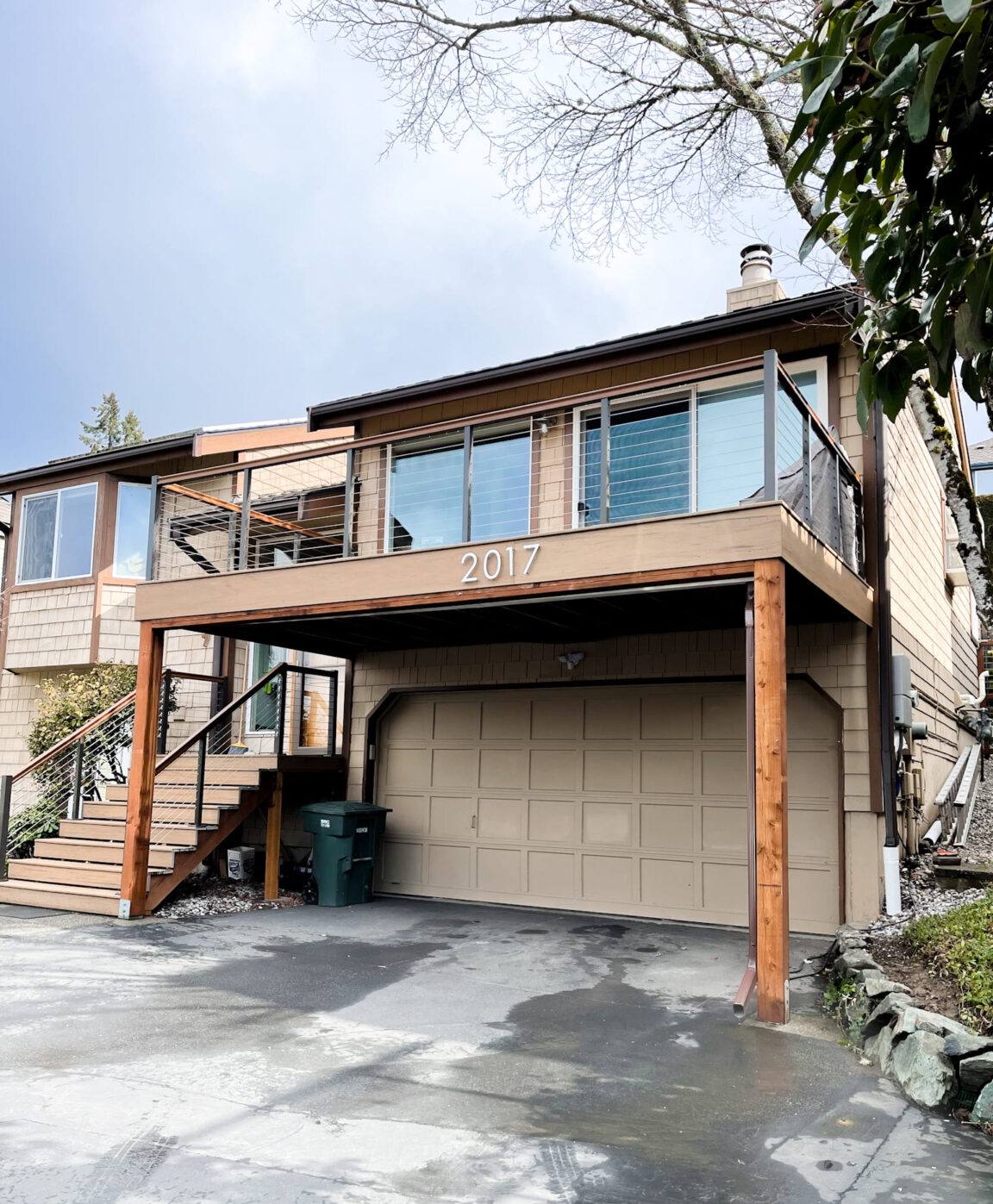
What Salt Air, Rain, and Moss Actually Do to a Deck
Salt Air
Airborne salt accelerates corrosion on any exposed metal — screws, joist hangers, post bases, and railing brackets. Once a fastener starts rusting, it weakens, stains the surrounding decking, and can eventually fail. This is one of the most common reasons a deck near the water needs early repair even though the boards themselves look fine.
Driving Rain
Wind-driven rain doesn't just fall straight down — it gets pushed sideways into railing posts, ledger connections, and any gap where water can collect instead of shed. Over time, standing water at a poorly flashed ledger board or an under-ventilated frame is what leads to hidden rot in the structure underneath a deck, even when composite boards are used on top.
Moss and Algae
Shaded decks, north-facing decks, and decks tucked under tree cover in this area grow moss faster than most homeowners expect. Moss holds moisture against the board surface, and on a poorly ventilated deck that moisture has nowhere to go. It also makes a deck surface genuinely slippery — a real safety issue on stairs and ramps.
Composite Decking: What It Solves and What It Doesn't
Modern composite decking is a strong fit for this climate because the boards themselves don't rot, splinter, or need annual staining the way wood does. But composite decking is not maintenance-free, and it's not immune to the three issues above. It solves the "the board itself is rotting" problem. It does not solve poor drainage, bad ventilation underneath the deck, or corroding fasteners — those come down to how the deck is built, not just what it's built with.
| Material | Salt Air Resistance | Moss/Algae Behavior | Upkeep |
|---|---|---|---|
| Pressure-treated wood | Fair — fasteners still at risk | Holds moss readily; needs cleaning + sealing | Annual staining/sealing recommended |
| Composite (capped) | Good — board material doesn't corrode | Grows moss slower; textured boards can still hold spores | Periodic wash, no staining |
| PVC decking | Very good | Sheds moisture well, low moss uptake | Periodic wash; higher material cost |
What a Correct Composite Deck Build Looks Like Here
Substructure First
We treat the framing as the part of the job that determines whether the deck lasts. That means corrosion-resistant fasteners and hardware rated for coastal exposure, proper ledger flashing where the deck meets the house, and joist spacing that matches the specific composite product's span rating — composite boards are less rigid than wood and need tighter joist spacing than a lot of older decks were built with.
Drainage and Ventilation
Water needs a clear path off the deck and away from the house, and air needs to move underneath the deck so moisture doesn't sit trapped against the joists. On lower decks or decks close to grade, this often means grading the ground underneath, adding gaps or vents at the skirting, and sometimes installing an under-deck drainage system if the space below is used as covered storage or a patio.
Board Selection for Moss-Prone Areas
Not all composite boards behave the same way in shade and moisture. Boards with a fully capped surface and a lower-texture finish tend to shed moss spores better than heavily embossed, uncapped boards. On decks that get significant shade — common on the north or east side of a house, or under tree cover — we'll often steer homeowners toward a board line built for that specific exposure rather than whatever is cheapest.
Fasteners and Hardware
Hidden fastener clip systems reduce the number of exposed screw heads, which reduces both the visual rust spotting and the number of failure points over time. Where fasteners are exposed — stair stringers, fascia, railing posts — we use hardware rated for coastal or marine-grade exposure, not standard exterior-grade.
Our Process for a Lummi Nation Area Deck
- On-site assessment — we look at sun exposure, prevailing wind direction, existing drainage, and the condition of any existing structure before quoting anything.
- Design and board selection — sizing, layout, railing style, and composite product chosen based on shade level, budget, and how the deck will actually be used.
- Permitting — most deck work at this size requires a local permit; we handle that paperwork rather than leaving it to the homeowner.
- Demo (if replacing an existing deck) — including an honest look at the ledger and framing underneath, since that's often where the real problems are hiding.
- Framing and substructure build-out — corrosion-resistant hardware, correct joist spacing, proper flashing at the house connection.
- Composite board installation — hidden fastener systems where the product supports them, correct expansion gaps per manufacturer spec.
- Railing, stairs, and trim — matched to the board line and finished with hardware rated for the exposure.
- Final walkthrough — we go over basic care for the specific board chosen, since cleaning recommendations vary by manufacturer.
Living With a Composite Deck in This Climate
A capped composite deck in this area still needs periodic attention, just less of it than wood. A seasonal wash with a soft-bristle brush and a mild cleaner (not a high-pressure setting that can etch the board surface) keeps moss and algae from getting a foothold, especially on shaded sections. Keeping gutters and downspouts clear so runoff isn't landing directly on the deck also matters more here than in drier climates, since that's often the source of the standing water that lets moss establish in the first place.
- Rinse or wash the deck surface at least twice a year, more often on shaded sections
- Keep planters and furniture legs off the boards directly — use protective pads to allow airflow underneath
- Check railing posts and stair connections yearly for any sign of fastener corrosion
- Clear leaves and debris from between boards and at the skirting before wet season sets in
- Confirm gutters aren't dumping runoff directly onto the deck surface
What Affects the Cost
| Factor | Why It Matters Here |
|---|---|
| Deck size and layout | Larger decks and multi-level designs need more framing and drainage planning |
| Board line chosen | Higher-end capped composite costs more but handles shade/moisture better long-term |
| Substructure condition | Replacing rotted ledger or framing on an older deck adds cost but isn't optional |
| Fastener system | Hidden-fastener systems cost more up front, reduce visible corrosion over time |
| Drainage/ventilation needs | Decks close to grade or over living space may need added drainage systems |
We give a firm, itemized quote after the on-site assessment rather than a rough number over the phone — the substructure condition and shade exposure genuinely change what a given deck needs.
Why It Matters That We Already Work This Area
A crew that mostly builds decks inland doesn't think about salt air corrosion or moss-prone shading as a default part of the design — because they don't have to. Working regularly in and around Ferndale and the Lummi Nation area, we've seen which fastener choices hold up here, which board finishes shed moss better in shaded yards, and where drainage tends to get overlooked on older builds. That local pattern recognition is the difference between a deck that just meets code and one that's actually built for this specific stretch of Whatcom County.
A Straightforward Checklist Before You Hire
- Ask whether hardware and fasteners are rated for coastal/marine exposure, not just standard exterior grade
- Ask how ventilation and drainage under the deck will be handled, not just what board goes on top
- Get a written, itemized quote that separates framing, board material, railing, and permitting
- Ask which composite board line is recommended for shaded areas versus full sun, and why
- Confirm the contractor pulls the required local permit rather than skipping it
If you're planning a new deck or replacing one that's showing its age, we're happy to take a look and put together a straightforward, no-pressure estimate — just fill out the form below.