 Ferndale Siding
 Nooksack's Climate Is Harder on a Deck Than the Product Brochure Admits
Every composite decking brand shows you a photo of a dry, sunny deck. That's not what a deck in the Nooksack area actually lives through. Between the salt-tinged air moving in off the Strait, the long stretches of driving rain that come sideways off the water, and a moss season that can stretch from October well into April, a deck here is under a different kind of load than the same product installed somewhere dry and inland. None of that means composite decking is a bad choice — it's usually the right one — but it does mean the build has to account for conditions the manufacturer's warranty paperwork barely mentions.
We work on homes throughout Ferndale and the surrounding Whatcom County communities, including Nooksack, and the pattern is consistent: decks fail early not because the boards were bad, but because the framing underneath wasn't built for how wet this region stays for months at a time. Get the structure and drainage right, and a composite deck here will genuinely outlast what most homeowners expect. Get it wrong, and you're fighting moss, soft spots, and premature fastener corrosion within a few seasons.
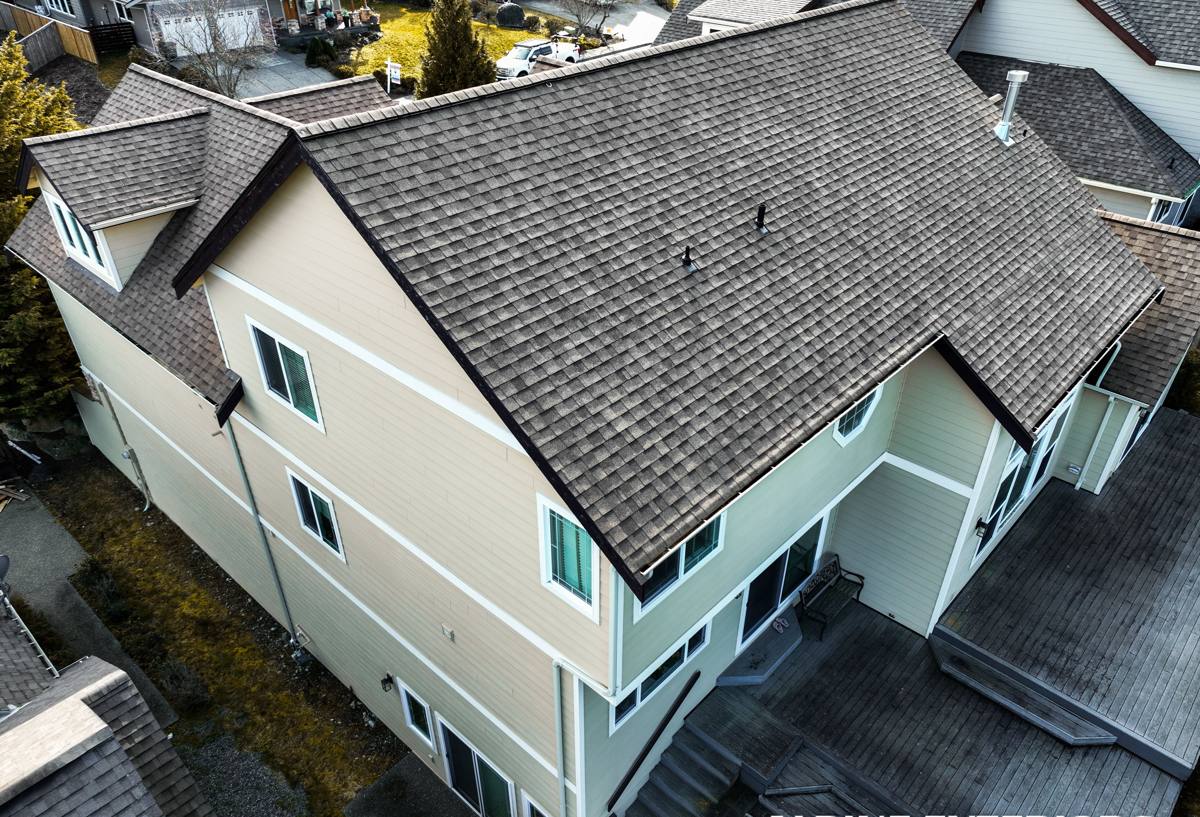
What "Correct" Composite Decking Actually Means in This Area
Framing built for wet years, not dry ones
Composite boards themselves don't rot, but the wood or steel structure underneath them still has to handle moisture correctly. In a climate where the ground stays saturated for a good chunk of the year, that means proper joist spacing for the specific composite product (not the widest spacing the brand allows on paper), joist tape or flashing tape over every framing member the decking will contact, and a substructure that's pressure-treated and detailed to shed water instead of holding it.
Board selection matched to sun, shade, and airflow
Not every part of a property gets the same exposure. A deck tucked against the house with limited afternoon sun holds moisture and grows moss faster than one that gets a full day of light and wind. We look at where the deck actually sits — how much shade it gets, how close it is to trees or fencing that block airflow, and how exposed it is to weather off the water — before recommending a board type and color. Darker boards in a shaded, damp spot are a recipe for moss buildup that shows up within a year or two.
Capped vs. Uncapped Composite: Why It Matters Here
Not all composite decking is built the same way, and the difference matters more in a wet, moss-prone climate than it does somewhere dry. Here's how the main options generally compare for a Nooksack-area install:
| Material | Moisture handling | Moss/algae resistance | Maintenance | Typical lifespan |
|---|---|---|---|---|
| Capped composite | Sealed outer shell resists water absorption | Good — smooth cap resists organic growth better than open-cell boards | Occasional wash; no staining or sealing | 25–30+ years |
| Uncapped composite | More porous; can absorb moisture at cut edges and surface | Fair — more prone to surface staining and algae in shaded areas | Regular cleaning; some fading and surface wear over time | 15–25 years |
| Pressure-treated wood | Absorbs and releases moisture constantly | Poor without upkeep — moss and algae take hold quickly in shade | Annual cleaning, staining or sealing | 10–15 years before major repair/replacement |
For most Nooksack projects, we recommend capped composite. The upfront cost is higher than uncapped boards or wood, but in a climate with this much sustained moisture, the reduced maintenance and better resistance to surface moss usually pays for itself in avoided upkeep and a longer service life.
Drainage and Moisture Management: The Part Nobody Sees
Most deck problems in this region trace back to water that had nowhere to go. This is the part of the job that doesn't show up in photos but determines whether a deck is still solid in fifteen years.
- Ledger flashing: Where the deck attaches to the house, proper flashing keeps water from working its way behind siding and into the wall structure — a common source of hidden rot that has nothing to do with the decking material itself.
- Joist protection: Every top edge and cut end of a framing member should be covered with flashing tape, not left as bare, exposed wood soaking up rain all winter.
- Board gapping: Correct spacing between boards lets water drain through instead of pooling on the surface, which matters more here given how many wet days this area sees in a typical year.
- Airflow underneath: A deck built low to the ground or against a slope with no ventilation traps moisture underneath, which speeds up moss growth on the underside of the structure and on the ground below.
- Grading away from the foundation: On decks near the house, the ground below should slope away, not pool water against the foundation wall.
Our Process for a Composite Deck Build in Nooksack
We keep the process straightforward and try to remove the guesswork for the homeowner:
- Site visit and assessment: We look at sun exposure, drainage, existing structure condition (if replacing an old deck), and how the space is actually used.
- Design and material selection: We walk through composite board options, colors, and railing choices suited to the site's shade and moisture exposure, along with an honest cost range.
- Permitting: Elevated decks in Whatcom County typically require a building permit. We handle that paperwork as part of the project so it isn't left on the homeowner's plate.
- Demolition (if applicable): Old decking and, if needed, damaged framing is removed and hauled off.
- Framing and flashing: This is where the long-term durability gets built in — treated lumber or steel framing, proper ledger flashing, joist tape, and correct spacing for drainage.
- Decking and railing installation: Boards are installed to the manufacturer's fastening specs, with attention to gapping and expansion allowances so the deck stays flat and tight over time.
- Final walkthrough: We go over the finished deck with the homeowner, including basic care so the investment holds up through the region's wet stretches.
Living With Composite Decking Through a Whatcom County Moss Season
Composite decking is genuinely low-maintenance compared to wood, but "low-maintenance" isn't "no-maintenance," especially with a moss season as long as this region gets. A little seasonal attention goes a long way:
- Sweep leaves and debris off the deck regularly in fall — trapped organic matter is what feeds moss and algae growth.
- Rinse the deck surface periodically through the wet months, especially in shaded areas that don't get direct sun or wind.
- Use a soft-bristle brush and a mild soap-and-water solution for general cleaning — avoid pressure washing at close range, which can damage the board surface.
- Check that gaps between boards stay clear of debris so water continues to drain properly.
- Inspect railing posts and any ground-level framing once a year for signs of moisture trapped underneath.
- Trim back overhanging branches or vegetation that keeps the deck surface shaded and damp longer than necessary.
Cost Factors for a Nooksack Composite Deck Project
Every project is different, but the main variables that move the price are consistent across jobs in this area:
| Factor | Why it affects cost |
|---|---|
| Deck size and shape | More square footage and complex angles or multiple levels increase material and labor |
| Board tier (capped vs. uncapped) | Capped composite costs more upfront but requires less long-term maintenance |
| Existing structure condition | Reusing sound framing costs less than a full tear-out and rebuild |
| Railing and fascia choices | Composite or metal railing systems cost more than basic wood rail options |
| Site access and grade | Sloped lots or limited equipment access can add labor time |
| Permitting and engineering | Taller or more complex decks may need additional engineering review |
As a broad range, homeowners in this area are typically looking at a moderate mid-range investment for a straightforward single-level composite deck, with costs rising for larger footprints, multiple levels, or premium board and railing selections. We give a firm, itemized number after the site visit rather than a ballpark over the phone, since the framing condition alone can swing the price significantly.
Why Hiring a Crew That Already Works in Nooksack Matters
A lot of what makes a deck last here isn't exotic — it's just not skipping the details that matter in this specific climate. A crew that regularly works in and around Ferndale and the Nooksack area already knows how the local moisture and shade patterns behave, understands the Whatcom County permitting process for elevated structures, and isn't guessing at framing details based on a spec sheet written for a drier region. That familiarity shows up in fewer surprises during the build and a deck that's actually set up to handle the salt air, driving rain, and moss season it's going to face year after year.
If you're planning a new composite deck or replacing an aging one in Nooksack, we're happy to take a look and walk through your options. There's no pressure and no obligation — just an honest assessment of your site and a straightforward estimate using the form below.