 Ferndale Siding
 Building Decks for Blaine Homes, Out of a Ferndale Shop
Blaine sits close enough to the water and the border that its homes deal with a slightly different mix of weather than you'll find further inland in Whatcom County. Salt-laden air off the Strait of Georgia, driving rain that comes in sideways during fall and winter storms, and a moss season that can stretch from October well into April all put real stress on an outdoor deck. We're a Ferndale-based crew that works this stretch of the county regularly, and we build decks with that specific combination of conditions in mind rather than treating every job like it's happening in a dry inland climate.
A deck built for Blaine isn't just a smaller version of a deck built for eastern Washington. The fastener choices, the gap spacing, the flashing details, and even the framing layout all shift once you're designing for near-constant moisture exposure and airborne salt. This page covers what actually matters for a custom deck in this specific area, not generic deck-building advice.
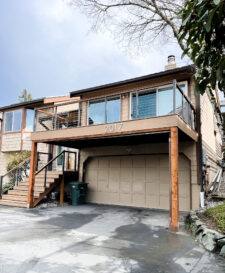
What Blaine's Climate Does to a Deck Over Time
Three things drive most of the deck problems we see in this part of Whatcom County: moisture that rarely lets a deck fully dry out, salt air that accelerates corrosion on hardware, and moss and algae that take hold anywhere shade and dampness combine.
Salt Air and Metal Fatigue
Proximity to the water means fasteners, brackets, and fixtures are exposed to airborne salt even on days when it isn't raining. Standard galvanized hardware can start showing surface corrosion within a few years in this environment. Once corrosion starts on a structural fastener, it's not a cosmetic issue — it's a slow weakening of the connection holding your deck together.
Driving Rain and Trapped Moisture
Rain here doesn't just fall straight down. Wind off the water pushes it sideways, which means it gets into joints, gaps, and ledger connections that a calmer climate might never test. If a deck's drainage and flashing details aren't built for that, water finds its way into framing and stays there.
Moss, Algae, and Slick Surfaces
Long wet seasons with limited direct sun on north- or east-facing decks create ideal conditions for moss and algae growth. Beyond looking bad, a mossy deck surface is genuinely slippery, and moss holding moisture against decking material shortens its life.
What a Correct Deck Build Looks Like Here
Every deck we build in the Blaine area is designed around these local realities from the framing stage forward, not patched after the fact.
Fastener and Hardware Selection
We use stainless steel or high-grade coated fasteners and structural hardware rated for coastal or high-corrosion environments, particularly at ledger boards, joist hangers, and any connection point that's difficult to inspect or replace later. Cutting corners on hardware is the single most common shortcut we see cause long-term problems in decks near the water.
Ledger and Flashing Details
The ledger board — where the deck attaches to the house — is the single most important waterproofing detail on the entire structure. We flash it properly with materials designed to shed water away from the house framing, not just caulk the gap and call it done. A poorly flashed ledger is one of the most common sources of hidden rot we find when repairing older decks.
Drainage and Airflow Underneath
Decks that sit low to the ground or over patios trap moisture unless there's real airflow underneath. We plan joist spacing, skirting, and ground clearance so air can move and standing water has somewhere to go, rather than pooling under the structure where it can't dry out between storms.
Board Spacing for Wet-Climate Drying
Gap spacing between deck boards affects how fast the surface dries after rain. Too tight, and water sits on the surface and in the gaps; that trapped moisture is exactly what feeds moss and accelerates wood decay. We set spacing based on the decking material and this climate, not a one-size-fits-all default.
Decking Material Options for a Coastal-Influenced Climate
There's no single "best" decking material — the right choice depends on your budget, how much upkeep you want to do, and how much direct weather exposure the deck will see. Here's how the common options actually perform in Blaine's conditions.
| Material | Moisture & Salt-Air Performance | Maintenance | Typical Lifespan Here |
|---|---|---|---|
| Pressure-treated wood | Good if sealed regularly; treatment resists rot but surface still absorbs moisture | Annual cleaning and re-sealing recommended | 15-20 years with upkeep |
| Cedar | Naturally rot- and insect-resistant; handles damp climates well when finished | Periodic staining/sealing to maintain appearance and protection | 15-25 years with upkeep |
| Composite decking | Excellent — doesn't absorb water like wood, resists salt-driven surface degradation | Occasional washing; no staining or sealing | 25-30+ years, manufacturer-dependent |
| PVC decking | Very strong moisture resistance, fully synthetic | Low — mainly washing to keep surface clean | 25-30+ years, manufacturer-dependent |
We'll walk through these trade-offs honestly during an estimate rather than steering you toward whatever's easiest to install. If you want the lowest upkeep over the deck's lifetime, composite or PVC generally makes sense in this climate. If you want a natural wood look and don't mind a maintenance routine, cedar performs better here than standard pressure-treated pine in most cases.
Structural Considerations Specific to This Area
Footings and Ground Moisture
Soil conditions near the water can hold more moisture than inland sites, which affects how footings are set and how deep they need to go to reach stable, frost-resistant ground. We evaluate this on a site-by-site basis rather than assuming a standard footing depth is adequate everywhere in Blaine.
Railing and Guard Hardware
Railings take the same corrosion exposure as the deck frame, often with the added stress of direct wind load if the deck is elevated or facing open water. We spec railing hardware to match — stainless or coated fasteners, and connection details that won't loosen as material expands and contracts through wet-dry cycles.
Stairs and Slip Resistance
Stair treads collect moss and algae faster than flat deck surfaces because they hold more shade and moisture at the nosing. We factor slip resistance into tread material and spacing decisions, especially for stairs that don't get much direct sun.
Our Process for a Blaine-Area Deck Project
- On-site assessment — we look at sun exposure, prevailing wind and rain direction, ground moisture, and how the deck will connect to your home before recommending a design.
- Design and material walkthrough — we go over decking, railing, and hardware options with honest trade-offs for cost, maintenance, and longevity in this climate.
- Permitting — we handle the paperwork required for the scope of your project so you're not chasing it down yourself.
- Framing and structural work — proper footings, ledger flashing, and joist layout built for drainage and airflow.
- Decking, railing, and finish work — installed with fastener spacing and hardware suited to salt air and driving rain.
- Final walkthrough — we go over the finished deck with you, including basic care guidance for your specific material choice.
Maintenance Checklist for a Blaine-Area Deck
Whatever material you choose, a little seasonal attention goes a long way in this climate. Homeowners who stay on top of this list get significantly more life out of their deck.
- Sweep debris and standing leaves off the surface regularly, especially in fall — trapped organic matter feeds moss and holds moisture against the boards.
- Wash the deck surface at least once or twice a year to remove early moss and algae growth before it takes hold.
- Check and clear gaps between boards so water can drain rather than pool.
- Inspect visible hardware annually for early signs of corrosion, especially near the ledger and stair connections.
- Re-seal or re-stain wood decking on the schedule appropriate for the product — don't wait until it's visibly failing.
- Confirm gutters and downspouts near the deck are directing water away from the structure, not onto it.
Why a Locally Familiar Crew Matters
A lot of the decisions that determine whether a deck holds up in Blaine — hardware grade, flashing detail, board spacing, footing depth — aren't things you can see once the project is finished. They're built into the structure before the decking ever goes down. A crew that works this specific stretch of Whatcom County regularly makes those calls by default, because they've already seen what happens when they're skipped. That's the real value of hiring local: not familiarity with the town, but familiarity with what this exact climate does to a deck over ten or twenty years.
If you're planning a new deck or replacing one that's showing its age, we're happy to come take a look and talk through what makes sense for your property. Reach out for a free, no-pressure estimate using the form below.