 Ferndale Siding
 Why Windows Take Extra Punishment in Sudden Valley
Homes in and around Sudden Valley deal with a specific combination of weather that's harder on windows than most people realize. Whatcom County sits close enough to the water that salt-laden air reaches inland further than folks expect, and that air finds every piece of exposed metal, every seam in a window frame, and every spot where a seal has started to give. Add in driving rain that comes sideways off winter storms, and you've got water being pushed against glazing and trim in a way that flat, calm rain never would.
Then there's the shade. Many lots in this area are wooded or sit against hillsides, which means less direct sun hits the siding and window trim for long stretches of the year. Less sun means slower drying, and slower drying means moss, algae, and general dampness get a real foothold — not just on the roof, but on horizontal window sills, sash tracks, and the wood trim around older window units. Put salt air, wind-driven rain, and a long moss season together, and you get a climate that's genuinely tough on window seals, frames, and the wall assembly behind them.
None of this means Sudden Valley is a bad place to own a home — it means the windows have to be chosen and installed with this exact combination in mind, not treated like a generic replacement job.
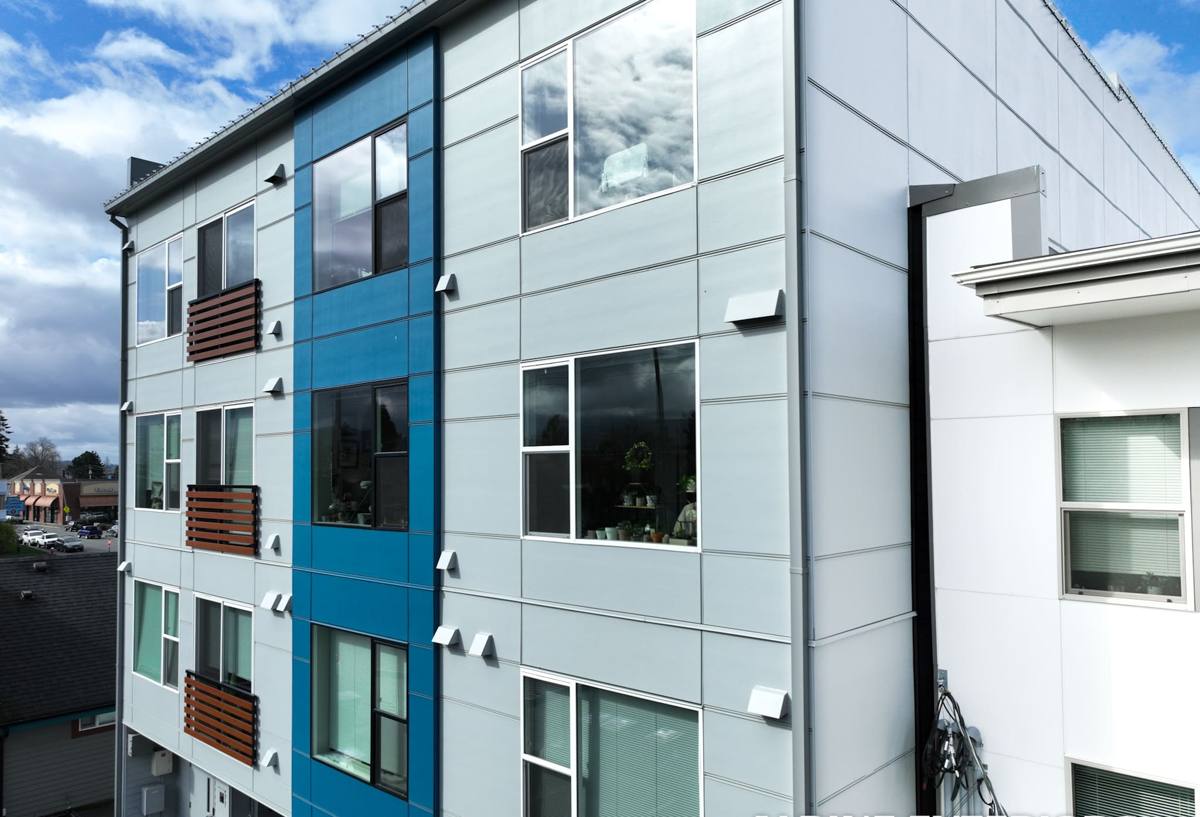
What "Custom" Actually Means Here
"Custom windows" doesn't mean fancy shapes or unusual glass — most of the time it simply means the window is built to the actual opening in your house, rather than your house being modified to fit a stock size off a shelf. Older homes and additions in this area often have openings that don't match today's standard sizes, especially if the home has settled over the decades or had past work done to it. A custom unit is measured and built for that specific opening, which matters more than people expect once you get into how a window actually seals against water.
Custom also covers decisions like:
- Frame material suited to a shaded, damp lot versus a sun-exposed one
- Glazing package matched to which side of the house takes the weather
- Sill and trim details that shed water instead of holding it
- Hardware and locking styles that hold up under salt exposure
- Matching sightlines and proportions to the rest of the home, especially on a street where homes share a general style
A correct custom job accounts for all of this before a single window is ordered — not after installation, when it's too late to change the opening or the flashing plan.
Signs It's Time to Replace, Not Just Repair
Window problems in this climate rarely show up as one dramatic failure. They show up as a slow accumulation of small signs that a homeowner notices for months before calling anyone. Common ones we see on Sudden Valley homes:
Moisture and Glass Issues
Fogging or a permanent haze between panes means the seal on a double-pane unit has failed and the gas fill or dead air space is gone — that's not something that can be cleaned out, it means the insulated glass unit itself needs replacing. Condensation on the inside of the glass during cold snaps, especially on north- or shade-facing windows, often points to a frame that's no longer insulating the way it should.
Frame and Sill Problems
Soft or discolored wood at the sill or bottom corners of a frame is usually rot starting from trapped moisture, not a surface stain. Moss or green growth building up on a window sill or the trim below it is a sign that water is sitting there longer than it should, which is common on shaded elevations in this area. Paint that keeps failing in the same spot no matter how often it's touched up usually means there's a water path behind it that painting alone won't fix.
Draft and Operation Issues
Windows that are hard to open, don't latch fully, or let in a draft you can feel on a windy day usually mean the frame has racked slightly or the weatherstripping has given out — both accelerated by damp conditions and temperature swings.
Frame Material and Glazing Comparison
There's no single "best" window material for every home — it depends on sun exposure, budget, and how much upkeep a homeowner wants to take on. Here's how the common options actually perform in a salt air, high-moisture, low-sun environment like Sudden Valley:
| Material | How It Handles Salt Air & Moisture | Upkeep | Typical Fit |
|---|---|---|---|
| Vinyl | Won't corrode or rot; performs well in damp, shaded spots | Low — occasional cleaning | Most homes, especially shaded lots |
| Fiberglass | Very stable in temperature swings and moisture; strong against warping | Low | Homes wanting a slimmer frame profile or higher-end finish |
| Wood-clad | Interior wood needs protection from any moisture that gets past the exterior cladding | Higher — requires monitoring seals and finish | Homes prioritizing a wood interior look |
| Aluminum | Prone to corrosion and condensation in salt air and cold, damp conditions | Moderate to high | Limited use; we generally steer homeowners here away from it for full exterior exposure |
On glazing, a dual-pane, low-E, argon or krypton-filled unit is standard for this region — it's the combination that handles both the temperature swings and the condensation risk of a marine climate well. For elevations that take direct driving rain, we also pay close attention to the exterior glazing bead and drainage path, since that's where wind-driven water tests a window hardest.
How We Handle a Custom Window Job
Assessment and Measurement
We start by looking at the whole opening, not just the window — the condition of the framing, the sill, the flashing (or lack of it), and how water currently moves around that spot on the house. On a shaded or moss-prone elevation, we're also checking how much standing moisture has already gotten into the sill or trim before we ever measure for the new unit.
Removal and Opening Prep
Old windows come out carefully so we can inspect the rough opening underneath — this is where hidden rot or old, inadequate flashing usually turns up. Any damaged framing or sheathing gets repaired before anything new goes in. Skipping this step is the single most common reason a "new" window job fails within a few years.
Flashing and Water Management
This is the step that matters most in a driving-rain climate. Proper flashing directs any water that gets behind the siding or trim back out, rather than letting it pool at the sill. We use a layered approach — sill pan flashing, side flashing, and head flashing integrated with the house wrap — so water sheds down and out at every layer, not just at the surface caulk line.
Installation and Sealing
The window is set plumb, level, and square, shimmed correctly so it isn't relying on fasteners alone to hold its shape, then sealed with appropriate sealants at the right joints — not everywhere, since over-sealing can actually trap water where it needs to escape.
Final Check and Cleanup
We test operation, check for square and smooth function, confirm weatherstripping contact, and walk the job with the homeowner before we consider it done.
Why Flashing Details Are the Real Difference-Maker Here
Most window failures we get called out to inspect in this area aren't a bad window — they're a window that was installed without proper flashing and water management. A premium window installed without a sill pan or proper head flashing will still eventually let water into the wall assembly, especially with the kind of sideways, driving rain that comes through Whatcom County in the winter months. Conversely, a well-built mid-range window installed with correct flashing will consistently outperform it. This is the part of the job that doesn't show up in a product brochure, but it's the part that determines whether a window job lasts fifteen years or shows rot behind the trim in three.
Why Local Experience in Sudden Valley Matters
A crew that regularly works this specific area already knows which elevations on a typical Sudden Valley lot take the worst of the driving rain, which shaded spots need extra attention to moss and moisture, and how the salt air moves further inland here than a lot of manufacturers' general warranty language assumes. That local pattern recognition means fewer surprises once framing is opened up, a realistic sense of how a given product will actually hold up on this street versus a drier or sunnier part of the state, and a crew that isn't learning the area's quirks on your house for the first time.
A Simple Maintenance Checklist for This Climate
New windows still need a small amount of seasonal attention in a climate like this one. A short annual routine goes a long way:
- Clear moss, leaves, and debris off sills and tracks before the wet season sets in
- Check that weep holes on vinyl and fiberglass frames are clear so water can drain out
- Inspect exterior caulking once a year for cracking or separation, especially on shaded elevations
- Rinse salt residue off exterior frames and hardware periodically, particularly on sides facing open exposure
- Test locks and operation each fall so any hardware issues get caught before winter storms
- Look for early moss growth on horizontal trim as an early warning sign of a drying problem
What Custom Windows Cost and Why
Cost varies a lot based on size, material, and how much flashing and framing repair a given opening needs. Rather than a single number, it's more useful to understand the factors that actually move the price:
| Factor | Why It Affects Cost |
|---|---|
| Frame material | Vinyl is typically the most budget-friendly; fiberglass and wood-clad cost more upfront |
| Opening condition | Hidden rot or old flashing failures found during removal add repair time before installation can proceed |
| Glazing package | Higher-performance low-E coatings and gas fills add cost but pay off in comfort and condensation resistance |
| Window size and count | Larger openings and full-house replacements have obvious economies of scale versus one-off units |
| Access and elevation | Second-story or hard-to-access windows on sloped Sudden Valley lots can add labor time |
The honest answer is that we can't give a real number without seeing the openings and their condition — a quote based only on a phone conversation isn't one you should trust for a job where the flashing and framing details matter this much.
If you're weighing whether your current windows need attention or you're planning a straightforward replacement, we're happy to take a look and give you a clear, no-pressure estimate — just fill out the form below and we'll set up a time to come out.