 Ferndale Siding
 Deck Repair Built for Custer's Weather, Not Just Any Deck
Custer sits close enough to the water and open farmland that decks here take a different kind of beating than decks twenty miles inland. Salt-tinged air off the Strait and Bellingham Bay works into fasteners and metal connectors faster than most homeowners expect, driving rain gets pushed sideways into ledger boards and stair stringers during winter storms, and the long gray stretch from October through April keeps every horizontal surface damp enough for moss and algae to take hold. A deck that looks fine in July can be hiding soft joists and rusted hardware by the time we get a service call in February. We repair decks in Custer with that cycle in mind, not a generic checklist.
This page covers deck repair specifically — not full rebuilds, not new construction. If your deck has isolated problems (a soft spot, a wobbly rail, moss buildup, a failing ledger connection) rather than needing to be torn out entirely, repair is usually the right call, and it's almost always the more affordable one.
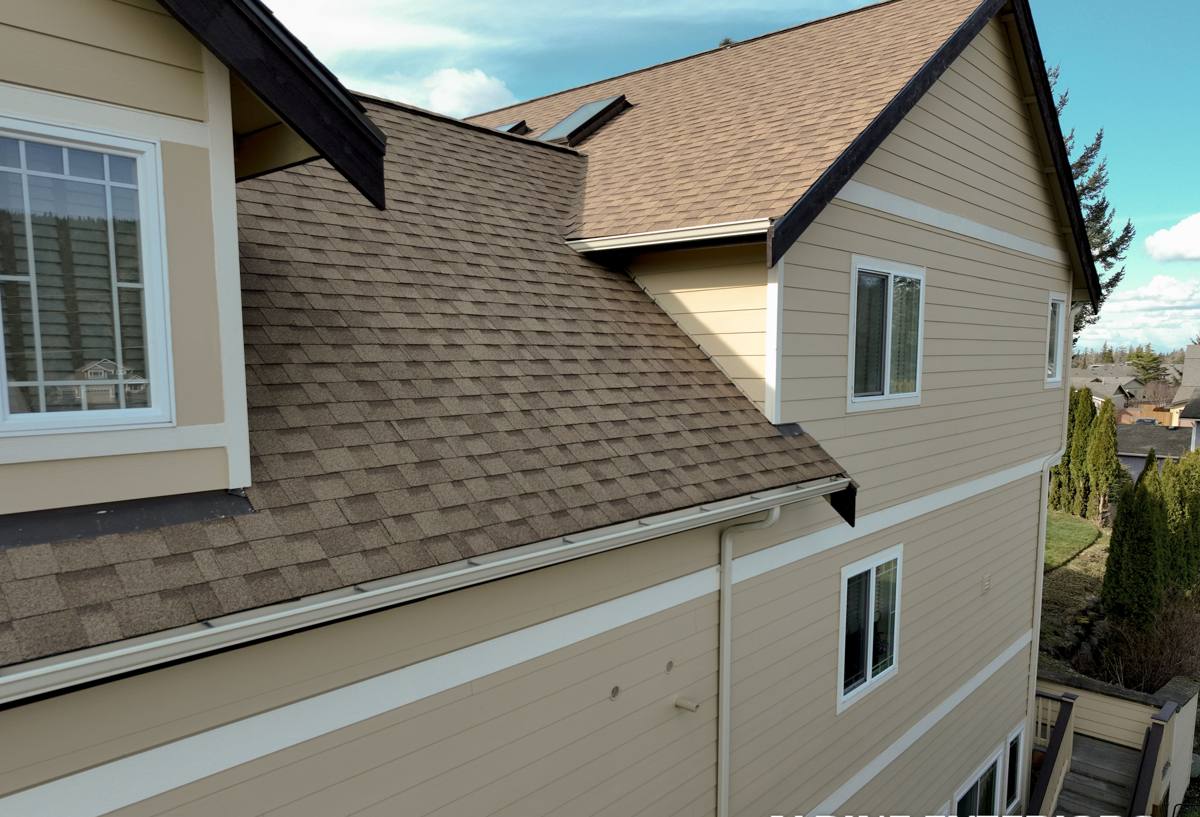
What Whatcom County Conditions Do to a Deck Over Time
Salt Air and Metal Fatigue
Custer's proximity to Puget Sound and Semiahmoo Bay means airborne salt reaches structures further inland than people assume. Galvanized joist hangers, lag bolts, and screws corrode from the inside of the connection outward — which means the rust is often invisible until a board shifts or a hanger lets go. We check hardware condition as a matter of course on every repair visit, because a new deck board on a corroded hanger is a repair that fails again within a year or two.
Driving Rain and Ledger Rot
The ledger board — where the deck attaches to the house — is the single most common failure point we see in this region, and driving rain is the reason why. Wind-driven rain gets forced up and under flashing that was never properly lapped, or through fastener penetrations that were never sealed correctly at installation. Once water gets behind the ledger, it's trapped against the house rim joist with nowhere to evaporate, and rot sets in from the inside where it can't be seen from the deck surface or the ground.
Moss, Algae, and Trapped Moisture
Whatcom County's moss season runs long — realistically most of the year on north-facing or shaded decks. Moss holds moisture against wood and composite surfaces alike, and on wood decking it accelerates surface rot at board edges and around fastener heads. On decks with tight board spacing or poor drainage underneath, moss and algae growth is often the first visible sign that water isn't shedding the way it should.
Signs Your Custer Deck Needs Repair, Not Just Cleaning
- Boards that feel spongy, springy, or noticeably softer than neighboring boards underfoot
- Visible gaps, staining, or dark streaking where the deck meets the house siding or ledger
- Railings or posts that flex or wobble when pushed — a safety issue, not a cosmetic one
- Rust stains bleeding from screw heads or joist hanger locations
- Persistent moss or black-green algae that returns within weeks of cleaning
- Stair stringers that feel uneven, bouncy, or show splitting at the notch cuts
- Fastener heads popping up above the board surface, or heads that spin freely without gripping
- Any visible daylight or gap between the ledger board and the house wall
What a Correct Deck Repair Actually Involves
A repair that only replaces the board you can see is a repair that gets called back out in a year. We start every job the same way: find out why that section failed before deciding how to fix it.
1. Diagnose the Cause, Not Just the Symptom
We probe suspect boards, check the framing underneath, and inspect the ledger connection and flashing. Soft decking is often a symptom of a moisture source, not the source itself — replacing the board without fixing the drainage or flashing issue just resets the clock on the same failure.
2. Address the Structure First
Joists, beams, posts, and the ledger connection get repaired or reinforced before any new decking goes down. This includes replacing corroded hardware with fasteners and hangers rated for the moisture and salt exposure typical this close to the water, not whatever was on the shelf when the deck was originally built.
3. Fix the Water Path
If rain is getting behind the ledger or pooling under the decking, we correct the flashing detail and drainage slope as part of the repair. Skipping this step is the single biggest reason deck repairs fail early in this climate.
4. Replace Decking and Rail Components to Match
Where boards, balusters, or rail caps need replacing, we match material and fastening method to the rest of the deck so the repair blends in and performs the same as the surrounding structure — rather than creating a new weak point where old and new materials meet.
5. Final Check on Fasteners and Connections
Every repair ends with a check of surrounding hardware, not just the section that was worked on. If we're already on the deck, it costs little extra to catch a second problem before it becomes a second service call.
Wood vs. Composite Repair: What Changes
| Factor | Wood Decking | Composite Decking |
|---|---|---|
| Typical failure mode | Rot, splitting, fastener pull-through | Fastener/clip failure, edge swelling on older boards, fading |
| Repair approach | Cut back to sound wood, replace affected boards | Match board profile and color generation; some older composites are discontinued |
| Moisture sensitivity | High — needs sealing/staining maintenance | Lower, but core-type composites can still absorb water at cut ends |
| Repair visibility | Blends well if wood species and finish are matched | Can be harder to match exactly if the original color line has changed |
| Structural framing underneath | Same wood-frame concerns either way | Same wood-frame concerns either way |
Whichever decking material is on your deck, the framing underneath is almost always wood, and that's where our inspection focuses first — the surface material only tells part of the story.
Why Hardware and Fastener Choice Matters More Here
We use stainless steel or heavy hot-dip galvanized fasteners and connectors on repair work in Custer specifically because of the salt air exposure. Standard electro-galvanized hardware is fine in a lot of inland climates, but it corrodes noticeably faster this close to the water, and a repair is only as good as the hardware holding it together. This is a professional standard we hold ourselves to on repair work, not an upsell — the cost difference between fastener grades is small relative to the cost of redoing the repair in three years.
Our Repair Process, Start to Finish
- Inspection and diagnosis — we walk the full deck, check framing access points, and identify every problem area, not just the one you called about
- Written scope and estimate — you know exactly what's being repaired and why before work starts
- Structural repairs — joists, posts, beams, and ledger connection first
- Decking, rail, and stair repairs — matched to existing materials where possible
- Hardware and fastener upgrade — corrosion-resistant hardware used throughout the repaired area
- Final walkthrough — we point out what was fixed and flag anything worth watching going forward
What Deck Repair Typically Costs
Costs vary a lot depending on whether the issue is cosmetic, structural, or both. As a general guide for the kind of repair work we see most often in this area:
| Repair Type | General Cost Range |
|---|---|
| Board replacement (few boards, no structural issue) | Low |
| Railing or baluster repair | Low to moderate |
| Ledger flashing correction | Moderate |
| Joist or beam repair/sistering | Moderate to higher |
| Stair stringer rebuild | Moderate to higher |
We won't quote a number without seeing the deck — a "soft board" repair can turn out to be a five-minute fix or a sign of a much bigger ledger problem, and we'd rather give you an honest estimate after inspection than a guess over the phone.
Maintenance That Extends a Repair's Lifespan
- Clear moss and debris from between boards each fall before the wet season sets in
- Keep gutters and downspouts near the deck clear so runoff isn't dumping onto the structure
- Reseal or restain wood decking on the schedule the finish manufacturer recommends — this region's rainfall shortens that interval compared to drier climates
- Check the ledger-to-house joint visually once a year for gaps, staining, or caulk failure
- Address a soft board or loose rail promptly — small repairs stay small if caught early
Why Hire a Crew That Already Works in Custer
Deck repair done wrong here isn't a matter of workmanship alone — it's a matter of knowing which failure patterns show up in this specific climate and building code environment. A crew that mostly works drier inland regions may not think to check ledger flashing first or upgrade to salt-resistant hardware by default, because they haven't had to. We work Custer and the surrounding Ferndale and Whatcom County area regularly, so we're not guessing at what the salt air and rain patterns do to a deck over a five- or ten-year span — we're repairing the results of it on a routine basis.
If you've got a deck in Custer that needs a second look — whether it's one soft board or something you're not quite sure how serious it is — we're happy to come take a look. Reach out for a free, no-pressure estimate using the form below.