 Ferndale Siding
 Windows in Point Roberts Face a Tougher Job Than Most
Point Roberts sits on its own peninsula, surrounded by water on three sides, which means homes here take on a level of wind-driven moisture and salt exposure that inland Whatcom County properties simply don't deal with. Add in the long, wet Pacific Northwest winter and the moss season that follows it, and windows in this part of the county are under near-constant pressure from the elements. A window that performs fine in a sheltered Ferndale neighborhood can fail years earlier out here if it wasn't specified and installed with this exposure in mind.
This page is specifically about energy-efficient window replacement and installation for homes in Point Roberts — what the climate demands, what a correct installation actually involves, and why local installation experience matters as much as the window itself.
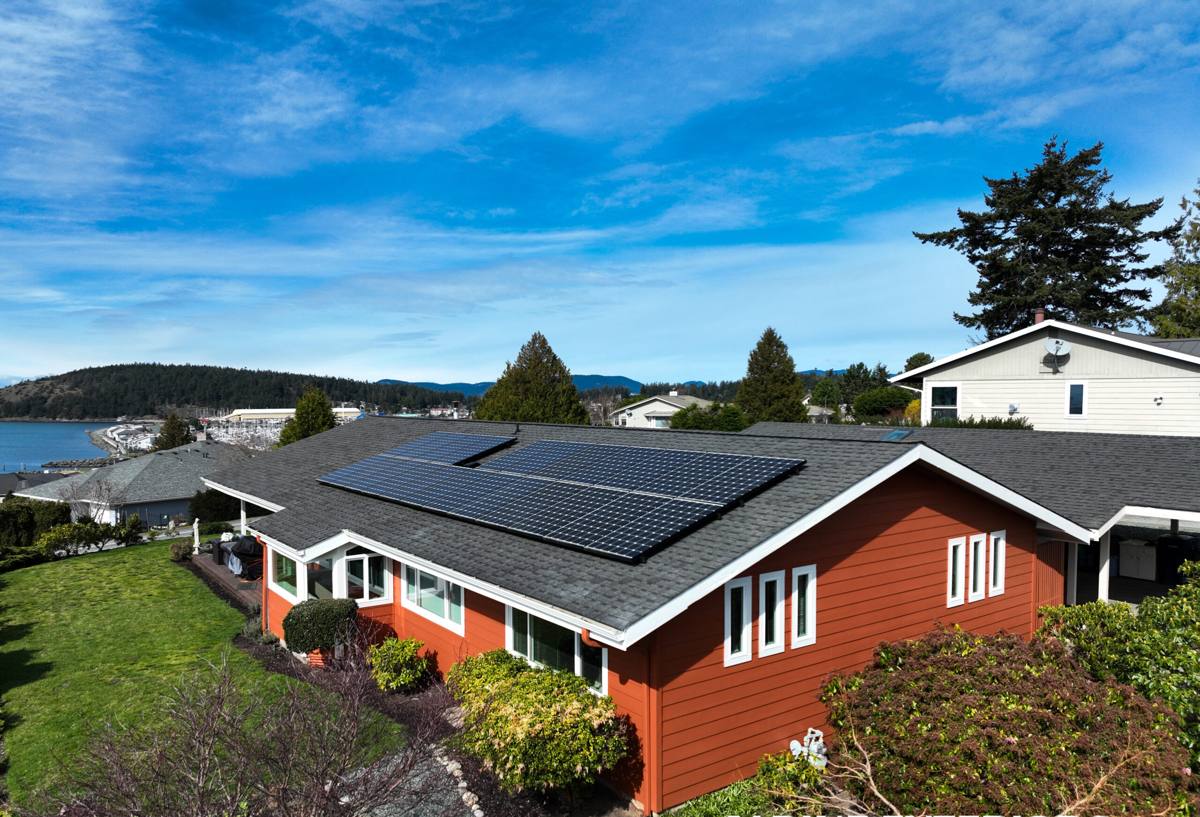
What Salt Air, Driving Rain, and Moss Season Actually Do to Windows
Salt Air
Airborne salt is corrosive to exposed metal hardware — hinges, locks, cranks, and some frame fasteners — and it accelerates the breakdown of certain finishes and sealants over time. On a coastal or near-coastal property like Point Roberts, hardware and finish choices that would be considered "good enough" further inland need to be treated as minimum requirements, not upgrades.
Driving Rain
Wind-driven rain doesn't just fall on a window, it pushes against it, testing every seam, flashing detail, and sealant joint. Most window failures we see aren't caused by bad glass — they're caused by water finding a path around the frame because flashing or sealant was rushed or skipped during installation. This is the single biggest reason two identical windows, installed by two different crews, can perform completely differently ten years later.
Moss and Sustained Moisture
Whatcom County's long moss season isn't just a roof problem. Persistent damp conditions around window sills, trim, and the siding-to-window transition create an environment where organic growth and slow rot can take hold if water isn't being shed properly. Once moisture gets behind a window frame or into surrounding trim, it tends to stay there through an entire wet season before anyone notices — which is why the installation details matter more here than the window brand.
What a Correctly Installed, Energy-Efficient Window Job Involves
"Energy-efficient" is often marketed as a glass or frame spec, but in a climate like this, efficiency and weather-tightness are the same project. A window that leaks air or water is not energy-efficient, no matter what its rating sticker says. A correct installation for a Point Roberts home includes:
- Removing the old window and inspecting the rough opening, sill, and surrounding framing for hidden moisture damage before anything new goes in
- Correcting any rot, soft wood, or existing water intrusion found in the opening — never installing a new window over a compromised opening
- Installing proper flashing at the sill and head, lapped correctly so water is directed out and away from the wall assembly, not into it
- Using a continuous, compatible sealant and backer rod system around the frame, not just a bead of caulk at the exterior trim
- Shimming and fastening the frame square and plumb so the sash operates smoothly and the seal performs as designed for the life of the window
- Insulating the gap between the frame and rough opening with an appropriate low-expansion product, not stuffed fiberglass that leaves air gaps
- Reinstalling or replacing exterior trim and sealing it correctly to shed water away from the new window
Skip any one of these steps and the window itself becomes almost irrelevant — a triple-pane, top-tier unit installed with poor flashing will underperform a modest window installed correctly.
Choosing Materials and Glass for a Salt-Air, High-Moisture Climate
There isn't one "best" window for every home. The right choice depends on the home's exposure, existing siding and trim, and budget. Here's how the common options generally compare for a property like this:
| Frame Material | Performance in This Climate | Trade-Offs to Know |
|---|---|---|
| Vinyl | Good moisture and corrosion resistance; consistent performance in salt air | Frame color/finish options are more limited; quality varies significantly by manufacturer |
| Fiberglass | Excellent dimensional stability and weather resistance; holds up well to temperature and moisture swings | Higher upfront cost than vinyl |
| Wood-clad | Strong energy performance and traditional appearance | Exposed wood components need diligent maintenance in a salt-air, high-moisture environment; cladding seams are a moisture risk if not detailed well |
| Aluminum | Durable and low-maintenance structurally | Poor natural insulator unless thermally broken; hardware is more exposed to salt corrosion |
Glass Packages
For most Point Roberts homes, a double-pane, low-E coated unit with an argon or krypton gas fill is the practical baseline for energy performance. Homes with more direct exposure to wind and weather, or owners looking for maximum comfort and lower heating costs, often step up to triple-pane glass. The right call depends on the specific elevation of the home, existing window sizes, and budget — which is part of what we walk through during an on-site estimate rather than guessing over the phone.
Signs Your Current Windows Are Costing You Money
Homeowners often wait until a window is visibly failing before calling, but there are earlier warning signs worth acting on:
- Condensation forming between the panes (a sign the seal has failed and the gas fill is gone)
- Drafts you can feel near the frame even when the window is fully latched
- Difficulty opening, closing, or locking the window — often a sign the frame has shifted or swollen
- Soft or discolored trim and sill areas around the window
- Visible moss, algae, or persistent dampness on the exterior trim or siding near the window
- A noticeable temperature difference near the window compared to the rest of the room
Any one of these can mean the window is no longer doing its job, even if it still looks fine from a distance. Left unaddressed through another wet season, minor issues like a failed seal or a small gap in flashing can turn into framing repairs, which cost considerably more than the window replacement itself.
Our Process, From Estimate to Final Walkthrough
1. On-Site Assessment
We look at each window individually — not just the glass, but the surrounding trim, sill, and siding condition — since on a property with this level of exposure, problems are rarely limited to the window itself.
2. Honest Recommendations
We'll tell you plainly which windows need full replacement, which can be repaired, and which are performing fine. We're not going to recommend replacing a window that doesn't need it.
3. Material and Glass Selection
We walk through the trade-offs above in the context of your specific home — its exposure, existing exterior finishes, and your budget — so the decision makes sense for your situation, not a generic recommendation.
4. Installation
Old windows come out, openings get inspected and corrected if needed, and new windows go in following the flashing, sealing, and insulation steps outlined earlier in this page. This is the step that determines how the window performs for the next fifteen to twenty-plus years, and it's where we don't cut corners regardless of what's happening with the weather that week.
5. Final Walkthrough
We check operation, seals, and exterior trim work with you before considering the job finished, and clean up the work area fully.
Maintenance That Actually Extends Window Life Here
Even a well-installed window benefits from some seasonal attention in this climate. A short annual routine goes a long way:
- Rinse salt residue off frames and hardware periodically, especially after storms with strong onshore wind
- Check and clear weep holes at the base of the frame so water can drain instead of pooling
- Inspect exterior caulking and sealant lines each fall before the wet season sets in, and have any cracked or separated sealant addressed promptly
- Keep gutters and downspouts clear so roof runoff isn't dumping extra water onto window and trim areas below
- Trim back vegetation that's holding moisture or shading window and trim areas, since that's exactly where moss tends to establish
- Operate hardware (locks, cranks, hinges) a few times through the winter so components don't seize from disuse and moisture
Warranty Considerations
Most window manufacturers offer strong warranties on the glass unit and frame, but those warranties typically cover manufacturing defects, not damage caused by improper installation. That's another reason installation quality matters as much as the product itself — a manufacturer's warranty won't cover a leak caused by missing flashing.
Why Local Point Roberts Experience Matters
Point Roberts' unique geography — cut off from the rest of Whatcom County by water and international border, exposed to marine wind and salt on multiple sides — means it doesn't behave like a typical inland Washington property when it comes to weather exposure. A crew that primarily works drier, more sheltered sites elsewhere in the county may not default to the flashing, sealant, and hardware choices this exposure calls for unless they've seen the failures firsthand.
We work throughout Ferndale and greater Whatcom County, including Point Roberts, and we treat the added exposure here as the standard to build to, not an exception. That means the same job spec whether the home is a few blocks from the water or set back from it — because on this peninsula, "set back" still means more weather than most homes ever see.
If your windows are drafty, fogging between the panes, or just due for an honest look, we're glad to come out and take a look. Estimates are free, there's no pressure, and you'll get a straight answer about what your home actually needs — use the form below to get started.