 Ferndale Siding
 Fairhaven Sits Right Where Siding Gets Tested
Fairhaven sits close enough to Bellingham Bay that homes here deal with a different mix of weather than siding just a few miles inland. Salt-laden air off the water, wind-driven rain that hits walls sideways instead of straight down, and a shaded, moisture-heavy tree canopy that keeps moss and algae going almost year-round — that combination is hard on exterior materials in ways that don't show up in a showroom or a spec sheet. Our crew works out of Ferndale and covers this stretch of Whatcom County regularly, so we've seen what holds up on these homes and what doesn't.
This page is about one thing specifically: installing James Hardie fiber cement siding on homes in and around Fairhaven, done the way this climate actually requires. We don't install vinyl, LP SmartSide, Cemplank, Allura, primed spruce, or cedar — this company put itself on record as a Hardie-only installer, and a coastal, high-moisture neighborhood like Fairhaven is exactly where that decision pays off.
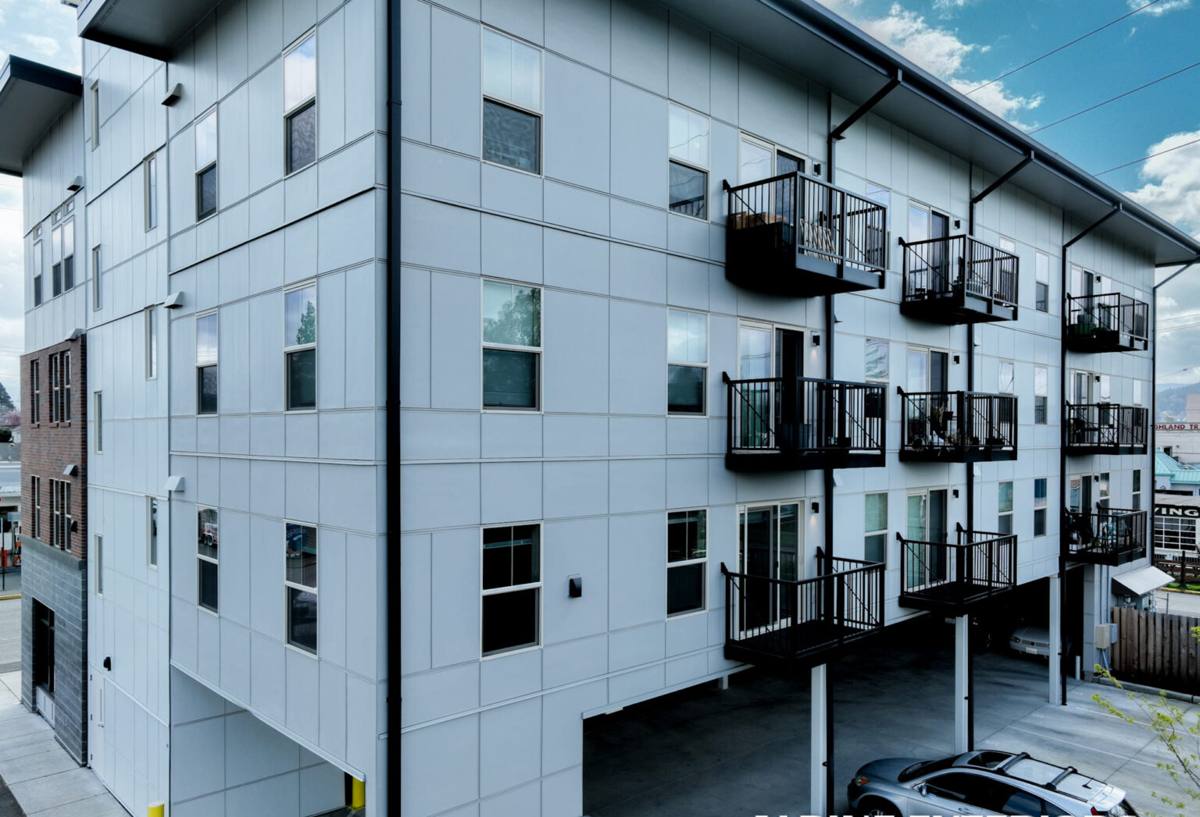
What Salt Air and Driving Rain Actually Do to Siding
It helps to be specific about the mechanisms, because "coastal climate" gets thrown around loosely.
- Salt air accelerates corrosion on fasteners, flashing, and any exposed metal trim. It also leaves a fine residue on siding surfaces that holds moisture longer than clean rainwater would.
- Wind-driven rain off the bay doesn't just wet the surface of a wall — it gets pushed up under laps, around trim, and into any gap in the water-resistive barrier that a sloppy install left behind. Vertical rain is forgiving of small mistakes; horizontal, wind-pushed rain is not.
- Moss and algae season in this part of Whatcom County runs long — shaded, north-facing, and tree-covered walls stay damp for months at a stretch. Any siding material that absorbs moisture, swells, or degrades under sustained dampness is going to show it first on those walls.
None of this means Fairhaven is an unusually punishing place to build. It means the margin for error on material choice and installation detail is thinner here than it is on a dry, inland lot, and that's worth planning for rather than discovering later.
Why James Hardie Fiber Cement Fits This Environment
James Hardie siding is a cement-and-cellulose fiber composite, not wood and not vinyl. That distinction matters directly for the conditions described above:
- It doesn't rot. Fiber cement has no organic wood fiber for moisture to break down, which matters on shaded, damp walls where moss and mildew have time to work.
- It holds its shape. Hardie panels are engineered to resist the swelling and warping that wood-based and some engineered-wood products can show under repeated wet-dry cycling — relevant on a site that rarely gets a long dry stretch.
- The ColorPlus factory finish is baked on, not field-applied. That finish is formulated to hold color and resist fading and moisture intrusion better than a job-site paint coat, and it comes with its own finish warranty separate from the product warranty.
- It's non-combustible. Not a coastal-specific point, but worth stating plainly — fiber cement doesn't burn like wood siding or contribute fuel the way some other claddings can.
None of this is marketing shorthand — it's the reasoning behind why we standardized on one product line instead of offering a menu of options with different risk profiles.
Picking the Right Hardie Product Line for a Bay-Adjacent Wall
James Hardie makes climate-specific formulations under its HZ5 (moderate/humid climate) and HZ10 (harsh/freeze climate) engineering. For most of Whatcom County, including Fairhaven, the HZ5 line is the correct match — it's engineered for the wet, moderate Pacific Northwest climate rather than the extreme freeze-thaw cycling HZ10 addresses. Getting this right matters less for looks and more for how the product performs against sustained moisture exposure over decades, which is the actual failure mode we're planning around here, not surface cosmetics.
We also pay attention to panel selection by exposure. A wall facing the prevailing wind and rain off the bay gets treated differently in our install planning — tighter attention to flashing and lap detail — than a sheltered, covered wall on the same house, even though both use the same Hardie product.
What a Correct Installation Actually Involves
Fiber cement siding performs exactly as well as its installation. A quality product with a rushed or careless install will fail early in a climate like this one — the material isn't the weak point, the workmanship is. On every Fairhaven-area job, our process includes:
- Proper water-resistive barrier and flashing sequencing behind the siding, lapped correctly so water is directed out and down, never trapped behind the panel.
- Correct fastener type and placement — corrosion-resistant fasteners driven per Hardie's specification, not just "close enough," since salt air is unforgiving of the wrong fastener choice.
- Manufacturer-specified clearances at grade, roofline, and any horizontal trim, so siding isn't sitting where it will wick standing water.
- Correct joint and butt-seam treatment, caulked and detailed per Hardie's installation manual rather than left as a gap for wind-driven rain to find.
- Painting or field-touching only where required — ColorPlus panels are pre-finished, and we protect that factory finish through handling and installation rather than treating it as a surface we'll fix up later.
These aren't optional refinements. They're the difference between siding that reaches its expected service life on a wet coastal wall and siding that needs early repair.
Our Process, Start to Finish
We keep the process straightforward and don't push anything before the homeowner has real information to decide with:
- On-site walkthrough. We look at each elevation, note exposure to wind and rain, existing moisture or moss issues, and the condition of what's currently on the walls.
- Honest scope and estimate. We tell you what needs to happen — including any sheathing or trim repair uncovered once old siding comes off — before work starts, not as a surprise mid-project.
- Tear-off and inspection. Removing the old siding is also when hidden moisture damage, if any exists, gets found and addressed before new siding goes over it.
- Barrier, flashing, and trim work. This is the stage that determines long-term performance, and it happens before a single piece of visible Hardie siding goes up.
- Hardie installation to manufacturer spec, panel by panel, with attention to the wind- and rain-exposed elevations specifically.
- Final walkthrough with the homeowner before we call the job done.
How Hardie Compares to the Alternatives in This Climate
| Factor | James Hardie Fiber Cement | Vinyl | Cedar / Untreated Wood |
|---|---|---|---|
| Moisture & salt air resistance | Engineered for it (HZ5 line); non-organic material | Doesn't rot, but seams and fasteners can be points of failure over time | Absorbs moisture; vulnerable to rot without diligent upkeep |
| Moss/algae-prone walls | No organic fiber for growth to feed on | Can still host surface growth in shaded, damp spots | Higher risk — wood provides an organic surface |
| Fire resistance | Non-combustible | Combustible; can soften/deform near heat | Combustible |
| Finish durability | Factory-baked ColorPlus finish with its own warranty | Color molded in but can fade; can't be easily refinished | Requires ongoing staining/sealing to hold up |
| Long-term upkeep | Low — periodic wash and inspection | Low, but prone to warping/cracking in temperature swings | High — regular sealing, staining, and rot monitoring |
| Upfront cost | Mid-to-higher | Typically lowest | Mid-to-higher, plus ongoing maintenance cost |
We're not going to pretend Hardie is the cheapest option on day one — it usually isn't. The case for it is what happens over the following fifteen to thirty years on a wall that faces salt air and driving rain, which is the timeline that actually matters for a siding decision.
A Note on LP SmartSide and Other Engineered Wood Products
Engineered wood siding products have improved over the years and get specified on plenty of homes. Our concern in a marine, moss-heavy environment like this one is moisture behavior at cut edges and seams over the long term — engineered wood relies on an intact factory coating to keep moisture out, and any breach at a fastener, edge, or field cut becomes a vulnerability in a climate that rarely gives a wall a chance to fully dry out. That's a real trade-off, not a knock on the product category — it's why we chose to specialize rather than install several competing systems with different risk profiles.
Maintenance Checklist for Fairhaven-Area Homes
Correctly installed Hardie siding is low-maintenance, not zero-maintenance. In this climate, a short annual routine goes a long way:
- Rinse siding once or twice a year, especially shaded or tree-covered walls, to keep salt residue and organic buildup from sitting on the surface.
- Walk the exterior after major storms and check caulked joints, trim edges, and any penetrations (vents, hose bibs, light fixtures) for gaps.
- Keep gutters and downspouts clear so water isn't overflowing onto siding below.
- Trim back vegetation and tree branches that keep a wall shaded and damp longer than it needs to be.
- Watch for any soft spots, staining, or discoloration near grade level, which can indicate a drainage or clearance issue rather than a siding defect.
- Have caulking and trim rechecked every few years, since sealant is the one component that wears faster than the siding itself.
Why It Matters That We Already Work This Area
A crew that's installed siding across Ferndale, Fairhaven, and the surrounding Whatcom County coastline knows how a given elevation typically behaves before the tear-off even starts — which walls tend to hold moss, which corners catch the worst of the wind off the bay, where clearance problems tend to hide. That's not something you get from a general spec sheet; it comes from doing the work locally, repeatedly, on homes that face the same weather yours does. It also means warranty support and any follow-up isn't coming from a crew that has to drive in from another region — we're already here.
If you're planning a siding project in Fairhaven or anywhere nearby, we're happy to walk your home, look at your specific exposure, and give you a straightforward estimate — no pressure, no upsell into a product line we don't stand behind. Use the form below to get started.