 Ferndale Siding
 Roofing Built for a Salt Air, High-Rain Neighborhood
Fairhaven sits close enough to the water that its homes deal with a different mix of weather stress than roofs a few miles inland. Salt-laden air off Bellingham Bay accelerates corrosion on fasteners, flashing, and vent caps. Long stretches of driving rain push water sideways under shingles and shakes that were never designed to shed water at an angle. And the shaded, moisture-heavy microclimate that makes this part of Whatcom County beautiful is the same thing that lets moss colonize a roof deck year-round. None of this means a Fairhaven roof is doomed to constant trouble — it means the repair work has to account for what's actually happening up there, not just patch the symptom that's dripping into the attic.
We work roofs in this pocket of the county regularly, and the calls we get are rarely one-size-fits-all. A roof repair here has to solve for corrosion, wind-driven moisture, and organic growth at the same time, or the same leak comes back in a different spot within a year or two.
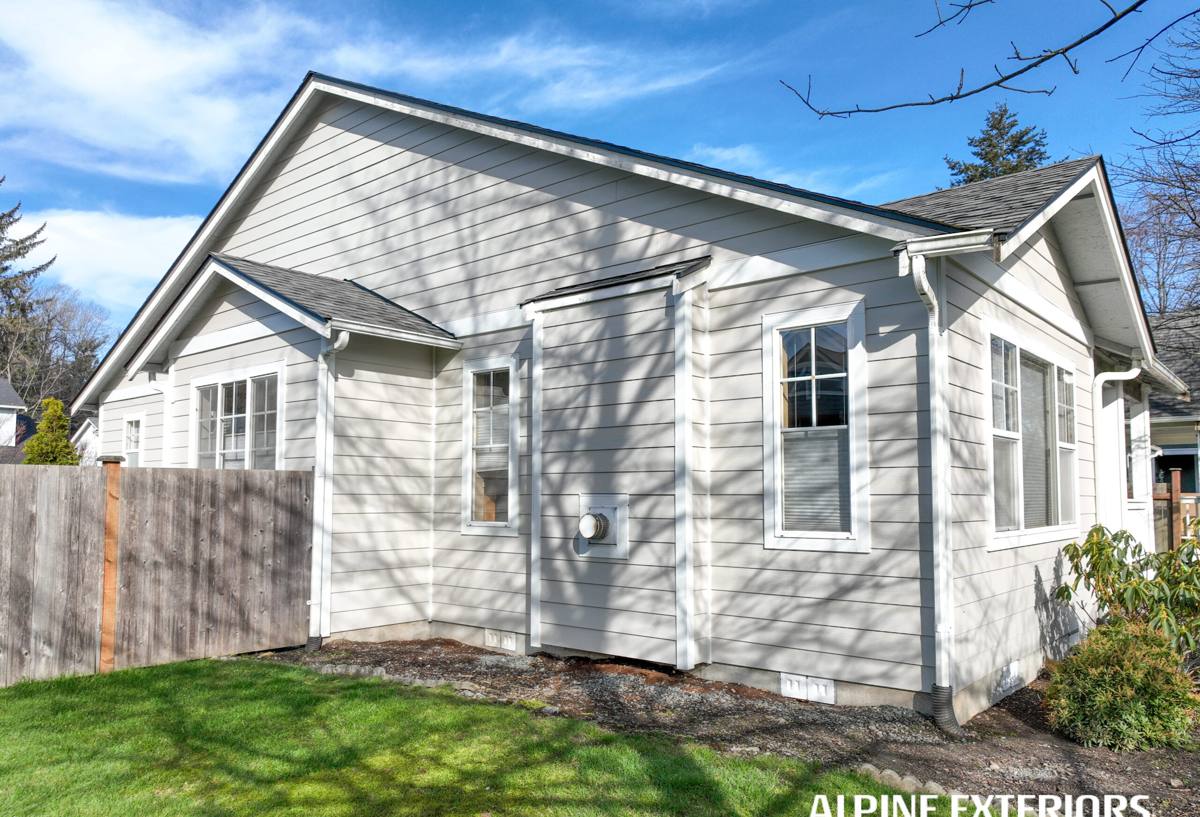
Signs a Fairhaven Roof Needs Repair
Most roof problems show themselves well before there's an active leak inside the house. Catching them early is the difference between a contained repair and a much larger one.
- Granules collecting in gutters or at downspout outlets — a sign shingles are wearing thin
- Dark streaking or thick moss growth on north-facing or shaded roof planes
- Curling, cupping, or lifted shingle edges, especially on slopes exposed to prevailing wind and rain
- Rusted, lifted, or missing flashing around chimneys, skylights, and roof-to-wall transitions
- Soft or discolored ceiling patches, especially after a stretch of heavy rain
- Daylight visible through the roof deck from inside an attic
- Gutters pulling away from the fascia or overflowing during normal rain, not just storms
Any one of these on its own might be minor. Two or three showing up together usually means water has already found a path under the roofing material, even if it hasn't reached drywall yet.
What a Correct Repair Actually Involves
Diagnosis Before Anything Gets Opened Up
Leaks are notoriously bad at showing up where the water actually enters. A stain on a bedroom ceiling can trace back to a flashing failure ten feet uphill on the roof plane. A proper repair starts with tracing the water path — checking the roof surface, the flashing details, the attic framing, and the insulation — before cutting into anything. Skipping this step is how homeowners end up paying for a repair that doesn't fix the actual leak.
Matching Materials, Not Just Covering the Spot
A patch that doesn't match the surrounding roofing in material, profile, and age tends to fail faster and stands out visually. Where a close match isn't available — which happens on older roofs — we explain the trade-off honestly rather than gluing down whatever's on the truck.
Flashing and Moisture Path First, Shingles Second
On a coastal-influenced roof, the flashing is doing more of the real work than the field shingles. Step flashing at wall intersections, counterflashing at chimneys, and boot flashing at pipe penetrations are the components most likely to fail first from corrosion and thermal movement. A repair that replaces shingles but reuses old, corroded flashing is a repair that's going to leak again.
Common Repair Types We Handle
| Repair Type | Typical Cause Here | What the Fix Involves |
|---|---|---|
| Localized shingle replacement | Wind lift, impact damage, or granule loss from age | Remove and replace affected shingles, check underlayment and decking beneath |
| Flashing repair or replacement | Corrosion from salt air, or original flashing undersized for the amount of rain | Remove old flashing, inspect for deck rot, install new flashing tied properly into the roofing layers |
| Moss and organic growth remediation | Shaded roof planes, long wet season, poor airflow | Careful removal, treatment to slow regrowth, and a look at what's keeping that section damp |
| Deck repair | Long-term hidden leak that reached the plywood or plank decking | Cut out and replace rotted decking sections before any new roofing goes down |
| Gutter and drip edge correction | Undersized or poorly pitched gutters overflowing during heavy rain | Reset or replace gutter runs and drip edge so water actually leaves the roof instead of running behind it |
Our Process, Start to Finish
1. On-Site Inspection
We look at the roof surface, attic, and any interior damage together, since they usually tell three different parts of the same story.
2. A Straight Explanation of What We Found
We'll tell you what's actually wrong, what's driving it, and whether a repair is the right call or whether you're better off putting that money toward a longer-term fix. If a repair is clearly the right move, we say so.
3. A Written Scope and Estimate
You'll know what's being repaired, with what materials, and roughly what it will cost before any work starts — no vague "we'll see once we're up there."
4. The Repair Itself
Work is done in a way that protects the rest of the roof and your landscaping, with the area cleaned up — nails, old material, and debris — before we leave.
5. A Look at What's Around the Repair
Since we're already on the roof, we'll flag anything nearby that's heading toward becoming its own problem, like gutters, adjacent flashing, or ventilation issues, without pressuring you to add it to the job.
Repair vs. Replacement: How We Help You Decide
Not every roof problem in Fairhaven calls for a full replacement, and not every leak is fixable with a patch that will actually last. The honest answer usually comes down to a few factors.
| Factor | Leans Toward Repair | Leans Toward Replacement |
|---|---|---|
| Roof age | Well within expected material lifespan | Near or past the end of its expected service life |
| Extent of damage | Isolated to one section or component | Spread across multiple planes or recurring in different spots |
| Decking condition | Solid, no rot found during inspection | Soft, delaminated, or rotted decking in multiple areas |
| Flashing condition | Sound, or a small section needs updating | Widespread corrosion, especially in a salt-air exposure |
| Repair history | First repair, or first in a long while | Third or fourth repair to the same general area |
We'd rather do an honest repair that buys you real years than sell a replacement a roof doesn't need yet — and we'll tell you plainly when a roof is close enough to the end of its life that a repair is only a short-term answer.
Materials That Hold Up in This Climate
What a repair is made of matters as much as the workmanship. In a setting with salt air, sustained rain, and heavy moss pressure, we lean toward corrosion-resistant flashing metals, quality synthetic or self-adhering underlayment at vulnerable transitions, and shingle or shake products with a track record in wet coastal climates rather than whatever is cheapest at the moment. Where an original roofing material has known moisture or maintenance challenges in this kind of exposure, we'll say so plainly and explain the trade-off — added maintenance, moisture sensitivity, or installation sensitivity — rather than talk you out of what you already have without a reason.
Why Local Experience on This Roof Type Matters
A roof repair in a coastal-influenced neighborhood like Fairhaven isn't the same job as a repair on a dry, inland roof. Crews who mostly work drier parts of Whatcom County can miss how much extra attention flashing and moisture management need out here, or underestimate how fast moss comes back without the right approach. Working roofs in this specific setting regularly means knowing which failure points show up first, which materials actually hold up, and which shortcuts turn into a callback in a year.
Keeping a Repair From Becoming a Recurring Job
A few habits go a long way toward protecting the work once it's done:
- Keep gutters and downspouts clear, especially heading into the wetter months
- Trim back overhanging branches that keep roof sections shaded and damp
- Have moss addressed before it thickens rather than after it's visibly matted
- Walk the attic once or twice a year for early signs of moisture, before it reaches the ceiling
- Get a professional look after any major windstorm, even if nothing looks obviously wrong from the ground
If you're dealing with a leak, visible moss buildup, or a roof that's just due for an honest look, we're glad to come out, walk the roof, and give you a straight assessment. The estimate is free, there's no pressure attached to it, and you'll get a clear answer about whether you're looking at a repair or something bigger — just fill out the form below to get started.