 Ferndale Siding
 Blaine's Exposure Is Different — Your Siding Should Be Chosen Accordingly
Blaine sits right up against the water in Whatcom County, and that location shapes what siding actually has to survive here. Salt-laden air moving in off the coast accelerates corrosion on fasteners and trim, driving rain gets pushed sideways into wall assemblies during winter storms, and the long stretch of overcast, damp months every year gives moss and algae plenty of time to take hold on north-facing walls and anything shaded by trees. A siding product that performs fine in a dry inland climate can struggle here, and the installation details that would pass inspection elsewhere aren't always enough for this exposure.
We install siding across Whatcom County, and Blaine jobs get treated differently from the start because of that combination of salt air, wind-driven rain, and moss pressure. This page covers what that actually means in practice — for the material we use, how we install it, and what homeowners in this area should expect over time.
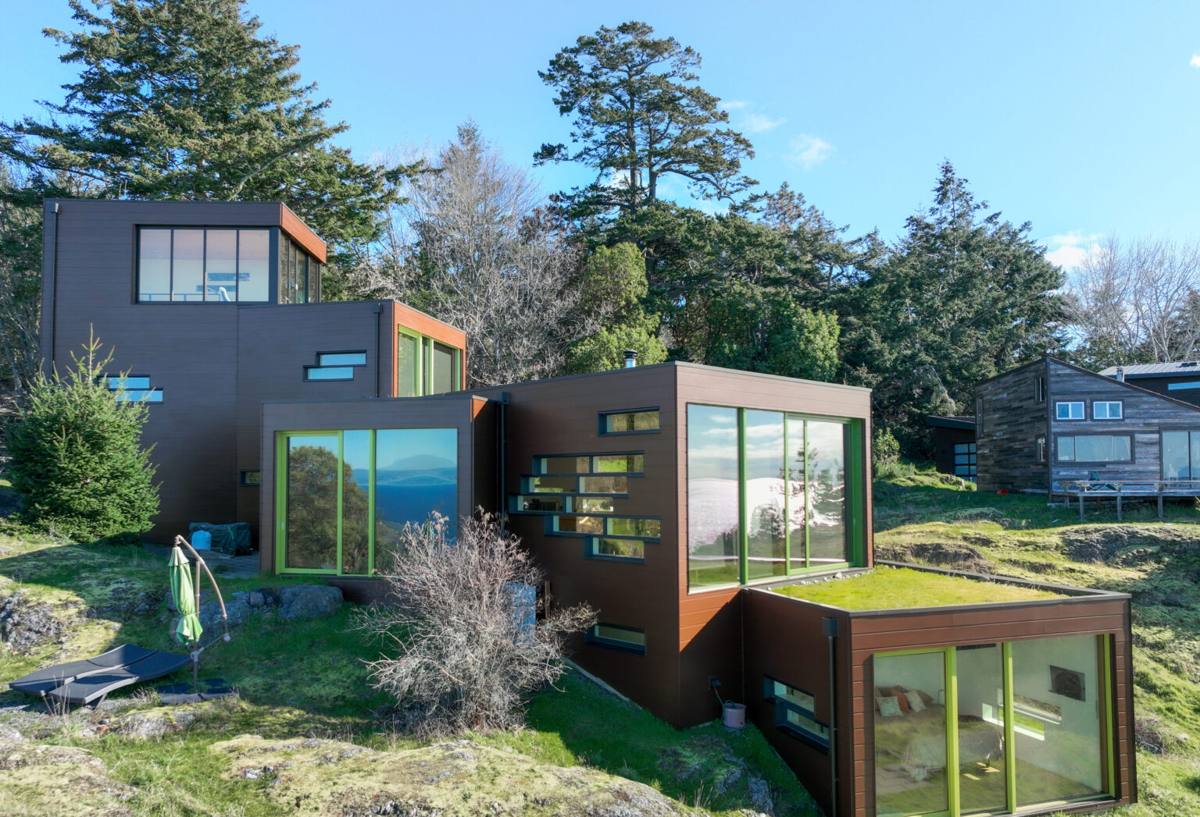
Why Fiber Cement Holds Up Where Other Materials Struggle
What Fiber Cement Actually Is
Fiber cement siding is made from a mix of cement, sand, and cellulose fibers, cured into a dense, stable board. Unlike vinyl, it doesn't soften or warp in heat and doesn't turn brittle and crack in cold snaps. Unlike wood or wood-composite products, it isn't organic material that mold, moss, and rot can feed on directly. That's the baseline reason it's a better fit for a coastal, wet-winter climate than the alternatives.
Why We Only Install James Hardie
We install James Hardie fiber cement exclusively — we don't install vinyl siding, LP SmartSide, Cemplank, Allura, or bare cedar and primed spruce. That's not a marketing position, it's a standard we hold because of what we've seen matter over time in this climate. Hardie's HZ5 product line is engineered specifically for wetter, colder regions like ours, its ColorPlus factory finish is baked on rather than field-applied (which matters a lot in a climate where field-painted finishes take a beating from UV and moisture cycling), and the company backs it with a strong, transferable non-prorated warranty when the installation is done to their specification. Other fiber cement and composite products have real strengths, but we chose to standardize on one system we can install consistently and stand behind, rather than juggling multiple products with different installation requirements and warranty terms.
Vinyl is worth naming specifically here because it's the most common alternative homeowners ask about. It's non-combustible material's opposite — it softens in direct summer sun and can distort, and in a marine climate the combination of salt exposure and moisture cycling behind the panels tends to shorten its practical lifespan compared to fiber cement. It's a reasonable product in the right application; we just don't think it's the right long-term choice for homes taking Blaine's weather head-on.
What a Correct Installation Involves on This Coast
Fiber cement siding is only as good as the assembly behind it. A rushed or generic installation can leave a home vulnerable to the exact problems Blaine's climate is best at creating — trapped moisture, corroded fasteners, and moss gaining a foothold in gaps and seams.
Moisture Management Behind the Cladding
Every job starts with a proper water-resistive barrier and drainage plane, installed so that any moisture that gets past the siding has a clear path down and out rather than pooling against the sheathing. In a climate with as much sustained wet weather as ours, this layer matters more than the siding itself — it's the difference between a home that sheds incidental moisture and one that slowly absorbs it.
Fastening and Hardware for Salt Air
We use corrosion-resistant fasteners and flashing rated for coastal exposure, not standard hardware. Salt air accelerates galvanic corrosion on anything less, and a siding job is only as durable as its weakest fastener — a corroded nail head or a rusting flashing strip well before the board itself shows any wear is a common failure point we install specifically to avoid.
Joints, Caulking, and Clearances
James Hardie specifies exact fastener placement, joint treatment, and clearances from grade, roof lines, and decks — and those specs exist for a reason in a wet climate. We keep proper clearance at the bottom of the wall so the siding isn't wicking up moisture from grade or a deck surface, and we treat butt joints and trim intersections the way the manufacturer requires rather than relying on caulk alone to do the work over the long run. Caulk is a maintenance item, not a substitute for correct clearances.
Ventilation Behind the Cladding
Where the wall assembly allows for it, a ventilated rainscreen gap behind the siding gives any moisture that reaches the drainage plane a way to dry out, and it also reduces the damp, shaded conditions moss and algae favor. This is one of the details that separates a correct installation from one that just gets boards on the wall.
Choosing the Right Hardie Product for a Blaine Home
Not every Hardie product line or exposure is identical, and the right choice depends on your home's design, sun exposure, and how much of the wall faces prevailing weather off the water.
| Consideration | Vinyl Siding | Wood / LP-Type Composite | James Hardie Fiber Cement |
|---|---|---|---|
| Salt air / corrosion resistance | Panel itself is stable but fasteners and trim corrode; can become brittle over time | Organic material is vulnerable to moisture-driven decay near the coast | Non-organic, dimensionally stable; correct hardware resists coastal corrosion |
| Moss and algae resistance | Moss grows on the surface in shaded, damp areas regardless of material | Organic surface can support growth and, over time, softening | Non-organic surface; growth stays surface-level and cleans off rather than taking hold |
| Finish durability | Color is molded in but can fade and chalk with UV exposure | Field-applied paint or factory coatings need repainting on a shorter cycle | ColorPlus factory finish is baked on, formulated for UV and moisture cycling |
| Fire performance | Combustible | Combustible | Non-combustible core material |
| Warranty structure | Varies by manufacturer, often prorated | Varies, often shorter-term | Long-term, transferable, non-prorated when installed to spec |
For most Blaine homes we recommend the HZ5 product line, which James Hardie engineers specifically for regions with more rain and colder temperatures than the national baseline. Within that line, HardiePlank lap siding is the most common choice for full walls, HardiePanel works well for accent areas or a more modern look, and HardieShingle is a common option for gable ends or a more traditional coastal look without the maintenance burden of real wood shingles. Darker ColorPlus finishes will show pollen and light surface dust more than lighter tones, which is worth factoring in if your home sits under mature trees.
Cost Factors for a Blaine Fiber Cement Project
Every home is different, so we don't quote a job without seeing it, but the main variables that move the price on a fiber cement siding project are consistent from house to house.
- Home size and wall complexity — more corners, dormers, and trim details mean more cutting, fitting, and labor time.
- Removal and disposal of existing siding — tear-off of old wood, vinyl, or aluminum siding adds cost and can reveal sheathing repairs.
- Sheathing and moisture barrier condition — if the wall assembly underneath needs repair before new siding goes on, that's addressed before installation, not after.
- Product line and profile — HZ5 versus standard exposure, plank width, and shingle versus lap siding all affect material cost.
- Color and finish — standard ColorPlus colors versus custom or premium finishes carry different pricing.
- Trim and accent work — window and door trim, fascia, and any accent panel areas add labor and material.
Our Process for a Blaine Job
We keep the process straightforward and give homeowners a clear picture of what's happening at each stage.
- On-site estimate — we walk the exterior, check the existing siding and sheathing where accessible, and discuss product and color options suited to your home's sun and wind exposure.
- Written proposal — scope, product line, and pricing laid out clearly before any work is scheduled.
- Removal and prep — old siding comes off, sheathing is inspected and repaired as needed, and the water-resistive barrier goes on correctly the first time.
- Installation to manufacturer spec — fastening, clearances, flashing, and joint treatment done to James Hardie's published requirements so the warranty is valid.
- Final walkthrough and cleanup — site cleaned up, work reviewed with the homeowner before we call the job done.
What to Expect After Installation
Correctly installed fiber cement siding is low-maintenance, but "low-maintenance" isn't "no-maintenance" — especially in this climate. A simple seasonal routine keeps a Blaine home's siding looking and performing the way it should.
- Rinse the siding down once or twice a year, focusing on shaded, north-facing walls where moss and algae are most likely to appear.
- Check and clear gutters before the fall rains so overflow isn't running down the wall surface.
- Keep shrubs and tree limbs trimmed back from the siding to reduce shade and improve airflow along the wall.
- Inspect caulking at trim joints and penetrations every year or two and touch up as needed — caulk is a maintenance item, not a one-time install detail.
- Watch for any staining or discoloration near ground level, which can signal a drainage or clearance issue worth having looked at.
Why It Matters to Hire a Crew That Already Works in Blaine
Siding installation guidelines are written by the manufacturer, but applying them correctly on a specific coastal lot takes judgment — knowing which walls take the brunt of driving rain, where moss pressure will be worst, and where salt air exposure calls for extra attention to hardware and flashing. A crew that already works this area has seen how these homes actually perform over time, not just how a spec sheet says they should. That local pattern-recognition is part of what a correct installation depends on, alongside following James Hardie's requirements to the letter so the warranty stays intact.
If you're weighing siding options for a Blaine-area home, we're happy to take a look and talk through what your specific exposure calls for. Reach out for a free, no-pressure estimate using the form below.