 Ferndale Siding
 Custer's Siding Problem Isn't Hypothetical
Custer sits close enough to the water that salt air is a daily fact of life, not an occasional nuisance. Add in the driving winter rain that comes off the Strait and a moss season that can stretch from October into May, and you've got a combination that punishes cheap or poorly installed siding faster than almost anywhere else in Whatcom County. We've worked on enough homes in this area to know that siding decisions made for a drier, more sheltered climate simply don't hold up out here.
This page is about one thing: installing James Hardie fiber cement siding correctly on Custer homes, and why that combination of product and process matters more here than it might somewhere fifty miles inland.
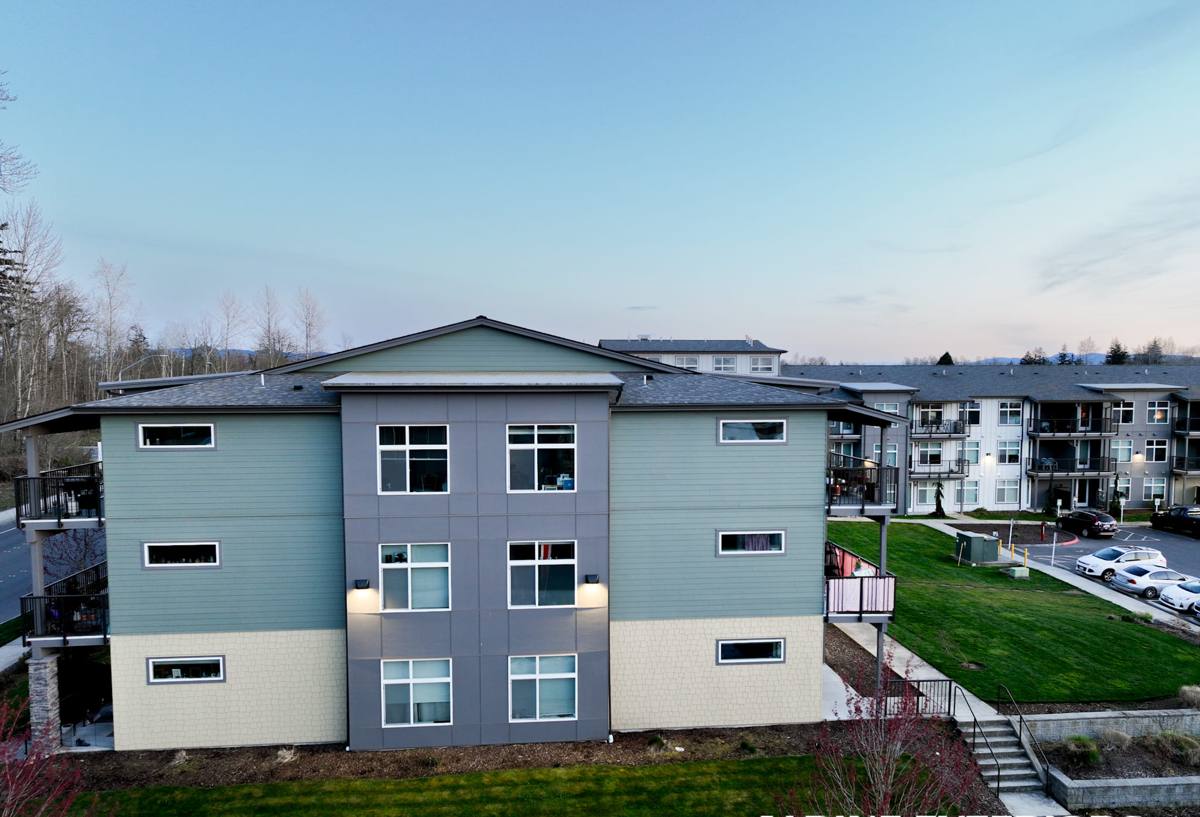
What Custer's Climate Actually Does to Siding
Salt Air
Airborne salt accelerates corrosion on fasteners, trim, and any metal flashing components. It also breaks down cheaper paint films and coatings faster than a standard exterior product rating would suggest. Siding that's rated for "coastal exposure" in a catalog and siding that's actually been engineered and tested for it are two different things.
Driving Rain
Wind-driven rain doesn't just fall on a wall — it gets pushed sideways into laps, seams, and butt joints. On a home in a more sheltered inland location, a small gap in flashing or a slightly under-lapped board might go unnoticed for years. In Custer, that same detail becomes a moisture entry point within one or two wet seasons.
Long Moss Season
Shade, moisture, and mild temperatures are exactly what moss needs, and Custer has all three for a large part of the year. Moss holds water against a wall surface, and on materials that aren't dimensionally stable or properly sealed at the edges, that sustained moisture contact is where rot and delamination start.
Why We Install James Hardie and Only James Hardie
James Hardie fiber cement is a non-combustible, cement-based material engineered specifically for exposure conditions like the ones Custer sees. The HardiePlank and HardiePanel products in the HZ5 line are formulated for the Pacific Northwest's wet, moderate climate — not adapted from a product built for a different region. That distinction matters when the local weather is this consistently damp.
The ColorPlus factory finish is baked on under controlled conditions before the boards ever leave the plant. That gives you a harder, more UV- and moisture-resistant top coat than a job-site paint application can typically achieve, which is directly relevant in a location where the finish is fighting salt air and rain exposure most of the year.
We don't install LP SmartSide, vinyl, Cemplank, Allura, primed spruce, or cedar. Each of those has situations where it performs reasonably well, but none of them is the product we're willing to stand behind on homes in this specific climate. Wood-based products need consistent maintenance to keep moisture out of end grain and seams — maintenance that's easy to fall behind on when the wet season barely lets a surface dry between rain events. Vinyl can warp and fade under UV and temperature swings, and it lacks the impact resistance and paintability of fiber cement. We standardized on Hardie because it's the one product where the manufacturer's engineering, the factory finish, and the transferable warranty all line up with what this climate actually demands.
What a Correct Installation Involves
Fiber cement siding fails less often because of the material and more often because of installation shortcuts. In a climate like Custer's, those shortcuts show up faster. A correct installation includes:
- Proper clearance between the bottom edge of the siding and grade, decks, patios, and roof surfaces — typically a minimum of 6 inches from grade and 2 inches from roofing, per manufacturer specification
- A drainable weather-resistive barrier behind the siding, not just a flat wrap, so any moisture that does get past the surface has somewhere to go
- Correct fastener type, length, and placement — stainless or coated fasteners are worth the upgrade in a salt-air environment
- Properly lapped and sealed joints, with the right sealant rated for exterior fiber cement, not a generic caulk
- Flashing at every horizontal transition — window heads, trim boards, roof-to-wall intersections — installed to shed water outward, not trap it
- Correct fastener spacing and butt joint treatment to allow for the board's normal expansion and contraction
Skip any one of these and you can still end up with moisture problems behind Hardie siding, even though the board itself is doing its job. The material is only as good as the installation around it.
How We Approach a Custer Job
Assessment
We start by looking at the whole wall system, not just the visible siding. That means checking existing flashing, sheathing condition where accessible, and any areas where past moisture intrusion has already left a mark — common around windows, deck ledgers, and lower wall sections that catch splashback.
Prep and Water Management
Before any new siding goes up, we address the water management layer — barrier, flashing, and drainage plane — since this is the layer doing the real work of keeping a Custer home dry long after the siding itself is installed.
Installation
Boards are cut, fastened, and sealed to manufacturer specification, with particular attention to the details that matter most in this climate: fastener corrosion resistance, joint sealing, and clearance from grade and hard surfaces.
Final Inspection
We walk the finished job checking every transition point — trim, corners, window and door flashing, and底 clearances — because these are the spots that determine whether the siding performs for its full service life or starts showing problems in three to five years.
Material Comparison for This Climate
| Factor | James Hardie Fiber Cement | Vinyl | Wood / Primed Spruce / Cedar |
|---|---|---|---|
| Moisture resistance | Engineered for wet climates; won't rot | Won't rot but can warp with heat/cold cycling | Absorbs moisture; needs consistent maintenance |
| Salt air / coastal exposure | Factory finish holds up well; HZ5 line built for this | Can fade and become brittle over time | Finish breaks down faster near salt air |
| Fire resistance | Non-combustible | Combustible, can melt/deform | Combustible |
| Maintenance | Occasional cleaning; repaint only if desired, decades out | Low, but limited repair options when damaged | Regular painting/sealing required |
| Typical service life when correctly installed | 30+ years | 20-30 years, variable | Highly dependent on maintenance |
Cost Factors to Expect
| Factor | Why It Affects Cost |
|---|---|
| Home size and wall complexity | More corners, dormers, and trim details increase labor time |
| Existing wall condition | Rot repair or sheathing replacement adds to the scope |
| Siding profile and trim selection | Lap width, panel style, and trim detailing vary in material cost |
| Access and site conditions | Tight lots, slopes, or limited access can affect setup and labor time |
| Removal and disposal of old siding | Tear-off scope depends on what's currently on the house |
We give straightforward, itemized estimates so you can see exactly what's driving the number — no vague lump-sum pricing.
Why Hiring a Crew That Already Works Custer Matters
A crew that's worked on homes throughout Ferndale and the surrounding Whatcom County communities already knows what this climate does to a wall assembly over time. That's different from a crew installing Hardie for the first time in an unfamiliar climate, or one used to drier conditions elsewhere. We know which details tend to fail first out here — usually flashing and clearance issues — and we build the job around getting those right the first time, since redoing siding work is far more disruptive and costly than doing it correctly from the start.
Local familiarity also means we're realistic about seasonal scheduling. Installation timing, drying conditions, and even material handling can be affected by the wet season, and planning around that keeps the job on track instead of running into avoidable delays.
A Simple Checklist Before You Hire Anyone
- Ask specifically what siding product they install and why — and be wary of a contractor who installs "whatever you want" with no professional opinion
- Confirm they carry James Hardie-specific installation training or certification, not just general siding experience
- Ask how they handle flashing and water management, not just the visible siding install
- Get an itemized written estimate, not a single number
- Ask about fastener type and corrosion resistance, especially this close to salt air
- Confirm what warranty applies — both manufacturer and workmanship — and get it in writing
Let's Look at Your Home
Every property in Custer sits a little differently relative to wind, moisture, and shade, and that affects how we'd approach your siding. If you're weighing a replacement or just want an honest read on your current siding's condition, we're happy to come take a look and give you a straightforward, no-pressure estimate.