 Ferndale Siding
 Storm Damage Roofing in Kendall: What Whatcom County Weather Puts a Roof Through
Kendall sits along the Nooksack River corridor east of Ferndale, closer to the timber and foothills than to the water, but that doesn't mean the roofs out here get an easier ride. The same weather systems that push in off the Pacific and up through Bellingham Bay still reach inland, and the river valley has a way of funneling wind into gusts that hit harder than the forecast suggests. Add in the heavy tree canopy that shades most Kendall properties for a good part of the year, and you get a combination of driving rain, wind-loaded limbs, and prolonged dampness that asphalt shingles, cedar, and metal roofing all have to survive winter after winter.
Moss is the quiet part of that equation. Shade, cool temperatures, and moisture that never fully dries out between storms give moss a long growing season on Kendall roofs, and moss does real damage over time — it lifts shingle edges, holds water against the roof deck, and works its way into anywhere a storm has already loosened material. A roof that took wind or debris damage and then sits through a few more months of moss growth is in worse shape than the original storm event alone would suggest. That's the pattern we're usually called out to address: not just "what did the storm break," but "what has been quietly getting worse since."
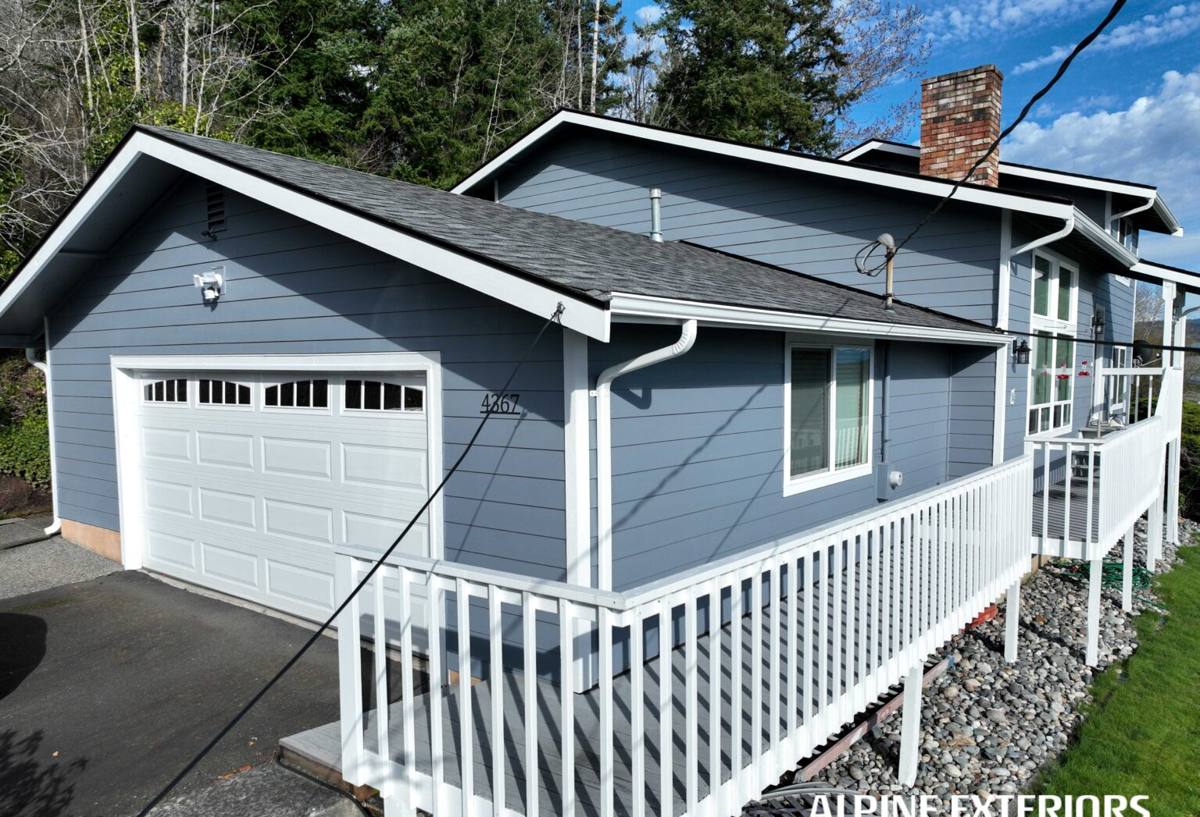
Common Types of Storm Damage We See on Kendall Roofs
Wind Damage
Sustained wind and sharp gusts funneled through the river valley can lift shingle tabs, break the sealant bond between shingle courses, and in worse cases tear whole shingles or metal panels loose. Wind damage is often the hardest for a homeowner to spot from the ground because the roof can look intact while the seal underneath is already broken, which lets the next rain get underneath the surface layer.
Impact Damage From Limbs and Debris
Kendall's tree cover is part of what makes the area appealing, but big timber also means falling limbs, cones, and occasional whole branches during wind events. Impact damage ranges from a cracked or punctured shingle to bent flashing, dented gutters, or in serious cases a compromised section of roof deck. Even a limb that doesn't punch through can crush the shingle mat enough to shorten its remaining life significantly.
Water Intrusion
Driving rain finds every gap a storm has opened — around flashing, at valleys, along ridge caps, or wherever moss has lifted a shingle edge. Water intrusion is the damage type most likely to cause problems you can't see from outside: soaked insulation, staining on interior ceilings, or slow rot in the decking that doesn't show up until it's a bigger repair than it needed to be.
Signs Your Kendall Roof May Have Storm Damage
Most storm damage doesn't announce itself with an obvious hole. Here's what we tell Kendall homeowners to watch for after a windy or wet stretch:
- Granules collecting in gutters or at the base of downspouts (a sign shingle surfaces are wearing or were impacted)
- Shingles that look lifted, curled, or out of alignment with the surrounding roof plane
- Visible gaps, cracks, or missing pieces of flashing around chimneys, vents, or skylights
- New or spreading moss growth, especially on north-facing slopes or heavily shaded sections
- Water stains or discoloration on interior ceilings, especially near exterior walls or after a storm
- Sagging or soft-feeling spots when walking the roof, which can indicate saturated decking underneath
- Dented or bent gutters, downspouts, or roof vents from falling debris
Any one of these on its own might be minor. Several together, or any sign paired with a recent storm event, is worth a professional look before the next round of rain gets in.
What a Correct Storm Damage Repair Actually Involves
A storm damage repair done right is not just replacing the shingles you can see are missing. It starts with figuring out how far the damage actually extends, because wind and water rarely stop exactly where the visible damage does.
Inspection Before Anything Else
We walk the roof, not just look at it from the ground or a ladder. That's the only way to catch lifted seals, hairline cracks, or soft decking that isn't visible from the yard. We also check the attic side when accessible, since staining or damp insulation there often tells us more about the scope of water intrusion than the roof surface does.
Matching Materials, Not Just Patching
Repairs should use materials that match the existing roof in type, weight, and where possible, color and age-appearance. A mismatched patch is a cosmetic problem now and a maintenance headache later, since different materials age and shed water differently.
Flashing and Underlayment, Not Just Shingles
Most leaks that come back after a "repair" come back because someone replaced the visible shingles but left damaged flashing or underlayment in place underneath. Correct storm repair addresses the whole assembly at the damage site — deck, underlayment, flashing, and surface material — not just the top layer.
Addressing the Cause, Not Just the Symptom
If moss contributed to the damage, a real repair includes moss removal and a plan to slow regrowth. If a specific tree or branch is a recurring impact risk, we'll tell you that honestly rather than just fixing the roof and leaving the same exposure in place.
Our Storm Damage Repair Process
- Contact and scheduling. We get basic details about the storm event and any visible or suspected damage, then schedule an on-site look — sooner if there's active leaking.
- On-roof inspection and documentation. We walk the roof, photograph what we find, and check attic access where possible. This documentation matters both for our repair plan and for any insurance claim you may file.
- Written scope and honest recommendation. You get a clear explanation of what's damaged, what's not, and whether the right move is a targeted repair or something more extensive. We're not going to recommend a full roof replacement when a repair will genuinely hold up.
- The repair itself. Deck, underlayment, flashing, and surface materials are addressed as a system, using materials matched to your existing roof.
- Cleanup and debris removal. Old materials, moss debris, and any storm debris from the roof and gutters are cleared before we consider the job done.
- Follow-up. We stand behind the work and are reachable if something doesn't look or perform right after the repair settles in through a rain cycle.
Repair or Replace? What Actually Decides It
Not every storm-damaged roof needs to be replaced, and not every roof that "just needs a patch" should stop there. The honest answer depends on a handful of factors:
| Factor | Points Toward Repair | Points Toward Replacement |
|---|---|---|
| Age of roof | Under 10-12 years, or well-maintained | Near or past expected material lifespan |
| Extent of damage | Localized to one section or slope | Spread across multiple areas or slopes |
| Decking condition | Solid, no soft spots found | Soft, rotted, or saturated decking discovered |
| Moss and moisture history | Minor, recently treated | Long-term moss damage with lifted material throughout |
| Prior repairs | First significant repair needed | Multiple past patches already in place |
We'll walk you through where your roof falls on these factors rather than defaulting to the more expensive answer. A well-timed repair on a roof with good bones is usually the right call, and we'll tell you when that's the case.
Insurance Claims and Storm Damage Documentation
Many storm damage repairs are at least partially covered by homeowner's insurance, but claims move faster and go smoother with good documentation. Our inspection photos and written scope of damage are built to support a claim if you decide to file one — they lay out what was damaged, the likely cause, and what repair is needed, in language an adjuster can work with. We're not a public adjuster and won't promise a claim outcome, but we can make sure the roofing side of your documentation is thorough and accurate.
If you're not sure whether damage is significant enough to file a claim, that's a fair question to bring to us directly — we'd rather give you a straight answer about the roof's condition than have you guess.
Why a Crew That Already Works Kendall Matters
Kendall isn't a drive-by stop for a lot of roofing companies based elsewhere in Whatcom County or further south. A crew that regularly works this area understands how the tree cover, river valley wind patterns, and long wet season here differ from a more open, coastal property closer to town — and that shapes what a repair needs to hold up long-term. It also means faster response after a storm, since we're not routing a crew in from across the county for every call.
Local familiarity matters for smaller practical reasons too: knowing which roof types and pitches are common in the area, understanding typical access and driveway conditions for equipment, and having a realistic sense of how quickly moss and moisture will return if it isn't addressed as part of the repair.
Reducing Repeat Storm Damage on a Kendall Roof
A good repair should reduce the odds of the same damage recurring, not just fix what already happened. A few things make the biggest difference for homes in this area:
- Keep overhanging limbs trimmed back from the roofline where safely possible
- Clean gutters and downspouts before the fall rains start, so water has somewhere to go
- Treat and remove moss on a regular schedule rather than waiting until it's visibly heavy
- Have flashing around chimneys, skylights, and vents checked every couple of years, since these are the most common leak points
- Get a roof looked at after any major wind event, even if nothing looks obviously wrong from the ground
None of this eliminates storm exposure entirely — no roof in Whatcom County is immune to what a wet, windy winter brings — but consistent maintenance is the difference between a minor repair every few years and a bigger, more expensive fix down the road.
Get an Honest Look at Your Roof
If a recent storm has you wondering whether your Kendall roof took damage, or you've noticed moss, staining, or lifted shingles building up over time, it's worth getting a professional set of eyes on it before the next rain. We offer free, no-pressure estimates and will tell you plainly what we find — whether that's a small repair, a bigger scope, or nothing urgent at all. Reach out using the form below to get scheduled.