 Ferndale Siding
 Why the Lummi Nation Coastline Changes What "Correct" Means
Homes on and around the Lummi Peninsula sit closer to open salt water than almost anywhere else in Whatcom County. That location is beautiful, and it's also hard on a roof. Wind off Bellingham Bay and Hale Passage carries fine salt spray inland, tree cover keeps large sections of many roofs shaded and damp for weeks at a stretch, and the long Pacific Northwest wet season means a roof here rarely gets a real chance to dry out between rains. A metal roof that's installed the same way you'd install one in a dry inland town will not perform the same way out here. The materials, fasteners, and detailing all need to account for salt exposure and moss pressure specifically, not just "rain in general."
Salt Air and Corrosion
Airborne salt is corrosive to metal, full stop. It settles on panels, collects in fastener heads, and works into any spot where the protective coating has been scratched, drilled through incorrectly, or left exposed at a cut edge. Steel roofing depends on its coating — galvanized zinc, Galvalume, or a factory paint system — to keep that salt from reaching bare metal. Once the coating is compromised near the water, corrosion can start years earlier than it would on the same roof a few miles inland. This is a coastal-exposure issue, not a knock on any specific product; it just means material choice and installation care matter more here than in most parts of the county.
Moss, Shade, and the Long Wet Season
Whatcom County's evergreen canopy and marine humidity add a second problem on top of salt exposure: moss. Moss doesn't need much — shade, moisture, and organic debris (needles, leaf litter, seed pods) sitting on the roof surface long enough to give it something to root into. North-facing slopes and roof sections under tree cover are the first to show growth, and once moss establishes itself it holds moisture against the roof surface far longer than open rain does on its own. On a metal roof, that moisture sits right at panel seams, fastener penetrations, and flashing laps — exactly the places you don't want standing dampness.
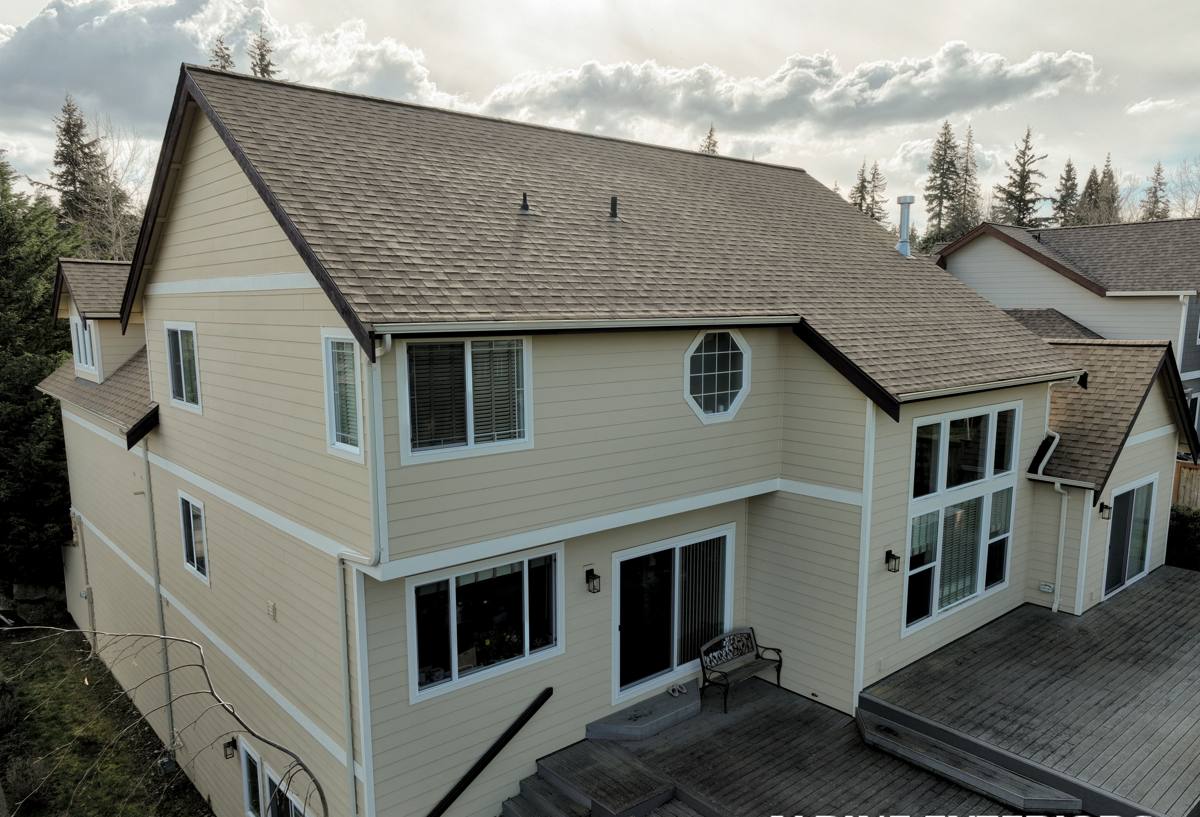
What a Correct Metal Roof Installation Involves Here
"Metal roofing" covers a wide range of quality, and the difference between a roof that lasts decades near the water and one that starts showing rust streaks in a few years usually comes down to details most homeowners never see once the job is done.
Underlayment and Fastening
A synthetic, moisture-resistant underlayment belongs under every metal roof in this climate, with extra attention at valleys, eaves, and any low-slope transition where wind-driven rain can work its way backward under panels. Fasteners matter just as much as panels — coastal-rated screws and clips with corrosion-resistant coatings and quality rubber washers hold up far longer than standard hardware, and using the wrong fastener is one of the most common shortcuts that shows up as rust spotting within a few seasons.
Flashing and Penetrations
Every place metal changes direction, or something interrupts the roof plane — chimneys, vents, skylights, wall transitions — is a place water is actively trying to get in. Flashing has to be formed and lapped correctly, sealed with compatible materials, and matched to the panel profile. This is where driving rain off the water finds its way into a roof system that looks fine from the ground.
Panel Coatings
For a home this close to salt water, the coating system on the panel is arguably more important than the base metal. A quality PVDF (often sold under the Kynar 500 resin name) or comparable factory finish resists fading and chalking and holds its protective properties far longer than field-applied paint. We treat coating quality as a baseline requirement for coastal jobs, not an upgrade.
Panel Types and How They Hold Up Near Salt Water
There isn't one "best" metal roofing product for every home — the right choice depends on your roof's exposure, slope, and budget. Here's a general comparison of the panel types most commonly used in this region.
| Panel Type | Salt Air Resistance | Moss Resistance | Maintenance Level |
|---|---|---|---|
| Standing seam steel (concealed fasteners) | Very good with quality coating | Very good — smooth, steep-slope friendly | Low |
| Exposed-fastener steel panels | Good, but fastener seals are the weak point | Good | Moderate — fasteners need periodic checks |
| Stone-coated steel shingles/shakes | Good, coating protects the steel core | Moderate — textured surface can trap debris | Moderate |
| Aluminum panels | Excellent — doesn't rust like steel | Very good | Low |
In general, the tighter and smoother the panel system, and the fewer exposed fasteners, the less maintenance a roof needs near the water. Aluminum is worth a look on homes with the most direct salt exposure, since it doesn't corrode the way steel can even when a coating is compromised — though it carries its own cost and structural considerations we'd walk through on-site.
Our Process From Estimate to Finished Roof
- On-site assessment. We look at your existing roof structure, decking condition, ventilation, and exposure — including how much shade and salt-air exposure different slopes get.
- Honest recommendation. We'll tell you which panel type and coating level actually fits your home and budget, not just what's easiest for us to install.
- Written estimate. Scope, materials, and timeline in writing before any work starts.
- Tear-off or overlay decision. We evaluate whether your existing decking and structure can support the new system properly, and whether old roofing needs to come off first.
- Underlayment and flashing detail work. This is where most of the long-term performance of the roof gets decided, and it's not a step we rush.
- Panel installation. Fastened and sealed to manufacturer specification, with attention to coastal-rated hardware throughout.
- Final walkthrough. We go over the finished roof with you, including what maintenance to expect given your specific tree cover and exposure.
Keeping Moss and Debris From Undoing the Work
A well-installed metal roof needs far less maintenance than asphalt shingles, but "far less" isn't "none" — especially with the tree cover common around Lummi Nation and the rest of Ferndale. A little seasonal attention keeps moss from ever getting a foothold in the first place.
- Clear needles, leaves, and organic debris from valleys and low slopes at least once or twice a year, more often under heavy tree cover
- Keep gutters and downspouts clear so water isn't backing up under eave edges
- Trim back overhanging branches to reduce shade and debris drop on the roof surface
- Do a visual check after major windstorms for lifted panels, dented flashing, or debris buildup
- Avoid pressure washing metal panels — it can force water under seams and damage coatings; a soft brush and rinse handles most moss and grime
- Have flashing and penetration seals checked periodically, since these fail long before the panels themselves do
What Drives Cost on a Job Like This
Metal roofing costs more upfront than asphalt shingles, and coastal-specific detailing adds a bit more on top of a standard install. The biggest cost drivers on a Lummi Nation job are usually the same handful of factors.
| Cost Factor | Why It Matters |
|---|---|
| Panel type and coating | Standing seam and premium coatings cost more than exposed-fastener systems but need less upkeep |
| Roof complexity | Valleys, dormers, and multiple slopes mean more flashing and labor time |
| Tear-off vs. overlay | Removing old roofing and repairing decking adds cost but is often necessary for a proper install |
| Site access | Tree cover, steep pitches, and limited equipment access affect labor time |
| Fastener and flashing hardware | Coastal-rated materials cost more than standard hardware but hold up far longer near salt water |
We'd rather walk through these factors on your specific roof than quote a number that doesn't reflect what your home actually needs. A written estimate lets you see exactly where the cost is going.
Why It Matters That the Crew Already Works This Area
A roofing crew that hasn't worked near open salt water before can install a technically fine roof that still underperforms here, simply because they're used to specifying and detailing for a drier, less corrosive environment. Working regularly around Ferndale and the surrounding Whatcom County coastline means knowing which slopes on a given lot type will hold moss, which fastener grades actually hold up a few hundred yards from the water, and which flashing details fail first under this area's specific combination of wind-driven rain and salt exposure. That's not a marketing point — it's the practical difference between a roof that needs attention in five years and one that doesn't need much at all for a couple of decades.
Signs Your Current Roof Is Already Behind
If you're deciding whether it's time to look at metal roofing, or whether an existing metal roof needs service, these are the signs we'd want to know about before recommending anything.
- Moss visibly established on shaded or north-facing slopes, not just algae staining
- Rust streaking below fasteners, seams, or flashing, especially on the side of the house facing open water
- Lifted, loose, or missing fasteners after a windstorm
- Granule buildup or debris packed into valleys that never seems to fully clear
- Visible daylight or water staining in the attic near penetrations or valleys
- Chalking, fading, or coating breakdown on panels more than a decade or two old
If your roof is showing any of these, it's worth having someone look at it before a small flashing or fastener issue turns into a decking or interior problem. If you'd like a straightforward, no-pressure look at your roof, our estimate form below is the easiest way to get started — we'll give you a clear picture of what your home actually needs and what it would cost to do it right.