 Ferndale Siding
 Windows Built for Marietta's Coastal Climate
Marietta sits close enough to the water that homes here deal with a different set of pressures than houses further inland in Whatcom County. Salt-laden air off the bay works its way into hardware and finishes. Driving rain, pushed sideways by wind off the water, tests every seal a window has. And the long, damp moss season that settles over Ferndale each year keeps humidity high against exterior walls for months at a time. Windows in this neighborhood don't just need to look good — they need to hold a seal, resist corrosion, and keep conditioned air where it belongs, year after year, in conditions that are genuinely harder on building materials than what you'd find on the drier side of the county.
When we talk about "energy-efficient windows" for a Marietta home, we're not just talking about a lower heating bill, though that matters. We're talking about a window assembly — glass, frame, and installation — that's specifically suited to a marine climate with a lot of moisture and a lot of wind-driven rain.
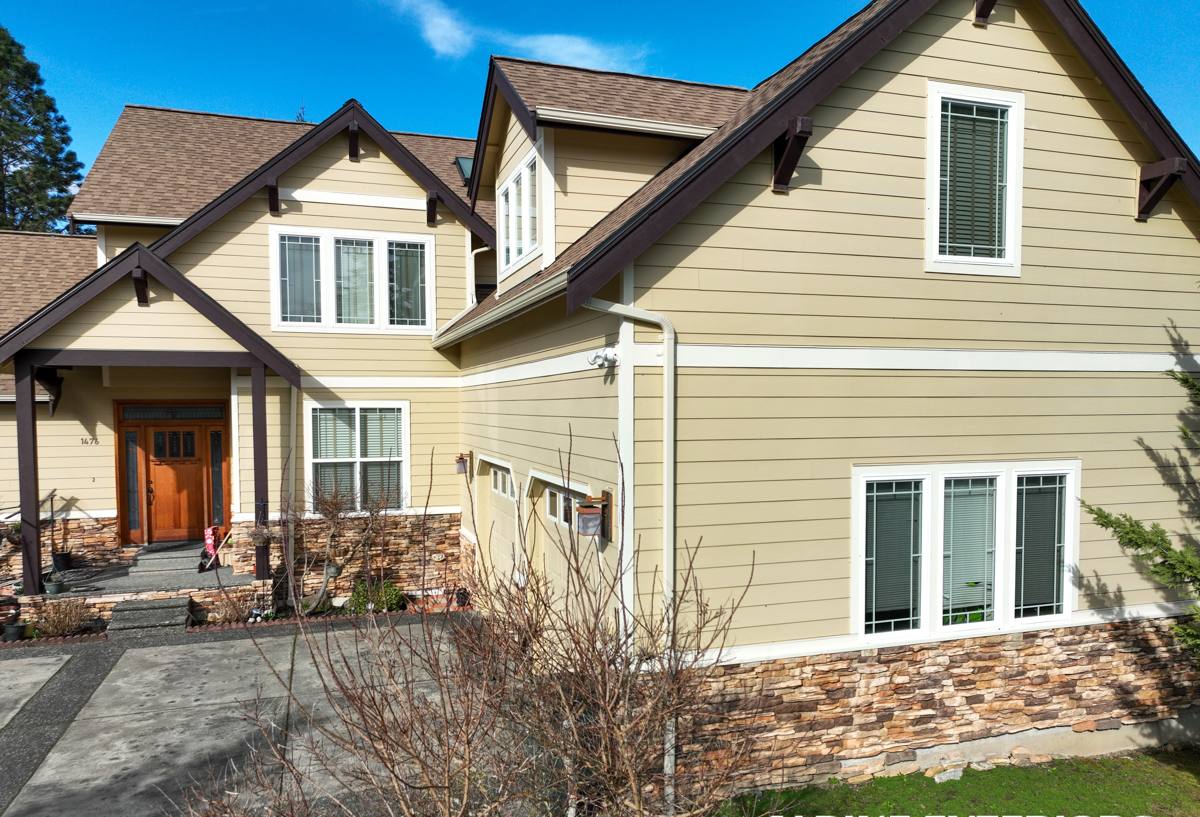
Why Older Windows Struggle Near the Bay
Single-pane and early dual-pane units
A lot of the housing stock around Ferndale and Marietta still has original single-pane windows or early-generation dual-pane units from decades back. Both types were built before modern low-E coatings, warm-edge spacers, and improved gas fills became standard. In a marine climate, these older windows have a second problem beyond poor insulation: the seals on early dual-pane glass fail faster in humid, salt-air conditions, which is why you'll often see fogging or moisture trapped between the panes on homes in this area well before it shows up on similar-aged windows further from the water.
Signs your windows are costing you money
Most homeowners don't wake up one day and decide they need new windows — they notice a handful of small problems that add up. Here's what we look for during an assessment:
- Visible fog or moisture between panes of dual-pane glass
- Cold drafts near the frame even when the window is fully latched
- Difficulty opening, closing, or locking — often from swollen wood or corroded hardware
- Visible condensation on the inside of the glass during cold, wet stretches
- Soft or discolored trim and sill areas, a sign water is getting past the seal
- Noticeably higher heating costs compared to similarly sized homes nearby
Any one of these on its own might not mean much. Two or three together, especially on a home's west- or south-facing walls where wind-driven rain hits hardest, usually means the window assembly has reached the end of its useful life.
What Actually Makes a Window "Energy-Efficient"
"Energy-efficient" gets used loosely in this industry, so it's worth being specific about what actually changes performance:
U-factor measures how well a window resists heat transfer — lower is better for our climate, where keeping heat inside the home matters most of the year. Solar Heat Gain Coefficient (SHGC) measures how much solar heat passes through the glass; for the Pacific Northwest, a moderate SHGC is usually the right call since we're not fighting intense summer sun the way homes in hotter climates are. Low-E coatings are a microscopically thin metallic layer that reflects heat while still letting light through. Gas fills, typically argon, sit between panes and insulate better than plain air. Warm-edge spacers separate the panes at the perimeter and reduce the cold spot you'd otherwise feel near the edge of the glass in winter.
None of these features work in isolation. A window with excellent glass but a poorly sealed frame will still leak air and, in this climate, eventually leak water. That's why frame material and installation quality matter just as much as the glass package.
Frame Materials: What Holds Up in Salt Air and Rain
We get asked constantly which frame material is "best." The honest answer depends on the home, the budget, and how exposed the window is to weather. Here's how the common options actually compare in a marine, high-moisture environment like Marietta:
| Frame Material | How It Handles Salt Air & Moisture | Maintenance Needs | Relative Cost |
|---|---|---|---|
| Vinyl | Won't corrode or rot; performs well in coastal air | Low — occasional cleaning | $ |
| Fiberglass | Excellent stability, resists expansion/contraction from moisture and temperature swings | Low | $$$ |
| Wood-clad | Attractive, but the cladding must stay intact — any breach lets moisture reach the wood core | Higher — needs regular inspection of seals and cladding joints | $$$ |
| Aluminum | Conducts cold and can corrode over time in salt air unless properly treated | Moderate | $$ |
Our default recommendation for most Marietta homes is vinyl or fiberglass, simply because neither one gives salt air or moisture a foothold. We're not against wood-clad windows — they can look great on the right home — but we're upfront with clients that they carry a higher long-term maintenance burden in this specific climate, and we make sure anyone who chooses that route understands what ongoing care it requires.
What a Correct Installation Actually Involves
The single biggest factor in how a window performs isn't the brand — it's the installation. A high-efficiency window installed carelessly will underperform a mid-grade window installed correctly, especially where wind-driven rain is a factor. A correct install includes:
- Removing the old unit without damaging the surrounding framing, and inspecting the opening for hidden rot or water damage before anything new goes in
- Correcting any damaged sheathing or framing found during that inspection — never installing a new window over a compromised opening
- Installing weather-resistant barrier and flashing in the correct shingle-lap order so water is directed out and down, never trapped behind the trim
- Setting the window level, plumb, and square, with proper shimming so the frame isn't under stress that can crack seals over time
- Insulating the gap between the window frame and rough opening — not stuffed too tight, not left with gaps
- Sealing the exterior with the correct sealant for the surface, and finishing interior and exterior trim so the whole assembly sheds water properly
Skipping or rushing any one of these steps is how a homeowner ends up with a brand-new, expensive window that still drafts or, worse, leaks water into the wall cavity during a hard winter storm.
Our Process for a Marietta Window Project
We keep the process straightforward and try not to disrupt your household more than necessary:
Assessment. We walk the exterior and interior with you, look at each window's condition, note which walls take the worst weather exposure, and talk through your goals — whether that's cutting energy costs, stopping drafts, or replacing windows that are simply failing.
Measurement and product selection. Every opening is measured individually; older homes rarely have perfectly uniform openings. We go over frame material, glass package, and grille or finish options based on what fits the home and the budget.
Installation. Most standard replacement projects on a typical home are completed in a matter of days, not weeks, with each window fully weathered-in the same day it's installed so the home isn't left exposed overnight.
Cleanup and walkthrough. We clear debris, clean the new glass, and walk the finished work with you before we consider the job done.
Why Local Experience in Marietta Matters
A crew that already works this part of Whatcom County knows things a traveling or out-of-area contractor has to learn on your dime. That includes which wall orientations take the worst wind-driven rain in this specific area, how much additional flashing detail a home near the water genuinely needs versus a home a few miles inland, and how to sequence work around our wetter months so openings aren't left exposed longer than necessary. It also means we're not guessing about local permitting requirements or building department expectations — we've already been through that process on homes near yours.
Just as important: if a question or an adjustment comes up after the job is done, we're a short drive away, not a call center in another state.
Protecting Your Investment After Installation
New energy-efficient windows are built to need very little upkeep, but a few habits go a long way in a climate like ours:
- Rinse tracks and weep holes periodically to keep salt residue and debris from building up
- Inspect exterior caulking once a year, ideally before the wet season sets in, and touch up any cracking
- Keep gutters and nearby vegetation clear so water and moss don't sit against window trim
- Operate locks and hardware a few times through the year so mechanisms don't seize from disuse
- Address any soft trim or discoloration right away rather than waiting until the next dry stretch
None of this is heavy maintenance — it's the kind of five-minute check that prevents a small issue from becoming a wall-cavity problem two winters from now.
What to Expect Cost-Wise
Window replacement pricing depends on the number of openings, frame material, glass package, and how much repair the existing opening needs once the old window comes out. Rather than quote a number that won't apply to your specific home, we'd rather walk your property, look at what's actually there, and give you a real, itemized estimate. If you're weighing options on a Marietta home affected by salt air, driving rain, or persistent moss and moisture, we're happy to come take a look and put together a free, no-pressure estimate — no obligation, just an honest read on what your home actually needs.