 Ferndale Siding
 Why Semiahmoo Roofs Wear Differently Than Roofs Ten Miles Inland
Homes along the Semiahmoo area sit closer to open water than most of Whatcom County, and that changes what a roof has to put up with year after year. Salt-laden air moves inland with the wind, settling on every exposed surface. Combine that with the long, wet Pacific Northwest winter and a moss season that can run from fall through spring, and you have three separate stresses working on the same roof at once: corrosion, water intrusion, and organic growth that holds moisture against the surface.
None of that is unique to Semiahmoo, but the intensity is higher near the water. A shingle roof that would show fifteen good years in a drier inland setting often shows granule loss, moss colonization, and soft decking years sooner when it's catching salt spray and driving rain off the bay. That's the practical reason more homeowners in this area ask about metal roofing specifically, rather than another round of asphalt shingles.
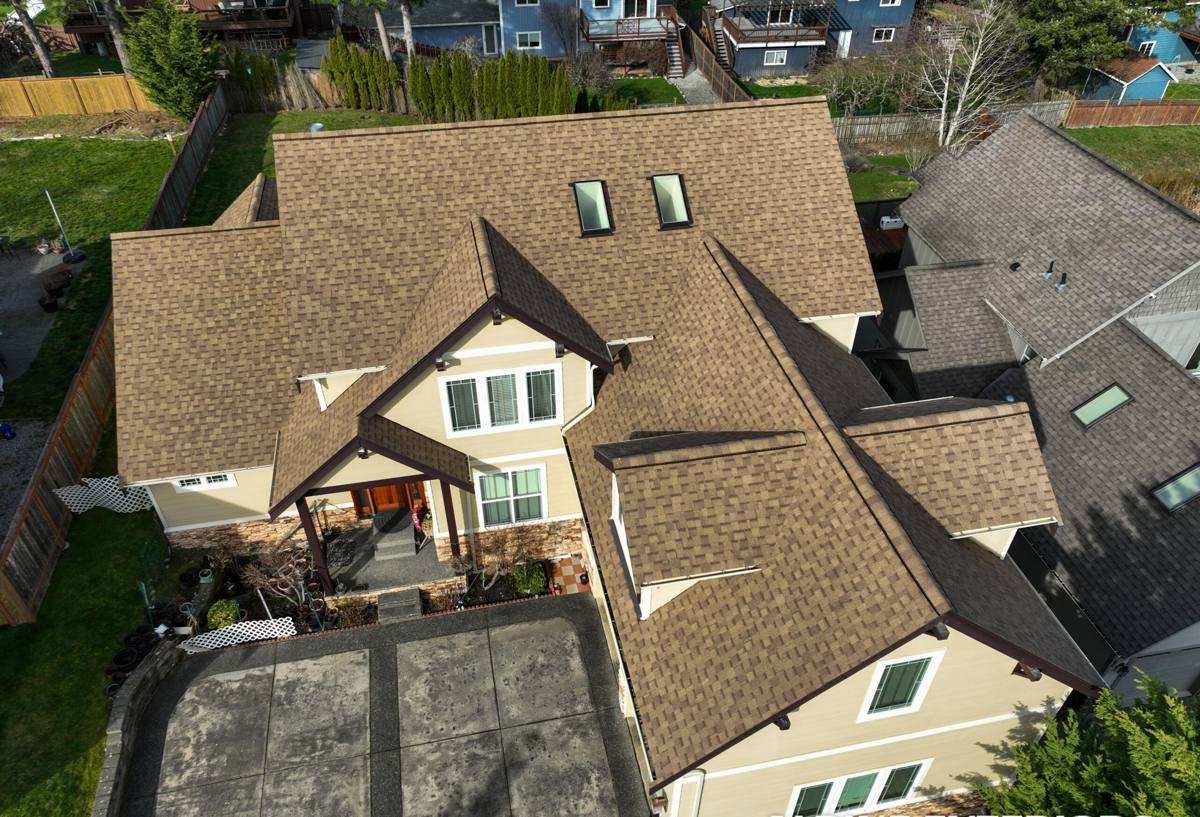
What Coastal Exposure Actually Does to a Roof
It helps to be specific about the mechanisms, because it changes what "correct installation" means here.
- Salt air accelerates corrosion on any exposed metal — fasteners, flashing, gutter hangers — if it isn't rated for coastal use.
- Driving rain off the water doesn't fall straight down; wind-driven rain gets pushed sideways and upward under laps, ridge caps, and flashing that would shed water fine in a calmer climate.
- Moss and algae take hold anywhere shade and moisture linger — north-facing slopes, valleys, and areas under overhanging trees — and once established, moss holds water against the roof surface far longer than the roof was designed to tolerate.
A roofing system that ignores any one of these three factors tends to fail from that specific weak point, even if everything else about the job was done well.
Why Metal Roofing Holds Up Better Here
Metal roofing isn't a fix for every home or every budget, but for the specific conditions around Semiahmoo, it addresses the three stresses above directly:
Against salt air: A properly coated steel or aluminum panel system, installed with coastal-rated fasteners and flashing, resists corrosion far longer than bare or lightly coated metal components. The coating and the fastener spec matter more here than they would fifty miles inland — this is where cutting corners shows up first.
Against driving rain: Standing seam and properly lapped panel systems shed wind-driven rain because the water path runs downhill with no exposed fastener penetrations for wind to push water back through. That's a meaningful advantage over materials that rely on gravity alone and a tight seal at every nail.
Against moss: Metal doesn't give moss and algae the rough, absorbent surface they need to colonize the way shingles do. It doesn't stop growth entirely — organic debris and moisture can still collect in valleys and against fascia — but it removes the roofing material itself as food and habitat for growth, which is a real factor in a climate with this much sustained moisture.
What a Correct Metal Roofing Job Involves
Metal roofing is unforgiving of shortcuts in a way that shingles sometimes aren't — a shingle roof with a mediocre install often still functions for years; a metal roof with the wrong fastener, wrong underlayment, or wrong ventilation shows problems faster, especially in a salt-air environment. A correct installation includes:
Deck Inspection and Prep
Before any panel goes down, the decking underneath needs to be sound. Soft spots, old moss staining, or trapped moisture from a prior roof get addressed first — covering a compromised deck with new metal just hides the problem, it doesn't solve it.
Underlayment Suited to the Climate
A high-quality synthetic or ice-and-water underlayment matters more here than in drier parts of the state, since it's the backup layer if wind-driven rain ever gets past the panel seams — which it can, in a strong storm off the water.
Fasteners and Flashing Rated for Coastal Use
This is the detail that separates a roof that lasts from one that starts showing rust streaks at the fastener heads within a few winters. Coastal-rated fasteners and matched flashing are a small line-item cost with an outsized effect on how the roof ages.
Ventilation
Metal roofing needs a ventilation plan that accounts for how the panel profile handles airflow underneath it. Poor ventilation traps moisture against the underside of the deck, which undermines the whole point of choosing a material meant to resist moisture damage.
Panel Types: What Actually Fits a Coastal Home
| Panel Type | Coastal Suitability | Typical Trade-Off |
|---|---|---|
| Standing seam (concealed fastener) | Best resistance to wind-driven rain and salt exposure; no exposed penetrations to corrode | Higher upfront cost, more installation skill required |
| Exposed-fastener panel | Workable if fasteners and washers are coastal-rated and maintained | Fastener washers age faster near salt air and need periodic inspection |
| Aluminum | Naturally corrosion-resistant, a strong fit directly on the water | Softer material, more prone to denting than steel |
| Galvanized/galvalume steel | Good with a proper coating system; coating quality is the deciding factor | Coating failure exposes bare steel to corrosion faster in salt air |
There's no single "best" answer in this table — it depends on the home's exposure, roof pitch, and budget. A roof tucked behind a windbreak of trees doesn't need the same spec as one with an open, unobstructed view of the water.
Our Installation Process
- On-site assessment — we look at the existing roof, decking condition, ventilation, and how exposed the home is to wind and salt air off the bay.
- Material and panel recommendation — based on exposure, budget, and the home's architecture, not a one-size-fits-all pitch.
- Deck repair as needed — any soft or moisture-damaged decking gets replaced before underlayment goes down.
- Underlayment and flashing — installed to handle wind-driven rain at valleys, penetrations, and edges.
- Panel installation — with fasteners and sealants specified for coastal conditions, not generic hardware.
- Final inspection and walkthrough — checking seams, flashing, and ventilation before we consider the job done.
Living With a Metal Roof Near the Water: Maintenance That Actually Matters
Metal roofing lowers maintenance compared to shingles in this climate, but "lower" isn't "none." A few things are worth staying on top of:
- Rinse accumulated salt film and debris off the roof and gutters periodically, especially after storms with strong onshore wind.
- Keep gutters and valleys clear of needles, leaves, and moss debris so water isn't held against seams or fascia.
- Have flashing and fastener condition checked every few years, particularly on older exposed-fastener systems.
- Trim back overhanging branches that keep sections of the roof shaded and damp longer than the rest.
What Drives Cost on a Semiahmoo Metal Roof
| Factor | Why It Matters Here |
|---|---|
| Panel type | Standing seam costs more than exposed-fastener but needs less long-term attention to fasteners |
| Metal and coating grade | Coastal-grade coatings and aluminum options cost more upfront but resist salt corrosion longer |
| Roof complexity | Valleys, dormers, and multiple planes mean more flashing work, which matters more in a driving-rain climate |
| Deck condition | Moss-related deck damage found during tear-off adds repair cost before the new roof goes on |
| Ventilation upgrades | Older homes often need ventilation improvements to get full value from a metal roof |
We give straightforward numbers based on the actual roof, not a phone-quote guess — the variables above genuinely change the price, and a homeowner deserves to know why before agreeing to anything.
Signs Your Current Roof Is Struggling With This Climate
- Moss growth returning within a year or two of cleaning
- Granule buildup in gutters and downspouts (a shingle roof sign)
- Rust staining around existing metal flashing or fasteners
- Soft or spongy spots when walked, especially near valleys
- Interior staining after wind-driven rain events, even without an obvious leak point
Why It Matters That We Already Work This Area
A roofing crew that mostly works inland doesn't run into salt-air corrosion or a moss season this long on a regular basis, so it isn't always front of mind when they're specifying fasteners or planning ventilation. A crew that works Semiahmoo and the surrounding Ferndale and Whatcom County coastline regularly treats coastal-rated hardware and wind-driven-rain detailing as the default, not an upsell. That's less about loyalty to a neighborhood and more about which mistakes we've already learned not to make in this specific environment.
If you're weighing a metal roof for a home near the water, we're glad to walk the roof with you, talk through what your exposure actually calls for, and give you a straightforward, no-pressure estimate — no obligation, just a clear look at what the job would involve. The form below is the easiest way to get that started.