 Ferndale Siding
 Roofing in Marietta: A Different Set of Demands
Marietta sits close to the water in Whatcom County, which means homes here deal with a roofing environment that's tougher than what you'd find a few miles inland. Salt-laden air off the bay accelerates corrosion on fasteners, flashing, and any metal components that aren't rated for it. Driving rain, often pushed sideways by wind off the water, finds every weak seam and gap that a calmer climate might never expose. And the long, wet moss season here does more than make a roof look neglected — it holds moisture against the roofing surface for months at a time, which shortens the life of shingles and speeds up decking rot underneath.
A new roof installation in this part of Whatcom County isn't just about laying down shingles. It's about building a roof system that's specifically prepared for salt exposure, wind-driven rain, and sustained moisture. That's a different job than a standard reroof in a drier region, and it should be treated that way from the first inspection to the final nail.
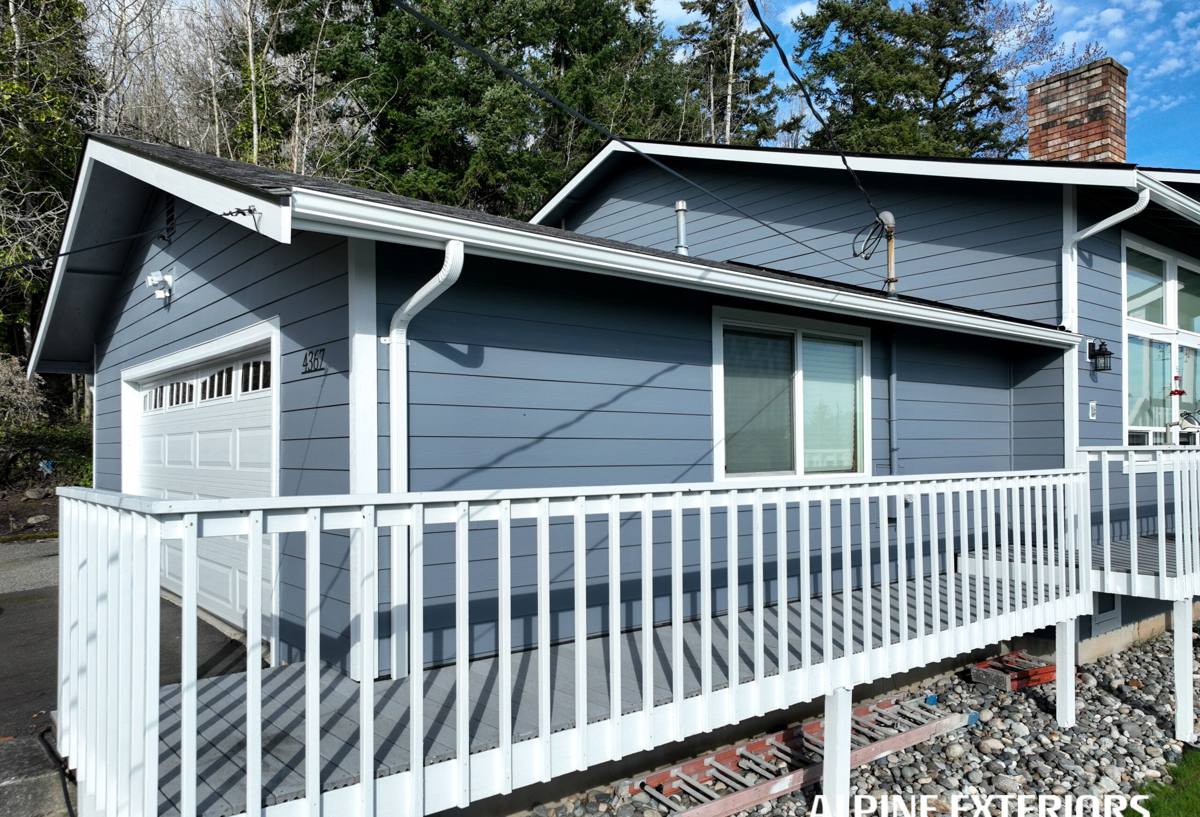
What Marietta Homes Actually Need From a New Roof
Corrosion-Resistant Fasteners and Flashing
Standard galvanized fasteners can start showing rust streaks within a few years this close to the bay. We use fasteners and flashing rated for coastal exposure, which costs a little more up front but avoids the staining, weakening, and premature leaks that come from hardware that wasn't built for salt air.
Underlayment That Handles Wind-Driven Rain
In a climate where rain rarely falls straight down, the underlayment matters as much as the shingles themselves. A synthetic underlayment with strong lap seals, combined with self-adhering ice-and-water shield at eaves, valleys, and penetrations, gives the roof a second line of defense when wind pushes water uphill under the shingle tabs.
Ventilation That Fights Moisture, Not Just Heat
Most roof ventilation advice is written for hot, dry climates where the goal is cooling the attic. Here, the bigger issue is moisture. A poorly ventilated attic in a wet coastal climate traps humid air, which condenses on the underside of the decking and feeds rot from the inside — often before any problem is visible from the roofline. Balanced intake and exhaust ventilation is a core part of doing this correctly, not an optional upgrade.
Moss: The Slow Damage Nobody Notices Right Away
Moss doesn't just sit on top of a roof — it works its way under shingle edges, lifts tabs, and holds water against the roofing surface long after a storm has passed. Over a full moss season, that constant dampness degrades shingle granules, softens decking, and creates the conditions for rot at a rate that's hard to appreciate until you're looking at exposed, damaged sheathing during a tear-off.
A new roof installation is the best opportunity to get ahead of this. Zinc or copper control strips near the ridge, proper shingle selection, and adequate airflow underneath the roofing surface all reduce how aggressively moss can take hold. None of these measures make a roof moss-proof — nothing does in this climate — but together they buy years of extra life and reduce how often the roof needs to be cleaned or treated.
What a Correct Installation Actually Involves
- Full tear-off of the old roofing material down to the decking, not an overlay
- Inspection of every square foot of decking for soft spots, rot, or delamination
- Replacement of any compromised sheathing before anything new goes down
- Installation of ice-and-water shield at eaves, valleys, and all penetrations
- Synthetic underlayment across the full roof deck
- New flashing at chimneys, walls, skylights, and any roof-to-wall transitions
- Balanced ridge and soffit ventilation sized correctly for the attic space
- Installation of the roofing material to manufacturer specifications, including nailing pattern and exposure
- Final walk-through covering drip edge, gutter apron alignment, and cleanup
Skipping any one of these steps is how a roof ends up with a leak in year three instead of year twenty. The decking inspection in particular gets rushed on lower-bid jobs, and in a moss-prone, high-moisture area like Marietta, that's exactly the step that matters most.
Choosing the Right Material for This Climate
There's no single "best" roofing material for every home — it depends on budget, roof pitch, how long you plan to stay in the home, and how much upkeep you're willing to do. Here's an honest comparison of the options we install most often in this area.
| Material | Coastal Durability | Moss Resistance | Typical Lifespan | Maintenance |
|---|---|---|---|---|
| Architectural asphalt shingles | Good with proper flashing and fasteners | Moderate — benefits from zinc strips | 25-30 years | Periodic cleaning recommended |
| Standing seam metal | Excellent when properly coated and fastened | Very good — moss struggles to grip metal | 40-50+ years | Low |
| Composite/synthetic shingles | Good, resists moisture absorption well | Good | 30-50 years | Low to moderate |
| Cedar shake | Requires diligent maintenance in this climate | Poor without regular treatment | 20-30 years with upkeep | High |
We're upfront when a material isn't a great fit for a specific roof or budget. Cedar shake, for example, can look great, but in a climate with this much sustained moisture and moss pressure, it demands a level of ongoing maintenance that many homeowners underestimate when they choose it. That's not a knock on the product — it's just a maintenance commitment worth going in with your eyes open about.
Cost Factors Homeowners Should Understand
Every roof is priced differently, but the variables that actually move the number are consistent. Understanding them helps you evaluate quotes on more than just the bottom line.
- Roof size and number of squares (100 sq ft = 1 square) being replaced
- Roof pitch and how much of the work requires steep-slope safety measures
- Number of layers being torn off and disposed of
- Condition of the decking and how much needs to be replaced
- Complexity of the roofline — valleys, dormers, chimneys, skylights all add labor
- Material choice, from standard asphalt up through metal or composite systems
- Ventilation upgrades needed to bring an older attic up to a proper standard
Broadly, a straightforward asphalt shingle reroof on an average-sized home runs in the low-to-mid five figures, with metal and premium composite systems running higher. Decking replacement, if extensive moisture damage turns up during tear-off, is the most common reason a final number moves from the original estimate — which is exactly why a thorough inspection before the quote matters.
Why It Matters That We Already Work in Marietta
A crew that's done roofs throughout Marietta and the surrounding Ferndale area already knows how this climate behaves on real houses, not just in theory. We know which orientations catch the worst of the wind-driven rain, which rooflines tend to hold moss longest through the wet months, and what ventilation setups actually perform over a Whatcom County winter versus what looks fine on paper. That local track record shapes the decisions we make on your roof — material selection, flashing details, ventilation sizing — before a single shingle goes down.
We also handle permitting and inspection requirements for the area as a routine part of the job, so there's no guesswork or delay on that front. And because we're local, warranty and service calls aren't a matter of waiting on a crew that has to travel in from somewhere else.
Signs Your Marietta Roof May Be Ready for Replacement
- Shingles that are cracked, curling, or missing granules in large patches
- Persistent moss growth that returns quickly after cleaning
- Soft or spongy spots when walking the roof, or sagging visible from the ground
- Daylight visible through the attic roof deck, or damp insulation below it
- Water stains on interior ceilings, especially after wind-driven rain events
- A roof approaching or past 20-25 years old, depending on the original material
- Rusted or deteriorating flashing around chimneys, vents, or skylights
Any one of these on its own doesn't necessarily mean full replacement is the right call — sometimes a repair is enough. But in combination, or on a roof that's already at the end of its expected life, replacement is usually the more cost-effective path compared to repeated patch repairs.
Get a Straightforward Estimate
If you're weighing a new roof for your Marietta home, we're happy to take a look and give you an honest read on what your roof actually needs — no pressure, no inflated scope. Use the form below to request a free estimate, and we'll walk the roof, explain what we find, and lay out your options plainly.