 Ferndale Siding
 Siding Repair Built for Point Roberts, Not a Generic Job Site
Point Roberts sits in an unusual spot. It's part of Whatcom County, but it's cut off from the rest of the U.S. mainland by water and international border — you reach it by crossing into Canada and back, or by boat. That geography matters for more than logistics. It means homes here sit surrounded by water on nearly every side, catching wind and salt spray that a house twenty miles inland in Ferndale simply doesn't deal with in the same way.
Siding repair in a spot like this isn't just patch-and-paint work. It's diagnosing what the marine environment has actually done to the wall behind the siding, fixing that root cause, and putting back a repair that will hold up to the same conditions that caused the damage in the first place. That's the job we do, and we do it as a crew that's already familiar with getting to Point Roberts and working there — not one figuring it out for the first time on your dime.
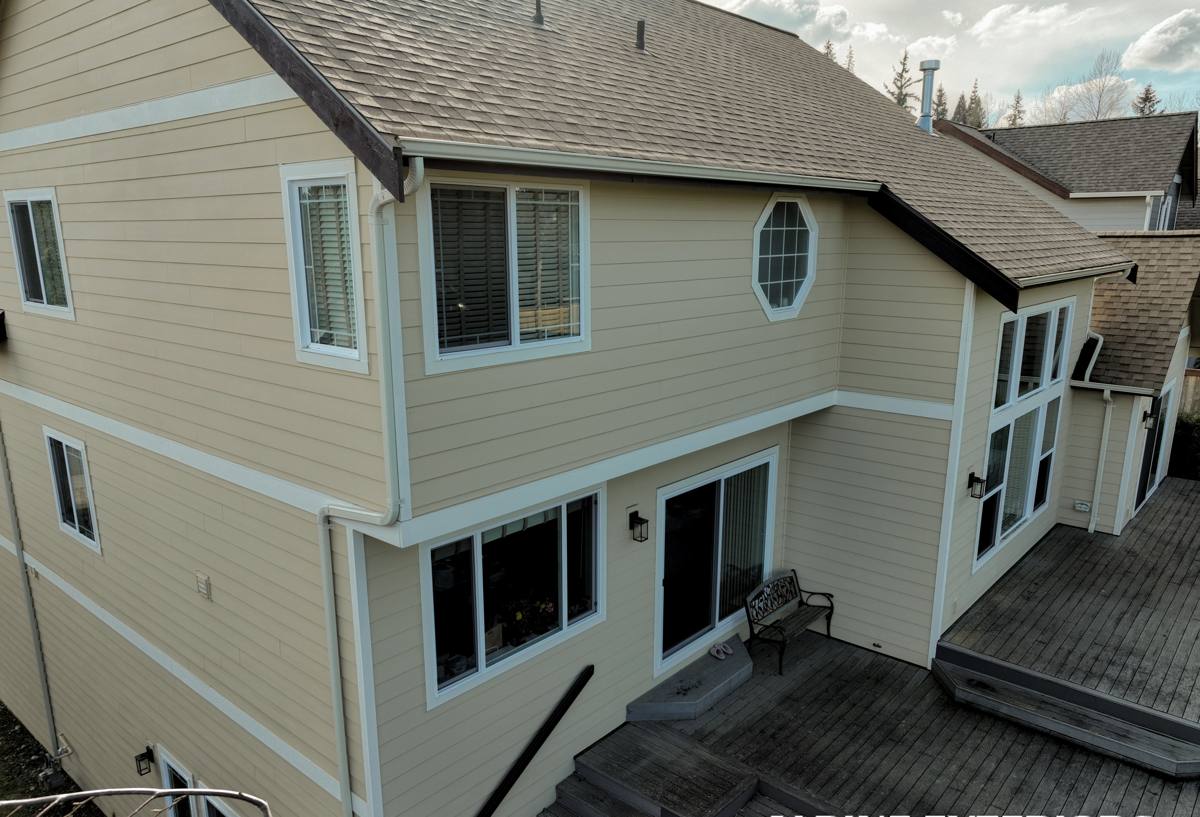
What Salt Air, Driving Rain, and Moss Season Do to Siding
Three things drive most of the siding repair calls we get from the Point Roberts area, and they compound each other:
Salt Air
Being surrounded by saltwater means airborne salt is a constant, low-grade attack on anything exposed — fasteners, flashing, caulking, and painted or coated surfaces. Salt accelerates corrosion in metal components and can break down lesser coatings faster than the same product would wear inland. Repairs that don't account for this — using the wrong fastener or skipping proper flashing — fail again within a few years.
Driving Rain
Wind off the water doesn't just bring rain, it drives it sideways into walls, seams, and trim. Siding systems are designed to shed water, not stop wind-driven rain from finding every gap. Once water gets behind a panel through a failed seam, cracked caulk, or a missing piece of flashing, it doesn't dry out quickly in this climate — it sits, and it starts doing damage to the sheathing and framing behind the siding, not just the siding itself.
Moss and Algae Season
Whatcom County's long wet season gives moss, algae, and mildew a wide window to establish themselves, especially on shaded, north-facing, or tree-covered walls. Beyond looking bad, sustained moss growth holds moisture against the siding surface for extended periods, which shortens the life of paint and caulking and can mask early signs of rot developing underneath.
Signs a Point Roberts Home Needs Siding Repair
Homeowners often notice the cosmetic issue — a dark streak, a bubbled patch of paint — long before they realize there's a moisture problem developing behind it. Here's what we tell people to watch for:
- Soft or spongy spots when you press on the siding, especially near the bottom courses or around windows
- Paint that's bubbling, peeling, or flaking in patches rather than evenly across the wall
- Dark streaking or persistent moss and algae growth that keeps coming back after cleaning
- Cracked, shrunken, or missing caulking at panel seams, corners, and trim joints
- Visible warping, buckling, or gaps between panels
- Staining or discoloration below windows, at roof-to-wall intersections, or near ground level
- Popped or backed-out nails, or fasteners showing rust bleed
- A musty smell near an exterior wall from the inside of the home
Any one of these on its own might be minor. Several showing up in the same area usually means water has been getting behind the siding for a while.
What a Correct Repair Actually Involves
A lot of "siding repair" in this climate goes wrong because it treats the symptom instead of the cause. Cutting out a damaged panel and screwing in a new piece over the same failed flashing or torn weather barrier just buys a year or two before the same spot fails again. A repair done right includes:
- Removing enough surrounding material to actually see the extent of the damage, not just the visible failure point
- Checking the weather-resistive barrier (house wrap or building paper) behind the siding for tears, gaps, or improper overlaps
- Inspecting and correcting flashing — window heads, kick-out flashing at roof lines, and butt joints are the most common failure points in wind-driven rain
- Assessing the sheathing and framing for soft spots or rot, and replacing anything compromised before new siding goes back on
- Re-sealing with the right materials — proper backer rod and sealant at joints, not just a bead of caulk over a gap
- Matching the replacement siding as closely as possible in profile, exposure, and finish so the repair doesn't stand out
Skipping any of those steps is how a "repair" turns into a callback a couple winters later.
Repair or Replace? How We Help You Decide
Not every damaged area needs a full re-side, and we're not going to tell you it does. But there's a point where patching keeps costing money without fixing the underlying problem. Here's how we generally think about it:
| Factor | Repair Usually Makes Sense | Replacement Is Usually Smarter |
|---|---|---|
| Extent of damage | Isolated to one or two areas | Recurring failures across multiple walls |
| Underlying material | Sheathing and framing are sound | Rot has spread into structural wood |
| Siding material | Existing siding is Hardie or another sound fiber cement in good condition elsewhere | Existing siding is failing broadly — warping, delaminating, or chronically absorbing moisture |
| Age of siding | Relatively recent, damage is from a specific event or defect | Original siding is at or past its practical service life |
| Cost pattern | First repair in this area | Second or third repair call to the same wall in a few years |
We'll always give you a straight answer on which side of that line your home falls on, with our reasoning, before you spend money either way.
Matching Materials on an Existing Home
We only install James Hardie fiber cement siding, and that shapes how we approach repair work. If your Point Roberts home already has Hardie siding, we can typically match the existing profile and, where the siding has a factory ColorPlus finish, work with Hardie's color system to get a close match on replacement boards rather than guessing with field-applied paint.
If your home has a different siding material — vinyl, LP SmartSide, cedar, or an older fiber cement product — we'll still repair what can reasonably be repaired to match what's there. Where the damage points to a broader pattern of failure in that material rather than a one-time issue, we'll tell you honestly, and that's usually the point where we'll talk about what full replacement with Hardie would look like instead of continuing to chase repairs on a material that's reaching the end of its useful life in this environment.
Our Point Roberts Repair Process
We keep the process straightforward because homeowners dealing with active water damage don't need more complexity added on top:
- Inspection — we look at the visible damage and check the surrounding areas most exposed to wind-driven rain and salt air, since that's usually where related issues show up first
- Diagnosis — we identify whether the problem is at the surface (caulking, paint, panel damage) or has reached the barrier, flashing, or framing behind it
- Written estimate — a clear scope of what we'll repair, what materials we're matching, and what it costs, before any work starts
- Repair — removal of damaged material, correction of any flashing or moisture barrier issues found, and installation of matched siding
- Cleanup and walkthrough — we go over the finished repair with you before we consider the job done
Why a Crew That Already Works Point Roberts Matters
Because Point Roberts is only reachable by crossing an international border — or by boat — scheduling isn't the same as a job in Ferndale proper. A crew that hasn't worked out there before has to figure out border logistics, material staging, and timing on the fly, and that usually shows up as delays or no-shows on your project. We've made those trips before. We know what it takes to get a crew and the right materials out there and get the job done in the time window we quote, without the learning curve costing you.
Familiarity with the area also means we're not guessing about what the salt air and wind exposure have likely done to a given wall before we even open it up. We've seen the failure patterns typical of this stretch of Whatcom County waterfront, and that experience shortens the diagnosis time and helps us catch problems that a crew unfamiliar with this specific environment might miss.
Ready to Get Your Siding Repaired Right
If you're seeing soft spots, peeling paint, stubborn moss, or gaps in your siding on a Point Roberts home, it's worth getting a straight assessment before the damage spreads further into the wall. We'll take a look, tell you honestly whether you're looking at a repair or something bigger, and give you a clear estimate with no pressure either way. Reach out for a free estimate using the form below.