 Ferndale Siding
 Roofing in a Waterfront Whatcom County Community
Sandy Point sits right on the water, and that changes what a roof has to deal with compared to a house a few miles inland in Ferndale or Bellingham. Salt-laden air off the Strait, wind-driven rain that hits shingles sideways instead of straight down, and long stretches of shade and dampness that never fully dry out — all of it adds up to faster wear on roofing materials than you'd see in a drier, more sheltered part of Whatcom County. A new roof installation here isn't a one-size-fits-all job. It has to be built with the local exposure in mind from the first course of underlayment to the last ridge cap.
We install roofs across this area regularly, so we're not guessing at what Sandy Point homes need — we're accounting for it in the materials we recommend, the fasteners we use, and the details we pay extra attention to during installation.
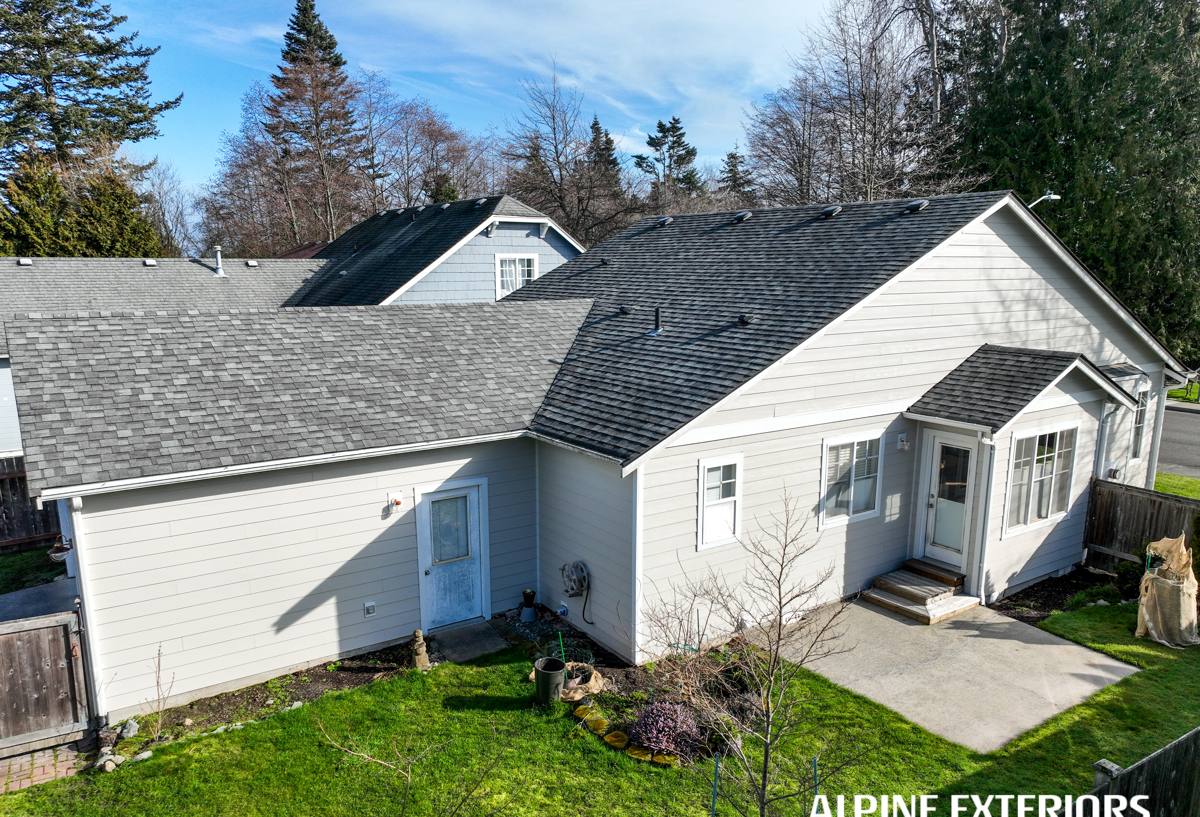
What Salt Air, Rain, and Moss Actually Do to a Roof
Salt Air and Corrosion
Airborne salt doesn't just affect boats and metal railings. It settles on roofing fasteners, flashing, and any exposed metal components, accelerating corrosion over time. A roof built with standard-grade fasteners or flashing may hold up fine inland but corrode faster this close to the water. That's why fastener and flashing selection matters more here than it does on a typical Ferndale re-roof further from the shoreline.
Driving Rain
Wind off the water pushes rain sideways and up under roof edges, ridge lines, and anywhere there's a gap in the roofing system. A roof that would shed water fine in calm conditions can still let water in in Sandy Point if the underlayment, flashing laps, and ridge details aren't installed with wind-driven rain specifically in mind.
Moss and Moisture
Whatcom County's long wet season is tough on any roof, but shaded, moisture-retentive spots — common on lots with mature tree cover near the water — grow moss aggressively. Moss holds moisture against the roof surface, works into shingle layers, and lifts edges over time. Left unchecked for a few seasons, it shortens the life of an otherwise sound roof considerably.
Signs a Sandy Point Roof Needs Replacing, Not Patching
Not every roofing problem calls for a full replacement, but certain conditions tell us a repair is just delaying the inevitable:
- Granule loss heavy enough that you can see bare, shiny patches on multiple slopes
- Moss growth that's spread across large sections rather than isolated shaded spots
- Soft or spongy decking felt underfoot during inspection, especially near valleys or eaves
- Repeated leaks in different spots each season rather than one recurring source
- Curling, cracking, or cupping shingles across most of the roof, not just one slope
- A roof at or past the manufacturer's expected service life, especially if it's never had a tear-off
If a roof is showing two or more of these at once, patch work usually isn't a good use of money. We'll always tell you honestly if a repair will hold for a few more years, but we won't recommend one just to avoid a harder conversation.
Choosing Materials for This Environment
There's no single "best" roofing material for every house — it depends on the roof's slope, sun and shade exposure, budget, and how the home is oriented to the wind and water. Here's how the common options generally perform in a Sandy Point-type coastal, moss-prone setting:
| Material | Coastal/Salt Air Behavior | Moss Resistance | General Considerations |
|---|---|---|---|
| Architectural asphalt shingles | Good, with corrosion-resistant fasteners and flashing | Moderate — benefits from zinc/copper strips or algae-resistant granules | Most common choice; wide range of price and warranty tiers |
| Standing seam metal | Very good with properly coated/finished panels and fasteners | Excellent — sheds moisture, little surface for moss to grip | Higher upfront cost, long service life, performs well in wind-driven rain |
| Composite/synthetic shingles | Good; check manufacturer specs for coastal-rated products | Good, depending on product | Can mimic wood or slate look with less maintenance burden |
| Cedar shake | Requires diligent maintenance near salt air and shade | Poor without regular treatment and cleaning | We'll walk through the maintenance commitment honestly before recommending it here |
We talk through these trade-offs with every Sandy Point homeowner before recommending a product — not to upsell, but because the wrong material for this exposure means callbacks and premature wear regardless of how well it's installed.
What a Correct Installation Involves
Tear-Off and Deck Inspection
We remove the old roofing down to the deck rather than layering over it. This lets us actually see the plywood or plank decking underneath, replace any sections that have soft spots or rot — often found near valleys, eaves, or old leak points — and start the new roof on a solid, dry base.
Underlayment and Ice/Water Protection
Given the wind-driven rain this area gets, we pay close attention to underlayment coverage and self-adhering ice-and-water membrane at eaves, valleys, and around penetrations — the spots where wind-blown water is most likely to find a way in.
Flashing
Flashing around chimneys, skylights, walls, and roof-to-wall transitions is where most leaks actually start, not in the field of the roof itself. We use corrosion-resistant flashing material and lap it correctly so water sheds outward at every transition, which matters more here given the salt air.
Ventilation
Proper intake and exhaust ventilation keeps the attic and roof deck dry from the inside, which matters as much as keeping rain out from the outside. Poor ventilation traps moisture that feeds rot and, indirectly, the conditions moss thrives in.
Fasteners
We use corrosion-resistant fasteners rated for coastal exposure rather than standard-grade nails, since the salt air here will find the weak point in cheaper hardware years before it would inland.
Our Process, Start to Finish
We keep the process straightforward and try to minimize surprises:
- On-site inspection — we walk the roof and attic (not just look from the ground) to assess deck condition, ventilation, and current material condition
- Written estimate — clear scope, material options, and pricing, explained in plain terms
- Scheduling — we plan around Whatcom County's weather windows to avoid installing in the middle of a heavy rain stretch
- Tear-off and deck repair — full removal, deck inspection, and replacement of any compromised sheathing
- Installation — underlayment, ice/water protection, flashing, and the finish material, installed to manufacturer spec plus the coastal-specific details noted above
- Cleanup and final walkthrough — magnetic sweep for nails, site cleanup, and a walkthrough so you know exactly what was done
Keeping Moss From Coming Back
A new roof buys you time, but moss is an ongoing condition in this part of Whatcom County, not a one-time problem. A few habits make a real difference in how long a new roof stays looking and performing like new:
- Keep overhanging branches trimmed back to let more light and airflow reach shaded roof sections
- Clear gutters and valleys of debris at least twice a year — trapped organic matter is what moss feeds on
- Have the roof looked at after major windstorms, since driving rain can expose small issues before they become big ones
- Address small moss patches early rather than waiting for full-slope coverage
- Ask about zinc or copper strips at the ridge during installation if moss has historically been a problem on the property
Why a Crew That Already Works in Sandy Point Matters
Sandy Point is a private, gated waterfront community, and that changes the logistics of a roofing project a little — access, staging, and scheduling around the community's own rules take some familiarity to get right the first time. A crew that's worked here before isn't figuring that out on your job. Beyond logistics, we've seen firsthand how roofs actually age in this specific microclimate versus a roof a few miles inland, and that experience shapes the material and installation choices we recommend — not textbook advice, but what actually holds up here.
We're a Ferndale-based crew, so Sandy Point isn't out of the way for us — it's part of the area we work in regularly, along with the rest of Whatcom County's waterfront communities.
Get a Straight Answer on Your Roof
If your roof is showing its age, holding onto moss it shouldn't, or you just want an honest read on how many years it's got left, we're happy to take a look. There's no pressure and no pushy sales pitch — just a straightforward inspection and a clear estimate if a new roof makes sense. Use the form below to request your free estimate.