 Ferndale Siding
 Why Windows Take a Harder Hit in Sandy Point
Sandy Point sits right on the water along the Strait of Georgia, just north of Ferndale, and that waterfront location changes what a window has to survive day to day. Homes a few blocks inland in Whatcom County deal with normal Pacific Northwest weather. Homes in Sandy Point deal with all of that plus salt-laden air coming straight off the water, wind-driven rain that hits window walls at an angle instead of falling straight down, and a moss season that runs longer here than it does even a short distance inland because of the shade, humidity, and constant dampness near the beach.
None of that means windows can't hold up in Sandy Point. It means the installation has to account for conditions that a standard inland job doesn't have to think about as hard. That's the difference between a window that looks fine for a couple of years and one that actually performs for the life of its warranty.
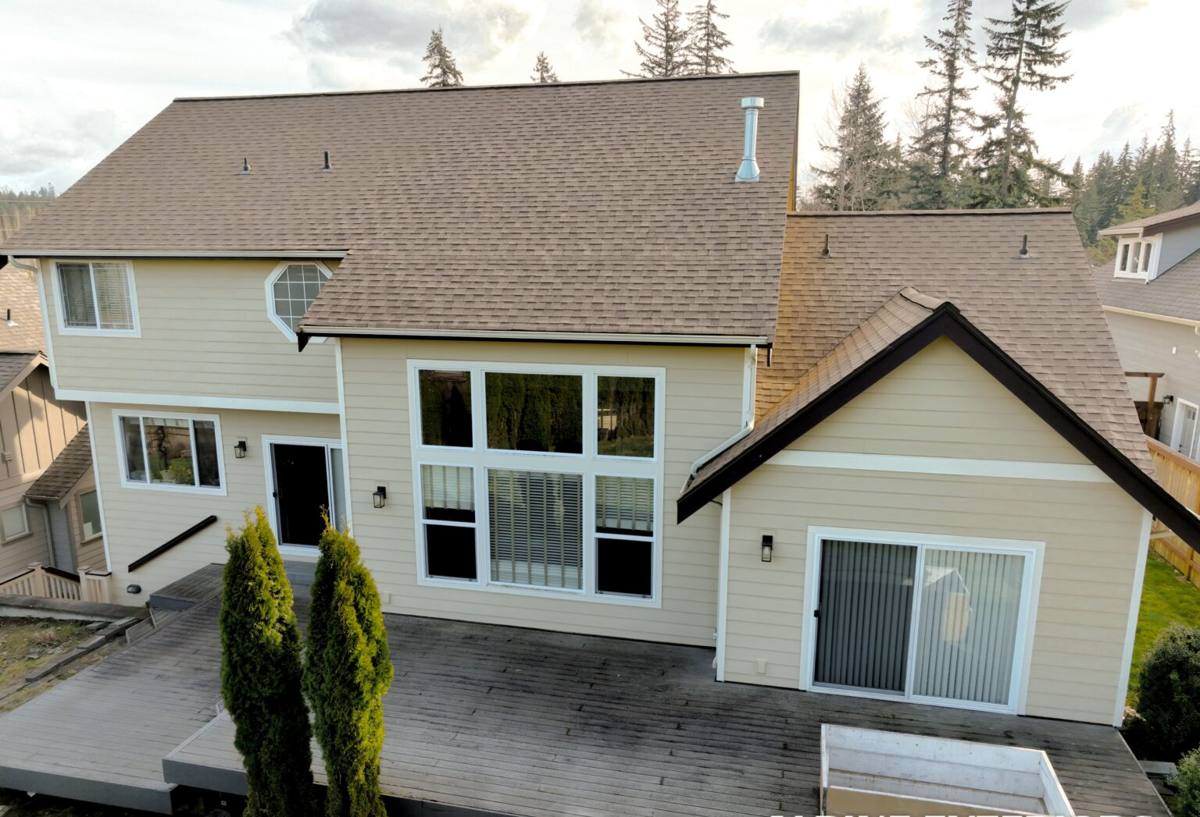
How Salt Air, Rain, and Moss Season Affect Window Materials
Hardware and Metal Components
Salt air is hard on anything metal. Hinges, cranks, locks, balance systems, and screws that aren't rated for coastal exposure corrode faster near the water than they would ten miles inland. Once hardware starts to seize or pit, a window stops sealing evenly, and that's usually where leaks start — not in the glass itself, but at the moving parts and fasteners around it.
Frame Material
Every frame material reacts differently to a wet, salty environment. Bare wood swells, checks, and eventually rots if the paint or finish film fails. Aluminum, unless it's properly treated and isolated from other metals, can corrode. Vinyl and fiberglass handle moisture and salt better by nature, but a poor-quality vinyl frame can still go brittle and warp under years of UV and temperature swings off the water. We'll get into the material comparison in more detail below, but the short version is: material choice matters more here than it does for a house set back from the beach.
Seals, Glazing, and Weatherstripping
The long, gray moss season in Whatcom County means extended stretches where wood trim, siding, and window perimeters stay damp for days at a time. Weatherstripping that's cracked or compressed, or a glazing seal that's starting to fail, lets that moisture work its way into the wall assembly instead of running off. In a marine climate like Sandy Point's, that failure point gets exploited faster than it would somewhere drier.
Signs a Sandy Point Home May Need New Windows
A lot of window problems near the water don't show up as an obvious leak right away. They show up as small annoyances first. Worth checking for:
- Fogging or moisture between the panes of a double-pane window (a failed seal, not a cleaning issue)
- Hardware that's stiff, gritty, or corroded — cranks that bind, locks that don't catch cleanly
- Visible pitting, white residue, or corrosion on window screens or metal trim near the glass
- Soft or discolored wood trim around the window, especially on the side facing the water or prevailing wind
- A noticeable draft or cold spot near the window frame during winter storms
- Green or black growth on the sill, trim, or frame that keeps coming back even after cleaning
- Paint that's peeling or bubbling on wood-framed windows well before it should
Any one of these on its own isn't necessarily urgent. A few of them together, especially on the water-facing side of the house, usually means the window's ability to shed moisture is starting to break down.
What a Correct Installation Involves Here
Tear-Out and Inspection
Before anything new goes in, the old window comes out and we look at what's actually going on underneath — the sheathing, the framing, and any water staining or soft wood around the opening. In a coastal spot like Sandy Point, this step matters more than usual, because a window that's been leaking slowly for a few seasons can leave hidden rot that needs to be addressed before a new unit goes in, not after.
Flashing and Weather Barrier Integration
This is the step that gets skipped most often on rushed jobs, and it's the one that matters most this close to the water. Flashing has to be layered correctly — sill pan, side flashing, and head flashing all integrated with the house's existing weather-resistive barrier so water is directed out and down, never trapped behind the window. Done right, this is what actually keeps driving rain out, regardless of how good the window itself is.
Sealing, Insulation, and Fastening
Fasteners and hardware get chosen for corrosion resistance, not just whatever's on the truck. Gaps around the frame get insulated properly, and sealant gets applied at the right joints — not just smeared around the outside trim as a cosmetic fix. A window that's insulated and air-sealed correctly around the perimeter also performs better against the cold snaps that roll off the water in winter.
Trim, Finish, and Cleanup
Exterior trim gets finished in a way that sheds water rather than holding it, caulking lines are tooled clean, and the site gets cleaned up so you're not left with old sashes, packaging, or debris. On wood trim, we make sure primer and finish coats are appropriate for a marine environment, since a coastal-grade finish schedule holds up longer than a standard one.
Choosing the Right Window for a Coastal Whatcom County Home
There's no single "best" window for every house — it depends on your budget, the look you want, and how directly your home faces the water and wind. Here's how the common frame materials generally compare for a coastal Ferndale-area home:
| Frame Material | Coastal/Salt Air Durability | Maintenance | Typical Cost Range |
|---|---|---|---|
| Vinyl | Good — won't rust or rot, handles salt air well | Low — occasional cleaning | Lower |
| Fiberglass | Very good — dimensionally stable, resists corrosion and swelling | Low | Mid to upper |
| Wood-clad (wood interior, clad exterior) | Good on the exterior if the cladding and flashing are done right; interior wood still needs normal care | Moderate | Upper |
| Aluminum | Variable — needs proper coating and metal isolation to avoid corrosion near salt air | Moderate | Mid |
For most Sandy Point homes, we lean toward vinyl or fiberglass on directly water-facing elevations simply because they shrug off salt exposure with the least ongoing maintenance. Wood-clad windows can still be the right call for a specific look or on a more protected side of the house — it's a conversation about trade-offs, not a one-size answer.
Our Process, Start to Finish
- Site visit and measurement — we look at every opening in person, note which elevations take the most wind and rain, and check the condition of existing trim and flashing.
- Written quote — a clear, itemized quote with the products, scope, and price, no pressure to decide on the spot.
- Scheduling — we work around weather windows, since opening up a wall to the elements during a driving rainstorm is exactly what we're trying to avoid.
- Install day — proper tear-out, flashing, insulation, and sealing as described above, with the openings protected at every stage.
- Final walkthrough — we test every window with you, review warranty paperwork, and make sure the job site is left clean.
Why It Matters to Hire a Crew That Already Works Sandy Point
A contractor who mostly works farther inland can still do a fine job, but they may not think through flashing details or hardware choices the same way for a house that takes salt spray and wind-driven rain most of the year. Working regularly in Sandy Point and along the rest of the Ferndale and Whatcom County coastline means we're already thinking about corrosion-resistant fasteners, proper sill pan flashing, and finish schedules built for a marine environment — before we're asked, not after something fails.
Many homes in Sandy Point are also part of a private community association with its own guidelines for exterior work. We're used to working within those kinds of requirements and coordinating timing so the job goes smoothly without surprises.
Keeping New Windows Performing Through Moss Season and Beyond
New windows are lower-maintenance than what they're replacing, but "low-maintenance" isn't "no-maintenance," especially this close to the water. A few habits go a long way:
- Rinse salt residue off exterior frames and glass periodically, especially after storms
- Keep gutters and downspouts clear so runoff isn't sheeting directly across window trim
- Clear moss or debris off sills and trim before it holds moisture against the surface
- Exercise locks and cranks a few times a year so hardware doesn't seize up unused
- Check caulking lines annually and have any cracked sealant redone before the wet season
If you're weighing whether your windows need attention or full replacement, we're happy to take a look and give you an honest answer either way. Reach out for a free, no-pressure estimate — the form below gets you started.