 Ferndale Siding
 Replacing a Deck on the Semiahmoo Spit
Semiahmoo sits out on a narrow spit between Semiahmoo Bay and Drayton Harbor, right at the edge of Blaine and the Whatcom County coastline. It's about as exposed a setting as a residential deck sees in this region — water on more than one side, open wind with little to break it, and a marine climate that keeps things damp for most of the year. Decks out here age differently than decks a few miles inland, and a lot of the ones we get called out to replace still look reasonably solid from a few feet away. The real story is usually underneath, in framing and hardware that's been quietly losing strength for years.
This page is specifically about deck replacement in Semiahmoo — not a repair patch, not a generic new-build page, but the process of taking out an aging deck that's reached the end of its useful life and putting in a new one built for what this exact location actually does to outdoor structures. If you're trying to figure out whether your deck needs full replacement or just repair, and what a correct replacement job should include here, this is written for that decision.
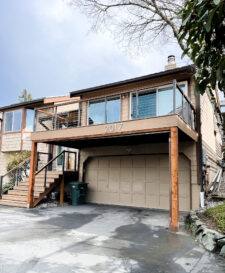
Why Decks Wear Out Faster on Semiahmoo
Salt Air From More Than One Direction
Because the spit is bordered by water on more than one side, homes here take salt-laden air from multiple directions instead of the single prevailing exposure most inland Whatcom County properties deal with. Salt speeds up corrosion in fasteners, joist hangers, post bases, and railing hardware, and that corrosion is doing damage well before it's visible from the top of the deck. A deck that was built to a standard fastener spec ten or fifteen years ago has usually been fighting that corrosion the entire time, quietly losing holding strength in connections nobody looks at until something moves.
Driving Rain With Almost No Windbreak
With little around to slow it down, wind-driven rain on the spit doesn't just fall on a deck surface — it gets pushed sideways into railing posts, ledger connections, and the gaps between boards with more force than a sheltered inland lot ever sees. Older decking, especially wood or early-generation composite, wasn't always installed with gapping and drainage detailed for that kind of sideways pressure. Over time that moisture works into places it was never supposed to reach.
A Moss Season That Runs Most of the Year
Mild temperatures and near-constant humidity give moss and mildew a long growing season across this part of Whatcom County, and a waterfront location like Semiahmoo doesn't shorten it. Horizontal decking surfaces hold water longer than a wall does, and any board with even a little surface porosity gives moss something to grip. On an older deck, moss buildup is often the visible symptom of a surface that's already lost whatever protective finish or cap it started with.
Signs a Semiahmoo Deck Is Due for Replacement, Not Repair
Not every tired-looking deck needs to come out. But a few signs consistently point to full replacement being the more honest answer than another round of patching:
- Soft, spongy, or springy spots in the decking surface or framing underneath, especially near the house or at stair landings
- Visible rust staining spreading from multiple fastener locations rather than one isolated spot
- A ledger board connection at the house that has shifted, gapped, or shows staining on the siding above it
- Posts or railings that flex noticeably when pushed, rather than a single loose baluster
- Framing lumber that's original to a deck built more than fifteen to twenty years ago, especially if it predates current fastener and flashing standards
- Repeated moss and mildew return within weeks of cleaning, suggesting the surface material itself has lost its resistance
- Multiple separate repair estimates that keep growing in scope once the contractor starts opening things up
Any one of those on its own might still be a repair. Two or three together, especially on a deck built to older specs, usually means the framing and hardware are past the point where patching makes financial sense.
Repair vs. Full Replacement: How We Make the Call
Homeowners understandably want to repair before they replace, and there are plenty of Semiahmoo decks where a repair is the right, honest answer. The table below covers how we generally think through it, though every deck still gets an actual inspection rather than a guess based on age alone.
| Factor | Leans Toward Repair | Leans Toward Replacement |
|---|---|---|
| Framing condition | Solid, dry, no soft spots found on inspection | Soft, corroded, or rot found at more than one location |
| Fastener/hardware condition | Isolated corrosion, easily replaced piece by piece | Widespread rust or failure across multiple connections |
| Ledger connection to house | Solid, properly flashed, no movement | Shifted, gapped, or showing water staining above it |
| Deck age | Newer deck with an isolated, identifiable problem | Original deck older than 15-20 years, dated hardware or flashing |
| Decking material | Composite or PVC with a few damaged boards only | Uncapped wood or early composite showing broad-surface failure |
| Code compliance | Railing height, guard spacing, and footings already meet current code | Structure predates current guard, footing, or attachment requirements |
What a Correct Deck Replacement Involves
Replacing a deck on Semiahmoo isn't just tearing off old boards and screwing down new ones. Done right, it starts with full removal down to the posts and footings, or further if the footings themselves are undersized or shifted, followed by an honest inspection of everything the old decking was hiding. That inspection is often the most useful part of the whole job, because it's the first real look anyone's had at the framing in years.
Tear-Out and Inspection
Once the decking surface comes off, we check joists, beams, posts, and footings for rot, corrosion, and undersizing relative to current span and load standards. We also inspect the ledger connection at the house closely, since that's one of the most common places a poorly built or aging deck lets water into the wall assembly behind it. Anything we find gets flagged and discussed before the rebuild starts, not discovered as a surprise add-on partway through.
Rebuilding to Current Standards
A deck built fifteen or twenty years ago was built to the code and fastener standards of that era, which are usually lighter than what's expected now, especially around guard rail height, baluster spacing, and footing depth. Replacement is the point where those get brought up to current requirements rather than repeated. That includes corrosion-resistant fasteners and connectors rated for coastal exposure, correctly sized footings for the actual soil and frost conditions on the spit, and proper flashing at the ledger where the deck ties into the house.
Decking Surface Options
With the structure rebuilt correctly, the decking material on top is a separate decision driven by budget and maintenance expectations. Wood, capped composite, and cellular PVC all have a place, but they behave differently in this climate:
- Wood costs less upfront but needs regular sealing or staining, and is generally the first material to show moss and graying in salt air if maintenance lapses.
- Capped composite resists moisture absorption and staining far better than wood, with a plastic cap layer doing most of that work rather than the composite core underneath.
- Cellular PVC contains no wood fiber at all, which gives it the strongest moisture resistance of the three, at a higher material cost and somewhat more flex under heavy point loads.
Permitting and Code Changes Since Your Deck Was Built
Whatcom County requires permits for most deck replacement work, particularly when the structure is being rebuilt down to the framing rather than just having boards swapped. That's actually good news for an older Semiahmoo deck, because it forces a review against current setback, guard rail, and structural requirements rather than letting an outdated build get quietly repeated. Common gaps we find on older decks include guard rail heights below current code, baluster spacing wide enough for a small child to pass through, and footings that don't meet current frost depth or bearing requirements for the soil conditions out here. We handle the permitting process as part of the job rather than leaving it for the homeowner to navigate.
How Our Replacement Process Works
We start with an on-site inspection of the existing deck, checking framing, fasteners, footings, and the ledger connection before anything gets torn out, so the scope of work is based on what's actually there rather than an assumption from the surface. From that inspection we put together a clear, written plan covering what's being replaced, what decking material fits the budget, and what the permitting process will involve for a Semiahmoo property specifically.
Once permitted, tear-out comes first, followed by a full inspection of the substructure and any framing or footing work that inspection turns up. From there we rebuild to current code with corrosion-resistant fasteners and connectors throughout, install the new decking surface with proper gapping and drainage for wind-driven rain, and finish with railings, stairs, and trim. We walk through what the specific material you chose needs going forward before we consider the job done.
Keeping a New Deck Performing on the Spit
A correctly replaced deck still needs some routine attention in this climate to reach its full lifespan. A short list worth keeping in mind:
- Rinse the deck surface periodically to clear salt residue and organic buildup before it works into the material
- Keep gaps between boards clear of leaves and debris so water can actually drain and the surface can dry between storms
- Check railing posts and hardware once a year, particularly heading into the wet season, for early corrosion or loosening
- Trim back plants or landscaping that hold moisture against the deck or block sun and airflow across the surface
- Address any soft framing or standing water underneath right away rather than waiting for the next inspection cycle
Why It Matters That We Already Work Semiahmoo
A crew that mostly replaces decks further inland can still do competent work here, but a Semiahmoo job has variables that don't come up as often elsewhere in Whatcom County — corrosion-grade fastener requirements from salt exposure on more than one side, wind loads tied to open exposure on a spit, and a moss season that runs longer here than in more sheltered towns. Working this area regularly means we're not guessing at footing depth, fastener grade, or ledger flashing on your project. We've seen which decking materials and hardware actually hold up to Semiahmoo's specific combination of salt air, driving rain, and moss, and which corners get cut on decks that don't last.
If your deck is showing soft spots, corroded hardware, or just feels past its reasonable lifespan, we're happy to take a look and give a straight answer about whether it needs repair or full replacement. Reach out below for a free, no-pressure estimate.