 Ferndale Siding
 Why Semiahmoo's Waterfront Setting Is Tough on Windows
Homes out on the Semiahmoo peninsula sit in one of the more exposed pockets of Whatcom County. The same water views that make these properties desirable also mean near-constant salt-laden air, wind that drives rain sideways into window assemblies, and a wet, shaded season that lets moss and algae take hold on anything that stays damp too long. It's a different exposure profile than a typical inland Ferndale lot, and windows built or installed for average conditions tend to show their age here years before they should.
Salt air is the biggest culprit most homeowners underestimate. It doesn't just sit on the glass — it works into weep holes, hinges, cranks, and fasteners, accelerating corrosion on hardware and pitting aluminum components over time. Combine that with wind-driven rain off the water and you get a climate that punishes any window with marginal flashing or a weak seal around the frame. Add Whatcom County's long, damp winters and you get moss and algae creeping into sills and tracks, holding moisture against wood and vinyl surfaces for months at a stretch.
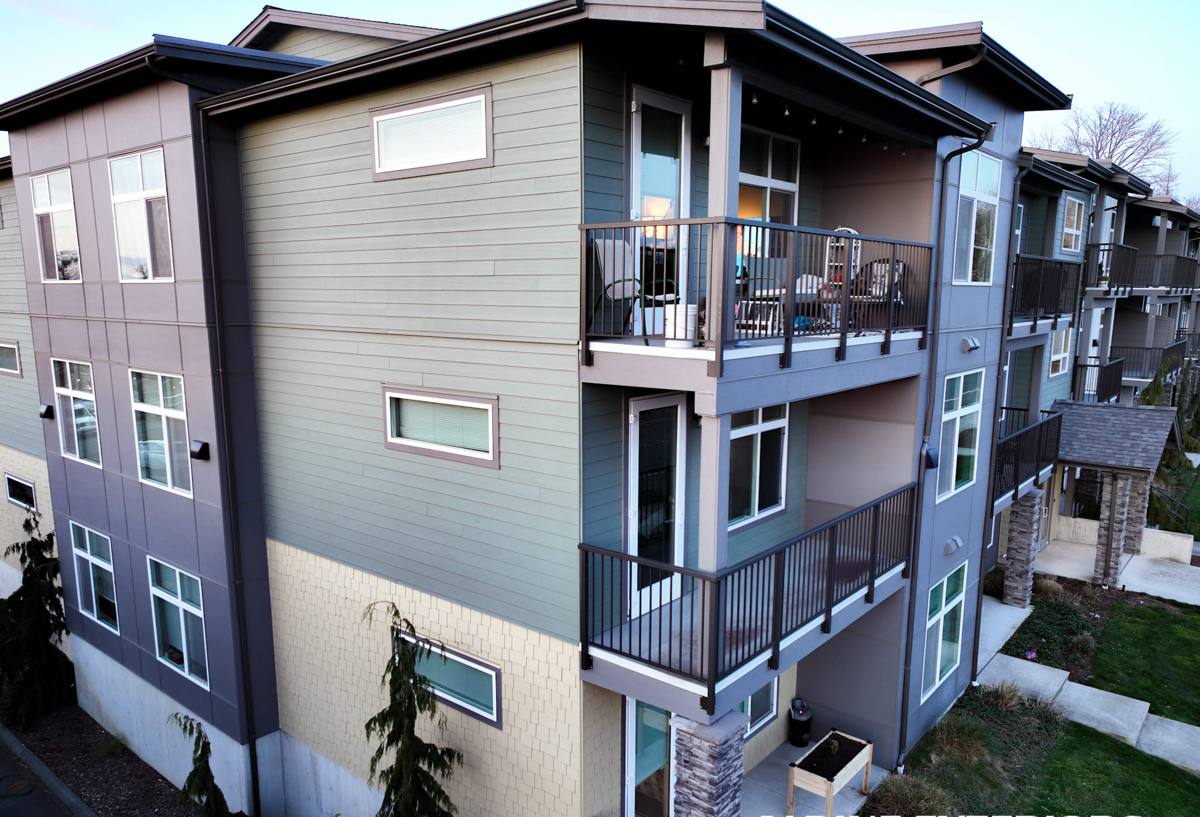
Signs Your Current Windows Are Losing the Battle
Coastal wear doesn't always show up as an obvious leak. More often it's a slow accumulation of small problems that add up to real energy loss and eventual rot. Walk your window line and look for these:
- Fogging or a hazy film between panes — a sign the seal has failed and the insulating gas or dead-air space is gone
- Hardware that's stiff, corroded, or won't latch tightly anymore
- Soft or discolored trim and sill wood, especially on the sides facing open water or prevailing wind
- Visible moss, algae, or black streaking building up in tracks and corners
- Drafts you can feel by hand along the frame edges on a windy day
- Noticeably higher heating bills compared to similar-sized homes with newer windows
- Condensation forming on the inside of the glass regularly, even with normal ventilation
Any one of these on its own might just mean a repair. Several together, especially on a home that's taken direct exposure for fifteen-plus years, usually means it's time to talk about replacement rather than patching.
What a Correct Window Replacement Actually Involves
Swapping in a new window is the easy part. The work that actually determines whether it holds up in this climate happens around the window — the flashing, the sealant, and how the unit ties into the existing wall assembly. A rushed install can leave a brand-new, expensive window performing worse than the tired one it replaced.
Flashing and Moisture Management
Every opening gets treated as a water-management problem first and a window-fitting problem second. That means proper flashing tape at the sill and jambs, a sloped sill pan so any water that does get past the exterior finish drains back out instead of sitting against the framing, and careful integration with the existing weather-resistive barrier. On a Semiahmoo-facing wall, this step matters more than almost anything else — it's the difference between a window that sheds fifteen years of wind-driven rain and one that quietly rots the framing behind it.
Frame and Hardware Selection
Not every frame material handles salt air and constant moisture equally well. We steer clients toward materials and hardware finishes that are known to hold up in marine-influenced air rather than whatever is cheapest on the shelf, because replacing hardware or refinishing a frame five years in costs far more than choosing correctly the first time.
Glass Package
Low-E coatings and argon-filled double or triple panes aren't just an efficiency upsell here — they reduce interior condensation, which matters a lot in a climate where humidity sits high for months at a time. The right glass package also cuts down on heat loss during the cold, windy stretches that come off the water in winter.
Comparing Frame Materials for a Waterfront Exposure
| Material | Salt Air / Moisture Performance | Maintenance | Typical Fit |
|---|---|---|---|
| Vinyl | Good — won't corrode or rot, seams are the main watch point | Low — occasional cleaning, no painting | Most homes; strong value in this climate |
| Fiberglass | Very good — dimensionally stable, resists warping in temperature swings | Low to moderate | Exposed elevations facing open water or prevailing wind |
| Wood-clad | Fair — clad exterior helps, but any breach exposes wood to rot risk | Higher — finish and seals need regular attention | Homes prioritizing a traditional wood interior look |
| Aluminum | Weaker — prone to corrosion and thermal transfer in marine air | Moderate | Generally not our first recommendation for this exposure |
We're not going to tell a homeowner their wood-clad windows were a bad choice if that's what fits the look of their home — but we will be upfront that it's a higher-maintenance commitment in a spot like Semiahmoo, and we'll spec the flashing and finish schedule accordingly.
Our Process, Start to Finish
- On-site assessment — we look at each opening individually, since exposure often varies a lot between the water-facing side of a house and the sheltered side.
- Honest scoping — we tell you which openings need full replacement versus which could reasonably wait, and why.
- Material and glass selection — matched to that specific wall's exposure, not a one-size spec for the whole house.
- Removal and inspection — once the old unit is out, we check the framing underneath for hidden rot or past water damage before anything new goes in.
- Flashing and sill pan installation — done to shed water outward, not just to look sealed on day one.
- Window set and shimming — leveled and secured so the unit operates smoothly and seals evenly for its whole service life.
- Insulation and air-sealing — gaps around the frame are filled correctly, not overpacked, which can bow the frame and cause operating problems.
- Exterior trim and finish — restored to match the home, with attention to any moss or algae growth found on adjacent siding during the work.
- Final walkthrough — every window opened, closed, and locked in front of you before we call the job done.
What Drives the Cost
| Factor | Why It Matters Here |
|---|---|
| Number and size of openings | Larger view windows facing the water often cost more due to glass package and structural bracing |
| Frame material | Vinyl is typically the most economical; fiberglass and wood-clad run higher |
| Extent of hidden damage | Rot found once old windows are removed adds carpentry time — common on long-exposed elevations |
| Glass upgrade | Triple-pane or specialty Low-E coatings add cost but reduce condensation and heat loss |
| Access and site conditions | Waterfront lots can have trickier staging and access than a standard in-town property |
Moss Season and Ongoing Window Health
Whatcom County's wet season runs long, and shaded, north-facing walls near the water rarely dry out fully between rain events. Moss and algae that take hold on a roof or siding can just as easily migrate into window tracks, sills, and weep holes if they're not kept clear. Once organic growth holds moisture against a frame or sill, it accelerates whatever wear the salt air has already started. Part of doing this job right is making sure new windows are installed with clean drainage paths and that we flag any nearby moss buildup that could work its way back into the window assembly over time.
Why Hiring a Crew That Already Works Semiahmoo Matters
A contractor who mostly works inland jobs may not think twice about spec'ing a standard flashing detail or a lighter-duty hardware finish — because in most of Whatcom County, it holds up fine. On an exposed Semiahmoo elevation, that same standard detail can fail years early. Knowing which walls on a property take the brunt of the weather, which hardware finishes actually last in salt air, and how much extra attention the flashing needs on a water-facing opening isn't guesswork — it's pattern recognition built from doing this work in this specific setting, season after season.
There's also a practical side: a crew already working in the area can typically get to a Semiahmoo job without the scheduling gaps that come with a contractor based well outside Whatcom County, and understands local permitting expectations for exterior work in this part of Ferndale's service area.
What to Ask Before You Hire Anyone
- Are you licensed and insured to do this work in Washington State?
- Have you installed windows on other homes with direct water or wind exposure?
- What's your approach to flashing and sill pans, specifically?
- What warranty applies to the window itself, and separately, to your installation labor?
- Will you check the framing for hidden rot once the old window is out, before quoting a final price?
A contractor who has good, specific answers to these — rather than a generic sales pitch — is worth taking seriously. One who can't explain their flashing approach or brushes off questions about exposure differences is a red flag no matter how competitive the quote looks.
Get a Straight Answer About Your Windows
If your windows are fogging, sticking, drafty, or just showing their age faster than you expected out here on the water, it's worth having someone look before winter's wind and rain make the decision for you. We'll walk your home, tell you honestly which openings need attention and which can wait, and put together a straightforward estimate — no pressure, no inflated scope. The form below gets you started whenever you're ready.