 Ferndale Siding
 Siding Built for the Lummi Nation Waterfront Climate
Homes in and around Lummi Nation sit close to Bellingham Bay and the open water of the Salish Sea, which means the siding on those homes works harder than siding almost anywhere else in Whatcom County. Salt-laden air moves off the water and settles on exterior walls day after day. Driving rain, pushed sideways by wind off the water, finds every gap in a wall assembly that wasn't built to stop it. And because so many properties here sit under fir and cedar canopy with limited afternoon sun, moss and algae get a running start every fall and don't let go until late spring. Any siding installation in this area has to be judged against all three of those conditions at once, not just one of them.
This page is about that one job — siding installation for homes in the Lummi Nation area — not a general overview of siding options. If you're comparing contractors or trying to understand what "correct" installation actually looks like out here, this is written for you.
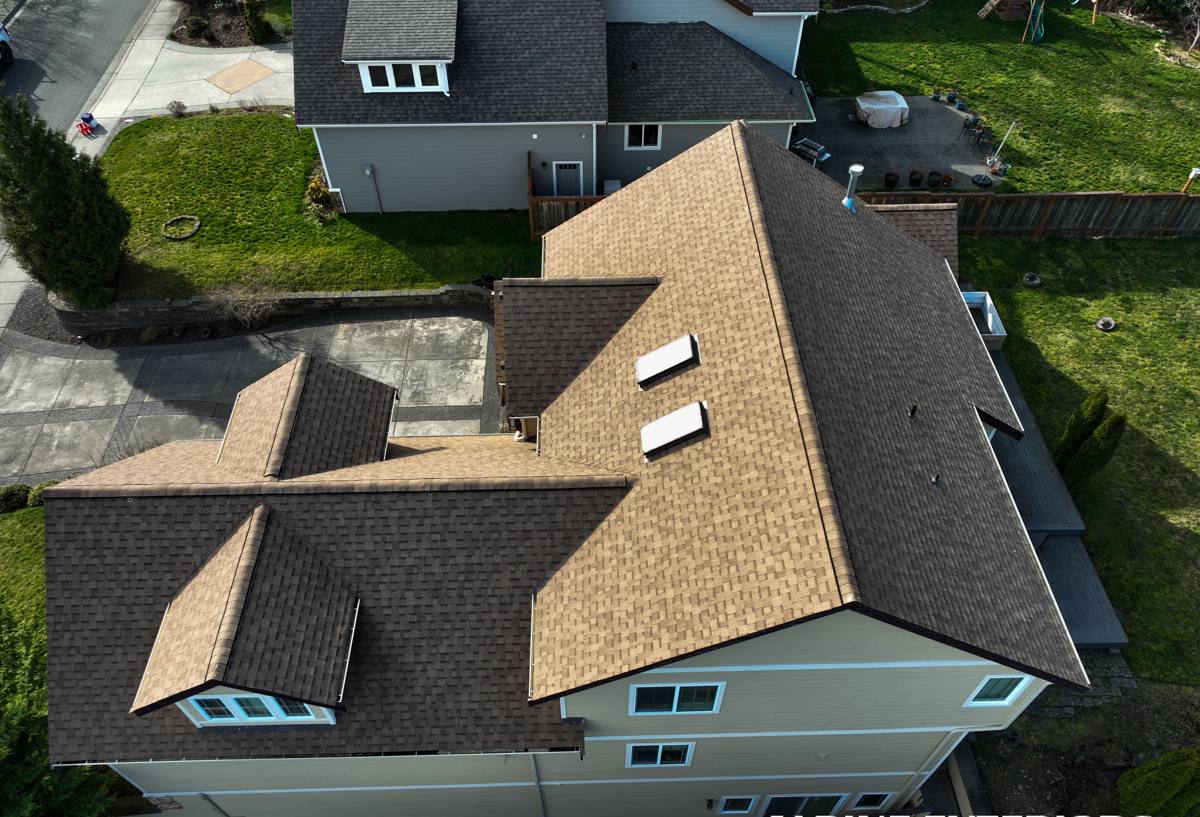
What Salt Air, Wind-Driven Rain, and Moss Actually Do to a Wall
Salt air
Airborne salt is corrosive to exposed metal fasteners, flashing, and trim, and it accelerates the breakdown of coatings that aren't formulated to resist it. Over years, a siding product with a weak factory finish will chalk, fade unevenly, and show streaking near corners and eaves faster on a waterfront lot than it would ten miles inland.
Driving rain
Wind off open water doesn't just wet a wall — it drives water sideways and upward under laps, around window and door trim, and into any seam that isn't properly lapped, caulked, or flashed. A siding job that would hold up fine in a calm, sheltered yard can fail within a few seasons on a more exposed Lummi Nation lot if the water-management details were skipped.
Moss and prolonged dampness
Shaded, moisture-retentive sites grow moss on roofs, decks, fences, and siding. Moss and algae hold water against a wall surface long after rain has stopped, which is hard on any porous or moisture-sensitive material and turns into an ongoing cleaning burden for the homeowner if the wrong product was chosen in the first place.
What a Correct Siding Installation Involves Here
"Correct" isn't about brand loyalty — it's about a wall assembly that actually manages water instead of just resisting it. In this climate, that means:
- A continuous weather-resistive barrier installed and lapped correctly, with no shortcuts at penetrations
- Properly flashed windows, doors, and any roof-to-wall or deck-to-wall intersections, since these are where wind-driven rain finds a way in
- Corrosion-resistant fasteners and trim hardware suited to a marine-influenced environment
- Correct siding lap exposure and fastening pattern per the manufacturer's installation manual — not "close enough"
- Adequate clearance between the bottom of the siding and grade, decks, and roof lines, so splash-back and standing moisture don't sit against the material
- A factory finish that resists fading, chalking, and moisture intrusion better than field-applied paint
Skip any one of these and you don't find out right away — you find out in year three or four, when trim starts to show staining, caulk joints open up, or panels start absorbing moisture at the edges.
Why We Install Only James Hardie Fiber Cement
We standardized on James Hardie fiber cement siding for every home we side, including homes throughout the Lummi Nation area, and we don't install vinyl, LP SmartSide, Cemplank, Allura, or primed wood siding. That's a deliberate professional standard, not a sales pitch, and it comes down to how these products actually perform against salt air, driving rain, and prolonged moss-season dampness:
| Factor | Why It Matters Here |
|---|---|
| Non-combustible material | Fiber cement doesn't contribute fuel to a fire the way wood-based or vinyl products can, which matters on wooded Whatcom County lots |
| ColorPlus factory finish | Baked-on, UV- and moisture-resistant finish holds color longer near open water than field-applied paint on wood trim or vinyl's molded-in color, which can chalk and fade unevenly |
| Climate-engineered HZ product line | James Hardie's HZ5 formulation is engineered for wetter, harsher climate zones like the Pacific Northwest, where moisture exposure is constant for much of the year |
| Dimensional stability | Fiber cement doesn't swell, warp, or rot the way wood-based siding can when it stays damp for weeks under moss-season conditions |
| Transferable warranty | A strong, transferable warranty protects the investment for the current owner and whoever buys the home next |
We're not claiming other products are junk — vinyl and engineered wood both have legitimate uses. We simply won't install products whose real-world trade-offs (moisture sensitivity, coating longevity, long-term maintenance) don't hold up to what a waterfront-influenced Whatcom County wall actually experiences year after year.
Our Installation Process for Lummi Nation Homes
- On-site assessment. We walk the exterior, check existing siding and trim condition, note exposure to wind and moisture, and look at drainage, grading, and any moss or algae buildup already present.
- Tear-off and substrate check. We remove the old siding and inspect the sheathing underneath for hidden rot or moisture damage before anything new goes up — this is where problems from a prior bad installation usually show up.
- Water management first. Weather-resistive barrier, flashing at every window, door, and penetration, and correct laps are installed before a single piece of siding goes on.
- James Hardie installation to spec. Panels or planks are fastened, lapped, and gapped per the manufacturer's installation manual, using corrosion-resistant fasteners appropriate for a marine-influenced environment.
- Trim, caulking, and detail work. Corners, outside trim, and joints are sealed correctly so wind-driven rain has no path in.
- Final walkthrough. We review the finished job with you, point out anything you should know about maintenance, and answer questions before we consider the job done.
Why a Crew That Already Works Lummi Nation Matters
Siding work near open water isn't the same job as siding work on a sheltered inland lot, and a crew that regularly works this specific stretch of Whatcom County has already seen how wind, rain exposure, and shade patterns play out on homes here. That familiarity shows up in small decisions — how much clearance to leave at grade, where extra flashing attention is warranted, which sides of a house take the worst of the weather — that a crew unfamiliar with the area might not think to prioritize. It also means faster, more accurate estimates, because we're not guessing at local conditions from a spec sheet.
Signs Your Current Siding Is Losing the Fight
- Persistent moss or algae staining that comes back within weeks of cleaning
- Soft or spongy spots, especially near the bottom courses or around trim
- Paint or finish that's chalking, peeling, or fading unevenly, particularly on water-facing walls
- Visible warping, cupping, or separation at seams and corners
- Rising energy bills or drafts that suggest the wall assembly behind the siding isn't sealed properly
- Caulk joints that have cracked, shrunk, or pulled away from trim
Any one of these on its own might just need a repair. Several together, especially on an older home, usually mean the wall assembly itself is due for a real look.
Cost Factors to Expect
| Factor | How It Affects Scope |
|---|---|
| Home size and wall complexity | More corners, dormers, and trim detail mean more labor and material per square foot |
| Substrate condition | Hidden rot or moisture damage found during tear-off adds repair work before new siding can go on |
| Siding profile and finish choice | James Hardie offers several plank widths, panel styles, and ColorPlus color options at different price points |
| Site access and exposure | Waterfront and sloped lots can require more setup time and protective measures during installation |
| Trim and accessory work | Full trim replacement alongside siding is more thorough than reusing existing trim, but not always necessary |
We give straightforward, written estimates after an in-person look at the home — not a ballpark over the phone, since exposure and existing conditions vary so much from lot to lot even within the same neighborhood.
Maintaining James Hardie Siding in a Moss-Prone, Salt-Air Climate
- Rinse siding gently once or twice a year to keep salt residue and organic buildup from accumulating
- Keep tree limbs and shrubs trimmed back from walls to reduce shade, moisture retention, and moss growth
- Inspect caulk joints at trim and penetrations annually and re-caulk any that have cracked or pulled away
- Check gutters and downspouts before the wet season to make sure water is directed away from walls, not onto them
- Address any moss or algae promptly with a soft wash rather than pressure-washing, which can damage caulk lines and finishes
If you're weighing a siding replacement or repair on a Lummi Nation area home, we're glad to come take a look and give you a straightforward, no-pressure estimate — just fill out the form below.