 Ferndale Siding
 Roofing Built for Semiahmoo's Marine Weather
Semiahmoo sits close enough to the water that its roofs live a different life than roofs ten miles inland. Salt-laden air off the water accelerates corrosion on fasteners and flashing, wind off open water hits roof planes at angles most shingle warranties were never tested against, and the long, wet Whatcom County winter keeps roofs damp for weeks at a stretch. That combination is what actually causes most of the "storm damage" we get called out for here — it's rarely one dramatic event. More often it's driving rain finding a weak seam during a windstorm, or moss that's been quietly working into a roof deck for two seasons finally opening a leak the week a real storm rolls through.
A storm damage roof repair in this area has to account for that context, not just patch what's visible. We've worked on roofs throughout Ferndale and the surrounding Whatcom County coastline long enough to know which failure points show up here again and again, and this page is about that specific job: storm-related roof repair for Semiahmoo homes, done in a way that holds up to the next storm season instead of just the next inspection.
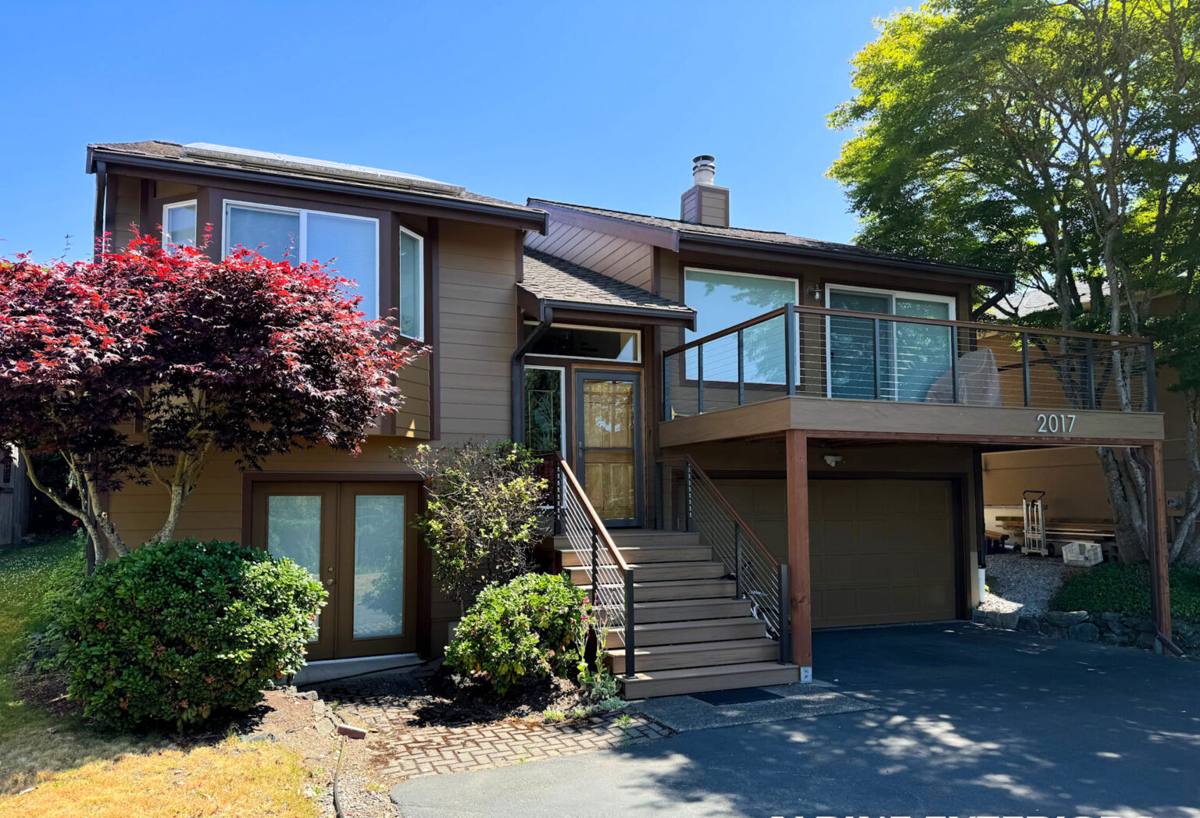
What "Storm Damage" Actually Looks Like on a Pacific Northwest Roof
Storm damage isn't always a hole or a missing shingle. In a wet, wind-exposed area like Semiahmoo, it usually shows up as one of a few patterns:
Wind-Lifted or Creased Shingles
Gusts off the water can lift the edge of a shingle just enough to break its seal without tearing it off entirely. The shingle looks intact from the ground but no longer sheds water correctly, and the next rain finds its way underneath.
Wind-Driven Rain Intrusion
Straight-down rain and sideways rain behave very differently on a roof. Driving rain gets pushed up and under laps, into flashing seams, and around vent boots that would be perfectly fine in calmer weather. This is one of the most common storm-related callouts we see in coastal Whatcom County.
Moss and Organic Growth Damage
Moss doesn't cause a storm, but it sets a roof up to fail during one. Moss holds moisture against the shingle surface, works its rhizoids under shingle tabs, and adds weight and friction that make shingles more likely to tear loose in wind. A roof with heavy moss going into storm season is a roof that's more likely to need repair coming out of it.
Salt Air Corrosion
Metal flashing, nail heads, gutter fasteners, and vent caps corrode faster this close to the water. Corroded metal fails quietly — a rusted-through flashing seam doesn't look dramatic, but it's often the actual entry point once a storm pushes water at it.
Signs Your Semiahmoo Roof May Have Storm Damage
Most storm damage isn't visible from the ground, and by the time a stain shows up on a ceiling, water has usually been getting in for a while. After any significant wind or rain event, it's worth checking for:
- Granules collecting in gutters or at downspout outlets
- Shingles that look curled, lifted at the edges, or creased
- Visible gaps or shiners (exposed nail heads) along shingle rows
- Bent, lifted, or missing flashing around chimneys, skylights, or roof-to-wall joints
- New or spreading moss patches, especially on north-facing slopes
- Water stains or discoloration on interior ceilings, especially near exterior walls
- Debris — branches, needles, moss clumps — packed into valleys or against vents
- Soft spots or sagging felt underlayment visible from the attic side
Any one of these on its own might not mean much. Two or three together, especially after a storm, is worth a real inspection rather than a guess.
What a Correct Storm Damage Repair Actually Involves
Start With the Deck, Not Just the Surface
A storm damage repair that only replaces shingles and skips checking the roof deck underneath is a repair that's guessing. If water has been getting in for any length of time, the plywood or planking under the damaged area can be soft, delaminated, or rotted. Repairing over compromised decking looks fine for a season and fails again the next time the wind picks up.
Match Materials, Don't Just Cover the Hole
Patching a section with mismatched shingles or the wrong flashing profile creates a new weak point even when the immediate leak stops. A correct repair matches shingle type, exposure, and where possible color and age, and uses flashing metal and fasteners rated for salt-air exposure rather than standard-grade hardware that will corrode again in a few seasons.
Rebuild the Water Path, Not Just the Patch
Every roof depends on layers working together — underlayment, flashing, shingle laps, and ventilation — to move water off the structure. Storm repair means restoring that whole system at the damaged area: proper underlayment overlap, correctly stepped flashing at walls and chimneys, and shingle courses that shed water the way the rest of the roof does.
Clear What Caused the Vulnerability
If moss buildup or debris contributed to the failure, a repair that doesn't address the cause is temporary. That can mean clearing moss and debris from the surrounding area, checking that gutters and valleys are actually draining, and confirming attic ventilation isn't trapping moisture that speeds up future moss growth.
Repair or Replace? What Actually Decides It
Not every storm-damaged roof needs full replacement, and not every roof that "just needs a patch" should get one. The honest answer depends on a few factors:
| Factor | Repair Is Usually the Right Call | Replacement Is Usually the Right Call |
|---|---|---|
| Extent of damage | Isolated to one section or slope | Multiple areas or spread across most of the roof |
| Roof age | Well within its expected service life | Already near or past the end of its expected life |
| Deck condition | Solid, dry decking under the damaged area | Soft, rotted, or delaminated decking found during inspection |
| Underlying moss/growth history | Minor, manageable with cleaning and repair | Long-term, widespread moss with likely deck involvement |
| Typical cost range | Several hundred to a few thousand dollars, depending on scope | A significantly larger investment, but resets the whole system and warranty |
We'll tell you honestly which category your roof falls into. There's no advantage to us in overselling a full replacement when a targeted repair will genuinely hold, and there's no advantage to patching a roof that's going to need replacement within a year or two anyway.
Our Storm Damage Repair Process
1. Inspection
We look at the roof from both the exterior and, where accessible, the attic side, since interior signs of water intrusion often tell us more than surface damage does. We check flashing, valleys, vents, and the areas most exposed to wind off the water.
2. Honest Assessment
We explain what we found, what's causing it, and what the realistic options are — repair, partial re-roof, or full replacement — with straightforward reasoning, not a pressured sales pitch.
3. Repair Plan and Materials
We match materials to what's already on the roof where we can, and we use fasteners and flashing suited to salt-air exposure so the repair doesn't just relocate the corrosion problem a few years down the road.
4. The Work
We remove and inspect the damaged area down to the deck, repair or replace decking as needed, rebuild the flashing and underlayment correctly, and install matching shingles with proper nailing and sealing for wind exposure.
5. Cleanup and Walkthrough
We clear debris and old material from the property and walk the repair with you before we consider the job done.
Storm Damage and Insurance Claims
Many storm-related roof repairs are covered in whole or in part by homeowners insurance, depending on the cause of damage and your specific policy. We can provide a clear, itemized assessment of the damage and the repair scope that you can submit with a claim, but we're not your insurance adjuster and we won't promise a coverage outcome we don't control. What we can promise is documentation that's accurate and useful, not inflated to fit a claim.
Why Local Experience Matters for This Job
A roof crew that hasn't worked this stretch of Whatcom County coastline can still do competent repair work, but they're starting from zero on things that matter here: which flashing details actually hold up to salt air over time, how aggressively moss comes back on a shaded, damp Semiahmoo lot compared to a drier inland yard, and which roof orientations catch the worst of the wind-driven rain in a winter storm. That local pattern recognition is the difference between a repair that's technically correct and one that's actually built for this specific location.
We're based in Ferndale and work throughout the surrounding Whatcom County area, including Semiahmoo, on a regular basis. That means we're not guessing at how a roof here behaves through a full wet season — we've seen it, repeatedly, on homes with the same exposure yours has.
Get a Straightforward Roof Assessment
If you've had recent storm activity or you're noticing any of the warning signs above, it's worth getting a professional look before a small issue becomes a bigger repair. We offer free, no-pressure estimates for storm damage roof repair in Semiahmoo — use the form below to get a time on the schedule.