 Ferndale Siding
 Siding That Has to Work Harder in Sudden Valley
Homes around Sudden Valley sit close to Lake Whatcom and deal with a specific combination of stresses that inland Whatcom County neighborhoods don't see in the same intensity: near-constant humidity off the water, long stretches of shade from mature evergreens, driving rain that comes in sideways off the lake during winter storms, and a moss and algae season that can run most of the year in the shadiest lots. Add in the salt-tinged marine air that moves up from Bellingham Bay and the greater Puget Sound corridor, and you have an exterior environment that punishes anything less than a genuinely weather-engineered siding product.
We install James Hardie fiber cement siding, and only James Hardie. That's not a marketing position — it's a decision we made after years of tearing old siding off homes in this exact climate and seeing which products held up and which ones didn't. This page covers what a correct fiber cement siding job looks like specifically for a Sudden Valley home, not siding in general.
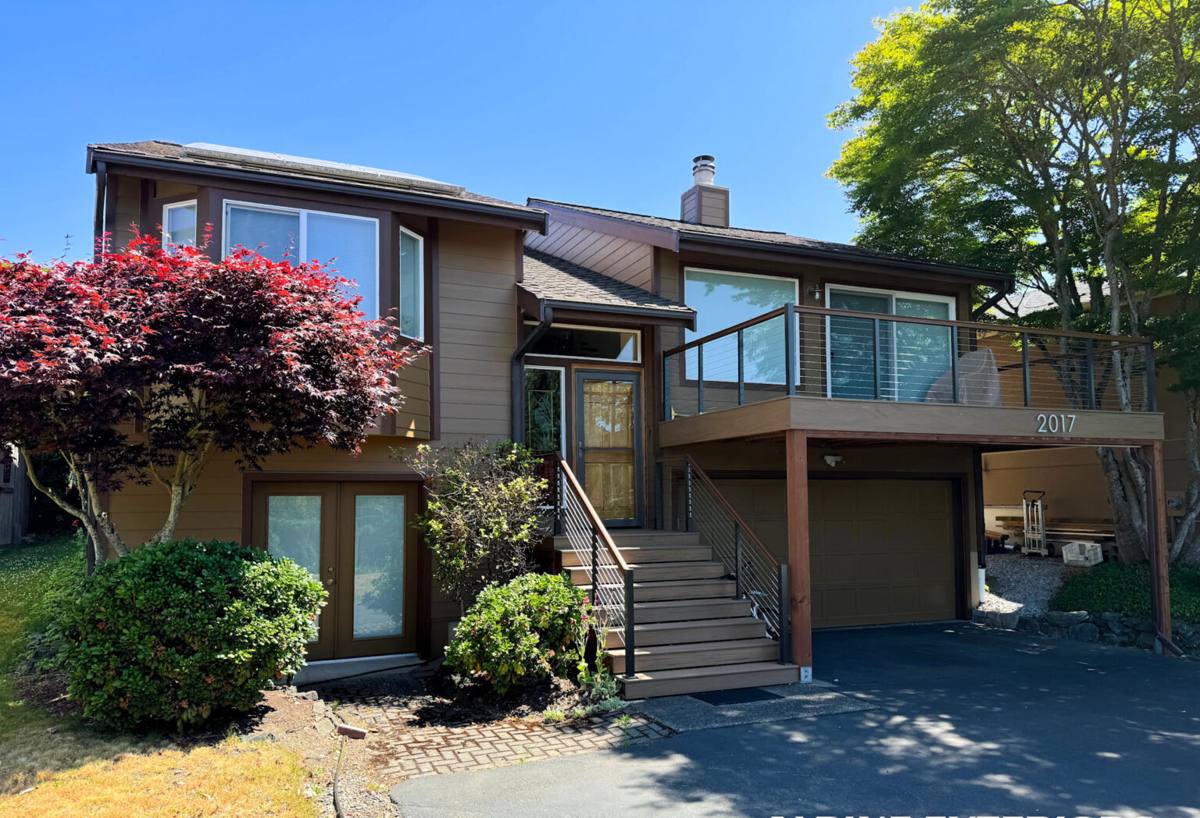
What This Climate Actually Does to a House
Moisture That Doesn't Leave
Lakeside lots and tree-covered lots both trap moisture against exterior walls longer than open, sunny sites do. Morning fog off the lake, shade from firs and cedars, and our long Pacific Northwest wet season combine to keep siding damp for days at a time in the worst-exposed spots — typically north and west walls, and anywhere landscaping crowds the house.
Moss, Algae, and Constant Green Growth
Where moisture sits, moss and algae follow. On wood-based or absorptive siding, that growth isn't just cosmetic — it holds water against the surface and accelerates rot from the inside out. A siding product that resists moisture absorption in the first place is fighting half the battle before a homeowner ever picks up a hose or a soft brush.
Salt Air and Wind-Driven Rain
Sudden Valley isn't oceanfront, but the broader Whatcom County corridor carries enough marine moisture and salt content to accelerate corrosion on fasteners, flashing, and any metal trim that isn't rated for it. Combine that with winter wind events that drive rain horizontally into wall assemblies, and every seam, joint, and butt edge on the house becomes a place water is actively trying to get behind.
Why We Only Install James Hardie Fiber Cement
Fiber cement as a category exists because wood siding, even well-maintained, struggles with rot and pest damage over a long enough timeline, and vinyl struggles with impact damage, fading, and heat warping. But not all fiber cement is built the same, and installation quality matters as much as the product itself. We standardized on James Hardie for three practical reasons:
- Climate-engineered product lines. Hardie manufactures specific formulations (HZ5, HZ10) engineered for different moisture and freeze exposure levels, so the product spec matches the actual climate zone rather than a one-size-fits-all mix.
- ColorPlus factory finish. A baked-on factory finish resists fading and moisture intrusion at the surface far better than field-applied paint, which matters in a neighborhood where UV exposure is inconsistent (deep shade in some yards, full sun in others) and repainting every wall on a different schedule gets expensive fast.
- Non-combustible material. Fiber cement doesn't feed a fire the way wood-based products can, which matters anywhere near wildland-urban interface areas in Whatcom County.
We don't install LP SmartSide, vinyl, Cemplank, Allura, or bare cedar or spruce siding. Each of those products has legitimate strengths, but none of them matched what we wanted to guarantee homeowners in this specific climate, and we'd rather install one product well than juggle five products with five different failure modes.
What a Correct Fiber Cement Job Involves Here
Water Management Comes Before Siding
The siding panel is the last layer, not the first line of defense. On a Sudden Valley home, correct installation starts with a properly lapped weather-resistant barrier, flashed windows and doors, and kick-out flashing at every roof-to-wall intersection — the exact spots where wind-driven rain finds a way in if it's skipped.
Fastening and Gapping Specific to Wet Climates
Hardie panels need to be fastened per manufacturer spec (proper nail placement, correct penetration into framing) and gapped correctly at butt joints and trim to allow for expansion without opening a moisture pathway. In a high-moisture area, sloppy gapping is one of the most common causes of early caulk failure and water staining.
Starter Strips, Clearances, and Grade
Siding needs proper clearance from grade, roofing, and decks — a rule that matters everywhere but especially on sloped lakeside lots where soil, mulch, and moisture can creep higher against a wall than the original plans assumed. We check and correct clearance issues as part of every job, not as an afterthought.
Caulk and Sealant Selection
Not all sealants perform the same in a cold, wet, UV-inconsistent climate. We use sealant products rated for the movement and moisture conditions Hardie specifies, applied at the joints that actually see water — not just cosmetic sealing at the trim edges.
Our Process for a Sudden Valley Project
- On-site assessment. We walk the exterior, check for existing moisture damage, moss buildup, flashing gaps, and grade/clearance issues before quoting anything.
- Product and line selection. We recommend the Hardie product line and color suited to the home's sun/shade exposure and HOA or neighborhood aesthetic, where applicable.
- Tear-off and substrate check. Old siding comes off and we inspect sheathing for hidden rot or water damage before anything new goes up — a step that's non-negotiable in a climate this wet.
- Water barrier and flashing correction. We install or correct the weather-resistant barrier and flashing details first.
- Hardie installation to manufacturer spec. Fastening, gapping, and clearances installed to Hardie's published requirements, not shortcuts.
- Final inspection and walkthrough. We review the finished work with the homeowner and point out anything they should watch for going forward.
Why Hiring a Crew That Knows Sudden Valley Matters
A siding crew that mostly works drier, sunnier regions can install a technically fine product and still miss the details that matter here — under-flashing a north wall that never fully dries, or skipping kick-out flashing because it "usually" doesn't rain sideways where they're used to working. We work in Whatcom County, and we've seen firsthand what happens to walls that face the lake, sit in permanent shade, or catch the brunt of a winter windstorm. That local pattern-recognition is part of what a homeowner is actually paying for when they hire local — not just labor, but judgment calls made correctly the first time.
Comparing Siding Options for a Lakeside, Shaded Property
| Factor | James Hardie Fiber Cement | Vinyl | Untreated Wood/Cedar |
|---|---|---|---|
| Moisture absorption | Very low — engineered for wet climates | Non-absorptive but seams/panels can trap moisture behind them | High — prone to rot without diligent maintenance |
| Moss/algae resistance | Factory finish resists surface growth better than porous materials | Can host algae growth in shaded, damp areas | Highly susceptible, especially in shade |
| Fire resistance | Non-combustible | Can melt or deform near heat sources | Combustible |
| Finish durability | Factory-baked ColorPlus finish, long fade resistance | Color molded in but can fade/chalk over time | Requires repainting/staining on a recurring cycle |
| Typical maintenance | Occasional wash, caulk checks | Occasional wash, panel replacement if cracked | Regular repainting, sealing, rot inspection |
Cost Factors Homeowners Should Understand
Every Sudden Valley home is different, so we don't quote in broad generalities, but a few factors consistently move the price:
- Extent of existing water or rot damage found once old siding comes off
- Home's total square footage and number of stories (access and staging complexity)
- Amount of trim, corner detail, and architectural features requiring custom cuts
- Whether flashing and water barrier work is minor correction or full replacement
- Product line selected (standard lap siding versus specialty shapes, panel, or shingle-style profiles)
We provide a written, itemized estimate after the on-site assessment so homeowners know exactly what they're paying for and why.
A Simple Pre-Project Checklist for Homeowners
- Walk your exterior and note any areas with visible moss, dark staining, or soft-feeling wood
- Check where landscaping or mulch beds sit close to or above the bottom of your siding
- Look at roof-to-wall intersections for any streaking below them, a sign flashing may be failing
- Note which walls stay damp or shaded longest through the day — those need the closest attention
- Ask any contractor you're considering directly what fiber cement brand and line they install and why
If you're weighing a siding project for a Sudden Valley home, we're happy to walk the exterior with you, point out what we see, and put together a straightforward, no-pressure estimate — just fill out the form below to get started.