 Ferndale Siding
 Metal Roofing for Sudden Valley: A Roof That Matches the Climate It Lives In
Sudden Valley sits in one of the wetter, more heavily wooded pockets of Whatcom County, and that combination shapes what a roof needs to survive here. Between the marine air that moves through the region off the Strait and Bellingham Bay, the long stretches of driving winter rain, and the heavy tree cover that shades much of the neighborhood, roofs in this area work harder than roofs in drier, more open parts of the state. Asphalt shingles wear out faster under those conditions than most homeowners expect. Metal roofing, installed correctly, is built to handle exactly this kind of climate — but "installed correctly" is doing a lot of work in that sentence, and it's where most of the problems we get called out to fix actually started.
This page is about metal roofing specifically for Sudden Valley homes: what the local conditions demand, what a proper installation looks like, and how we approach the job when we're up on a roof in this part of Whatcom County.
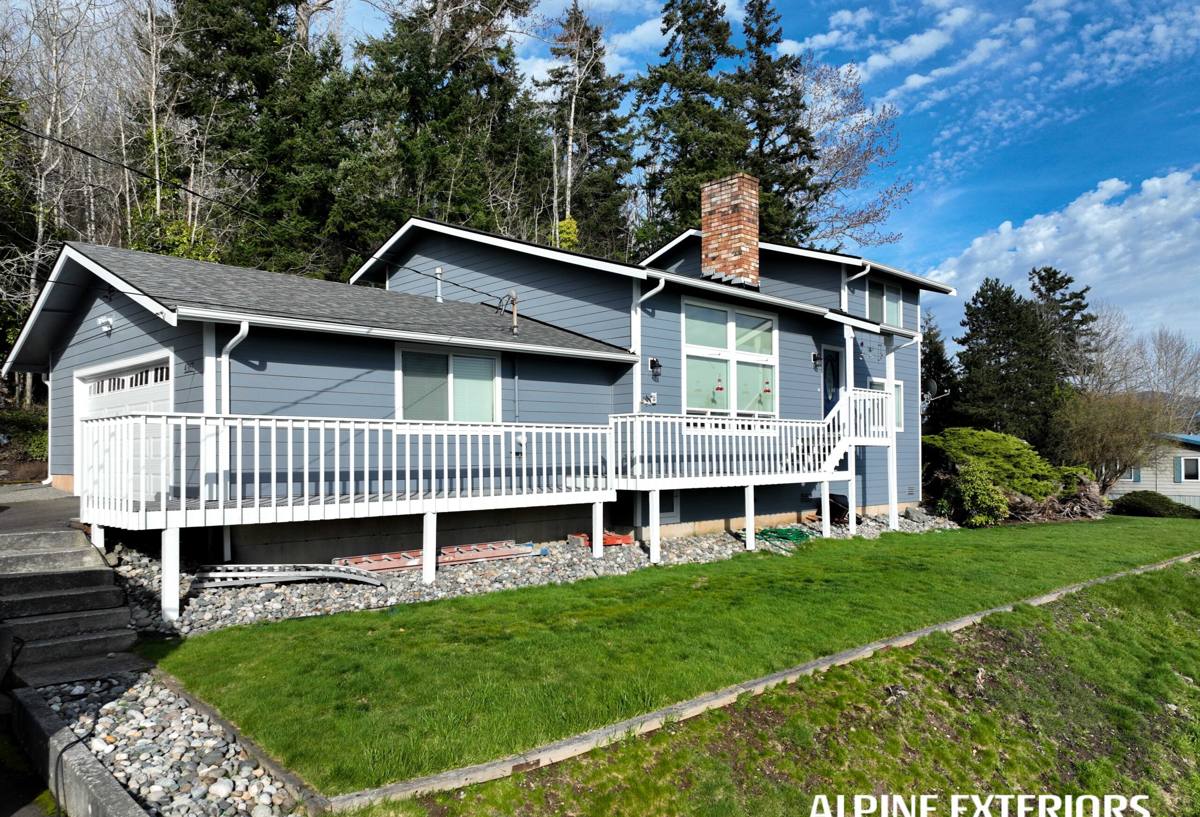
What This Climate Actually Does to a Roof
It's easy to say "Pacific Northwest weather is rough on roofs" without explaining why. Here's what's actually happening, mechanically, on a Sudden Valley roof over the course of a year:
Moisture that doesn't let up
Long, steady rain events — not just occasional downpours — mean a roof spends more of the year wet than dry. Any weak point in flashing, fastener seals, or underlayment gets tested repeatedly, not once. Water finds the smallest gap over enough repetitions.
Salt-bearing marine air
Whatcom County sits close enough to Bellingham Bay and the Strait that the marine air carries a mild salt content even well inland. Over years, that air accelerates corrosion on unprotected or poorly coated metal — fasteners, flashing, and cheap panel coatings are usually the first things to show it.
Shade and moss
The tree cover that gives Sudden Valley its character also means many roofs stay shaded and damp longer after a rain than a roof out in the open would. Shade plus moisture is exactly what moss and algae need to establish. On asphalt shingles, moss roots into the granule surface and lifts it. On metal, moss can't root the same way, but it can still hold moisture against seams and fasteners if debris is allowed to accumulate.
Temperature swings and wind-driven debris
Whatcom County doesn't see extreme heat, but freeze-thaw cycles and windstorms that knock down branches and needles are a normal part of the year. Roofing materials and fastening systems need to tolerate both without loosening.
Why Metal Roofing Fits This Environment
Metal roofing isn't automatically the right answer for every home, but for the specific conditions Sudden Valley deals with, it solves several problems at once:
- Moss resistance: Metal doesn't give moss and algae a surface to root into the way granulated shingles do, which matters under heavy tree cover.
- Shedding, not absorbing: Correctly installed metal panels shed water quickly instead of holding it against the surface, reducing the time moisture sits on the roof after rain.
- Long service life: A properly installed and coated metal roof commonly outlasts two or three asphalt shingle roofs, which matters on a home surrounded by trees where re-roofing access isn't always simple.
- Corrosion resistance when specified correctly: The right coating and fastener specification handles marine air far better than mismatched or budget-grade materials.
- Wind and debris performance: A correctly fastened metal roof holds up well against the branch and debris fall common in wooded areas.
None of that is automatic, though. Metal roofing done wrong fails in its own specific ways — and those failures are often more expensive to fix than a shingle mistake, because they usually involve the fastening system or the panel seams themselves.
Choosing the Right Metal Roofing System
Not all metal roofing is the same product wearing different colors. The panel profile and fastening method matter as much as the metal itself. Here's how the common options compare for a shaded, wet, wooded property like a Sudden Valley home:
| System | How it's fastened | Best fit | Trade-offs |
|---|---|---|---|
| Standing seam | Concealed clips, no exposed fasteners on the field of the panel | Homes wanting the lowest long-term maintenance and the cleanest water-shedding performance | Higher upfront cost; installation is less forgiving of shortcuts |
| Exposed-fastener panels | Screws driven through the panel face with rubber washers | Budget-conscious projects, outbuildings, some roof pitches | Washers age and need eventual replacement; more penetration points for water to test |
| Metal shingles / shakes | Interlocking panels styled to resemble shingle or shake roofing | Homeowners who want a metal roof's durability with a more traditional look | More seams than standing seam; installation detail quality matters even more |
For a shaded, moisture-heavy property, we generally steer homeowners toward standing seam or a quality interlocking shingle system, specifically because fewer exposed penetrations means fewer places for the constant regional rain to work its way in over time. That said, exposed-fastener systems installed correctly, with proper washer specification and maintenance expectations set upfront, still perform well on many roofs — it depends on the structure, the budget, and how the roof is used.
What a Correct Metal Roof Installation Actually Involves
The metal panel itself is the least likely part of the system to fail. Almost every metal roof problem we're called to diagnose traces back to something underneath or around the panel:
Underlayment
Metal roofing needs a high-temperature, moisture-resistant underlayment rated for the panel type and climate — not a leftover roll of standard felt. In a wet climate like this one, the underlayment is the roof's real backup line of defense.
Flashing at every transition
Valleys, wall intersections, chimneys, skylights, and vents are where roofs leak — on metal or shingles. Flashing has to be custom-fit and properly lapped so water is directed out, not channeled toward a seam.
Fastener spacing and type
Metal roofing has manufacturer-specified fastener patterns and spacing for a reason: wind uplift resistance and thermal movement both depend on it. Fasteners also need to match the panel metal to avoid galvanic corrosion — mixing incompatible metals is a slow, hidden failure mode.
Ventilation
Metal roofs expand and contract more visibly with temperature than shingles do, and trapped attic moisture under a metal roof in a wet climate can lead to condensation issues if ventilation isn't accounted for. This gets missed more often than people expect.
Panel layout for water flow
On a roof with valleys, dormers, or multiple pitches, panel layout has to be planned so seams run with the water flow, not against it. This is a judgment call that experienced installers make before the first panel goes up, not something corrected afterward.
Our Process for a Sudden Valley Metal Roof Project
- On-site assessment: We walk the roof and the attic space where accessible, noting tree overhang, shaded areas prone to moss, existing moisture damage, and the condition of the decking underneath.
- System recommendation: Based on the roof's pitch, shape, and exposure, we recommend a panel profile and fastening system suited to the property — not a one-size answer.
- Written estimate: You get a clear breakdown of materials, labor, tear-off (if applicable), and timeline before any work starts.
- Tear-off and deck inspection: If we're removing an existing roof, we inspect the decking for rot or soft spots before anything new goes down — this is often where hidden moisture damage from years of wet climate exposure shows up.
- Underlayment and flashing installation: Done to manufacturer spec, with extra attention to valleys and any wall or chimney transitions.
- Panel installation: Laid out for correct water flow, fastened to spec, with clean, weather-tight terminations at every edge.
- Final walkthrough: We go over the finished roof with you, including what maintenance to expect given the site's tree cover and shade.
Maintaining a Metal Roof Under Heavy Tree Cover
A metal roof installed correctly needs far less attention than an asphalt roof, but "less" isn't "none," especially on a shaded, wooded lot. A simple annual routine keeps small issues from becoming roof-replacement issues:
- Clear needles, leaves, and branch debris from valleys and around any roof penetrations — this is where organic material collects and holds moisture longest.
- Keep gutters clear so water actually leaves the roof system instead of backing up under the drip edge.
- Trim back overhanging branches where practical, both to reduce debris and to let more light and airflow reach shaded roof sections.
- Do a visual check after major windstorms for any lifted flashing or panel edges.
- Have flashing and sealant points checked periodically, since these are the parts of any roof system — metal or otherwise — that age fastest.
- Address any moss or algae growth on adjacent surfaces (like a shaded fascia or gutter) before it spreads onto roof penetrations.
Why Local Experience in Sudden Valley Matters
A metal roof spec that works fine on an open, sunny roof in a drier part of the state can underperform on a shaded Whatcom County lot with heavy tree cover and near-constant winter moisture. Knowing how much shade a particular roof orientation gets, how debris tends to collect on similarly wooded properties in the area, and which flashing details actually hold up through a full Pacific Northwest wet season isn't something you get from a spec sheet — it comes from doing this work on homes in this climate, repeatedly.
We're a Ferndale-based crew that works throughout Whatcom County, including communities like Sudden Valley, and we bring the same standards to every roof: proper underlayment, correct flashing details, manufacturer-spec fastening, and a layout planned around how water actually moves off that specific roof. We don't cut corners on the parts of the job that don't show up until year three or four, because those are the parts that determine whether a metal roof lasts fifteen years or fifty.
Get a Straightforward Estimate
If you're weighing metal roofing for a Sudden Valley home — whether you're dealing with a moss-prone shaded roof, an aging asphalt roof that keeps needing patches, or you're planning ahead for a re-roof — we're happy to come take a look and walk you through your options honestly. Use the form below to request a free, no-pressure estimate.