 Ferndale Siding
 Roofing in Bellingham Isn't the Same Job as Roofing Inland
Bellingham sits right on the water, and that changes what a roof has to deal with year-round. Homes here get salt-laden air off Bellingham Bay, wind-driven rain that comes in sideways off the Strait during winter storms, and long stretches of gray, damp weather that keep roof surfaces wet for days at a time. Add in mature tree cover on a lot of Whatcom County properties and you get a moss and algae season that can run eight or nine months out of the year. A roof installed without that reality in mind will look fine for a year or two and then start showing problems that a properly built roof simply wouldn't have.
We're based in Ferndale and have worked Bellingham roofs for years, so this isn't a generic installation write-up. It's what actually matters when you're putting a new roof on a home in this specific corner of Washington.
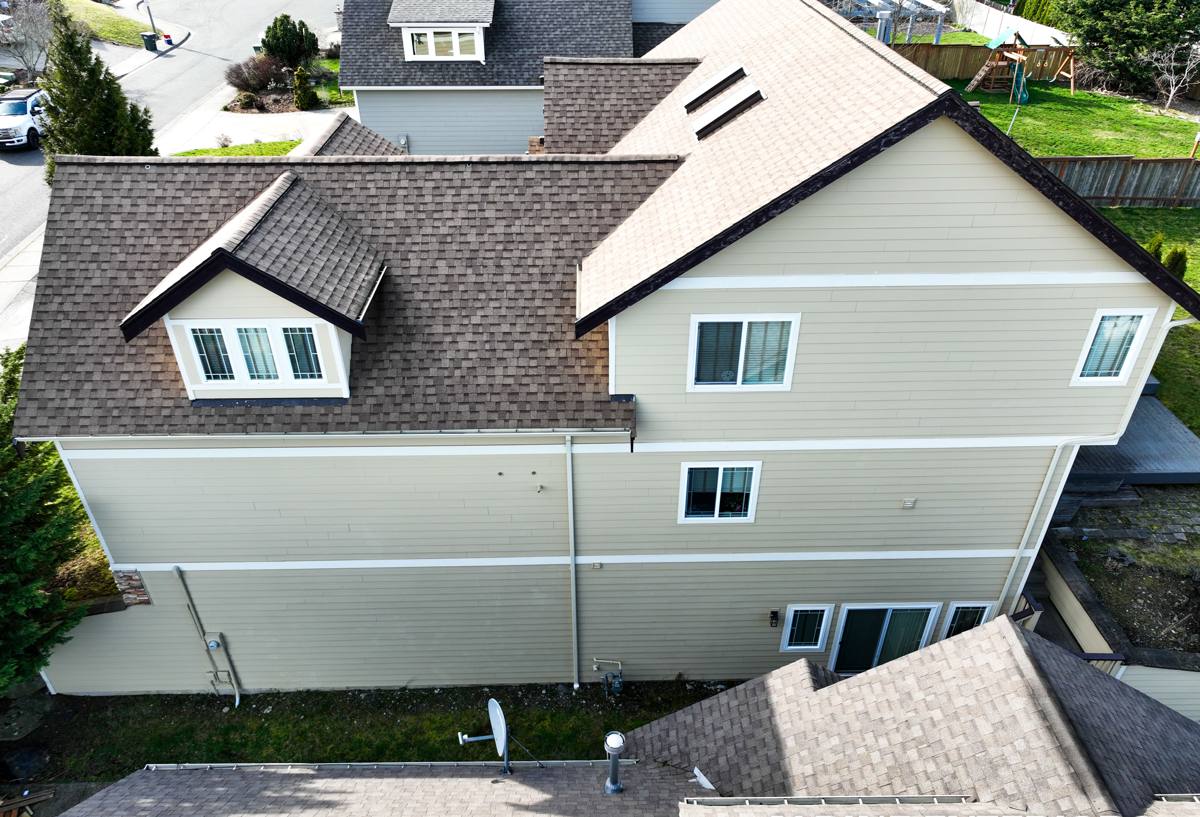
How the Local Climate Shortens Roof Life
Three things do most of the damage to Bellingham roofs, and a good installation is built to resist all three:
Driving Rain and Wind
Winter storms off the Strait of Georgia don't just drop rain straight down — they push it sideways under shingle tabs, into exposed nail heads, and up under poorly lapped flashing. A roof that's only detailed for vertical rainfall will leak in exactly the conditions Bellingham gets several times a winter.
Salt Air
Proximity to saltwater accelerates corrosion on anything metal — flashing, fasteners, vents, and valley metal. Cheap or mismatched metal components can start rusting years before they should, which leads to small leaks that are hard to trace back to their source.
Moss, Algae, and Trapped Moisture
Shade, moisture, and mild temperatures are ideal moss-growing conditions. Moss doesn't just look bad — it holds water against the roof surface, works its way under shingle edges, and can lift tabs enough for wind to get underneath. Homes tucked under trees or on the north side of a slope see this worst, and it's one of the most common reasons we get called out to look at a roof that's only 12–15 years old but already failing.
Signs a Bellingham Roof Needs Full Replacement, Not Another Repair
Not every roof problem calls for a full tear-off. But there's a point where patching stops making financial sense. Common signs we look for during an assessment:
- Granule loss heavy enough that you can see bare, shiny patches on shingles
- Shingles that are cupping, curling, or cracking, especially on south- and west-facing slopes
- Moss growth thick enough to lift shingle edges rather than just sitting on the surface
- Soft spots or sagging when walking the roof, which usually points to deck damage underneath
- Daylight visible through the roof deck from inside the attic
- Repeated leaks in different spots after previous repairs
- A roof original to a home built more than 20–25 years ago, even if it "looks okay" from the ground
If a roof is under about 10 years old and the problem is isolated — a flashing leak or storm damage in one area — repair is usually the right call. Past that, especially with moss damage or widespread granule loss, a full replacement is more cost-effective than continuing to chase leaks.
What a Correctly Built Roof Includes Here
The shingles are the part everyone sees, but they're maybe a third of what actually keeps water out. A roof built for this climate needs the whole system done right, not just a new layer on top.
| Component | Why It Matters in Bellingham's Climate |
|---|---|
| Ice-and-water shield at eaves, valleys, and penetrations | Backs up flashing where wind-driven rain and pooling water are most likely to force their way under shingles |
| Synthetic underlayment across the full deck | Sheds water reliably during the days-long wet stretches typical of a Whatcom County winter, and holds up better than felt if a storm delays shingle install |
| Corrosion-resistant flashing and fasteners | Resists the accelerated rust that salt air causes on standard-grade metal |
| Balanced intake and exhaust ventilation | Moves moist attic air out before it condenses on the underside of the deck, which prevents rot and helps shingles last their full rated life |
| Algae-resistant shingle granules | Slows the moss and algae growth that shortens roof life on shaded, damp lots |
Skip any one of these and the roof will still get sold as "new," but it won't perform the way it should for this area.
Our Installation Process, Start to Finish
1. On-Site Assessment
We walk the roof, check the attic for existing ventilation and moisture signs, and look at slope, tree cover, and drainage patterns specific to your property. This tells us where extra attention is needed — a heavily shaded north slope gets treated differently than an open, sun-exposed one.
2. Tear-Off and Deck Inspection
We remove the old roofing down to the deck rather than layering over it. This is the only way to actually see the plywood or sheathing underneath and catch soft or rotted spots before they're covered up again for another 20 years.
3. Deck Repair
Any damaged sheathing gets replaced before anything else goes down. Installing new roofing over a compromised deck is one of the most common causes of early failure we see when we're called to look at other contractors' work.
4. Underlayment and Ice-and-Water Shield
Ice-and-water shield goes down first at eaves, valleys, and around every penetration, followed by synthetic underlayment across the rest of the deck.
5. Flashing
New flashing at chimneys, walls, skylights, and valleys — never reused from the old roof. Flashing is the single most common leak point on Pacific Northwest roofs, and it's not worth cutting corners on.
6. Shingle or Metal Installation
Installed to manufacturer nailing patterns and exposure specs, with attention to proper overlap for wind resistance given how much sideways rain this area gets.
7. Ventilation Check
We confirm intake at the soffits and exhaust at the ridge are balanced. Mismatched or blocked ventilation is a quiet cause of premature shingle failure and deck rot that homeowners rarely notice until there's visible damage.
8. Cleanup and Walkthrough
Magnetic sweep for stray nails, full site cleanup, and a walkthrough so you understand what was done and what to watch for going forward.
Choosing Materials for a Bellingham Roof
There's no single "best" roofing material — it depends on your home, budget, and how much long-term maintenance you want to take on.
| Material | Strengths Here | Trade-Offs |
|---|---|---|
| Architectural asphalt shingles | Good value, wide style range, solid wind rating when installed correctly | Needs periodic moss treatment; shorter lifespan than metal |
| Standing seam metal | Sheds moss and rain well, long service life, handles wind-driven rain cleanly | Higher upfront cost; needs correctly matched, corrosion-resistant fasteners near the coast |
| Cedar shake | Traditional look that fits a lot of Whatcom County homes | Highest maintenance in a damp, mossy climate; requires diligent upkeep to avoid rot |
For most Bellingham homes we work on, algae-resistant architectural shingles hit the right balance of cost and durability. Metal makes sense for homeowners planning to stay long-term and wanting to minimize moss maintenance. We'll walk through the honest trade-offs for your specific roof rather than push whichever product has the best margin.
Ongoing Care That Actually Extends Roof Life
A well-installed roof still needs some attention in this climate. None of this is complicated, but skipping it is how a 30-year roof turns into an 18-year roof.
- Have moss physically removed (not just chemically treated) every year or two on shaded roofs
- Keep gutters clear so water isn't backing up under the shingle edge during heavy rain
- Trim back overhanging branches to reduce shade and debris buildup on the roof surface
- Check attic ventilation isn't blocked by insulation or storage
- Have flashing and valleys inspected after major windstorms, not just when a leak shows up
Permits, Timeline, and What to Expect During the Job
Most full roof replacements in the Ferndale and Bellingham area take one to three days depending on roof size, complexity, and weather windows — and weather windows matter more here than in drier climates. We watch the forecast closely and schedule tear-off to avoid leaving a deck exposed overnight when rain is likely. Permitting requirements vary depending on jurisdiction and scope of work; we handle that process as part of the job so you're not tracking down paperwork yourself.
Expect some noise and activity around the house during the work, debris containment via tarps and a designated drop zone, and a final cleanup pass before we consider the job done.
Why a Local Crew Matters for a Bellingham Roof
We're not driving in from out of the area to bid a job and disappear. Being based in Ferndale means we're familiar with how Whatcom County weather actually behaves through the seasons, which local lumber and roofing suppliers stock the materials that perform here, and what past work in the Bellingham area has taught us about which details matter most — flashing, ventilation, and moss resistance, in that order. If a warranty question or a storm-related concern comes up two years down the road, we're a short drive away, not a call center in another state.
What Affects the Cost of a New Roof
Every roof is priced based on its own specifics, but the main cost drivers are consistent:
- Roof size and number of squares (100 sq ft units) to be covered
- Roof complexity — number of valleys, penetrations, chimneys, and slope changes
- Current layer count and whether full tear-off and deck repair are needed
- Material choice, from standard architectural shingles up to standing seam metal
- Access difficulty, including steep pitch or limited staging area around the home
We give straightforward, itemized estimates so you can see exactly what you're paying for and why, rather than a single lump number.
If your roof is showing wear, moss buildup, or you're just planning ahead, we're happy to come out and take an honest look. The estimate is free and there's no pressure — use the form below to get started.