 Ferndale Siding
 Why Bellingham Homes Are Hard on Siding
Homes in and around Bellingham sit close enough to Bellingham Bay and the Puget Sound shoreline that salt-laden air is a constant factor, even for houses that aren't waterfront. Combine that with Whatcom County's long wet season — months of driving rain pushed sideways by wind off the water — and you get a siding environment that punishes anything less than a correctly installed, moisture-tolerant material. Add the shade from mature Pacific Northwest tree cover common in Ferndale and the surrounding Bellingham neighborhoods, and you get extended moss and algae growth on north-facing and shaded walls for much of the year.
None of these factors are dramatic on their own. What they do is compound. Salt air accelerates corrosion of fasteners and trim. Driving rain finds any gap in flashing or caulking and pushes water behind the siding instead of down and off it. Moss and algae hold moisture against the wall surface long after a storm has passed, keeping the substrate damp for days. Siding that might last two or three decades in a drier inland climate can fail in half that time here if it wasn't designed — or installed — for this kind of exposure.
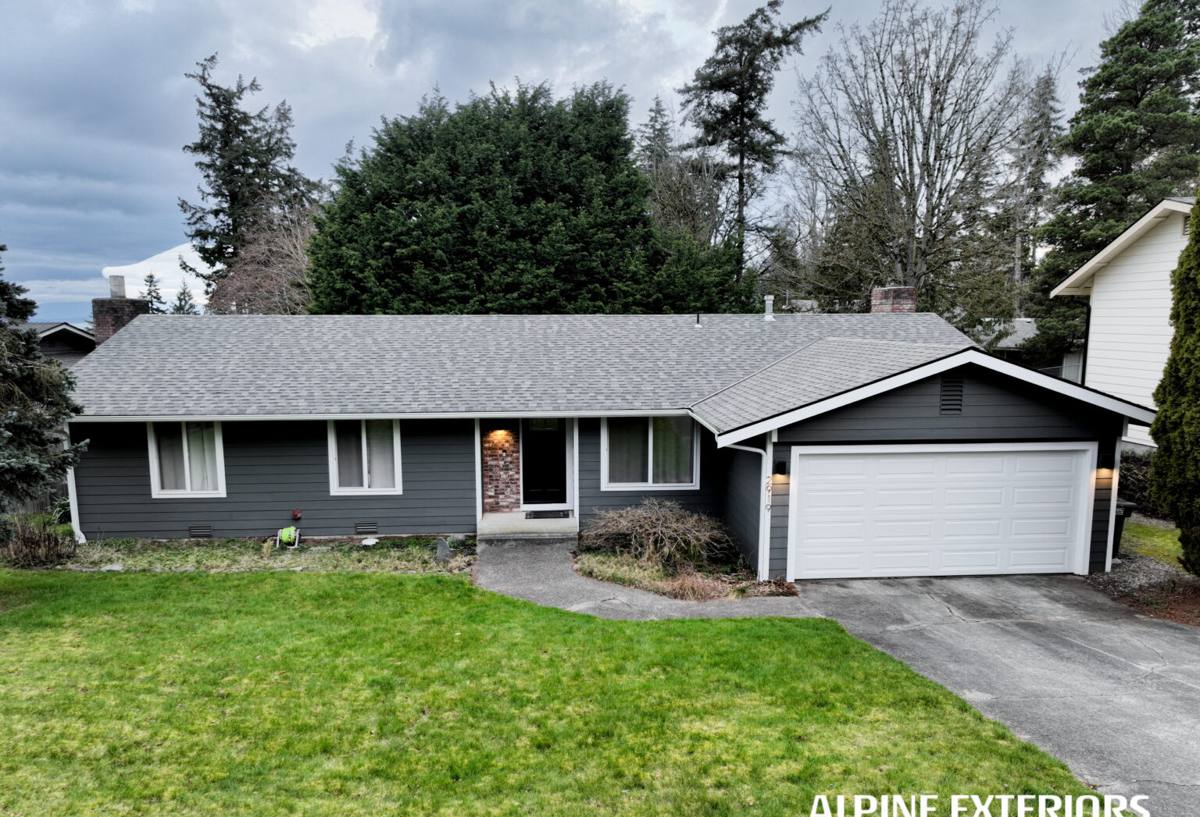
Signs a Bellingham Home Needs Siding Replacement, Not Just Repair
Not every siding problem calls for a full replacement. But there's a point where patching becomes false economy, and homeowners in this area tend to hit that point sooner than they expect because of how aggressively the climate works against marginal materials. Watch for these signs:
- Soft or spongy spots when you press on the siding, especially near the bottom courses and around window and door trim
- Visible swelling, delamination, or bubbling of the paint or finish layer
- Persistent moss or algae staining that returns within weeks of cleaning
- Cracked or missing caulking at seams and butt joints that hasn't been maintained in several years
- Paint that needs repainting more often than every 7-8 years to look presentable
- Visible gaps, warping, or fastener pull-through, particularly on walls that face prevailing wind and rain
- Interior signs — musty smell, peeling interior paint, or soft drywall near exterior walls — that point to moisture getting through from outside
If you're seeing two or more of these at once, it's usually a sign the siding system as a whole — not just one board — has reached the end of its useful life.
What Correct Siding Replacement Actually Involves
Siding replacement done right is mostly about what happens before the new boards ever go up. In a climate like Bellingham's, the water-resistive barrier (WRB) and flashing details matter as much as the siding material itself, because they're what stops wind-driven rain from reaching the wall sheathing in the first place.
Tear-Off and Inspection
Old siding comes off in full, not patched around. This is the point where we can actually see the sheathing, framing, and any existing moisture damage that's been hidden for years. Rot, soft sheathing, or compromised framing gets addressed before anything new goes on — covering over a wet wall with new siding just delays the same problem.
Water-Resistive Barrier and Flashing
A new WRB is installed with proper overlaps, shingled from the bottom up so water sheds outward rather than working its way in. Flashing gets installed at every horizontal transition, window and door head, and roof-to-wall intersection — the exact spots where driving rain concentrates and where most siding failures actually originate.
Fastening and Clearances
Fasteners are set to manufacturer spec for depth and spacing, using corrosion-resistant hardware appropriate for a marine-influenced climate. Siding is held off grade, decks, patios, and roof lines with the clearances the manufacturer requires, so splash-back and standing moisture don't sit against the bottom edge of the material.
Finish and Sealant Details
Caulking is used only where the manufacturer specifies it — over-caulking traps moisture just as often as under-caulking lets it in. Cut edges and field-cut siding get factory-matched touch-up per the product's requirements so the whole exterior weathers evenly.
Why We Install Only James Hardie Fiber Cement
We standardized on James Hardie fiber cement siding for every project we take on, including replacements here in Bellingham and throughout Ferndale. It's a non-combustible material that doesn't rot, swell, or feed moss and algae the way wood-based or engineered wood products can. Hardie's HZ product lines are climate-engineered for regions like ours with sustained damp exposure, and the factory-applied ColorPlus finish is baked on under controlled conditions rather than field-painted, which means better color retention and fewer repaint cycles over the life of the siding. It carries a strong transferable warranty when installed to spec, which matters to future buyers as much as current owners.
We don't install vinyl, LP SmartSide, or other engineered wood or fiber cement alternatives. That's a deliberate standard, not a sales pitch — we've made the call that in a climate this consistently wet and salt-exposed, fiber cement done correctly is the product we're willing to put our name behind and warranty.
Our Replacement Process for Bellingham Homes
| Step | What Happens |
|---|---|
| On-site assessment | Walk the exterior, check for moisture damage, note exposure direction and shade patterns unique to the property |
| Written estimate | Scope, product line, color, and cost broken out so there are no surprises once work starts |
| Tear-off | Full removal of old siding and trim; sheathing inspected and any damage repaired before moving on |
| WRB and flashing | New water-resistive barrier and flashing installed at every penetration and transition point |
| Hardie installation | Siding installed to manufacturer fastening, spacing, and clearance specs |
| Trim and finish work | Trim, corners, and touch-up completed to match the ColorPlus finish |
| Final walkthrough | Site cleanup and a walk-through so you can see the finished work before we consider the job done |
What Affects the Cost of Siding Replacement Here
Every home is different, but the same handful of factors drive most of the variation in cost for siding replacement projects around Bellingham and Ferndale:
| Factor | Why It Matters |
|---|---|
| Extent of hidden damage | Rot or soft sheathing found during tear-off adds repair scope before new siding can go on |
| Home size and wall complexity | More corners, dormers, and trim details mean more labor and material cuts |
| Siding profile and color | Lap width, shingle-style panels, and certain ColorPlus finishes carry different material costs |
| Access and site conditions | Multi-story walls, tight lot lines, or landscaping that limits staging can add time |
| Existing trim and flashing condition | Whether trim, window flashing, and fascia can be reused or need replacing alongside the siding |
We give a firm written estimate after seeing the home in person — broad ranges without an on-site look tend to be more misleading than helpful.
Why Local Experience Matters for This Job
A crew that regularly works Bellingham and Ferndale homes has already seen how this specific stretch of Whatcom County's climate behaves against different wall orientations, roof lines, and tree cover. That's not something you get from general siding experience alone. Knowing which walls in this area tend to hold moss longest, which exposures take the worst of the driving rain off the water, and how to detail flashing for a marine climate all come from doing this work here repeatedly — not from a one-size-fits-all install.
It also matters for warranty support. If an installer isn't local, follow-up service on a warranty claim years down the road becomes a scheduling and logistics problem. A crew based in the area is positioned to actually show up.
Maintaining Hardie Siding After Replacement
Correctly installed James Hardie siding is low-maintenance, but "low" isn't "none," especially in this climate. A simple annual routine keeps it performing the way it's designed to:
- Rinse the exterior yearly with a garden hose to clear salt residue and organic buildup before it sets in
- Check and refresh caulking at seams and trim every few years, since sealant breaks down faster under constant wet-dry cycling
- Keep gutters clear so overflow doesn't run down the siding face repeatedly
- Trim back vegetation and tree limbs that keep a wall section shaded and damp longer than the rest of the house
- Address any impact damage or fastener issues promptly rather than letting a small gap become a moisture entry point
None of this requires special equipment or a contractor visit in most years — it's the kind of upkeep that protects the investment without much effort.
Get a Free, No-Pressure Estimate
If your Bellingham or Ferndale home is showing signs of siding failure, or you'd simply like an honest read on how much useful life is left in what's on the walls now, we're happy to take a look. The estimate is free, there's no pressure to commit on the spot, and you'll get a straight answer about whether replacement makes sense yet or whether targeted repair can buy you more time. Use the form below to get started.