 Ferndale Siding
 Deck Replacement Built for Blaine's Coastal Conditions
Blaine sits about as close to the water and the border as a Whatcom County home can get, and that location comes with a specific kind of wear on outdoor structures. Salt-laden air off the Strait, driving rain that blows in sideways during winter storms, and a moss season that can stretch from October well into April all work against a deck that wasn't built or replaced with those conditions in mind. If your deck is cupping, splitting, sprouting soft spots, or growing a green film every year no matter how often you scrub it, that's not bad luck — it's the climate doing exactly what it does here, to a structure that's reached the end of what patching can fix.
A deck replacement isn't just tearing off old boards and nailing down new ones. Done right, it's a chance to correct the drainage, ventilation, and fastening problems that shortened the life of the last deck in the first place, so the new one actually holds up through another decade of Whatcom County winters.
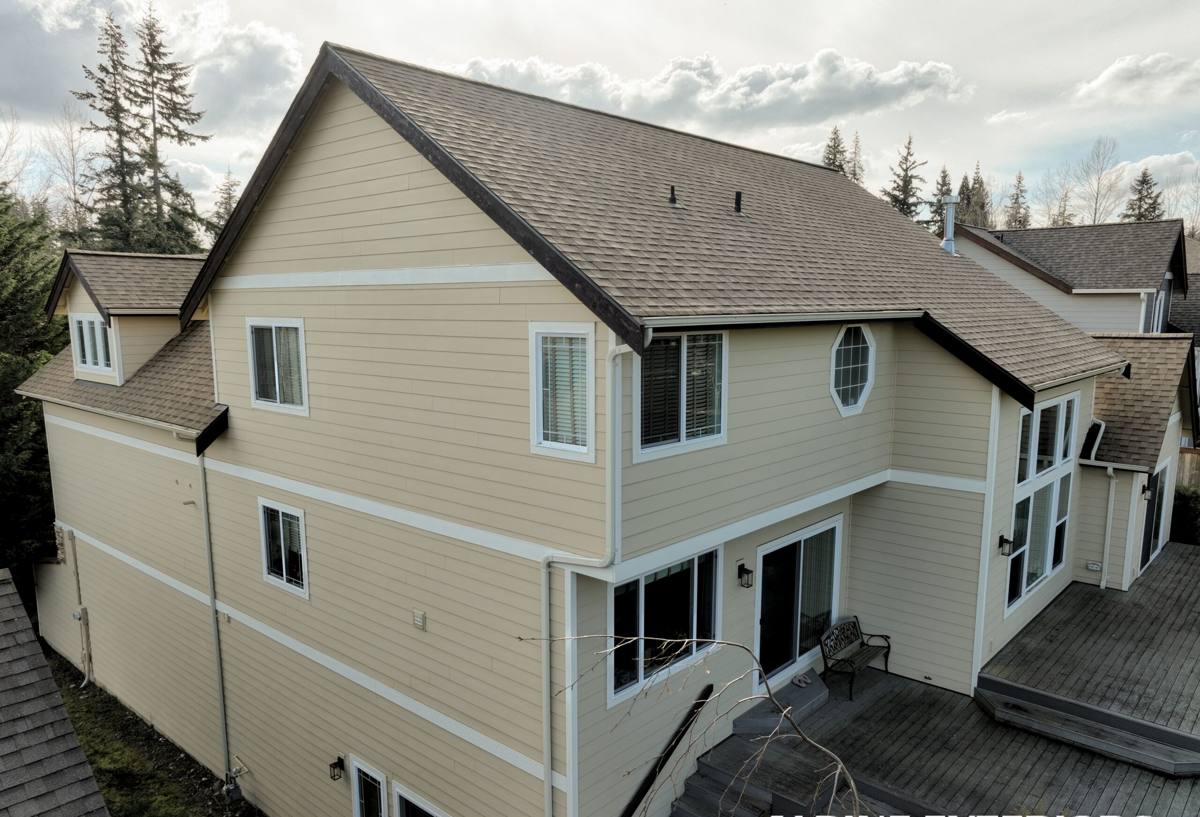
What Salt Air, Rain, and Moss Actually Do to a Deck
Salt Air
Airborne salt from the Strait of Georgia settles on every exposed surface, including deck boards, railings, and — critically — the metal fasteners and hardware holding the structure together. Standard fasteners corrode faster in this environment, and corroding fasteners are one of the most common reasons a structurally "young" deck starts to feel loose or unsafe.
Driving Rain
Rain that comes in at an angle finds its way into board gaps, ledger connections, and any spot where flashing was skipped or done poorly. Once water gets behind or underneath decking, it doesn't dry out quickly in our climate — it just sits there, and that's where rot starts, usually invisibly, at the framing and ledger board rather than the surface you can see.
Moss and Constant Dampness
A deck that stays shaded and damp for months at a time grows moss whether it's wood, composite, or anything in between. Moss holds moisture against the surface, makes boards slick and dangerous underfoot, and on wood decking it accelerates the very rot that moisture already causes. A long moss season means more months where a deck's surface is wet, not fewer.
Signs Your Blaine Deck Needs Replacing, Not Repairing
- Boards that feel spongy, soft, or spring back when you step on them
- Visible cupping, splitting, or checking across multiple boards, not just one or two
- Railing posts that wiggle at the base — often a sign the framing underneath has softened
- Rust streaks running down from fastener heads or hardware
- A ledger board (where the deck attaches to the house) that looks discolored or feels soft when probed
- Moss or algae that returns within weeks of cleaning, even in summer
- A deck more than 15-20 years old that has never had the substructure inspected
If you're only seeing surface-level graying or minor moss, a cleaning and refinishing may still be enough. Replacement becomes the right call once the framing, ledger, or fasteners are compromised — patching boards on a deck with a failing structure underneath just delays a bigger problem.
What a Correct Deck Replacement Involves
A deck replacement done for Whatcom County's climate is more than a materials swap. The parts that matter most are often the parts you won't see once the project is done.
Framing and Ledger
We inspect the ledger board connection and the framing underneath for rot before anything new goes down. Any softened wood gets replaced, not sealed over. The ledger-to-house connection gets proper flashing so water is directed away from the house rather than trapped against it — this single detail is behind a large share of the hidden rot we find on older decks.
Fasteners and Hardware
Given the salt air here, we use fasteners and structural hardware rated for corrosion resistance, not the standard-grade hardware that's fine further inland. This is a small cost difference at install time and a large difference in how the deck ages.
Drainage and Airflow
Proper board spacing and, where the design allows it, ventilation underneath the deck keep moisture from pooling against the structure. A deck that can't shed water and dry out between storms is a deck that's rotting on a schedule, just slowly.
Decking Material
Wood, composite, and PVC decking all perform differently in wet, salty, moss-prone conditions, and each has real trade-offs worth understanding before you choose — covered below.
Choosing Decking Material for Blaine's Climate
| Material | Moisture & Moss Behavior | Maintenance | Typical Lifespan Here |
|---|---|---|---|
| Pressure-treated wood | Absorbs water, needs sealing to resist moss and rot | Annual cleaning, periodic staining/sealing | 10-15 years with upkeep |
| Cedar | Naturally rot-resistant but still needs sealing in this climate | Regular cleaning and refinishing | 15-20 years with upkeep |
| Composite decking | Doesn't absorb water like wood; moss can still grow on the surface film | Periodic washing, no staining/sealing | 20-25+ years |
| PVC decking | Fully non-absorbent; least hospitable surface for moss growth | Occasional washing | 25+ years |
There's no single "right" material for every home — a lot depends on budget, how much upkeep you want to commit to, and how the deck is used. Our job is to walk through those trade-offs honestly rather than push whatever has the best margin, including being upfront when a lower-maintenance product costs more upfront but saves real money and effort in a Blaine backyard over the next two decades.
Our Replacement Process
- On-site assessment — we inspect the existing deck, ledger, and framing to confirm replacement is the right call and identify any hidden rot
- Material and design discussion — honest walkthrough of decking options, railing choices, and layout given your home and how you use the space
- Removal — full teardown of the old deck surface and any compromised framing, hauled off site
- Structural correction — framing repairs, proper ledger flashing, and corrosion-resistant fastening
- Installation — decking, railings, and stairs installed to code with attention to drainage and spacing
- Final walkthrough — we go over the finished deck with you before calling the job done
Permits and Code Considerations
Deck replacement projects, particularly those involving structural framing, ledger reattachment, or railing height changes, typically require a permit and inspection. We handle that process as part of the job rather than leaving it to the homeowner, and we build to current code for railing height, guard spacing, and structural spans — details that matter both for safety and for resale down the line.
Why a Crew That Already Works Blaine Matters
Deck problems in Blaine tend to look similar from house to house because the climate driving them is the same: the same salt exposure, the same wind-driven rain patterns, the same long stretch of damp shaded months that feed moss. A crew that already replaces decks in this specific stretch of Whatcom County has seen which ledger connections fail first, which fastener grades hold up and which don't, and which decking materials actually perform here versus how they're marketed. That's the difference between a deck replacement that's generically "done right" and one that's built for the conditions it will actually sit in for the next twenty years.
We're a local siding and exterior contractor based near Ferndale, and deck replacement is one of the services we get called for most often specifically because of what this coastal climate does to outdoor structures. We're not a national franchise cycling crews through the area — we're here year-round and stand behind the work.
What to Expect Cost-Wise
Deck replacement costs vary widely based on size, decking material, railing style, and how much structural work the framing needs. A straightforward wood replacement on an existing footprint costs meaningfully less than a full composite or PVC rebuild with new railings and stairs. Rather than quote a number that won't reflect your actual deck, we provide a firm estimate after seeing the site and understanding what's underneath the current structure — that's the only way to give you an honest figure instead of a placeholder that changes once work begins.
Get a Free, No-Pressure Estimate
If your deck is showing its age or you're just not sure whether repair or replacement makes sense for your home, we're happy to take a look and give you a straight answer. Use the form below to request a free estimate — no pressure, no obligation, just an honest assessment of what your deck needs.