 Ferndale Siding
 Blaine's Siding Problem Isn't Like Everyone Else's
Blaine sits at the northwest corner of Whatcom County, right on the water and right at the border. That location is part of what makes it a great place to live, and it's also exactly why siding fails faster here than it does twenty miles inland. Homes close to Semiahmoo Bay and the open water take on salt-laden air that most siding products were never engineered to handle. Add the Pacific Northwest's long wet season, driving rain that comes in sideways off the water, and a shade-and-moisture combination that keeps moss and algae growing for most of the year, and you've got a climate that finds every weakness in a siding system within a handful of years instead of a couple decades.
We install James Hardie fiber cement exclusively, and Blaine is one of the clearest examples of why. This page is about that one product, in this one area, for one job: replacing or installing siding on a Blaine home in a way that actually holds up to what the local climate throws at it.
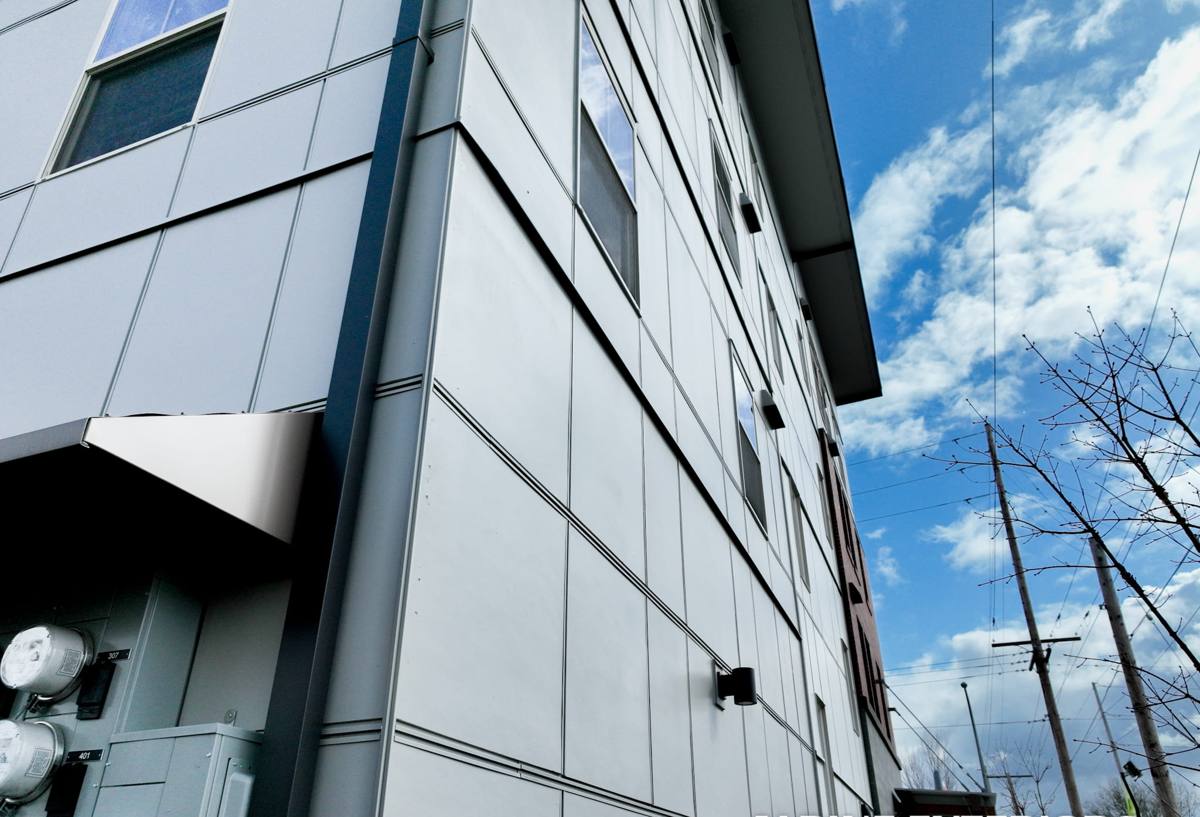
Why Salt Air Changes the Calculation
Salt air isn't just an inconvenience — it's chemically aggressive. Airborne salt settles on exterior surfaces and speeds up corrosion of fasteners, trim hardware, and any metal flashing that isn't properly rated or protected. It also accelerates the breakdown of some siding coatings, causing chalking, fading, and surface degradation well ahead of a manufacturer's stated timeline. Vinyl siding can go brittle and discolor faster near salt water. Wood and primed wood products absorb moisture more readily when salt is present in the air, which shortens the interval between repaints and increases rot risk at joints and end cuts.
James Hardie fiber cement doesn't eliminate the effects of coastal exposure, but it's a fundamentally different material — cement, sand, and cellulose fiber, not wood or plastic — so it doesn't rot, and it isn't vulnerable to the same UV and chemical breakdown that shortens the life of other sidings. The factory-applied ColorPlus finish is also formulated to resist fading and chalking better than field-applied paint, which matters in a location where the sun, salt, and moisture are working against the finish year-round.
Driving Rain and the Water-Management Layer
Whatcom County gets steady rainfall most of the year, and Blaine's exposed, waterfront position means that rain often arrives horizontally rather than straight down. That kind of wind-driven rain tests the water-management details behind the siding — the house wrap, the flashing at windows and doors, the weep paths at the bottom of the wall — far harder than a calm, vertical rain would. A siding job that looks fine from the driveway can still be letting water behind the cladding if those details were rushed or skipped.
This is where installation quality matters as much as the product itself. James Hardie's own installation instructions are specific about clearances, fastening patterns, and flashing integration, and those specs exist because the company has seen what happens when they're ignored — call-backs for staining, buckling, and moisture intrusion almost always trace back to a shortcut in the water-management layer, not a flaw in the board.
What Correct Water Management Looks Like
- A continuous weather-resistive barrier behind the siding, lapped correctly top over bottom
- Proper head flashing above every window and door, integrated with the barrier — not just caulked
- A minimum clearance between the bottom of the siding and grade, decks, and roof lines so splash-back and standing water can't wick into the board
- Rain-screen or drainage gap detailing where the wall assembly calls for it, so any water that gets behind the cladding can drain and dry
- Fastener patterns and joint treatment that match Hardie's published specs for this region's exposure category
Moss Season Is Longer Here Than Most Homeowners Realize
Blaine's combination of shade, humidity, and mild temperatures keeps conditions favorable for moss and algae growth for much of the year, not just in the depths of winter. Moss holds moisture against a wall surface long after a storm has passed, and prolonged moisture contact is bad news for almost any siding material — it's what drives rot in wood products and can degrade coatings on lower-grade composites over time.
Fiber cement doesn't feed moss the way wood-based products can, and it doesn't absorb and hold water the way untreated wood does, which limits the damage moss growth can do to the siding material itself. That said, moss and algae staining is still a cosmetic issue on any exterior surface in this climate, and part of doing this job right is thinking about drainage, shading, and gutter placement during installation — details that reduce how much moss takes hold in the first place.
What a Correct James Hardie Installation Involves
A Hardie job is only as good as the crew installing it. The board itself is engineered for this climate zone, but the performance homeowners actually experience depends on execution. A correct installation includes:
- Site-specific product selection — matching the HZ5 climate-engineered formulation to the exposure this home actually gets, not a one-size-fits-all approach
- Proper starter strip and flashing integration at the foundation line
- Correct fastener type, spacing, and embedment depth per Hardie's published fastening schedule
- Field-cut edges sealed per manufacturer spec to protect the cut edge from moisture
- Butt joints and trim details caulked with a high-quality, paintable, exterior-grade sealant rated for the product
- Proper clearance from roofing, decking, and grade — the single most common installation error we see corrected on other contractors' work
Skipping any one of these doesn't usually cause an obvious problem in year one. It shows up in year five or six, as staining, swelling at cut edges, or moisture damage to the sheathing behind the siding — the kind of failure that costs far more to fix than it would have cost to do correctly the first time.
Our Process for a Blaine Job
1. On-Site Assessment
We look at wall exposure, sun and shade patterns, drainage around the foundation, and the condition of the existing sheathing and water barrier before we ever talk product or price. A house facing the water gets different attention than one tucked behind a wind break.
2. Tear-Off and Sheathing Check
We remove the existing siding and inspect what's underneath. Any rot, moisture damage, or compromised sheathing gets addressed before new siding goes on — covering a problem is not an option we offer.
3. Water Barrier and Flashing
New weather-resistive barrier, correctly lapped, with flashing integrated at every penetration, window, and door — the layer that does the real work in a driving-rain climate.
4. Hardie Installation to Spec
Boards, fasteners, joints, and clearances installed to James Hardie's published specifications for this climate zone, not shortcuts based on what's fastest.
5. Final Walkthrough
We walk the finished job with the homeowner, point out the water-management details that aren't visible after the fact, and cover basic care going forward.
ColorPlus Finish: Why It Matters More on the Water
James Hardie's ColorPlus Technology applies the finish in a factory-controlled environment with multiple baked-on coats, which produces better fade and chip resistance than most site-applied paint jobs. In a location where sun, salt, and moisture are all working against a painted finish simultaneously, that difference translates into a longer stretch before the exterior needs attention. It also comes with its own finish warranty, separate from the substrate warranty, which is worth understanding before you pick a color and finish type.
Cost Factors for a Blaine Hardie Project
| Factor | Why It Affects Cost |
|---|---|
| Tear-off complexity | Removing old vinyl, wood, or damaged siding takes more labor than working over a clean substrate |
| Sheathing repair | Moisture damage found during tear-off, common in coastal-exposed homes, adds material and labor |
| Product line and profile | Lap siding, shingle-style panels, and board-and-batten carry different material and labor costs |
| Trim and detail work | Homes with more windows, corners, and architectural detail require more precise (and time-consuming) flashing and trim work |
| Wall height and access | Multi-story or difficult-access walls near steep grades or water increase equipment and labor needs |
| Color and finish | Factory ColorPlus finishes vs. primed-for-paint boards affect both material cost and long-term maintenance |
Ongoing Care in This Climate
- Rinse siding annually to remove salt residue and organic growth before it builds up
- Keep gutters and downspouts clear so water sheds away from the wall instead of running down it
- Trim back vegetation and tree cover where practical to reduce shaded, damp areas prone to moss
- Inspect caulking at trim and joints every couple of years — sealant is the first thing to wear in a wet, salty climate
- Address any staining or discoloration early rather than waiting — it's usually a symptom of a moisture path worth checking
Why It Matters That We Work in Blaine Regularly
A crew that mostly works inland doesn't think about salt exposure, water-facing wall orientation, or extended moss season by default — they apply the same details everywhere. Working Whatcom County's coastal edge regularly means we account for those conditions automatically: where extra flashing attention pays off, which walls need the closest look at drainage, and how the exposure category should shape fastener and clearance choices on a given home. That's not a marketing point — it's the difference between a siding job that looks right at handoff and one that still looks right in year ten.
If you're planning a siding project in Blaine, we're happy to walk your property, look at what your home is actually dealing with, and give you a straight assessment — no pressure, no upsell. Reach out for a free estimate using the form below.