 Ferndale Siding
 Decking Built for Sandy Point's Coastal Conditions
Sandy Point sits right up against the water, and that location shapes everything about how a deck should be built there. Salt-laden air moves through constantly, driving rain comes in sideways off the Strait during winter storms, and the shaded, damp stretches of the year let moss and algae get a foothold on anything that stays wet too long. A deck built the same way you'd build one twenty miles inland, in a drier pocket of Whatcom County, won't hold up the same way out here. We've worked on homes throughout this community long enough to know which details actually matter and which ones are just extra cost with no real payoff.
This page is specifically about composite decking in Sandy Point — not composite decking in general, and not decks anywhere else in Ferndale. The material, the fasteners, the framing choices, and the maintenance routine we recommend are all shaped by what this particular stretch of coastline does to a deck over time.
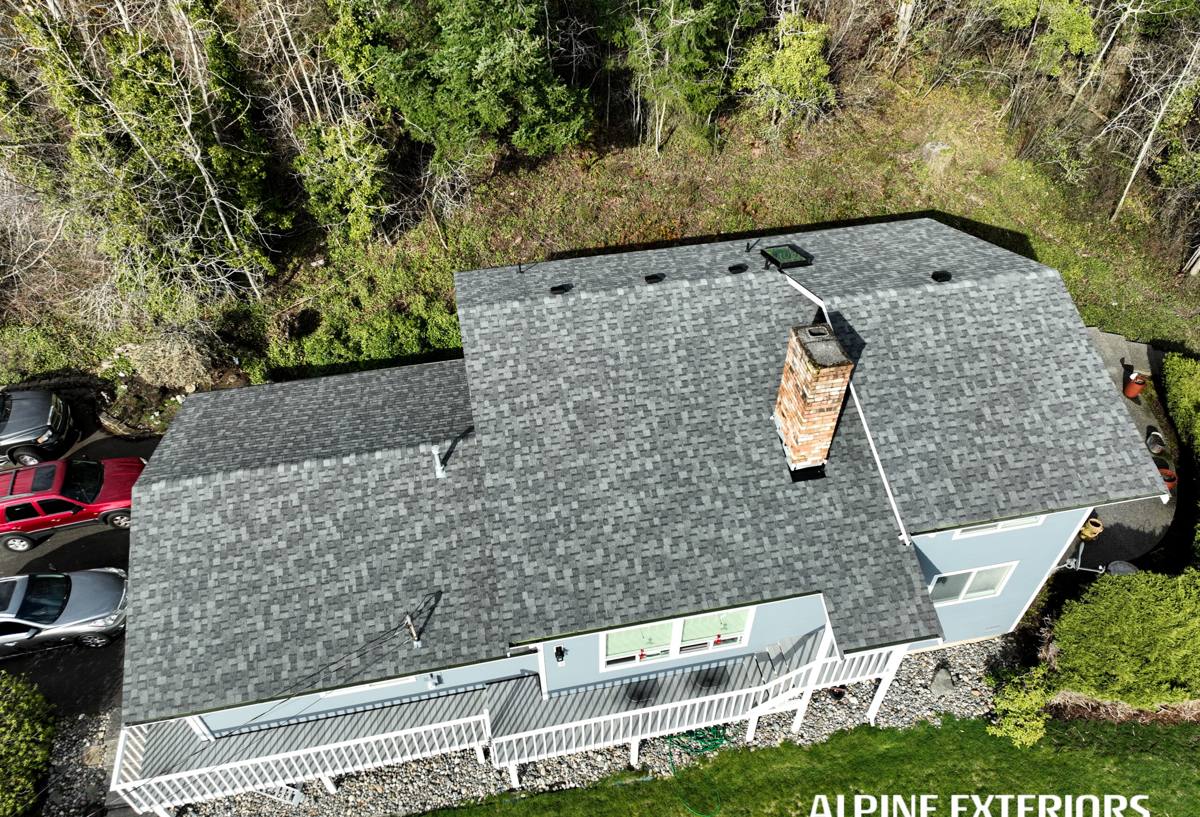
What This Climate Does to a Deck
Salt Air and Corrosion
Airborne salt doesn't just affect boats and siding — it settles on deck hardware, fasteners, and any exposed metal fittings. Over years, standard hardware can corrode, stain the decking around it, and eventually weaken. This is one of the biggest differences between building here and building further inland, and it drives most of the hardware decisions we make on Sandy Point jobs.
Driving Rain and Moisture Cycling
Wind-driven rain off the water doesn't just fall straight down — it gets pushed under railings, into board gaps, and against the house where the deck ties in. A deck that can't shed and drain that water efficiently stays damp longer, and prolonged dampness is what accelerates rot in substructures, corrodes fasteners faster, and feeds moss growth on the deck surface itself.
Moss, Algae, and Shaded Ground-Level Areas
Whatcom County's long wet season is tough on any exterior surface, and low-lying, shaded, or ground-level decks in Sandy Point are especially prone to moss and algae buildup. This isn't just cosmetic — moss holds moisture against the deck surface, which affects both appearance and long-term durability if it's ignored.
Why Composite Makes Sense for This Location
Wood decking can absolutely be built well and can look great, but in a salt-air, high-moisture environment like Sandy Point, it demands a maintenance commitment most homeowners underestimate — annual staining or sealing, more frequent board replacement as moisture cycling takes its toll, and closer attention to fastener corrosion. Composite decking shifts that burden. It doesn't absorb water the way wood does, it won't splinter or rot, and modern composite boards resist the moss and algae staining that's common on wood surfaces near the water. That doesn't mean composite is maintenance-free — nothing on a coastline is — but it changes what maintenance looks like, from sanding and re-staining to periodic cleaning.
| Factor | Wood Decking | Composite Decking |
|---|---|---|
| Moisture absorption | Absorbs and swells, especially at cut ends | Minimal absorption with capped boards |
| Moss/algae resistance | Lower — porous surface holds moisture | Higher — smoother, capped surface sheds moisture faster |
| Annual upkeep | Staining or sealing typically needed | Periodic washing, no staining/sealing |
| Fastener exposure | Often more surface fasteners visible | Hidden fastener systems common |
| Typical lifespan in this climate | Shorter without consistent upkeep | Longer with manufacturer warranty backing |
We're not going to tell you wood is a bad product — it isn't, and plenty of homeowners like the look and are willing to keep up with it. For most Sandy Point properties, though, composite is the lower-maintenance, more climate-appropriate choice, which is why it's what we recommend most often out here.
What a Correct Composite Deck Installation Involves
Framing and Substructure
The composite boards get the attention, but the framing underneath is what determines whether the deck lasts. In a wet, salt-exposed environment, we pay close attention to joist spacing (often tighter than manufacturer minimums for coastal exposure), proper flashing where the deck ties into the house to keep water out of the wall assembly, and adequate ventilation underneath the deck so moisture doesn't just sit there.
Drainage and Slope
A deck surface should have a slight slope away from the house so rainwater actually moves off it instead of pooling. Combined with proper gapping between boards, this is one of the simplest and most overlooked ways to reduce the moisture cycling that causes problems down the road — especially relevant given how much rain this area sees.
Fasteners and Hardware
Given the salt air, we use corrosion-resistant fasteners and structural hardware rated for coastal or high-moisture exposure, not standard hardware. It costs a bit more up front and it's not visible once the deck is finished, but it's one of the details that separates a deck that holds up in Sandy Point for decades from one that starts showing rust streaks and loosening connections within a few years.
Ledger Board Attachment
Where the deck attaches to the house is the single most common source of long-term water damage on any deck, anywhere. Correct flashing, proper waterproofing membrane behind it, and code-compliant attachment hardware at this connection point matter more here than almost anywhere else on the structure, precisely because of how much moisture this area deals with.
Our Process for Sandy Point Deck Projects
- On-site assessment — we look at sun/shade exposure, existing drainage patterns, proximity to the water, and the condition of any existing structure before recommending anything.
- Design and material selection — board color, railing style, and fastener system are chosen with this site's exposure in mind, not a generic default.
- Permitting — decks typically require a permit through Whatcom County or the relevant local jurisdiction; we handle that process as part of the job.
- Framing and substructure work — built to handle coastal moisture and wind exposure, with corrosion-resistant hardware throughout.
- Composite decking installation — boards installed per manufacturer spec, with attention to gapping, fastening method, and edge details.
- Final walkthrough — we go over drainage, railing security, and basic care with you before we consider the job done.
Living With a Composite Deck in a Moss-Prone Climate
Composite is lower-maintenance than wood, but "lower" doesn't mean "none." In a community with this much moisture and shade in certain spots, a little seasonal attention keeps a composite deck looking and performing the way it should for the long haul.
- Sweep debris (leaves, needles, wind-blown organic matter) off the deck regularly — trapped debris holds moisture against the boards and is the main driver of moss and algae growth
- Wash the deck surface periodically with mild soap and water or a manufacturer-approved cleaner, especially in shaded or low-airflow areas
- Rinse salt residue off periodically, particularly on decks with more direct water exposure or wind-driven spray
- Check railing posts and stair connections annually for looseness — hardware can shift slightly with seasonal moisture cycling even when it's corrosion-resistant
- Keep gutters and downspouts near the deck clear so runoff isn't dumping extra water onto or under the deck surface
- Avoid pressure-washing at close range or high pressure, which can damage the board's protective cap layer
Why Local Experience in Sandy Point Matters
A lot of deck-building advice online is written for a national audience and doesn't account for what a marine, moss-prone climate like this actually does to a structure over time. Crews who haven't worked this specific stretch of Whatcom County coastline sometimes underestimate how much the salt air and driving rain affect hardware choices, drainage detailing, and long-term maintenance needs. We've built and repaired decks throughout Ferndale and the surrounding coastal communities, including Sandy Point, and that experience shapes the specific choices we make on framing, fastener grade, and drainage — the parts of the job that aren't visible once it's finished but determine whether the deck is still solid in fifteen years.
What Affects the Cost of a Composite Deck Project
| Factor | Why It Matters |
|---|---|
| Deck size and shape | More square footage and complex angles increase material and labor |
| Board tier and brand | Composite lines vary in cap technology, color options, and warranty length |
| Substructure condition | Replacing or reinforcing existing framing adds cost but is often necessary for a proper coastal build |
| Railing style | Composite, metal cable, or glass railing systems price differently |
| Site access and grade | Waterfront and sloped lots can complicate equipment access and framing |
| Permitting requirements | Height, guardrail, and structural code requirements vary by design |
We won't quote a project without seeing the site — too much of the cost in a coastal build depends on what's actually there (existing framing condition, grade, access) rather than square footage alone.
Get a Straightforward Estimate
If you're planning a new composite deck or replacing an aging one in Sandy Point, we're happy to come take a look and walk you through what your specific site needs — no pressure, no upsell on materials you don't need. Use the form below to request a free estimate, and we'll get back to you to schedule a time to assess your property.