 Ferndale Siding
 Why Decks in Cordata Wear Out Faster Than Homeowners Expect
If you own a home in the Cordata area near Ferndale, you already know the weather here is not gentle on outdoor wood structures. Whatcom County sits close enough to the water that salt-laden air reaches yards well inland, and the region's long wet season means a deck can stay damp for days or weeks at a stretch. Add in the moss and algae that thrive in shaded, moisture-heavy conditions, and you have a combination that ages a deck faster than the same structure would age in a drier climate. A deck that looks fine from a distance can be quietly failing underneath — soft joists, corroded fasteners, or a ledger board pulling away from the house — long before the surface boards show obvious damage.
This page is about one job, done right, for this one area: full deck replacement for Cordata homes. Not a patch job, not a resurfacing, but a complete tear-off and rebuild that accounts for what our climate actually does to a deck over ten, fifteen, twenty years.
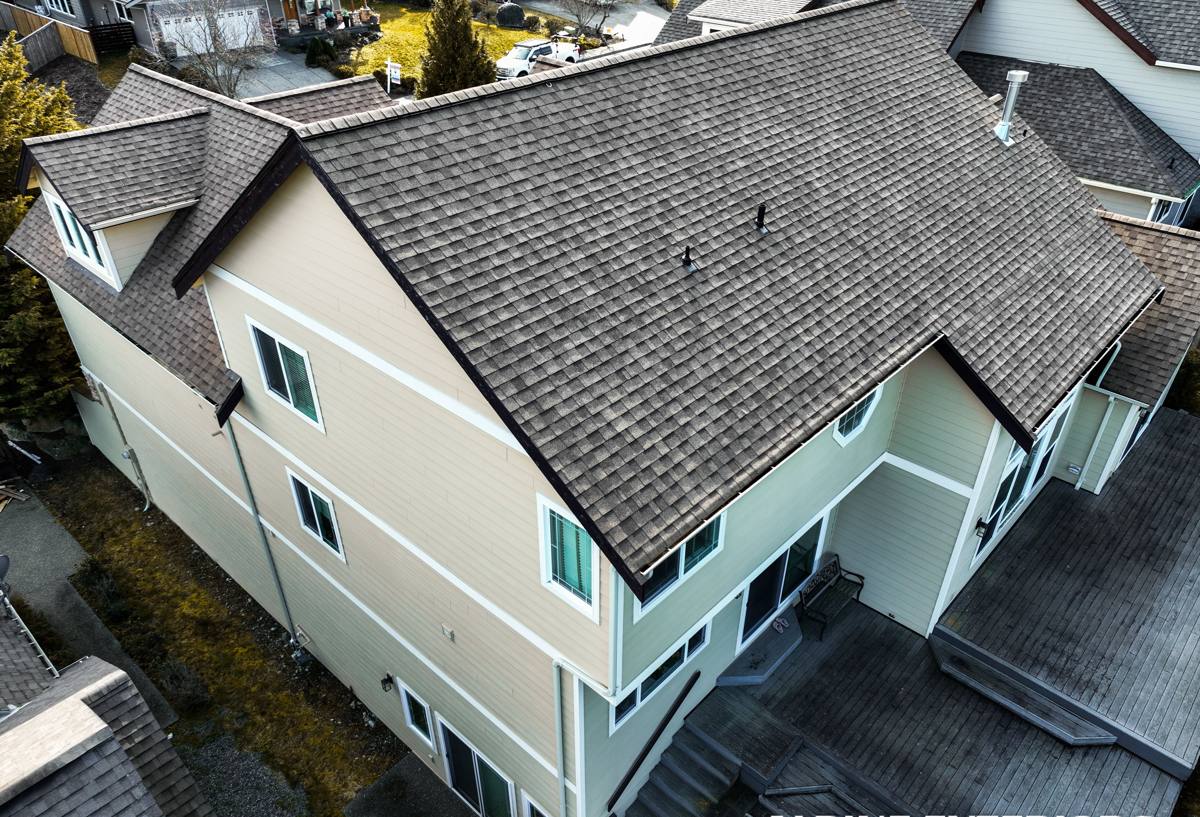
What Driving Rain, Salt Air, and Moss Actually Do to a Deck
Moisture Intrusion
Driving rain doesn't just fall straight down here — wind pushes it sideways, which means it finds its way into gaps around ledger boards, under poorly flashed rim joists, and between decking boards that were installed too tight. Once water gets into a framing member and can't dry out quickly, rot sets in. This is almost always worse at the ledger board (where the deck attaches to the house) and at post bases, because those spots trap moisture against wood with less airflow.
Salt Air Corrosion
Homes closer to Bellingham Bay and the Puget Sound shoreline deal with airborne salt that accelerates corrosion on any exposed metal — nails, screws, joist hangers, and structural connectors. Standard fasteners can corrode from the inside of the wood outward, which means the damage is often invisible until a board or railing fails. This is one of the most overlooked causes of premature deck failure in coastal Whatcom County neighborhoods.
Moss and Organic Growth
Ferndale's long wet, mild season is ideal for moss, algae, and lichen. On a deck, that growth does two things: it holds moisture against the wood surface far longer than bare boards would, and it makes the surface slippery and dangerous underfoot. Moss growing in the gaps between boards can also work like a wedge, holding water right where boards meet and accelerating rot at the edges.
Signs a Cordata Deck Needs Full Replacement, Not Just Repair
Not every aging deck needs to be torn out. But there's a point where patching individual boards is just delaying an inevitable, more expensive failure. Here's what we look for when deciding whether repair is still realistic or replacement is the honest answer:
- Soft or spongy spots when you walk across the deck, especially near the house or at stair landings
- Visible gaps, cracking, or separation at the ledger board where the deck meets the house
- Rust streaks running down from fasteners, railing brackets, or joist hangers
- Persistent moss or dark staining that returns within weeks of cleaning
- Wobbly railings or posts that move when pushed, which often signals rot at the base
- A deck original to a home built more than 20 years ago that has never been rebuilt
- Multiple boards already replaced piecemeal over the years — a sign the underlying frame is likely next
If two or more of these apply, replacement is usually the more cost-effective path once you account for what repeated repairs actually cost over a few years.
What a Correct Deck Replacement Actually Involves
Full Tear-Off and Frame Inspection
A real replacement starts with removing the old decking and railings down to the ledger and support posts, so the framing can be inspected directly rather than guessed at. This is the only way to know if posts, beams, or footings need to be replaced along with the visible surface.
Ledger Board Flashing
Because the ledger board is the single most common failure point in wet climates, correct flashing here is not optional. That means proper metal flashing integrated with the house's water-resistive barrier, not just caulk over the old connection. This detail alone accounts for a large share of long-term deck failures we see when a deck was built or repaired without it.
Corrosion-Resistant Fasteners and Hardware
Given the salt air common to this part of Whatcom County, we use fasteners and structural hardware rated for coastal or high-moisture exposure rather than standard interior-grade hardware. It costs a little more upfront and saves the homeowner from hidden corrosion failures a decade later.
Proper Drainage and Airflow Beneath the Deck
Board spacing, joist protection tape, and grading beneath the deck all affect how quickly the structure dries out after rain. A deck that can't shed water and dry between storms will always age faster than one built with drainage in mind from the start.
Railings and Stairs Built to Current Code
Replacement is the right time to bring railing height, baluster spacing, and stair geometry up to current code, especially on older decks that predate current safety requirements.
Choosing Decking Material for This Climate
There's no single "best" decking material for every homeowner — it depends on budget, maintenance tolerance, and how much moss and rain exposure the specific site gets. Here's an honest comparison of the main options we install:
| Material | Moisture Behavior | Moss/Algae Resistance | Maintenance | Typical Lifespan |
|---|---|---|---|---|
| Pressure-treated wood | Absorbs water, needs to dry fully between rains | Low — surface texture holds growth | Annual cleaning and periodic sealing | 10–15 years before major repair |
| Cedar | Naturally moisture-resistant but still needs sealing | Moderate | Regular sealing and cleaning | 15–20 years with upkeep |
| Composite decking | Does not absorb water into the board itself | Moderate to good depending on product | Occasional washing | 20–25+ years |
| Capped composite / PVC | Fully sealed surface resists moisture intrusion | Best of the group | Low — mostly rinsing | 25+ years |
We're upfront that wood decking costs less to install but carries a real ongoing maintenance burden in a climate like this — sealing, cleaning, and watching for soft spots every year. Composite and capped composite cost more upfront but hold up better against the specific combination of rain and moss we deal with here, which is why we recommend homeowners weigh long-term cost, not just install price, when deciding.
Framing Material Matters Too
Whatever decking surface you choose, the framing underneath should match the exposure. Pressure-treated framing lumber, corrosion-resistant hardware, and proper flashing matter more to long-term durability than the surface material alone — a beautiful composite deck on a poorly protected frame will still fail early.
Our Process for a Cordata Deck Replacement
- On-site walkthrough and honest assessment of whether repair or full replacement is the right call
- Written estimate covering material options, scope, and realistic timeline
- Permit handling where required by local code before any demolition begins
- Full tear-off and inspection of framing, posts, and footings
- Rebuild with corrosion-resistant hardware, proper ledger flashing, and code-compliant railings
- Final walkthrough with the homeowner before we consider the job done
We don't upsell scope that isn't needed, and we don't cut corners on the parts of a deck that homeowners can't see once it's finished — flashing, fasteners, and framing are exactly where corners get cut on rushed jobs, and exactly where problems show up years later.
Permits and Local Requirements
Deck replacements of a certain size, height above grade, or attachment method typically require a permit under local building codes in Whatcom County and the City of Ferndale. Requirements vary by project specifics like deck height, footprint, and whether it's attached to the house, so we handle the permit conversation as part of the estimate rather than leaving homeowners to figure it out on their own. Skipping a required permit can create real problems at resale or with insurance, so we treat this as a standard part of the job, not an optional extra.
Why a Crew That Already Works in Cordata and Ferndale Matters
Deck work in this climate rewards local familiarity. A crew that regularly works Whatcom County neighborhoods has already seen how salt air affects hardware choices, how moss behaves on shaded lots versus open ones, and how the region's rain patterns stress ledger connections over time. That's different from general contracting experience picked up in a drier climate. Local presence also matters after the job is done — if a question comes up about maintenance or a warranty item, you're dealing with a crew that's a short drive away and familiar with your specific property, not a distant office.
Keeping Your New Deck in Good Shape Through Moss Season
A correctly built deck still benefits from a little seasonal attention. Here's what actually helps in this climate, regardless of which material you choose:
- Clear leaves and debris from between boards before fall rains set in, so water and moss don't collect there
- Rinse or gently scrub visible moss and algae before it has a chance to establish, rather than after it's thick
- Keep gutters and downspouts near the deck clear so runoff isn't dumping extra water directly onto or under the deck
- Check railings and stair connections once a year for movement, which can signal early hardware corrosion
- Reseal wood decking on the manufacturer's recommended schedule — don't wait until it's visibly gray and dry
None of this is complicated, but skipping it is exactly how a well-built deck ends up needing early repairs in a climate this wet.
Get an Honest Look at Your Deck
If your Cordata-area deck is showing soft spots, rust stains, persistent moss, or is simply old enough that you're wondering if it's time, we're happy to take a look and give you a straight answer — repair, or full replacement, with reasoning you can actually follow. Request a free, no-pressure estimate using the form below and we'll walk the property with you.